Artwork
Parade (A Theatrical Procession in Paris)
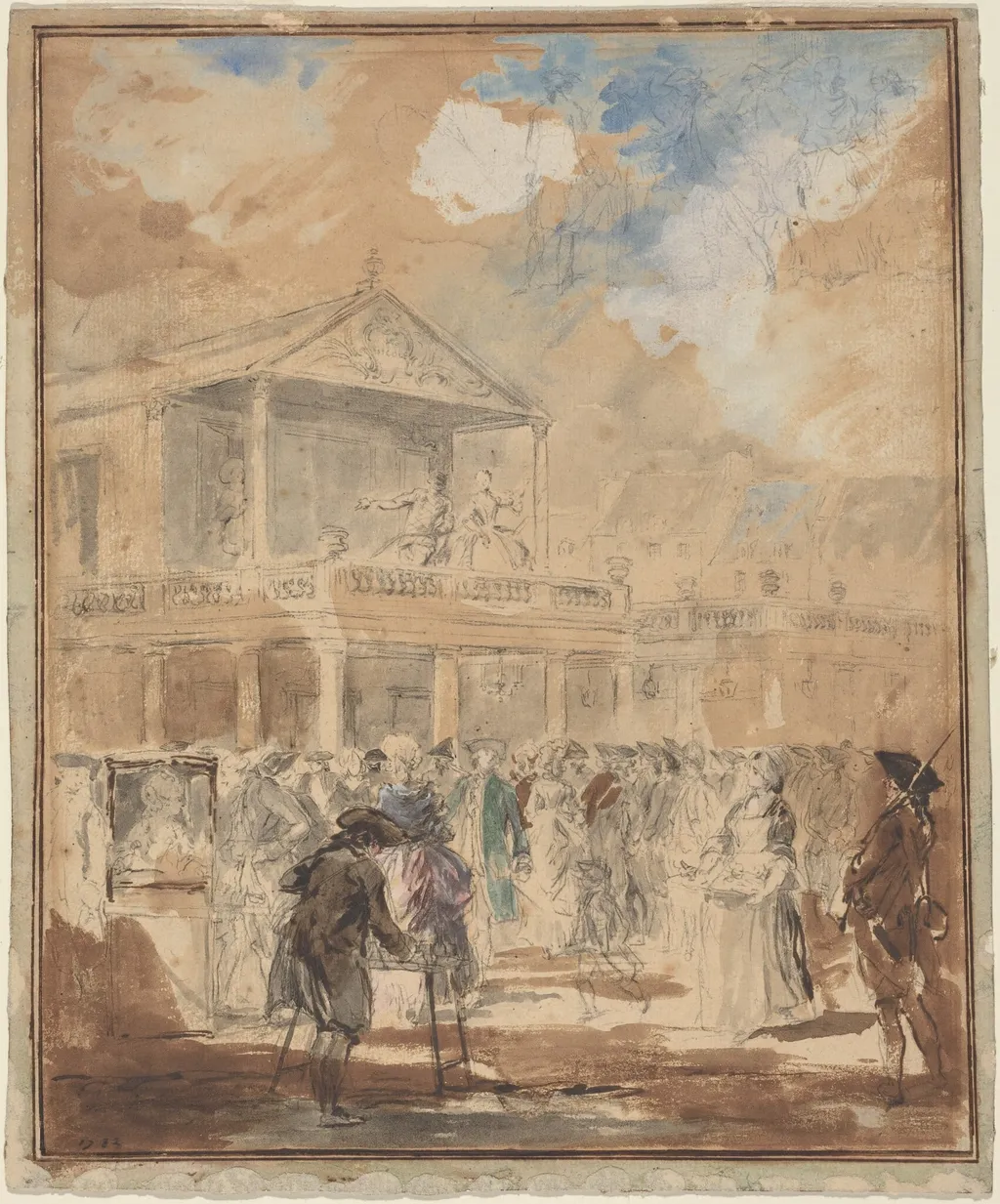
Parade (A Theatrical Procession in Paris) is a chalk drawing by the Baroque artist Augustin de Saint-Aubin. It dates from 1772 and is held in the collection of the National Gallery of Art.
About this work
Overview
Parade (A Theatrical Procession in Paris) is a drawing by Augustin de Saint-Aubin, executed in 1772 on laid paper with black chalk and watercolor. It captures a vibrant Parisian street scene, focusing on a theatrical procession.
Subject & Meaning
The drawing depicts a bustling street with a crowd descending steps, overlooked by a small stage with figures, evoking the lively atmosphere of a public entertainment event in 18th-century Paris.
Technique & Style
Saint-Aubin's design and printmaking background is evident in the drawing's detailed, graphic quality. Quick, loose lines characterize the crowd, contrasting with the more defined, simple stage setup.
History & Provenance
Created in 1772, the work reflects Saint-Aubin's skill in capturing dynamic scenes, typical of his fast and lively drawing style, as seen in his other works.
Context
The piece is set against the backdrop of 18th-century Parisian life, highlighting the importance of public theatrical events and processions during this period.
Legacy
As part of Saint-Aubin's oeuvre, *Parade* contributes to the historical record of French artistic and cultural practices in the late 18th century, showcasing his ability to document urban life.
Artist & collection
Artist
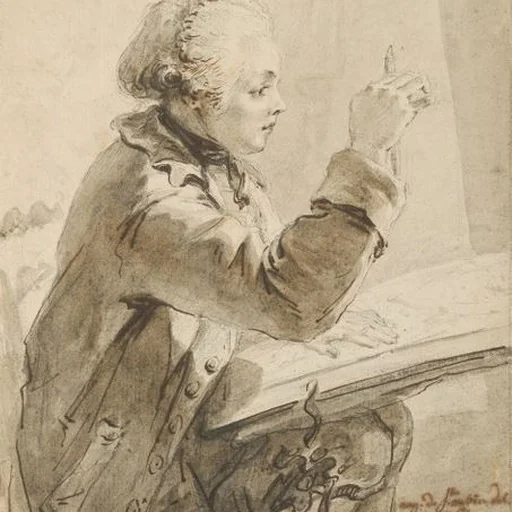
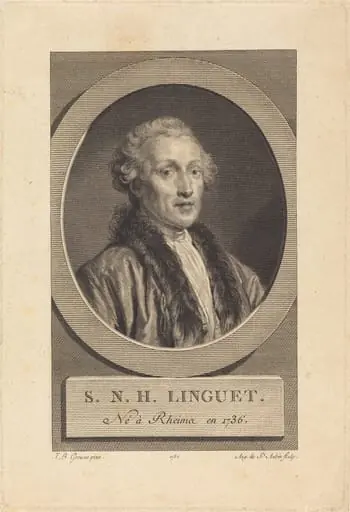
Augustin de Saint-Aubin sometimes styled Auguste de Saint-Aubin (3 January 1736 – 9 November 1807), belongs to an important dynasty of French designers and engravers.

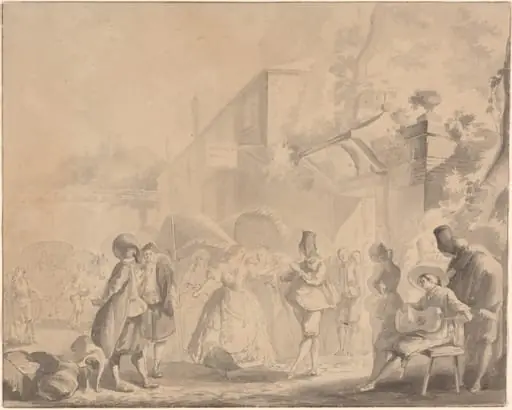 Dance in a Village Square
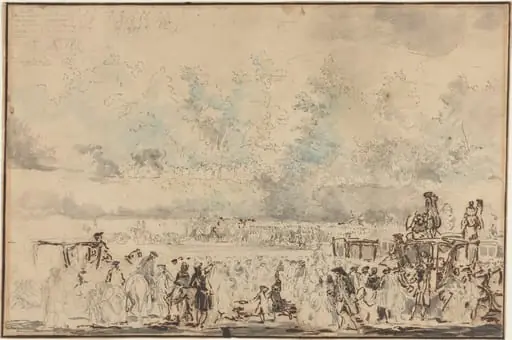 Royal Review of the Troops
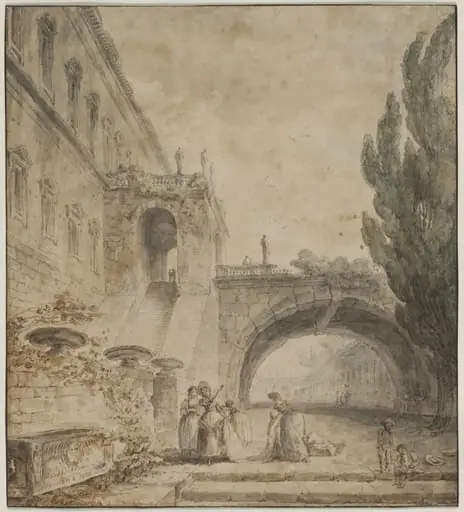 A Palace with an Arched Bridge (A Roman Villa)
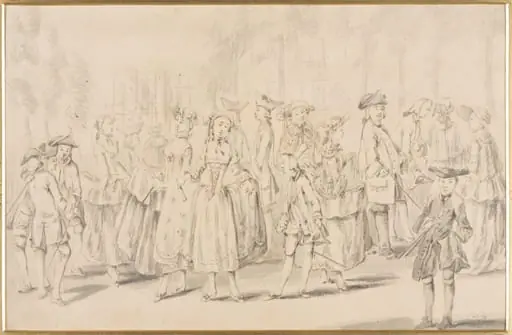 Promenaders in St. James' Park
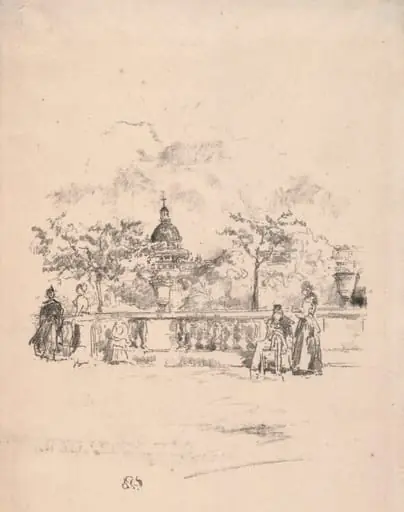 Pantheon from the Terrace of the Luxembourg Gardens
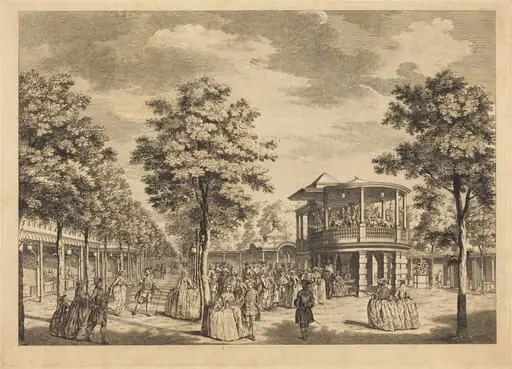 Vauxhall Gardens shewing the Grand Walk at the Entrance of the Garden and the Orchestra with Musick Playing
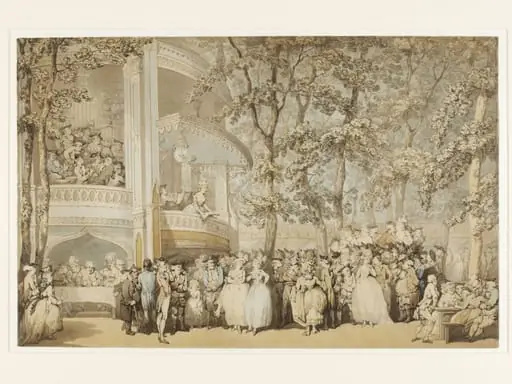 Vauxhall Gardens
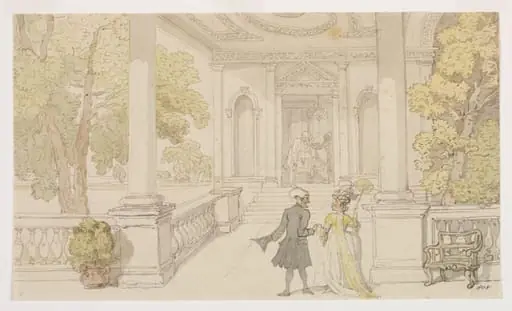 The Tour of Dr. Syntax in Search of the Picturesque
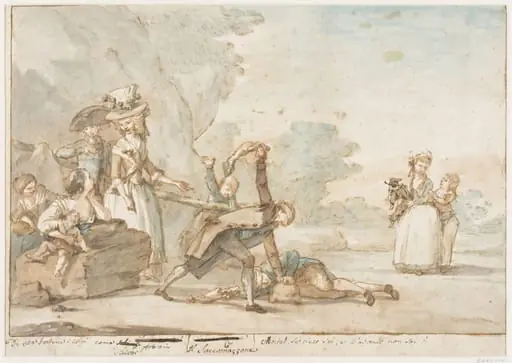 Two boys playing a variation of Blind Man's Buff
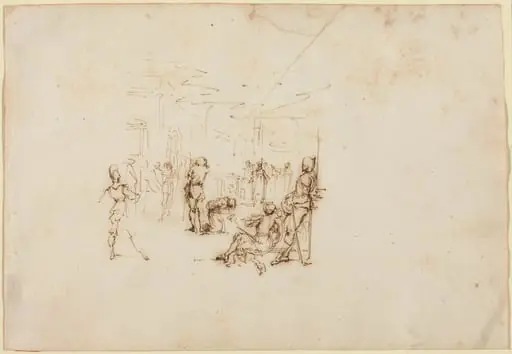 Saint Matthew
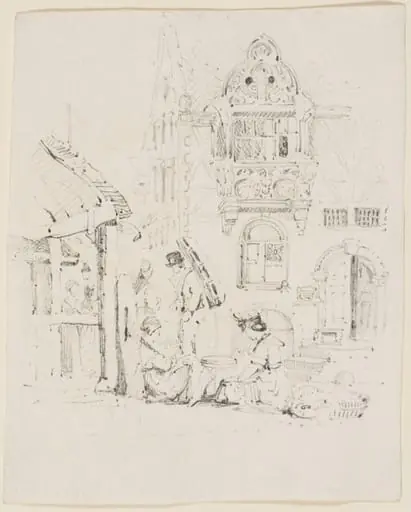 album of loose drawings and sketches
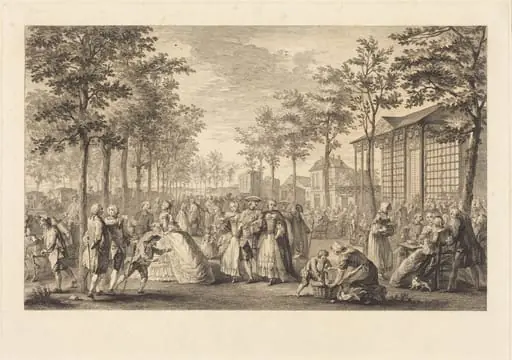 La promenade des remparts de Paris