Artwork
Anderson
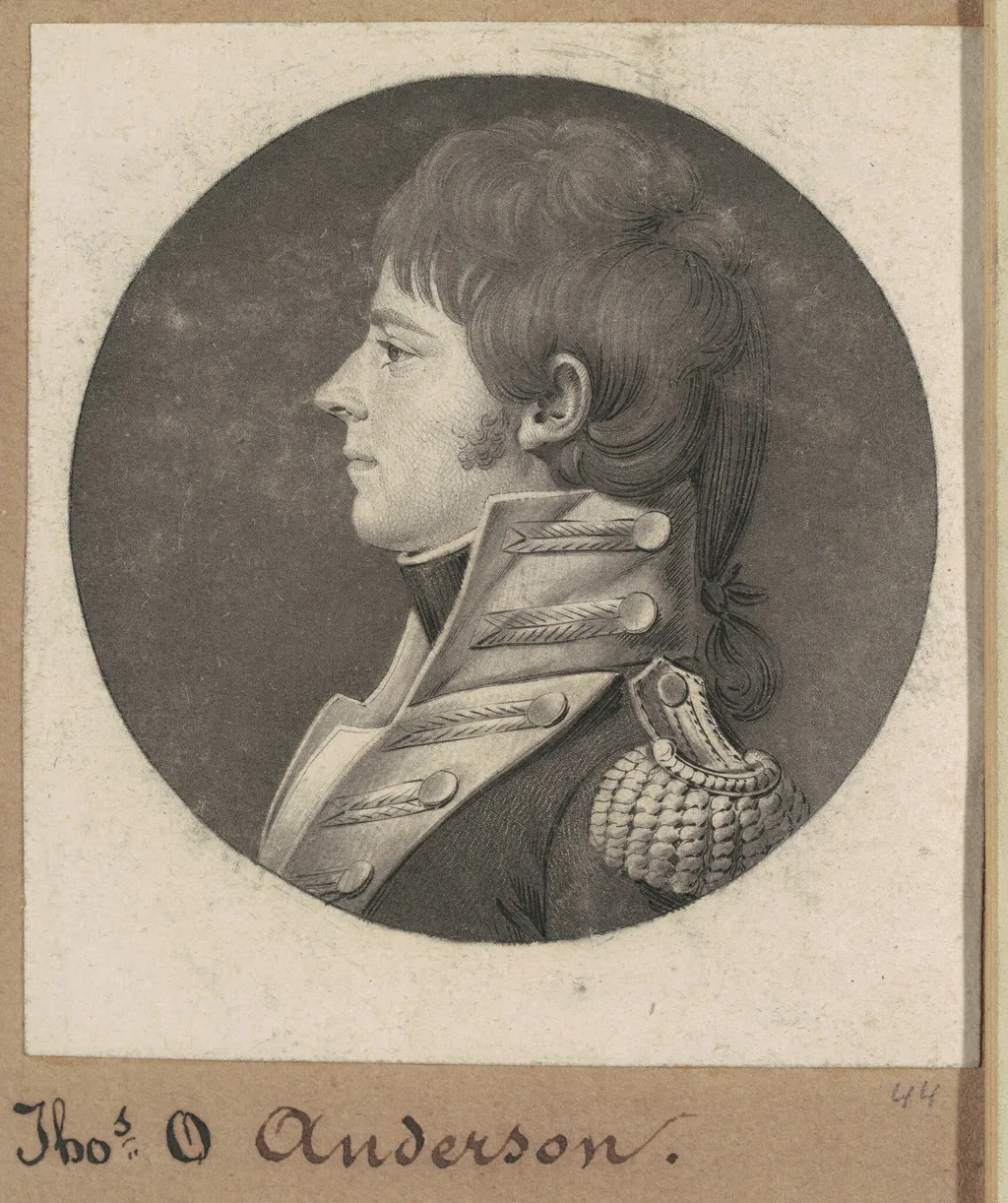
Anderson is an ink print by the Romanticist artist Charles Balthazar Julien Févret de Saint-Mémin. It dates from 1808 and is held in the collection of the National Gallery of Art. Created in 1808 by Charles B.
About this work
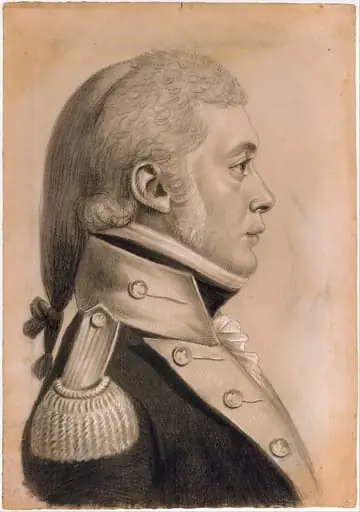
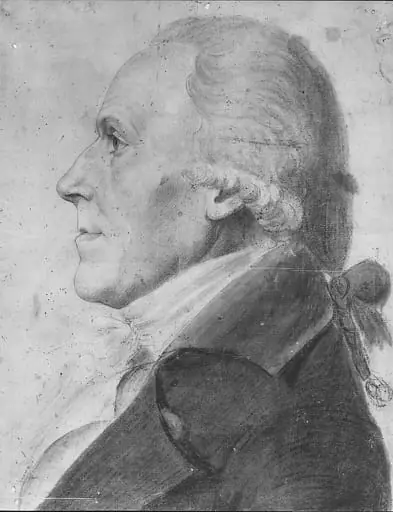
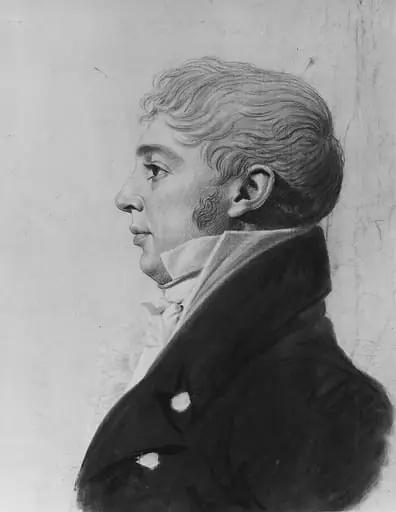
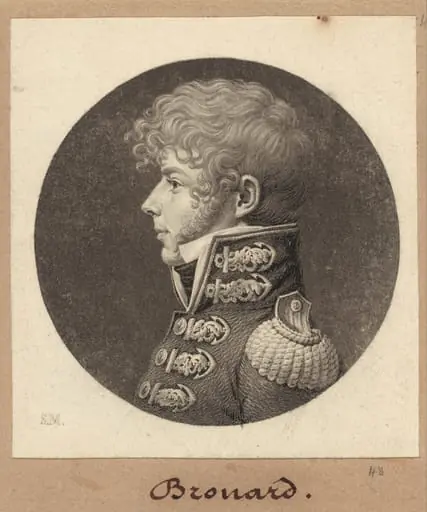
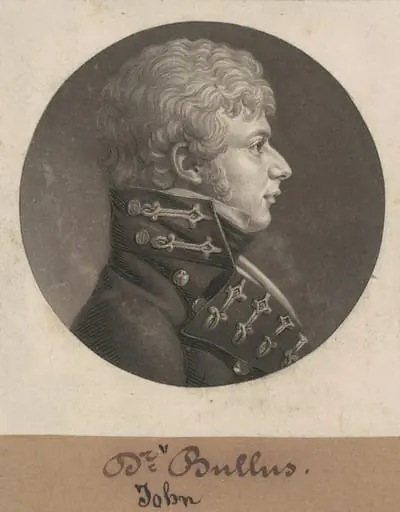
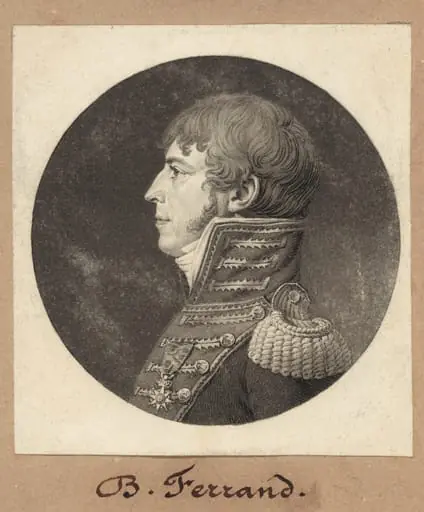
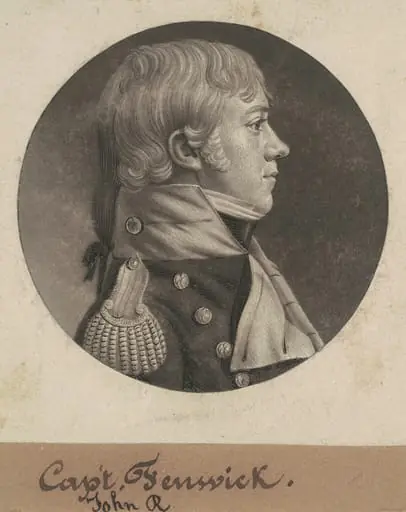
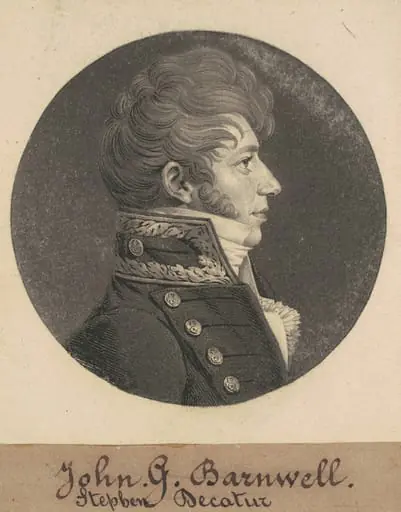
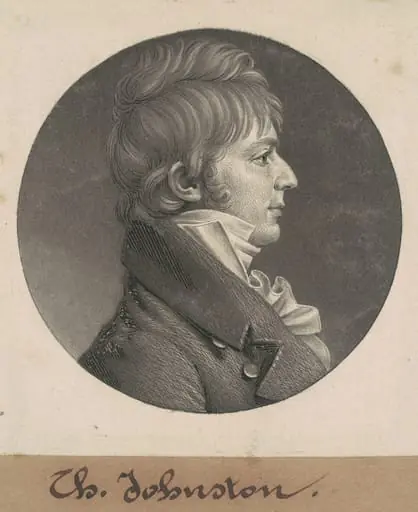
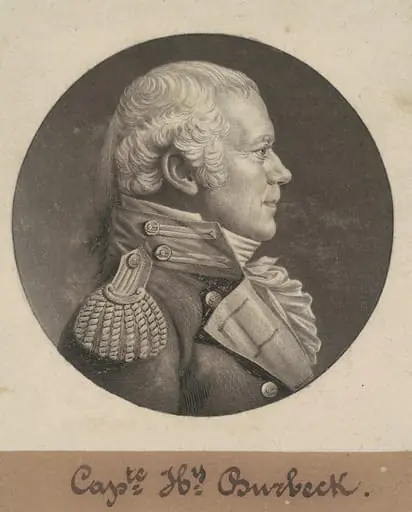
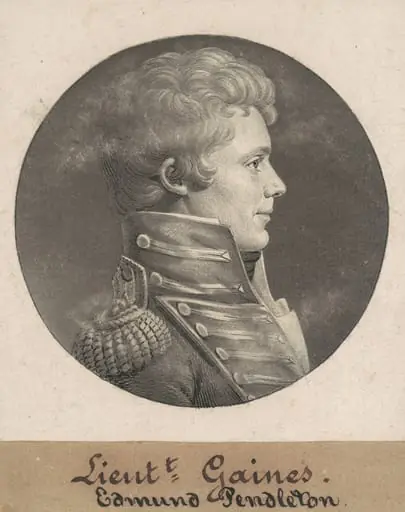
Saint-Mémin’s 1808 print shows a man in a dark coat with a high collar.
Saint-Mémin’s 1808 print shows a man in a dark coat with a high collar. His face is lit from the left, the shadows soft and gradual. The white shirt stands out against the dark background.
This is a mezzotint, a tricky printmaking method. It uses roughened metal plates to hold ink. The artist scrapes and polishes the plate to create light and dark. One small dot changes the whole image.
Look up Saint-Mémin, Charles B. J. Févret de to see more of his work.
Overview
Created in 1808 by Charles B. J. Févret de Saint-Mémin, this print depicts a man named Anderson. Executed in mezzotint and engraving on wove paper, it is mounted on a brown wove support. The work belongs to the Corcoran Collection and exemplifies Saint-Mémin’s precision in portrait reproduction, using labor-intensive techniques to capture subtle tonal shifts.
Subject & Meaning
The subject, Anderson, is rendered with formal dignity, his dark coat and high collar suggesting professional or civic status. The lighting, falling softly from the left, emphasizes the contours of his face and the crisp white of his shirt, drawing attention to his composed expression. The absence of context or symbolism focuses the viewer’s attention on the individual’s presence and quiet authority.
Technique & Style
Saint-Mémin employed mezzotint, a method involving a textured metal plate that holds ink in its pits. He refined the surface by scraping and burnishing to achieve gradations of tone, from deep blacks to delicate grays. Engraving added fine linear details, particularly in the collar and shirt. The result is a portrait with remarkable softness and depth, characteristic of his mastery in translating likeness into print.
History & Provenance
The print was produced in 1808 during Saint-Mémin’s time in the United States, where he made portraits of prominent figures. It entered the Corcoran Collection in the 19th century and remained part of its holdings until the collection’s redistribution. Its preservation reflects its significance as a document of early American portraiture and the artist’s influence in the young republic.
Context
In early 19th-century America, mezzotint portraiture was a favored medium for capturing the likenesses of political and social elites. Saint-Mémin, a French émigré, brought European printmaking techniques to the U.S., adapting them to local tastes. His work contributed to a growing visual culture that valued individual identity and civic representation through accurate, refined imagery.
Legacy
Saint-Mémin’s prints, including this one, helped establish mezzotint as a respected medium in American art. His attention to tonal nuance and psychological presence influenced later portraitists. Though not widely known today, his body of work remains a key record of early American portraiture and the transatlantic exchange of artistic methods in the post-Revolutionary era.
Artist & collection

Artist
Charles Balthazar Julien Févret de Saint-Mémin
Charles Balthazar Julien Févret de Saint-Mémin (French pronunciation: ; 1770–1852) was a French portrait painter and museum director.