Artwork
Henry Lawson Biscoe
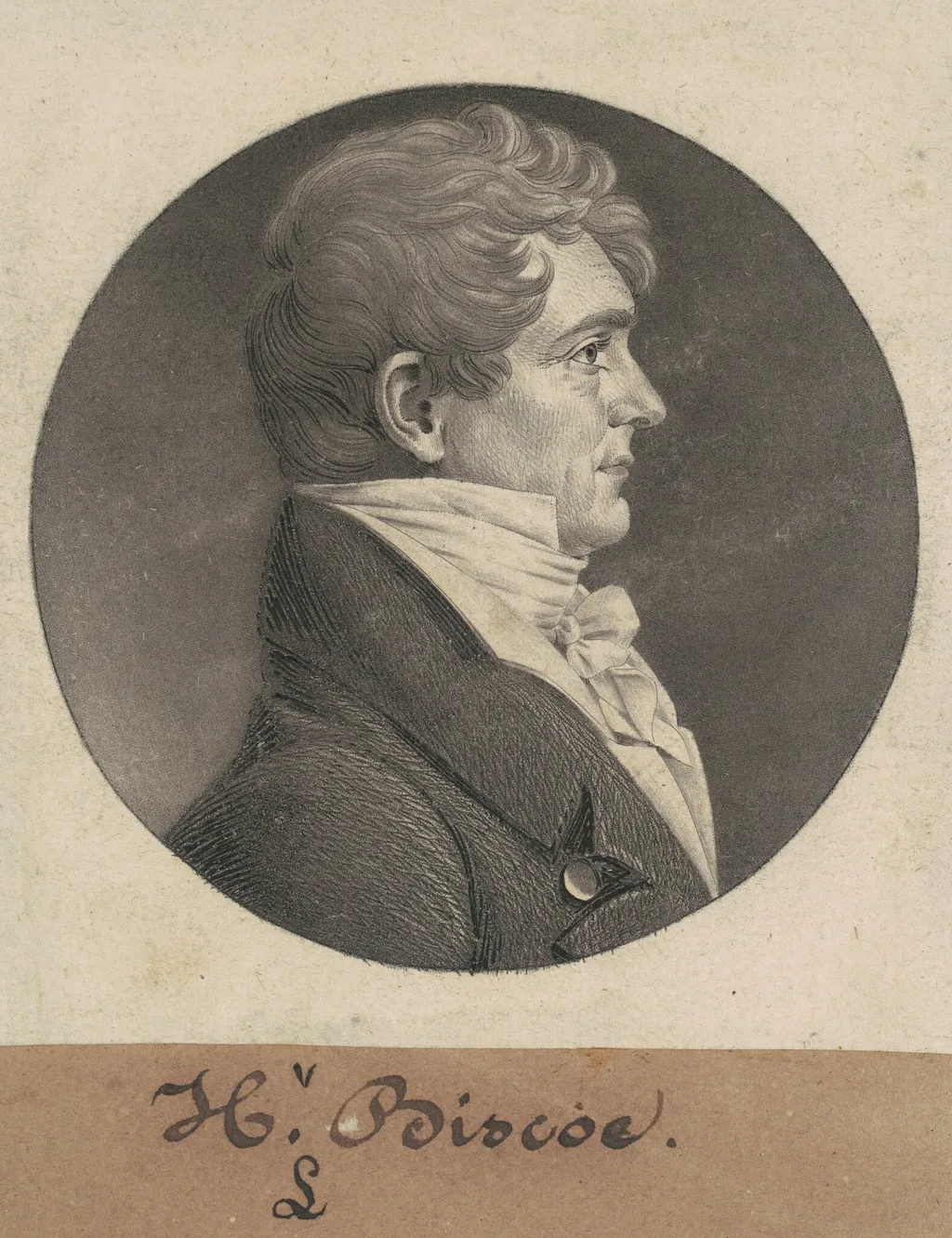
Henry Lawson Biscoe is an ink print by the Romanticist artist Charles Balthazar Julien Févret de Saint-Mémin. It dates from 1808 and is held in the collection of the National Gallery of Art.
About this work
Overview
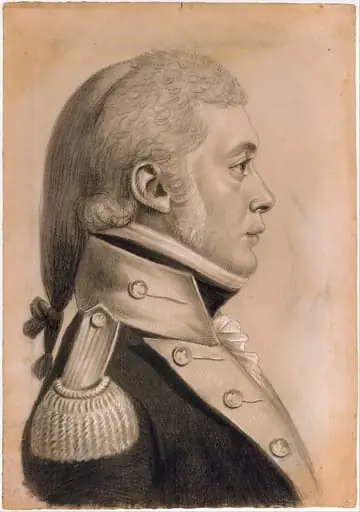
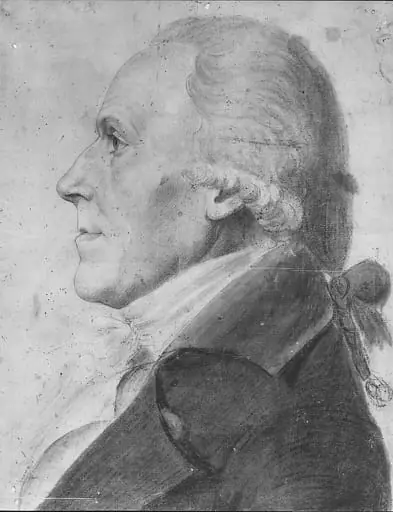
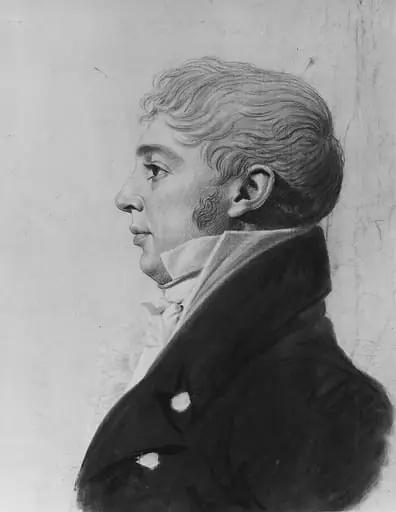
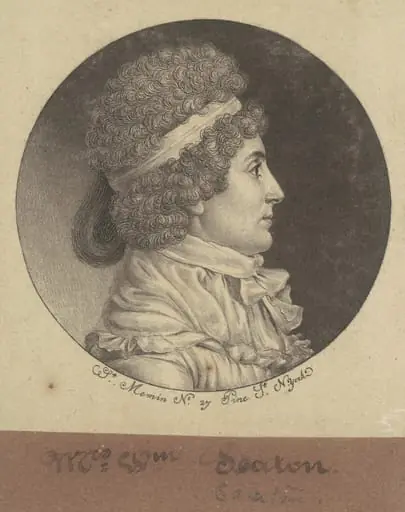
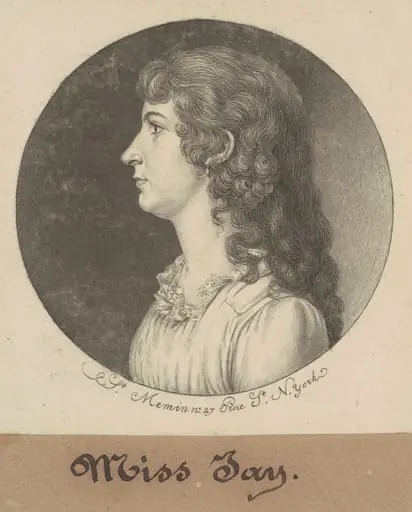
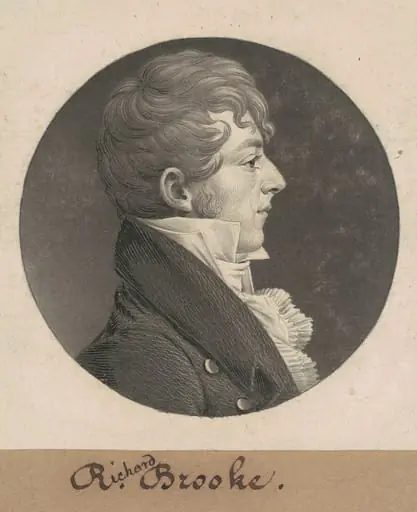
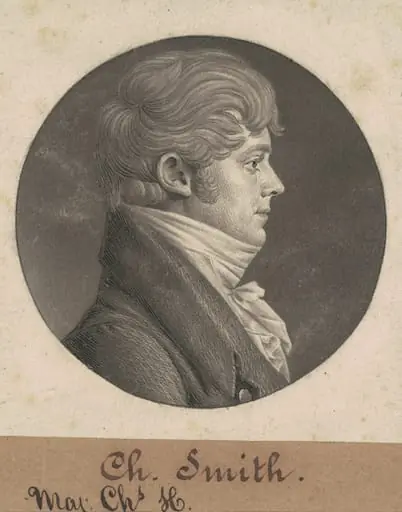
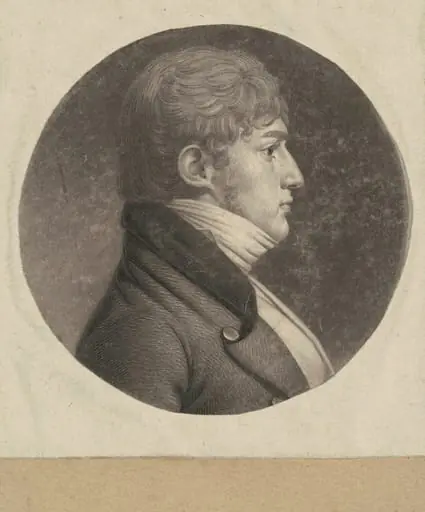
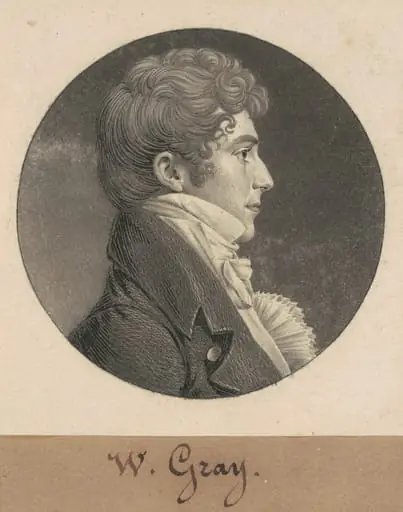
This small portrait print, created in 1808, depicts Henry Lawson Biscoe in profile. Executed in mezzotint and engraving on wove paper, it is mounted on a slightly darker brown sheet. The composition is tightly framed, emphasizing the subject’s facial structure within a square format barely over five centimeters on each side.
Subject & Meaning
Henry Lawson Biscoe, a figure of some social standing, is rendered with precise anatomical detail, suggesting a deliberate effort to capture his individuality. The formal attire—dark coat and crisp white cravat—signals respectability and restraint. The profile view, common in early 19th-century portraiture, conveys dignity and clarity of character without overt expression.
Technique & Style
The artist employed mezzotint to achieve subtle tonal gradations in the skin and hair, complemented by fine engraving lines that define contours and texture. The contrast between the dark coat and luminous cravat enhances the subject’s presence. The small scale demands close viewing, reflecting the intimacy typical of personal commemorative prints of the period.
History & Provenance
Created by Charles B. J. Févret de Saint-Mémin, a French-born artist active in the United States, the print was made during his tenure producing portrait engravings for American elites. Its survival in good condition suggests it was carefully preserved, likely by family or associates of Biscoe, though its early ownership trail remains undocumented.
Context
In the early 1800s, mezzotint and engraving were favored for portraiture due to their capacity for fine detail and reproducibility. Profile portraits, inspired by classical antiquity and Enlightenment ideals, were popular among the educated classes. This work aligns with a broader trend of using print media to circulate likenesses of notable individuals beyond painted commissions.
Legacy
Though not widely known today, the print stands as an example of the technical skill and social function of small-scale portrait engravings in early American visual culture. It reflects the intersection of European artistic methods and American clientele, preserving the likeness of a man whose public record is otherwise sparse.
Artist & collection

Artist
Charles Balthazar Julien Févret de Saint-Mémin
Charles Balthazar Julien Févret de Saint-Mémin (French pronunciation: ; 1770–1852) was a French portrait painter and museum director.