Artwork
Richard Brooke
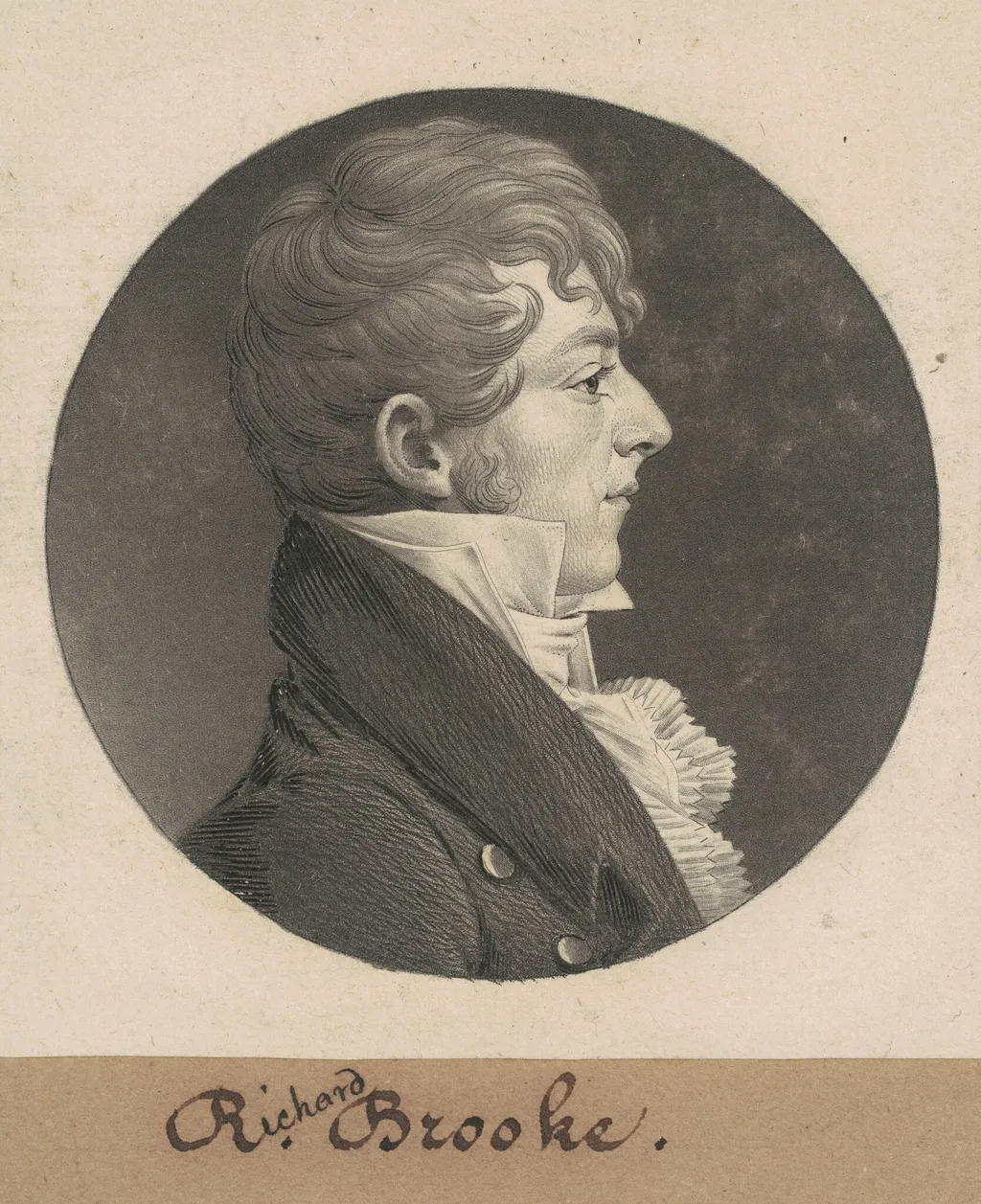
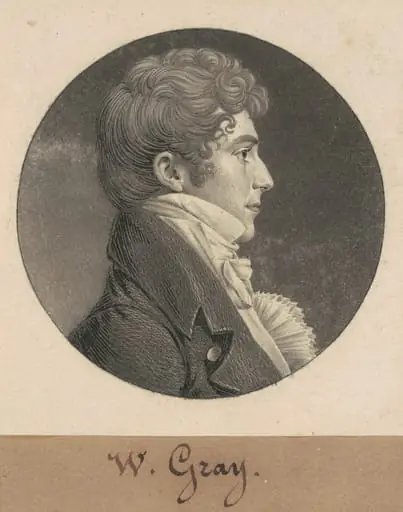
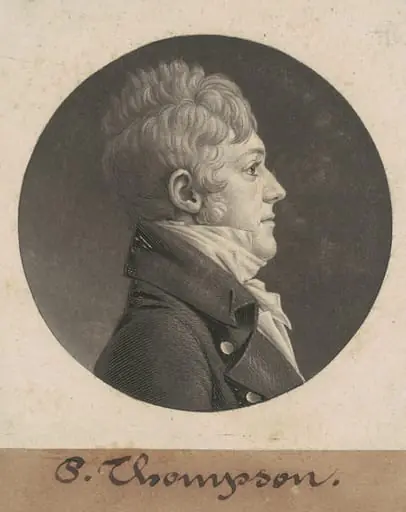
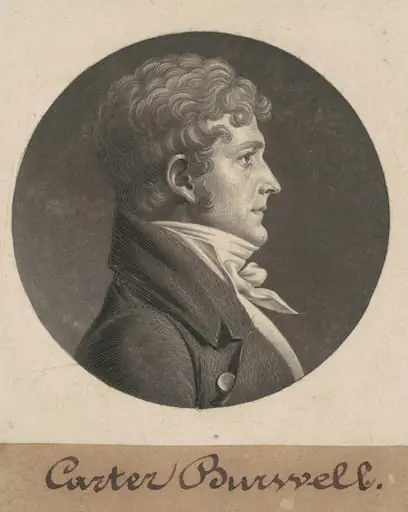
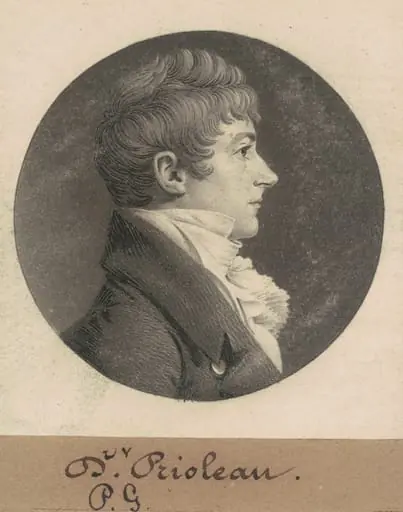
Richard Brooke is an ink print by the Romanticist artist Charles Balthazar Julien Févret de Saint-Mémin. It dates from 1808 and is held in the collection of the National Gallery of Art.
About this work
Overview
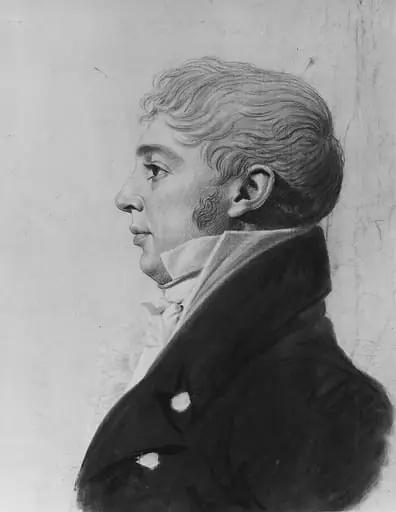
Created in 1808, this intimate print depicts Richard Brooke in a tightly rendered portrait. Executed in mezzotint and engraving on wove paper, the image measures just under six centimeters on each side. The composition centers the sitter against a modest, textured circular field, emphasizing his facial features and attire without extraneous background detail.
Subject & Meaning
The figure presents wavy hair and a resolute expression, dressed in a high‑collared black coat paired with a white shirt featuring a ruffled front. The stark contrast between the dark garment and the illuminated shirt underscores the sitter’s social standing, while the direct gaze suggests confidence and personal presence within the limited space of the print.
Technique & Style
Saint‑Mémin employed a combination of mezzotint shading and fine engraving lines to achieve a rich tonal range on the small surface. The mezzotint technique provides deep, velvety shadows, while the engraved details render the texture of the clothing and the subtle gradations of the hair, demonstrating the artist’s skill in manipulating light within a miniature format.
History & Provenance
Attributed to Charles B. J. Févret de Saint‑Mémin, a French artist known for his portrait prints of the early nineteenth century, the work reflects his practice of creating highly detailed likenesses for a European clientele. The print’s modest dimensions suggest it was intended for private collection or as a keepsake rather than public display.
Artist & collection

Artist
Charles Balthazar Julien Févret de Saint-Mémin
Charles Balthazar Julien Févret de Saint-Mémin (French pronunciation: ; 1770–1852) was a French portrait painter and museum director.