Artwork
Joseph Barker
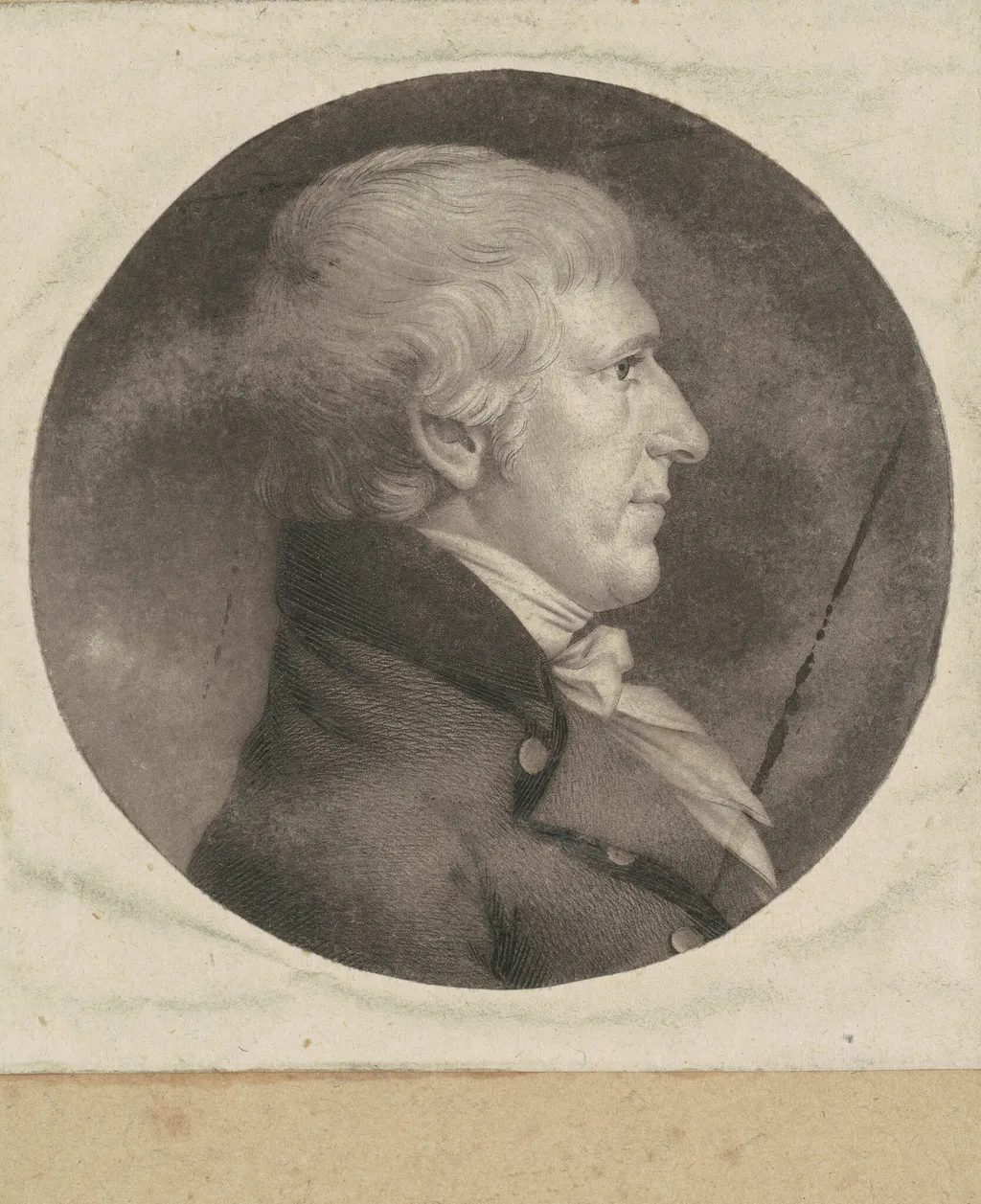
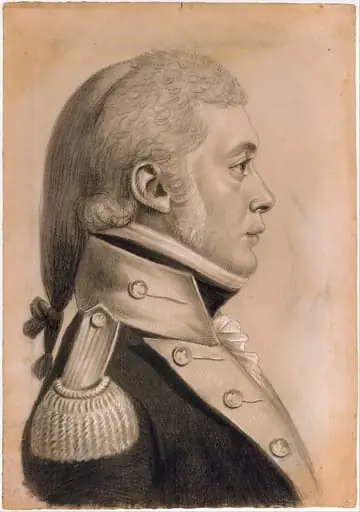
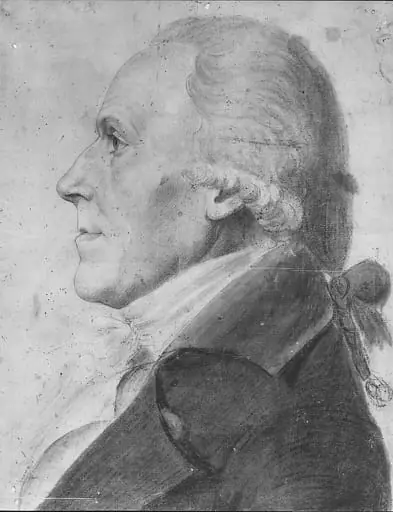
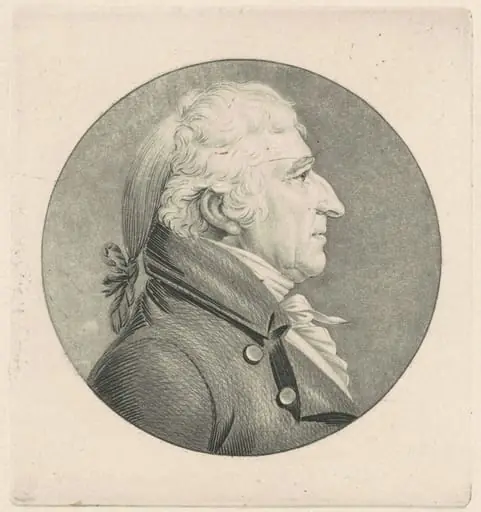
Joseph Barker is an ink print by the Romanticist artist Charles Balthazar Julien Févret de Saint-Mémin. It dates from 1800 and is held in the collection of the National Gallery of Art. Charles B.
About this work
Overview
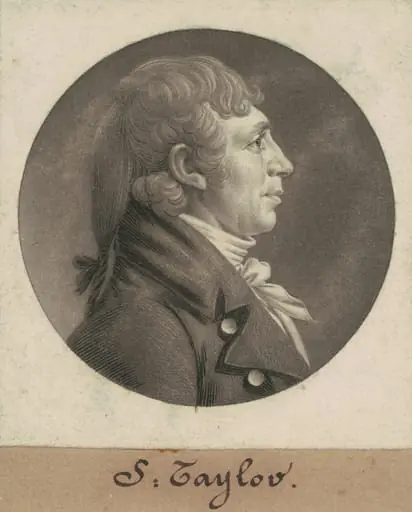
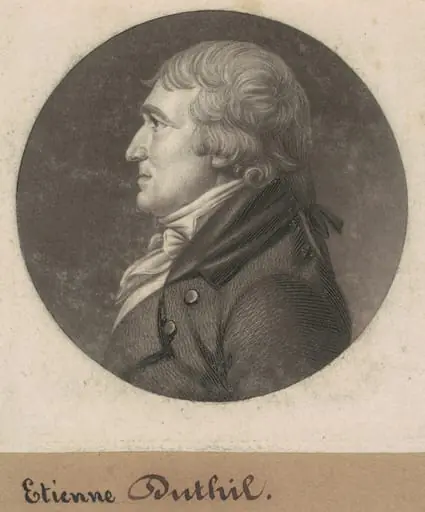
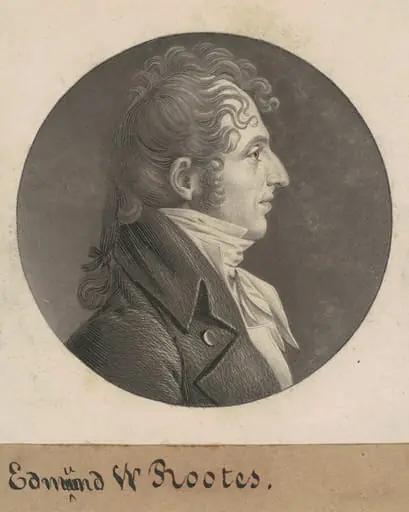
Charles B. J. Févret de Saint‑Mémin’s small portrait of Joseph Barker was produced in the early years of the French Consulate, between 1798 and 1803. Executed in black mezzotint and engraving on wove paper that has been mounted to a brown backing, the print measures just 5.72 × 5.72 cm, making it a notably compact example of the artist’s work.
Subject & Meaning
The image presents a close‑up view of a male sitter, rendered with fine linear detail that emphasizes facial features and expression. While no narrative context is supplied, the intimate scale and careful rendering suggest a purpose of personal commemoration or private collection.
Technique & Style
Saint‑Mémin combined mezzotint’s tonal richness with precise engraving lines, a hybrid approach that allows subtle gradations of shadow alongside crisp contours. The use of a tiny copper plate required meticulous handling, resulting in a highly detailed yet delicate surface typical of late‑eighteenth‑century French printmaking.
History & Provenance
The portrait entered the Corcoran Collection, a notable American institution that acquired many European prints in the 19th and early 20th centuries. Its presence there indicates that the work was regarded as a valuable example of Saint‑Mémin’s output and of the period’s portrait print tradition.
Context
Created during a period of political upheaval in France, the print reflects the era’s demand for portable, affordable portraiture. Saint‑Mémin, a French émigré active in the United States, catered to a market of expatriates and American patrons seeking European artistic techniques.
Artist & collection

Artist
Charles Balthazar Julien Févret de Saint-Mémin
Charles Balthazar Julien Févret de Saint-Mémin (French pronunciation: ; 1770–1852) was a French portrait painter and museum director.