Artwork
Margaret Lewis Livingston
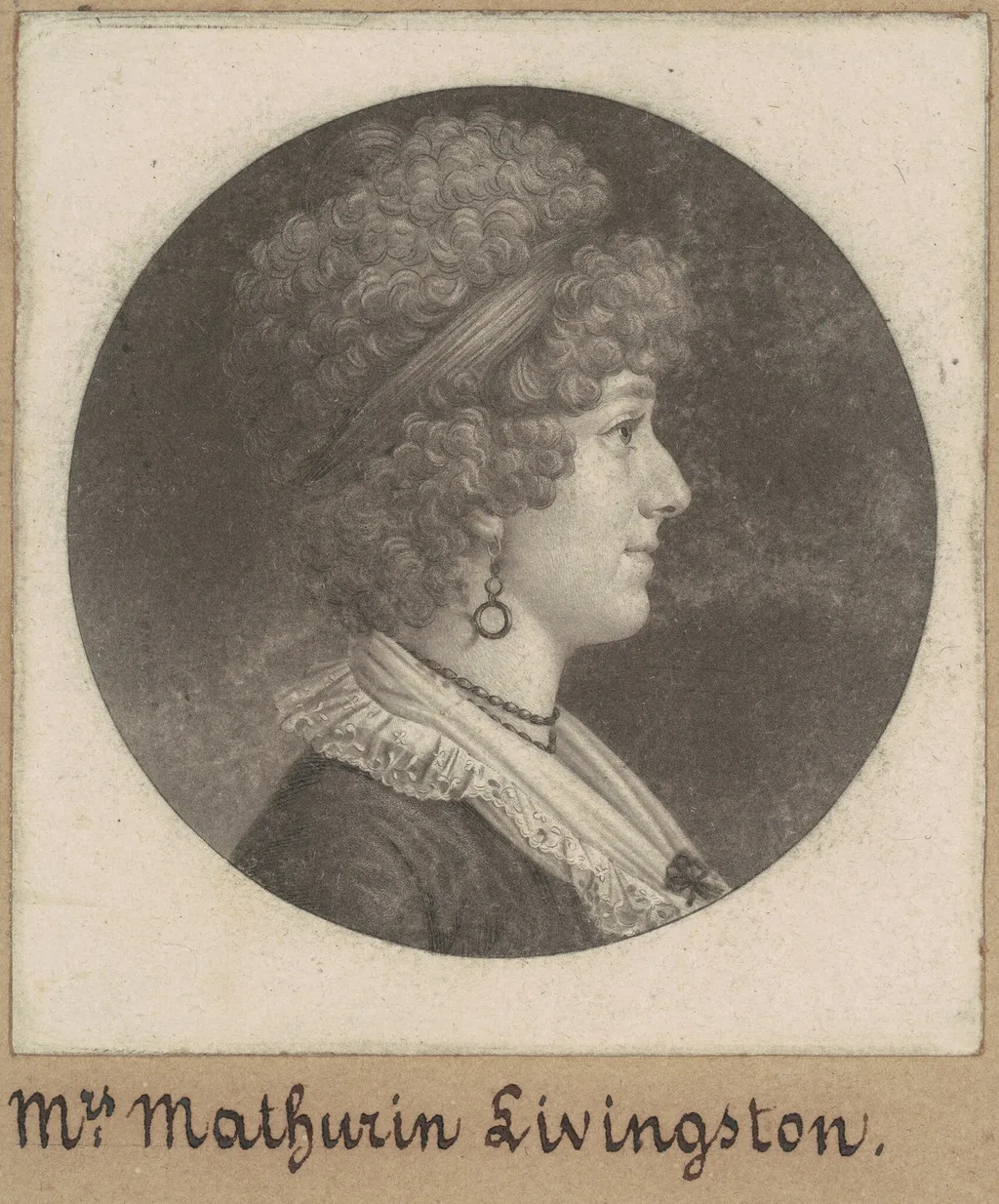
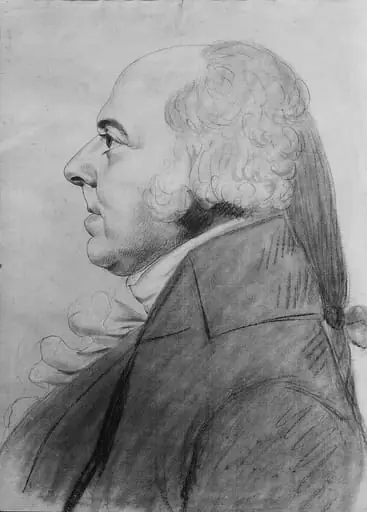
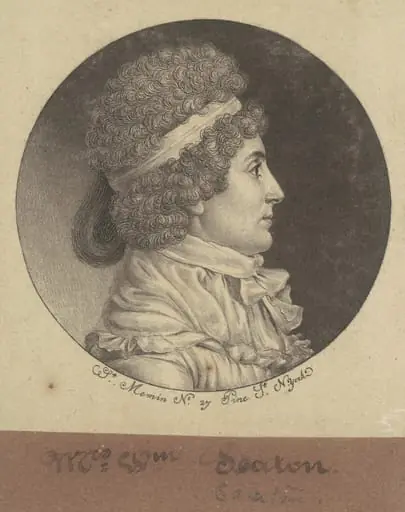
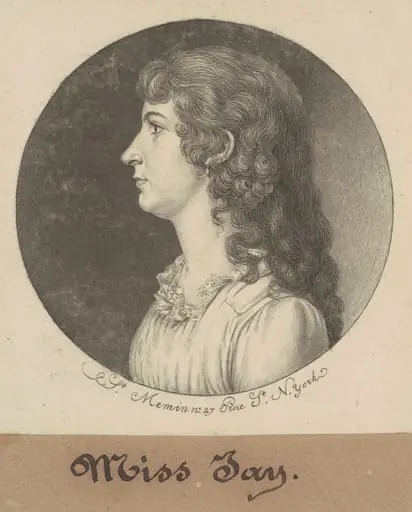
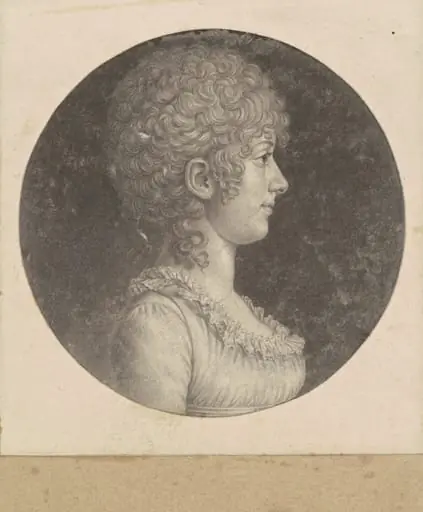
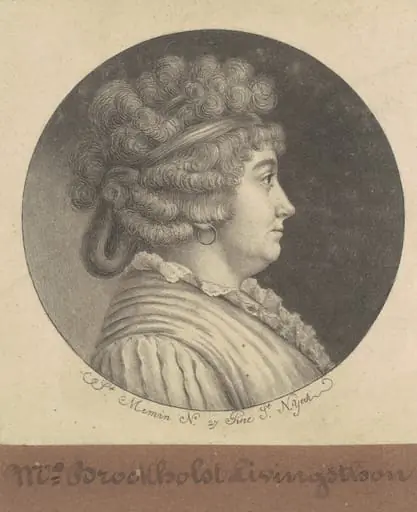
Margaret Lewis Livingston is an ink print by the Romanticist artist Charles Balthazar Julien Févret de Saint-Mémin. It dates from 1797 and is held in the collection of the National Gallery of Art. Charles B.
About this work
Overview
Charles B. J. Févret de Saint‑MÉmin’s portrait of Margaret Lewis Livingston is a black‑and‑white print executed in mezzotint and engraving on wove paper, later mounted to a brown wove backing. The work is held in the Corcoran Collection of the National Gallery of Art and presents the sitter in a calm, frontal profile.
Subject & Meaning
The image depicts Margaret Lewis Livingston, a woman of the late eighteenth‑century American gentry, rendered in a dignified profile that emphasizes her serene expression and modest attire. The composition reflects the period’s emphasis on genteel restraint and the social standing of the sitter.
Technique & Style
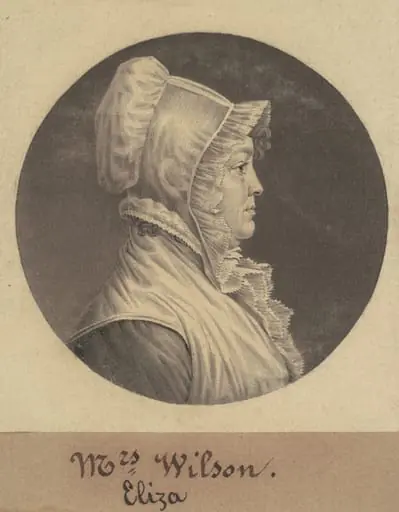
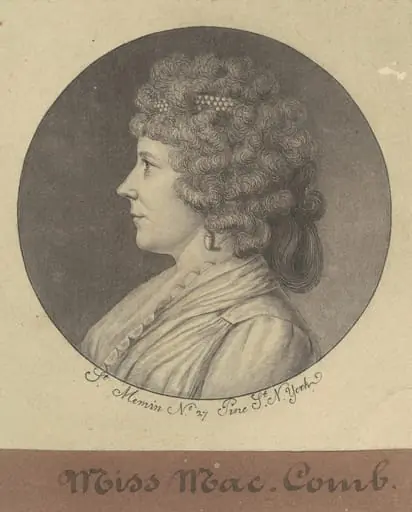
Saint‑MÉmin employed the mezzotint process, a labor‑intensive method that begins with a roughened copper plate and is selectively smoothed to produce a range of tonal values. Combined with fine engraving lines, the technique yields a luminous flesh tone that contrasts with a deep, velvety background, giving the portrait a subtle three‑dimensional quality.
History & Provenance
The print entered the Corcoran Collection, now part of the National Gallery of Art, through acquisition in the early twentieth century. Its documented provenance traces back to the original commission for Margaret Lewis Livingston, though details of the sitter’s family connections remain limited.
Context
Created during a period when American portraiture was increasingly influenced by European printmaking practices, the work exemplifies the transatlantic exchange of artistic techniques. Saint‑MÉmin, a French émigré, brought his expertise in mezzotint to the United States, where such prints were valued for their ability to reproduce likenesses with refined tonal gradations.
Artist & collection

Artist
Charles Balthazar Julien Févret de Saint-Mémin
Charles Balthazar Julien Févret de Saint-Mémin (French pronunciation: ; 1770–1852) was a French portrait painter and museum director.