Artwork
Christina Livingston Macomb
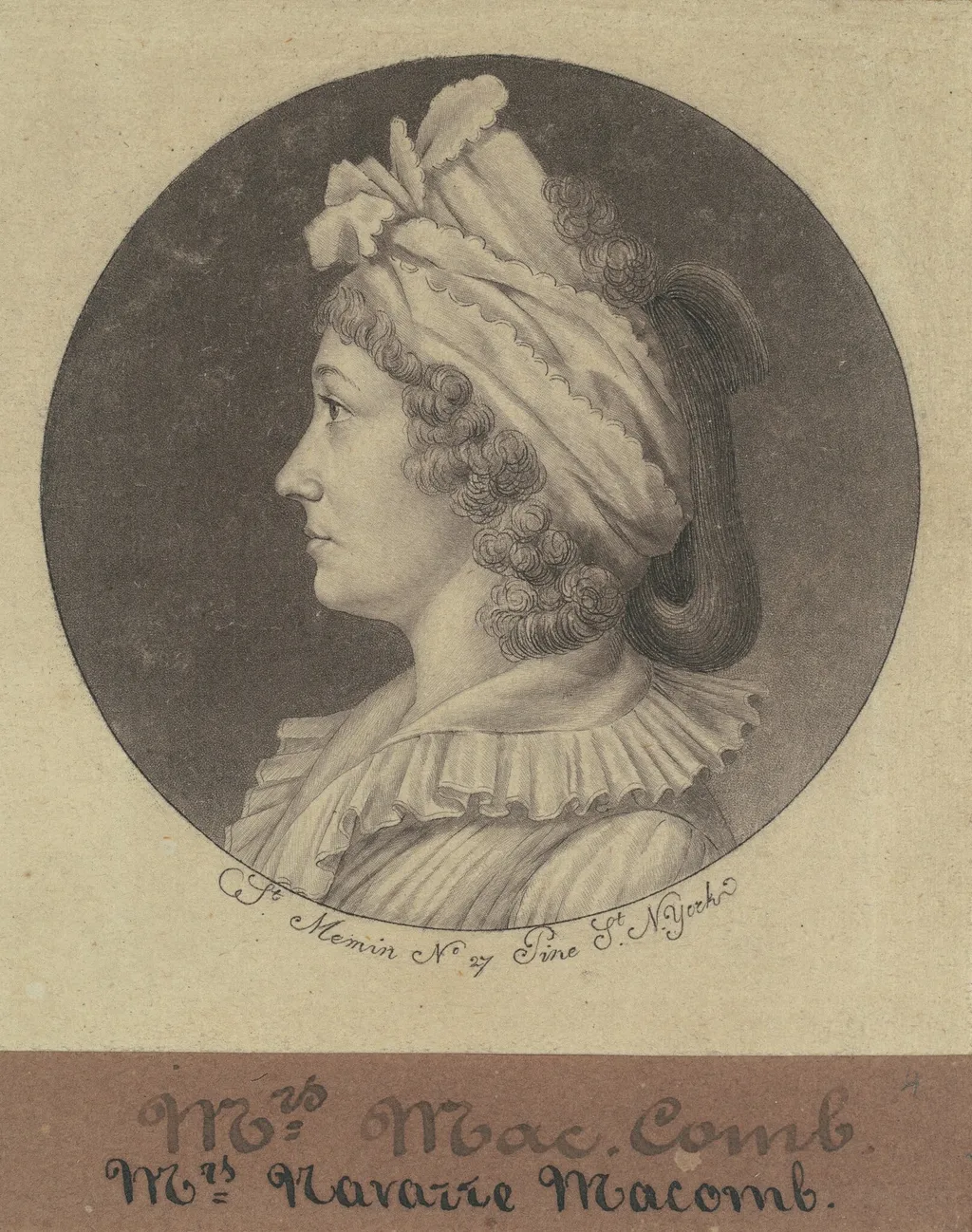
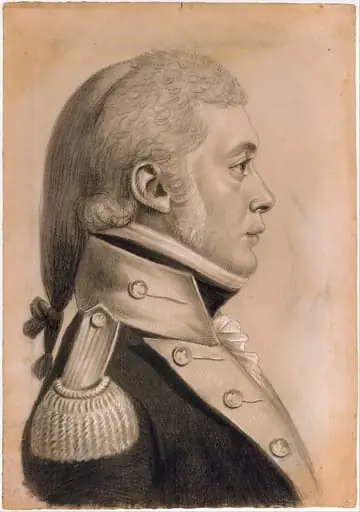
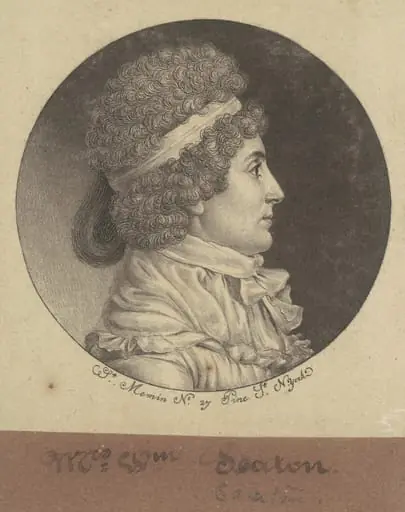
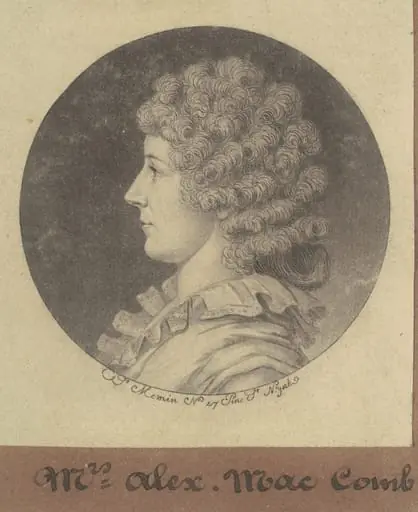
Christina Livingston Macomb is an ink print by the Romanticist artist Charles Balthazar Julien Févret de Saint-Mémin. It dates from 1797 and is held in the collection of the National Gallery of Art.
About this work
Overview
It belongs to a series of portraits commissioned by prominent American families during the early 19th century, executed by the French-born artist Charles B.
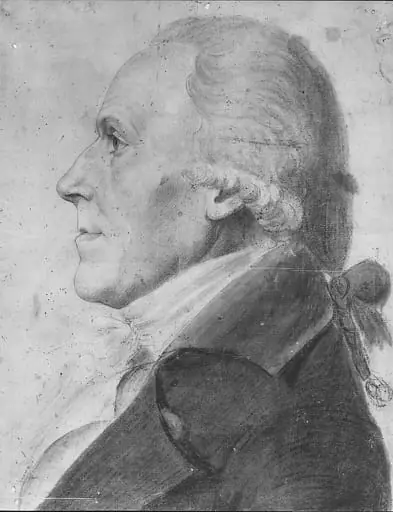
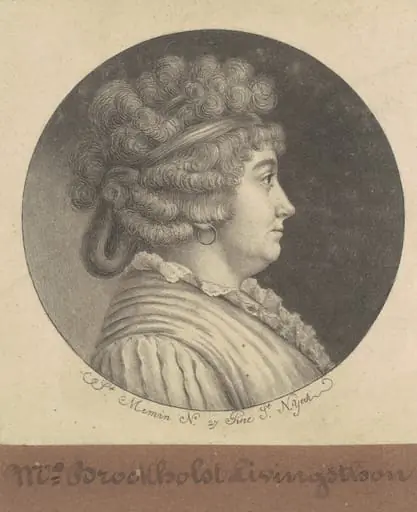
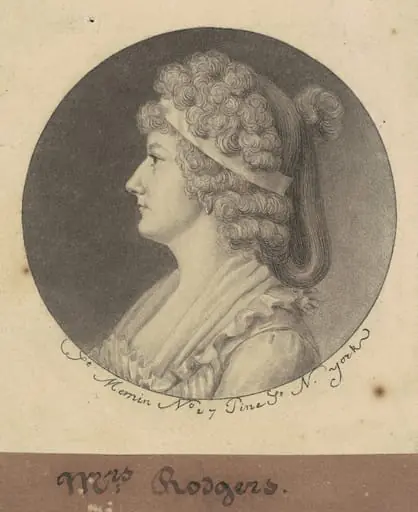
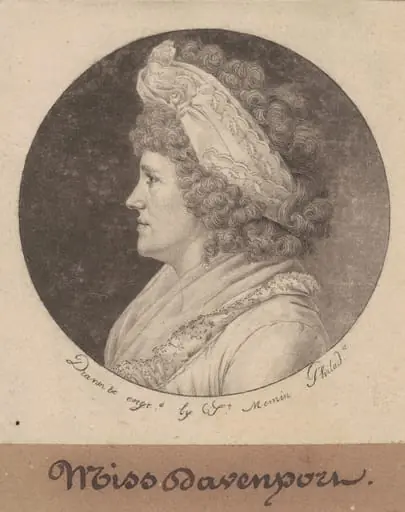
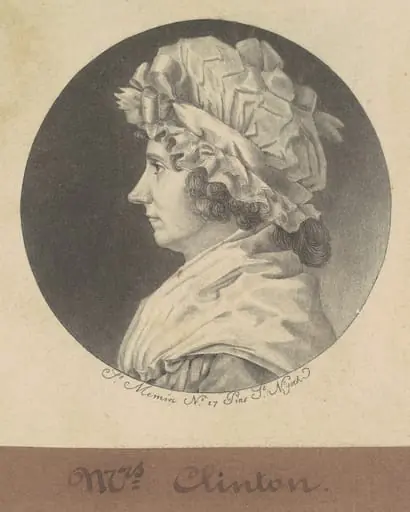
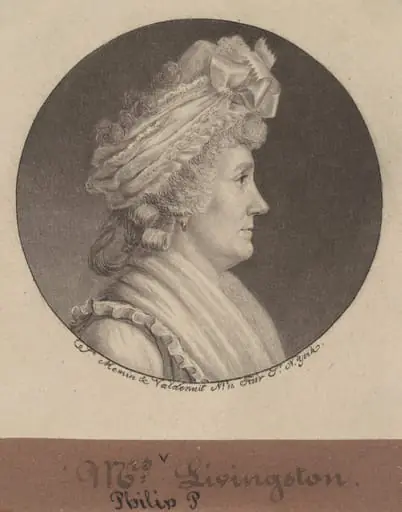
Christina Livingston Macomb is depicted in a black-and-white print created through mezzotint and engraving on wove paper, mounted to a brown paper support. The work captures her in a profile view, rendered with precise detail and a restrained tonal range. It belongs to a series of portraits commissioned by prominent American families during the early 19th century, executed by the French-born artist Charles B. J. Févret de Saint-Mémin.
Subject & Meaning
The portrait presents Christina Livingston Macomb with composed dignity, her tightly curled hair and ornate headpiece reflecting contemporary ideals of refinement and social standing. The profile format, rooted in classical antiquity, conveys permanence and virtue rather than individual emotion. Her stillness and formal attire suggest her role within a family of influence, emphasizing lineage and decorum over personal expression.
Technique & Style
Saint-Mémin employed mezzotint, a labor-intensive engraving method that involves roughening a metal plate to hold ink, then smoothing areas to create gradations of tone. This allowed for velvety blacks and delicate transitions, enhancing the contrast between her pale skin, intricate lace, and dark hair. The result is a quiet, luminous realism, free of theatricality, characteristic of his portable studio practice across American towns.
History & Provenance
The portrait was produced during Saint-Mémin’s itinerant career in the United States, when he traveled to affluent households to create commissioned likenesses. It is part of the Macomb Family Portraits collection, documenting the social elite of the early republic. The work’s survival in its original mounted state suggests careful preservation by descendants, aligning with the family’s emphasis on heritage and status.
Context
In the early 1800s, mezzotint was a favored medium for portraiture in America due to its ability to reproduce fine detail and subtle shading without color. Saint-Mémin, trained in France, adapted European techniques to meet the tastes of a new nation’s wealthy class. His portraits served as both personal mementos and symbols of cultural aspiration, bridging transatlantic artistic traditions.
Legacy
Saint-Mémin’s mezzotints remain among the most technically refined portraits of early American elite society. His method influenced later printmakers and preserved the likenesses of families who shaped regional identity. Though not widely exhibited today, his works continue to offer insight into the visual language of status and refinement in post-revolutionary America.
Artist & collection

Artist
Charles Balthazar Julien Févret de Saint-Mémin
Charles Balthazar Julien Févret de Saint-Mémin (French pronunciation: ; 1770–1852) was a French portrait painter and museum director.