Artwork
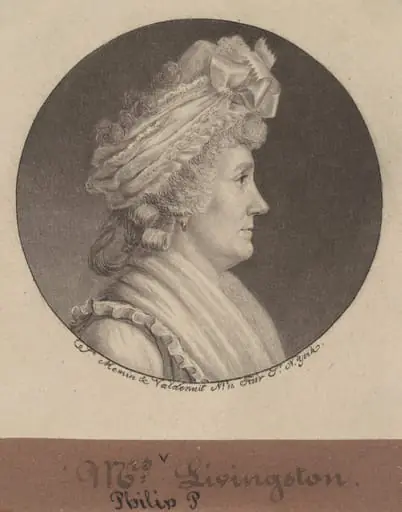
Eliza Barclay Livingston
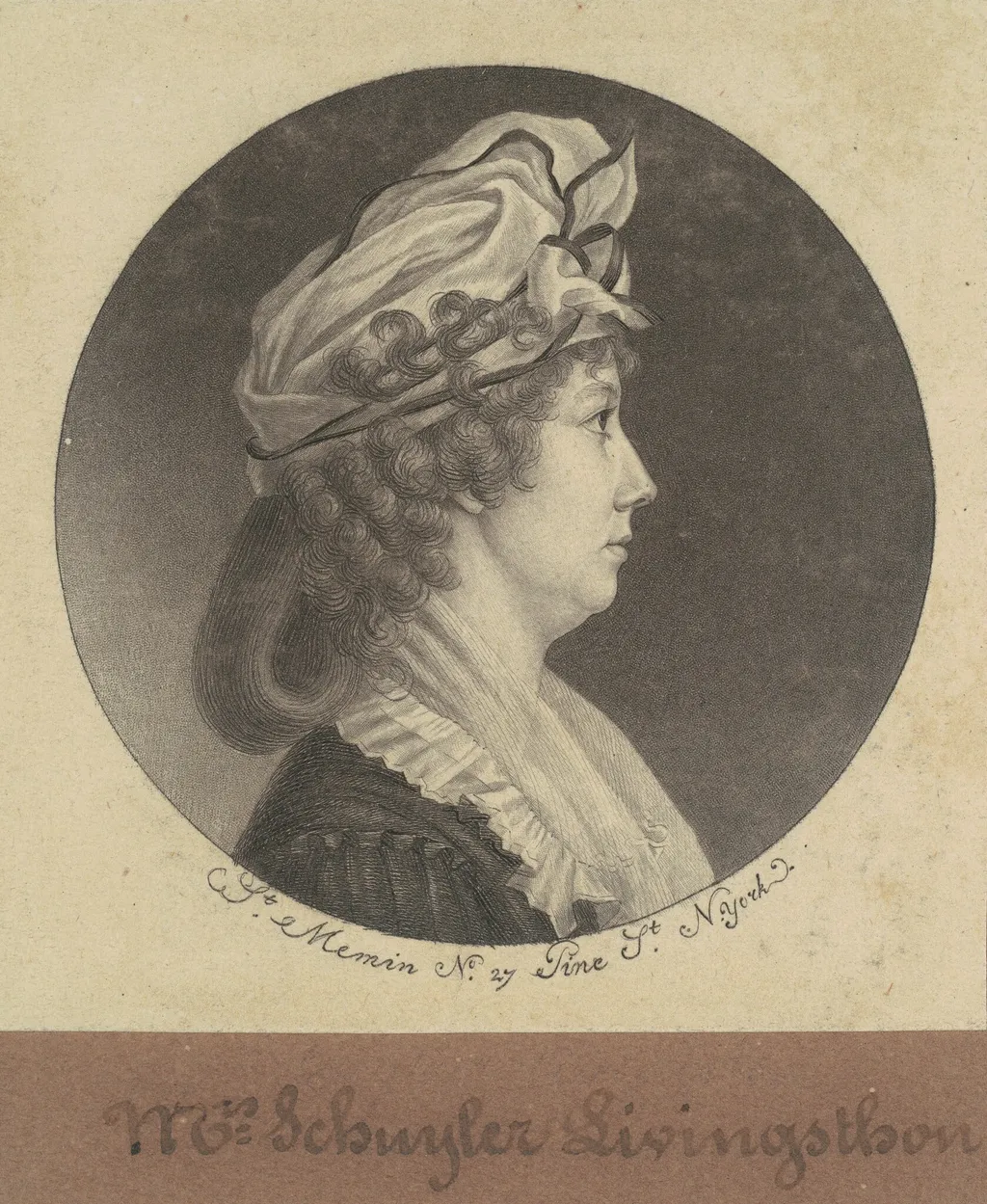
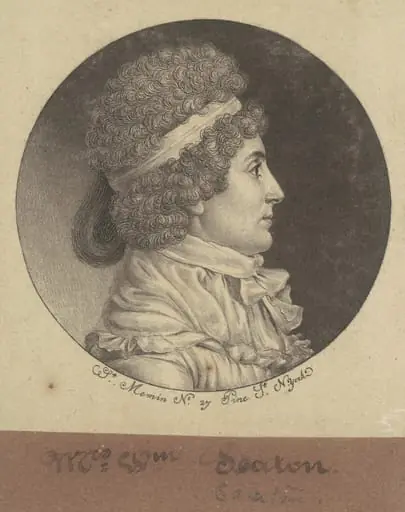
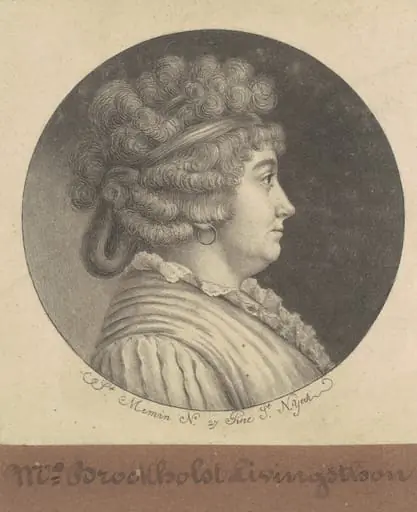
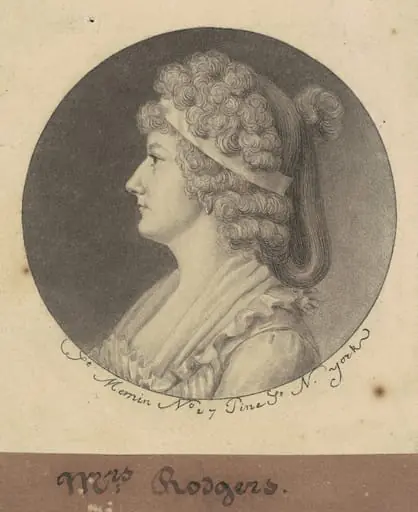
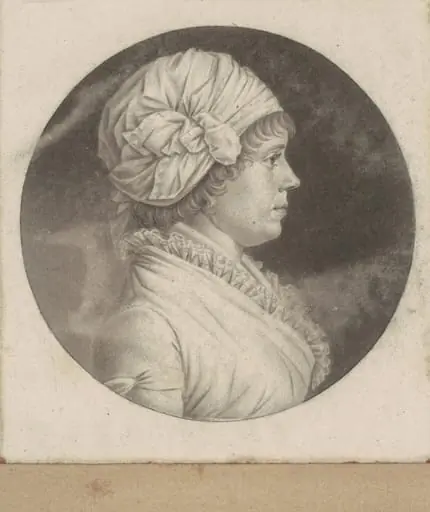
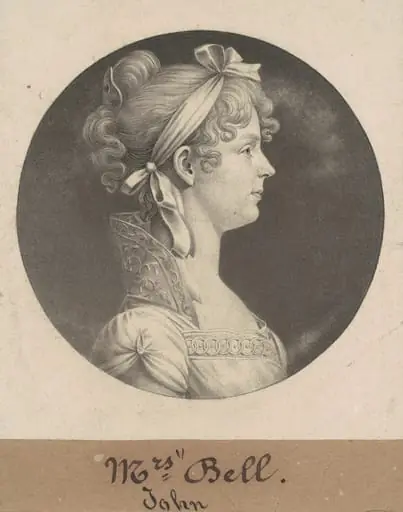
Eliza Barclay Livingston is an ink print by the Romanticist artist Charles Balthazar Julien Févret de Saint-Mémin. It dates from 1797 and is held in the collection of the National Gallery of Art. This print is a mezzotint and engraving on wove paper, mounted to brown wove paper, created in 1797.
About this work
The artist made many portraits of important people, which is interesting because it shows how he liked to document people's lives.
This painting shows a woman, Eliza Barclay Livingston, in a portrait.
She's dressed in clothes from the 18th century.
The artist made many portraits of important people, which is interesting because it shows how he liked to document people's lives.
He used a special technique to create detailed images.
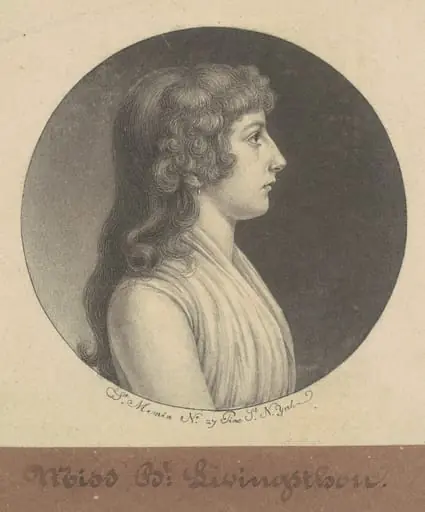
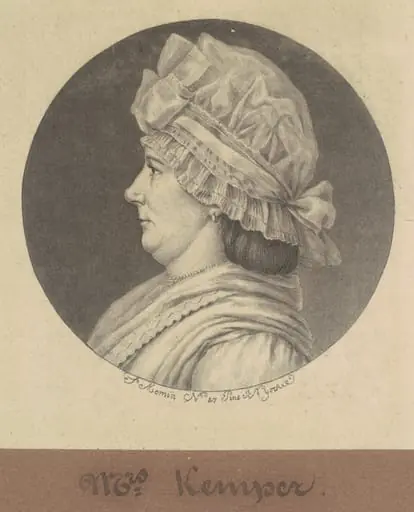
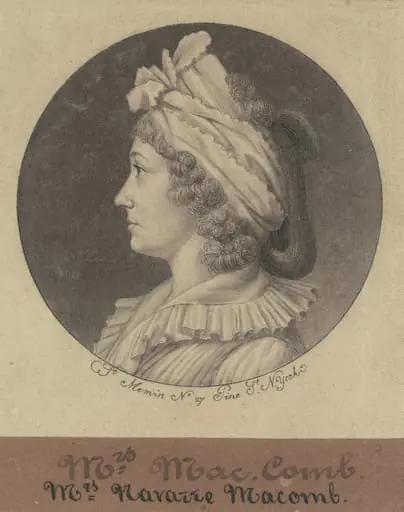
The portrait is part of a collection of portraits made by the artist.
You can learn more about this style by looking at the work of artist: Saint-Mémin, Charles B. J. Févret de.
Overview
This print is a mezzotint and engraving on wove paper, mounted to brown wove paper, created in 1797. It depicts Eliza Barclay Livingston, a member of a prominent New York family. The work reproduces a portrait originally painted by Charles B. J. Févret de Saint-Mémin, who specialized in translating painted likenesses into detailed graphic prints for wider distribution.
Subject & Meaning
Eliza Barclay Livingston is portrayed in formal 18th-century attire, reflecting her social standing. The portrait serves as a record of individual identity within a network of elite families in early American society. Her composed demeanor and refined dress convey status and propriety, aligning with the values of the period’s aristocratic circles.
Technique & Style
Saint-Mémin employed mezzotint and engraving to achieve subtle tonal gradations and fine linear detail. The process allowed for rich blacks and delicate textures, capturing the softness of fabric and the clarity of facial features. His method prioritized precision over expressive brushwork, favoring clarity and reproducibility for portrait dissemination.
History & Provenance
The print originates from Saint-Mémin’s broader project to document prominent American figures between 1796 and 1802. It was produced shortly after the original painting, likely as part of a series intended for collectors and institutions. The work remains within the tradition of early American portraiture circulated through print media.
Context
During the late 18th century, portraiture in the United States increasingly served as a tool for social documentation among the emerging elite. Saint-Mémin’s practice reflected transatlantic influences, blending European engraving techniques with American subject matter. His work contributed to a growing visual archive of national figures during the republic’s formative years.
Legacy
Saint-Mémin’s portraits, including this one, remain significant for their role in shaping early American visual culture. The prints provided accessible images of public figures, helping to establish a collective identity through shared representation. His technique influenced later printmakers and preserved likenesses of individuals otherwise absent from painted records.
Artist & collection

Artist
Charles Balthazar Julien Févret de Saint-Mémin
Charles Balthazar Julien Févret de Saint-Mémin (French pronunciation: ; 1770–1852) was a French portrait painter and museum director.