Artwork
Stephen Decatur, Sr.
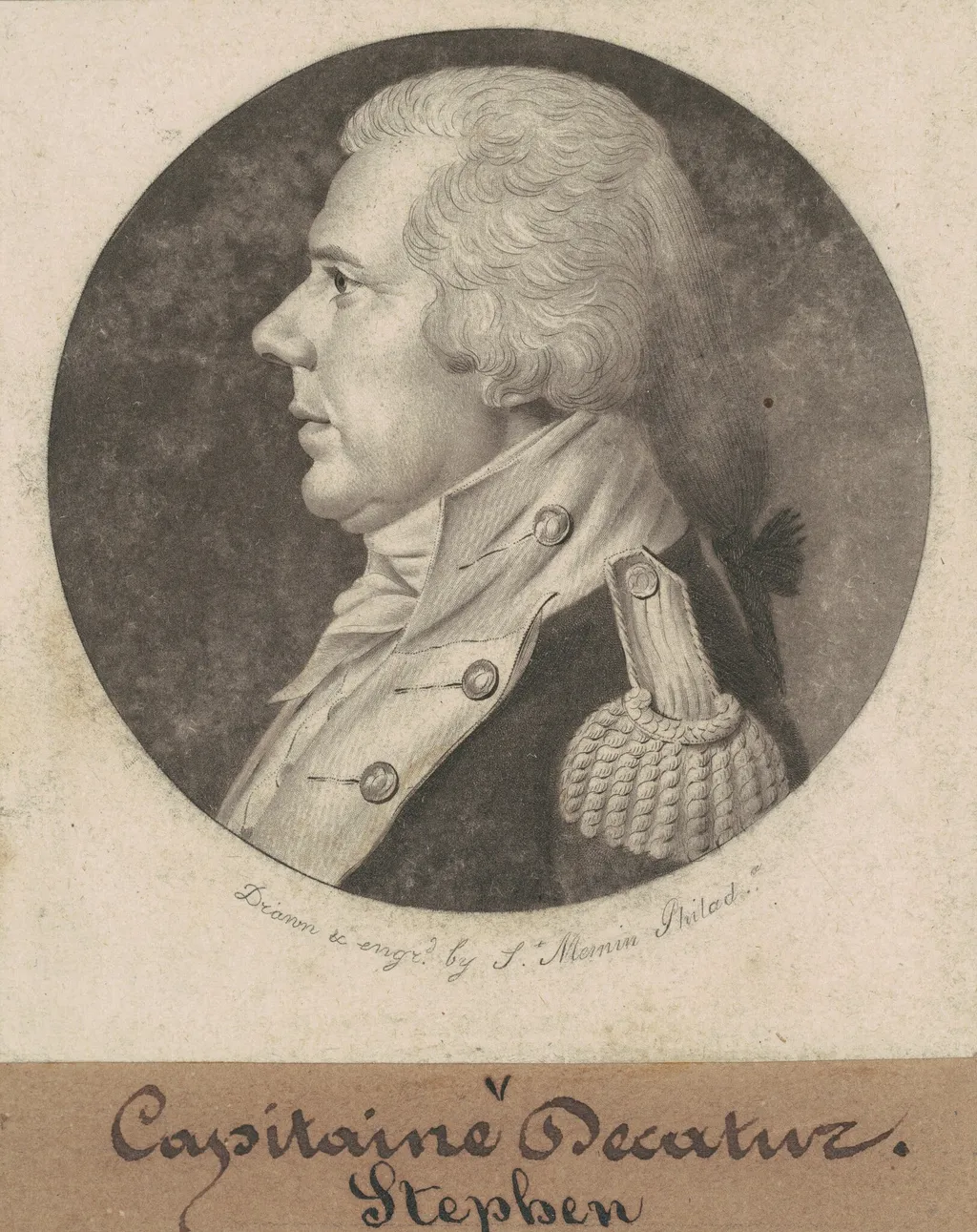
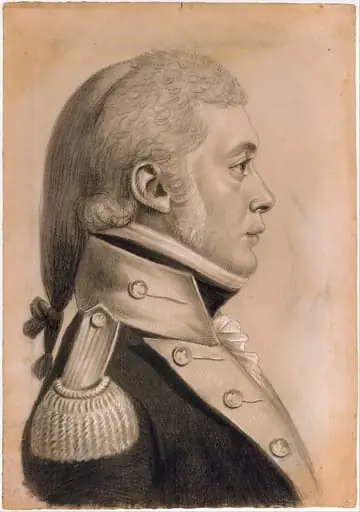
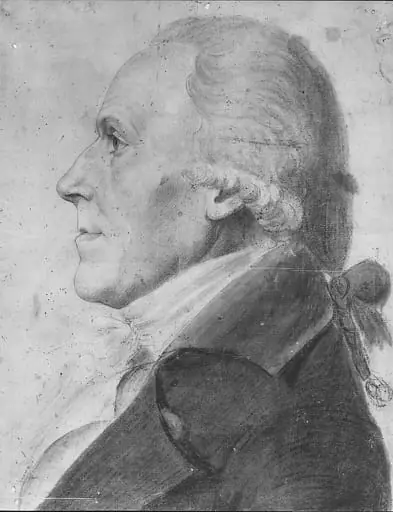
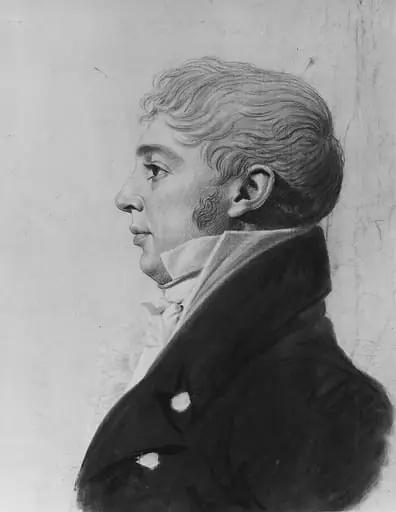
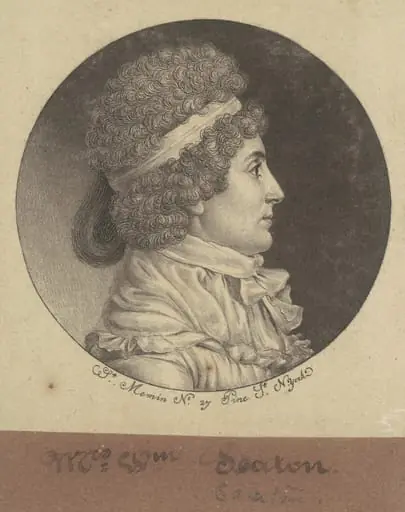
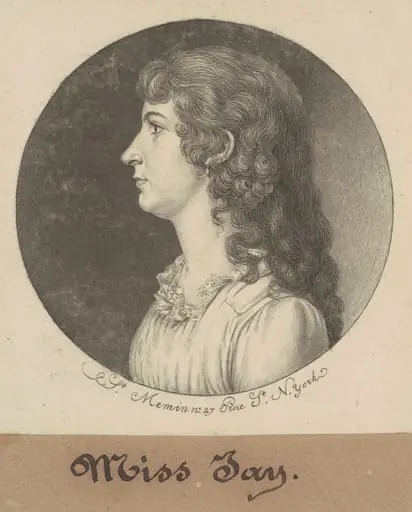
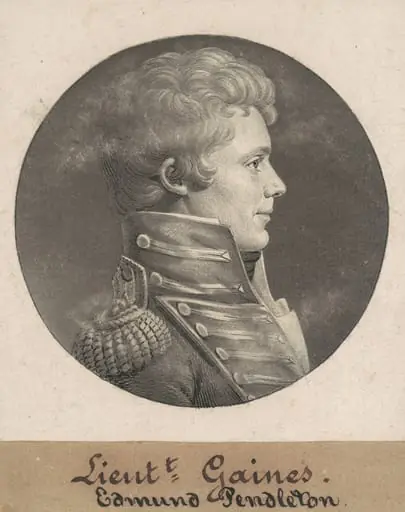
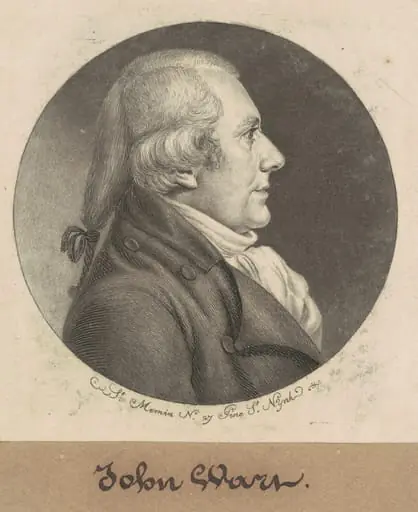
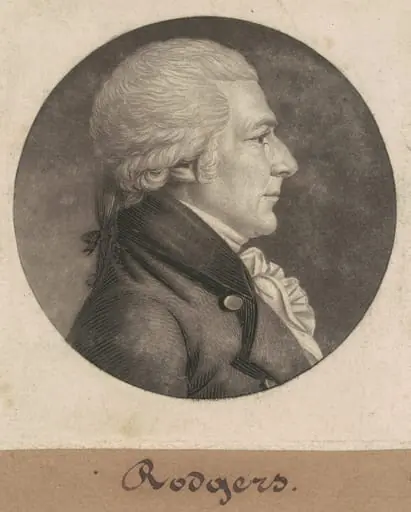
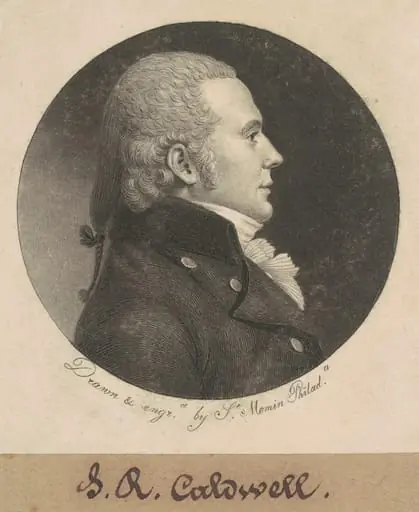
Stephen Decatur, Sr. is an ink print by the Romanticist artist Charles Balthazar Julien Févret de Saint-Mémin. It dates from 1802 and is held in the collection of the National Gallery of Art. This print is a mezzotint and engraving on wove paper, mounted to brown wove paper, produced in 1802 by Charles B.
About this work
The artist used a small drawing to create this portrait, which is now at the National Gallery of Art, Washington.
This painting shows a portrait of Stephen Decatur, Sr.
He was an important figure in American maritime history.
The artist used a small drawing to create this portrait, which is now at the National Gallery of Art, Washington.
The drawing is small, only 5.56 × 5.56 cm.
It was made in 1802 by Charles B. J. Févret de Saint-Mémin.
The artist's use of a small drawing to create a portrait is notable.
You can learn more about this technique by looking into the work of artist: Saint-Mémin, Charles B. J. Févret de.
Overview
This print is a mezzotint and engraving on wove paper, mounted to brown wove paper, produced in 1802 by Charles B. J. Févret de Saint-Mémin. It depicts Stephen Decatur, Sr., a U.S. naval officer known for his service in the early republic. The work derives from a small original drawing, measuring just 5.56 by 5.56 centimeters, which served as the basis for the printed image. The National Gallery of Art in Washington, D.C., holds the finished print.
Subject & Meaning
Stephen Decatur, Sr. was a respected naval commander whose career spanned the Quasi-War with France and the Barbary Wars. His portrait, rendered with precision, reflects the era’s emphasis on civic virtue and military leadership. The image was not merely a likeness but a statement of national identity, aligning the officer’s personal honor with the emerging authority of the U.S. Navy during its formative years.
Technique & Style
Saint-Mémin employed mezzotint and engraving to translate his tiny pencil drawing into a reproducible print. The process involved meticulous tonal gradations and fine line work, capturing subtle facial contours despite the miniature scale of the original. The resulting image retains a crisp, intimate quality, characteristic of his method: using small drawings as direct templates for engraved plates, a practice that allowed for consistent, high-fidelity reproductions.
History & Provenance
The original pencil drawing was made in 1802 during Saint-Mémin’s travels across the United States, where he created portraits of prominent figures. The print was likely produced shortly after, intended for distribution among military circles and government officials. It entered the collection of the National Gallery of Art in Washington, D.C., where it remains as part of a broader archive of early American portraiture.
Context
In the early 1800s, portraiture served both personal and political functions, especially for military leaders. Saint-Mémin’s practice of producing small drawings for later engraving was common among itinerant artists seeking to document national elites. This work reflects a broader cultural moment in which the U.S. sought to visually establish its institutional figures, using print technology to disseminate images of leadership beyond elite circles.
Legacy
Saint-Mémin’s portraits, including this one, remain among the most accurate visual records of early American military figures. His technique influenced the reproduction of official likenesses in the decades before photography. Decatur’s image, preserved through this print, continues to be referenced in historical studies of the U.S. Navy’s early institutional identity and the role of visual culture in shaping public perception.
Artist & collection

Artist
Charles Balthazar Julien Févret de Saint-Mémin
Charles Balthazar Julien Févret de Saint-Mémin (French pronunciation: ; 1770–1852) was a French portrait painter and museum director.