Artwork
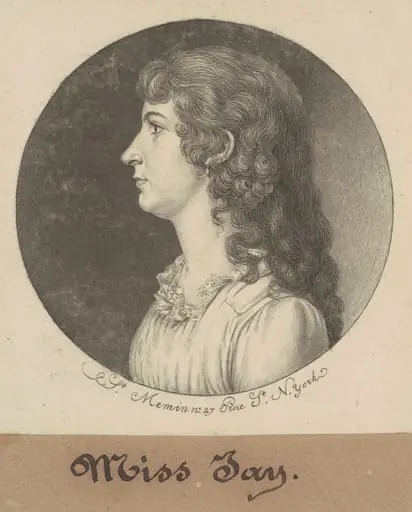
Unidentified Young Woman
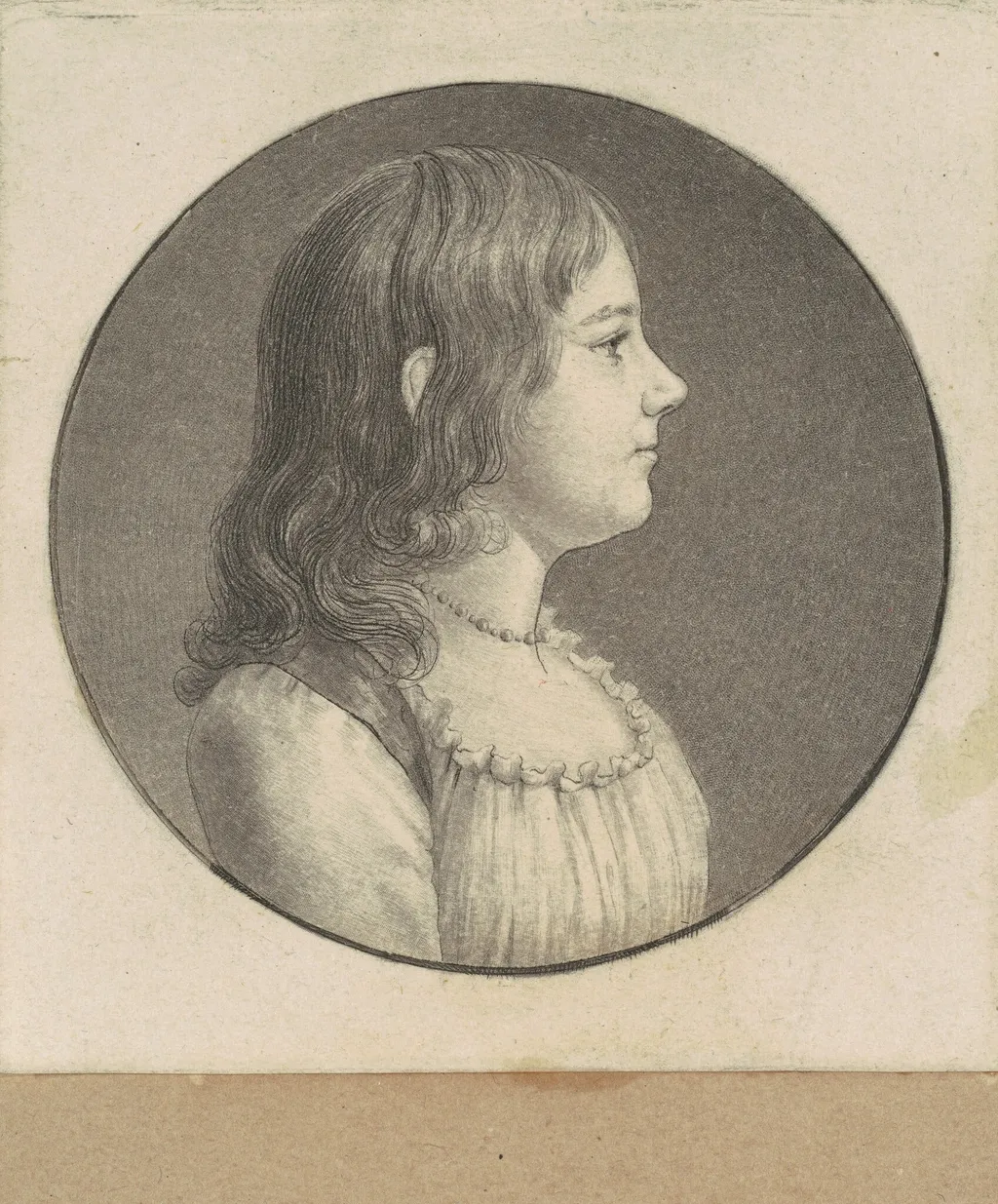
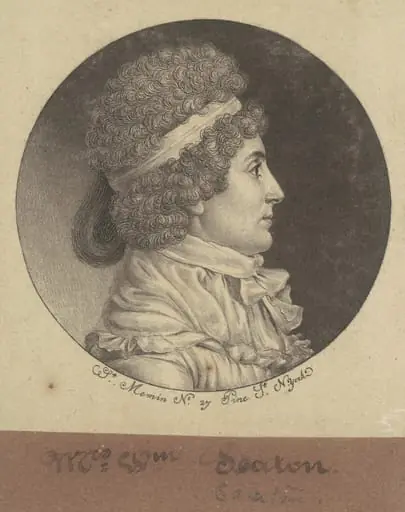
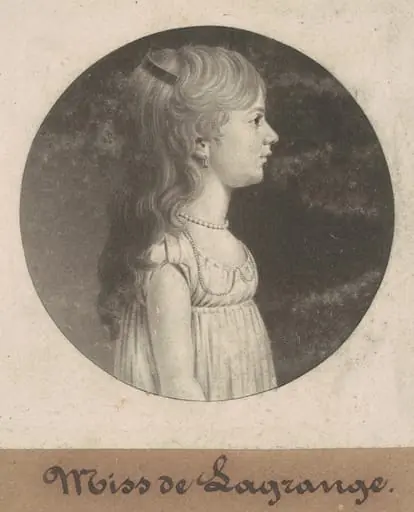
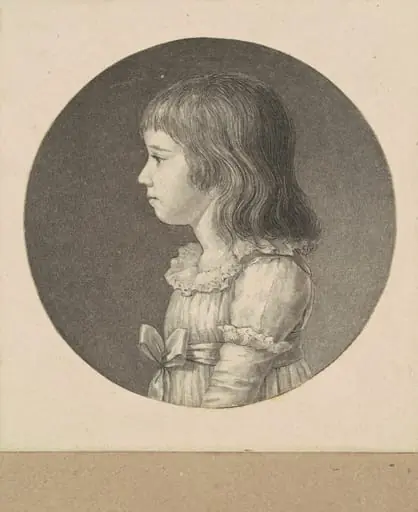
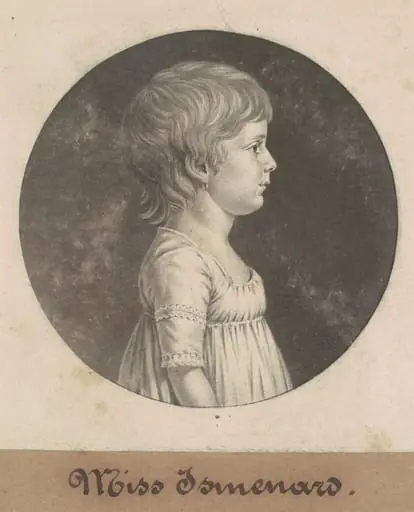
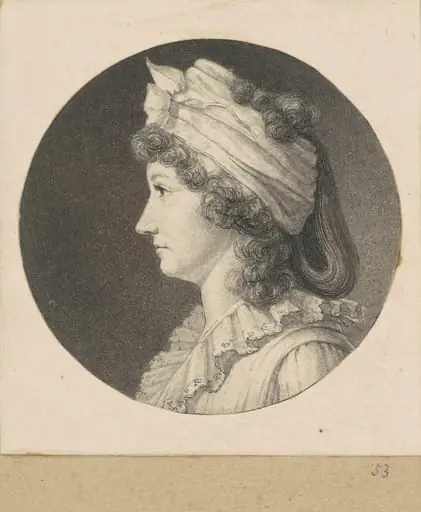
Unidentified Young Woman is an ink print by the Romanticist artist Charles Balthazar Julien Févret de Saint-Mémin. It dates from 1797 and is held in the collection of the National Gallery of Art. Created in 1797, this small print measures just over five and a half centimeters square.
About this work
Overview
Created in 1797, this small print measures just over five and a half centimeters square. Executed in both mezzotint and engraving on wove paper that has been mounted to a brown backing, the work bears the title Unidentified Young Woman and is attributed to Charles B. J. Févret de Saint‑Mémin. It is held within the Corcoran Collection, a notable repository of early American prints.
Subject & Meaning
The image presents a solitary female figure in strict profile, her gaze directed forward with a composed, almost contemplative expression. The delicate rendering of her features—soft lines, gentle curvature of the cheek and nose—conveys a sense of quiet dignity, inviting viewers to consider the individuality of a woman whose name remains unknown.
Technique & Style
Combining mezzotint’s tonal richness with the precise line work of engraving, the artist achieves a subtle gradation of light and shadow across the sitter’s face. The fine incisions and careful modulation of ink demonstrate a high level of craftsmanship, allowing the portrait to appear three‑dimensional despite its modest scale.
History & Provenance
The print entered the Corcoran Collection, an institution founded in the early 19th century to preserve American art and artifacts. Its acquisition reflects the period’s interest in portraiture and the growing appreciation for printmaking as a means of disseminating images of contemporary figures.
Context
Produced at the close of the 18th century, the work aligns with a broader European tradition of intimate, single‑figure portrait prints. Saint‑Mémin, known for his skill in both engraving and mezzotint, often employed these media to capture nuanced expressions, situating this piece within the transitional aesthetic between Rococo delicacy and emerging Neoclassical restraint.
Artist & collection

Artist
Charles Balthazar Julien Févret de Saint-Mémin
Charles Balthazar Julien Févret de Saint-Mémin (French pronunciation: ; 1770–1852) was a French portrait painter and museum director.