Artwork
William Brown
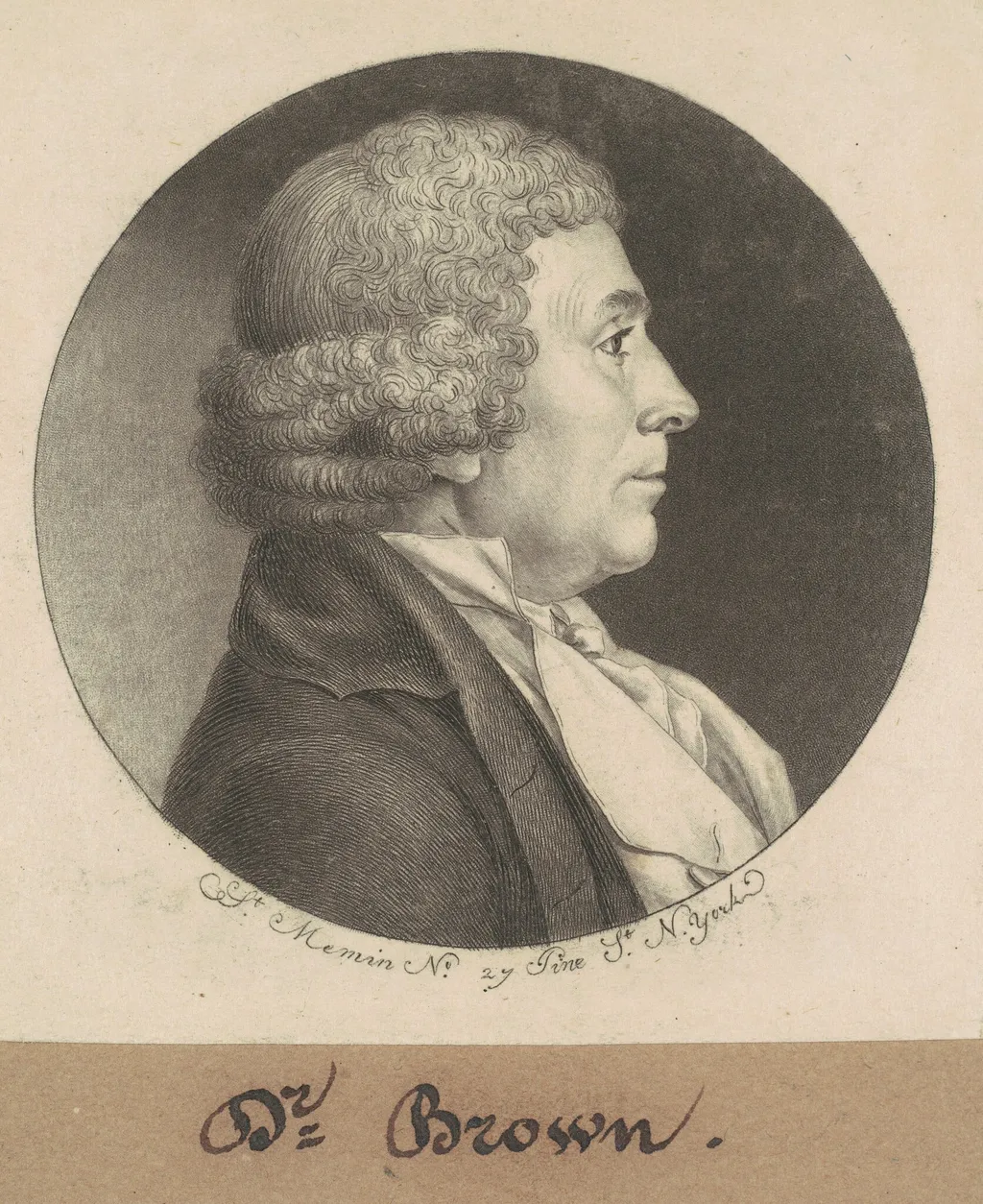
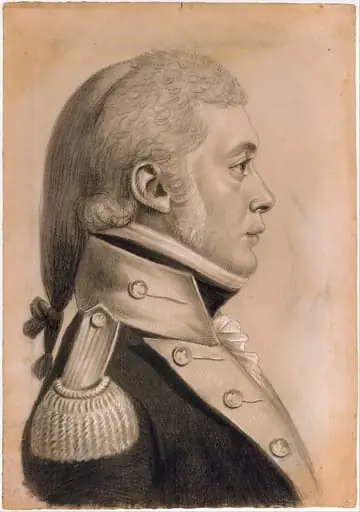
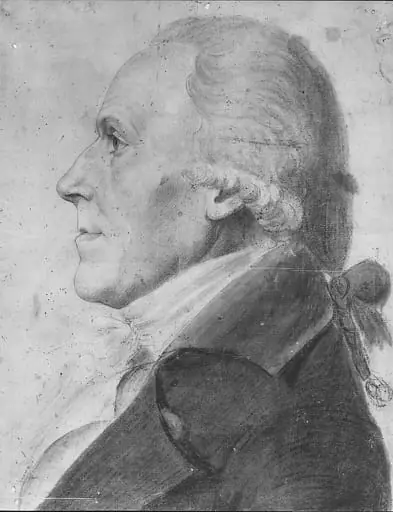
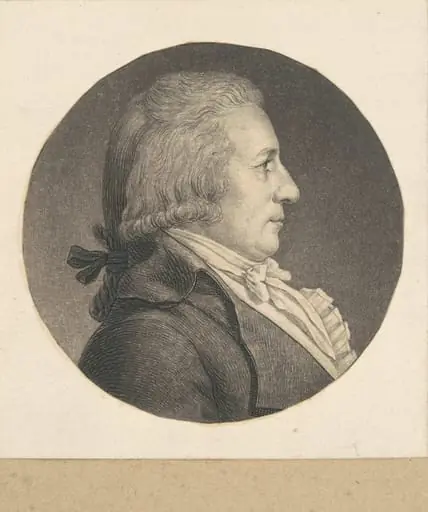
William Brown is an ink print by the Romanticist artist Charles Balthazar Julien Févret de Saint-Mémin. It dates from 1798 and is held in the collection of the National Gallery of Art. Charles B.
About this work
Mezzotint lets artists carve deep blacks that fade to light—here the ink does the work.
This tiny print shows a man’s face in three-quarter view.
The shadows melt softly around his cheek and jawline.
Mezzotint lets artists carve deep blacks that fade to light—here the ink does the work.
Saint-Mémins were rare in America in 1798.
He came from France on a sketching tour, making crisp portraits in pencil.
Then he flipped the method to metal plates that printed rich, velvety tones.
Look for the square dot in the corner.
Check Saint-Mémin, Charles B. J. Févret de.
Overview
Charles B. J. Févret de Saint-Mémin's 1798 print 'William Brown' is a small, intricately detailed mezzotint and engraving on wove paper, measuring 5.56 × 5.56 cm. It is now part of the Corcoran Collection.
Subject & Meaning
The print depicts a man's face in three-quarter view, with softly melting shadows around the cheek and jawline, leveraging mezzotint's ability to convey deep blacks transitioning to light.
Technique & Style
Saint-Mémin utilized mezzotint to achieve rich, velvety tones, a departure from his initial pencil sketches. A distinctive square dot in the corner signifies a hallmark of his printmaking technique.
History & Provenance
Created during Saint-Mémin's sketching tour in America, this work was unusual for its time due to the rarity of Saint-Mémin's prints in 18th-century America, originating from his French background.
Context
Saint-Mémin's method involved initially sketching in pencil before translating his work to metal plates for printing, adapting his approach to harness the expressive qualities of mezzotint and engraving.
Artist & collection

Artist
Charles Balthazar Julien Févret de Saint-Mémin
Charles Balthazar Julien Févret de Saint-Mémin (French pronunciation: ; 1770–1852) was a French portrait painter and museum director.