Artwork
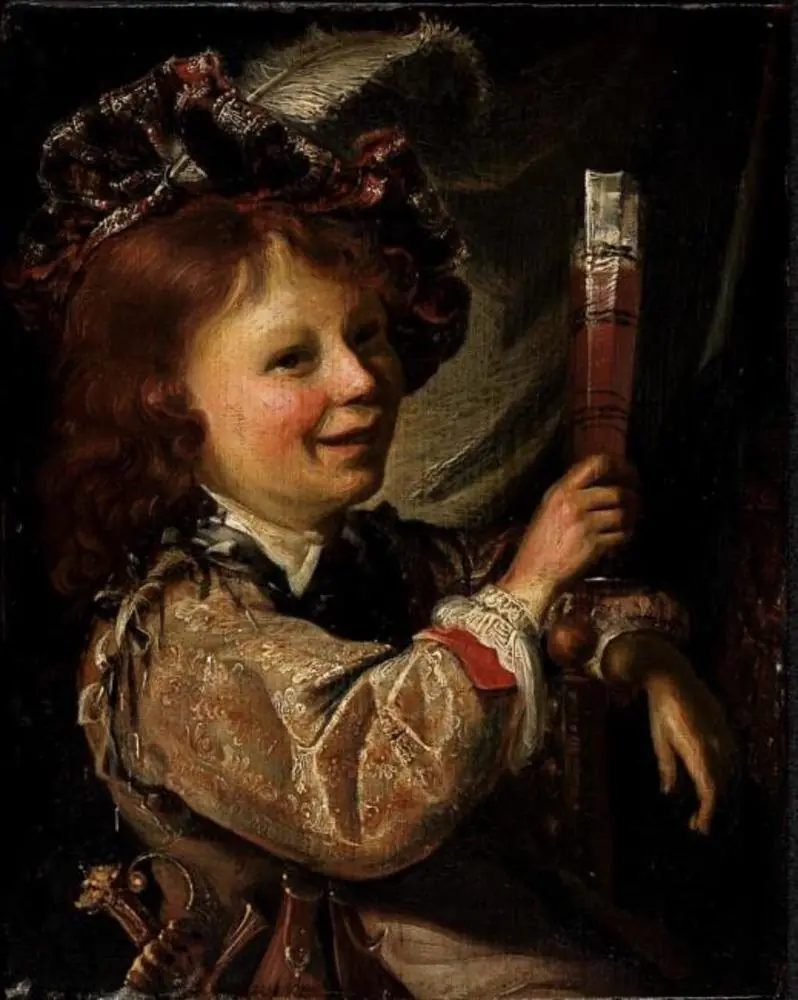
A Laughing Child Holding a Wicker Rattle
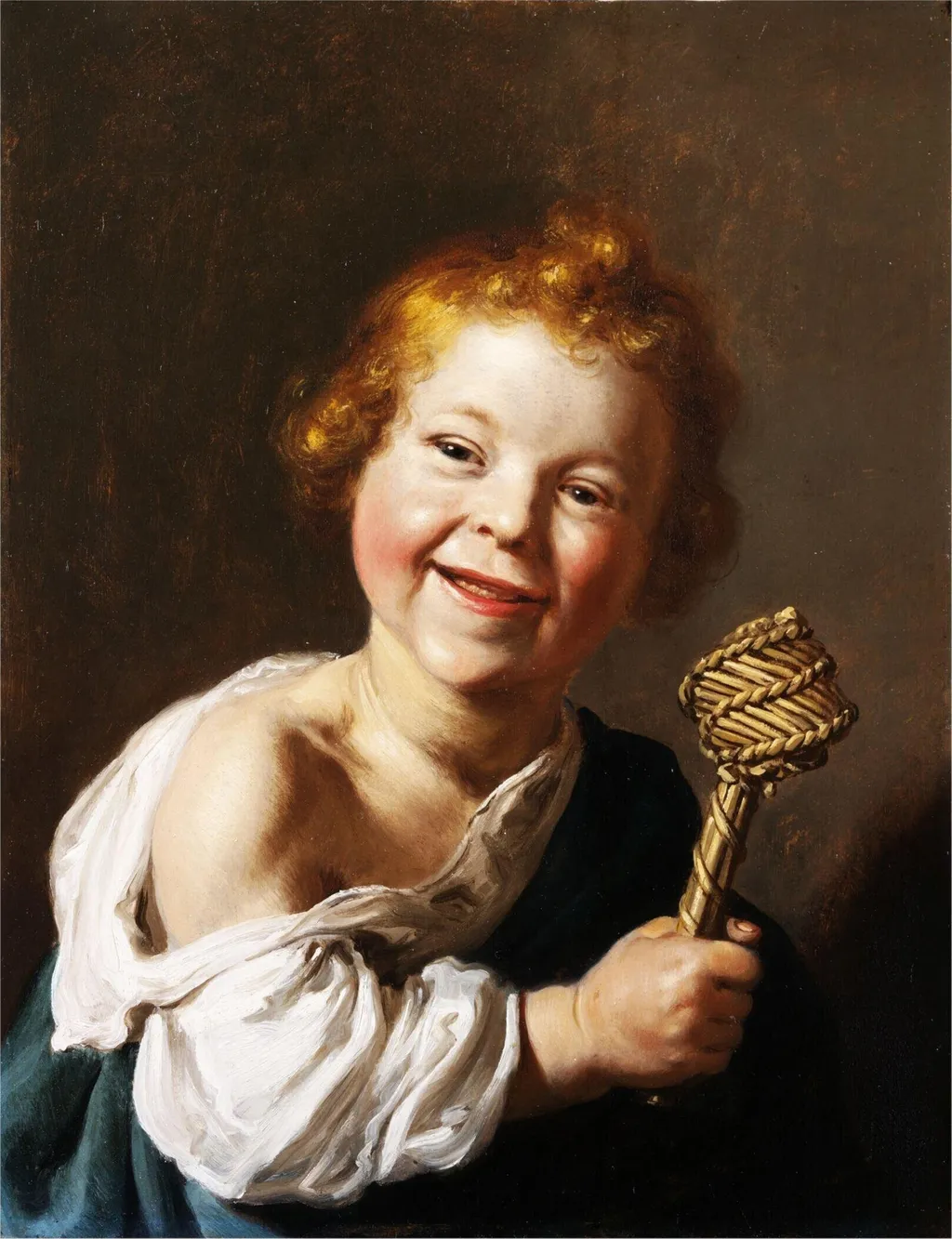
A Laughing Child Holding a Wicker Rattle is an oil painting by the Rococo painting artist Salomon de Bray. It is held in the collection of the Victoria and Albert Museum.
About this work
Overview
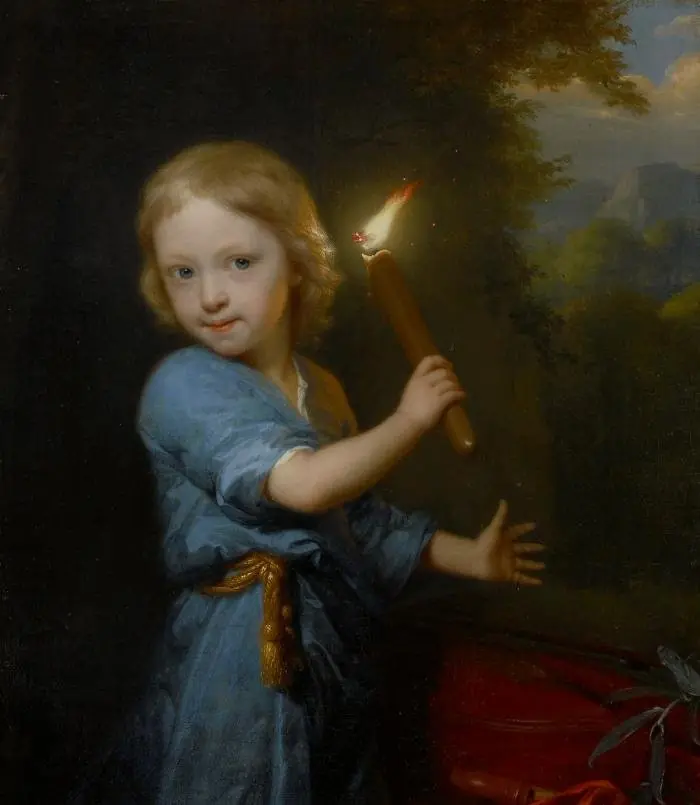
A Laughing Child Holding a Wicker Rattle is an oil painting attributed to Salomon de Bray, dated around 1700. It presents a candid portrait of a young child, rendered with attention to expressive detail and naturalistic lighting. The work is part of the Victoria and Albert Museum’s collection, where it is held as an example of Dutch Golden Age portraiture focused on childhood.
Subject & Meaning
The painting captures a child in a moment of unguarded joy, smiling broadly with teeth visible, suggesting innocence and vitality.
The painting captures a child in a moment of unguarded joy, smiling broadly with teeth visible, suggesting innocence and vitality. The wicker rattle, a common toy of the period, implies the child’s youth and domestic setting. The direct gaze toward the viewer invites an intimate connection, possibly reflecting contemporary ideals of familial affection and the moral value placed on childhood purity.
Technique & Style
De Bray employs a dark, unmodeled background to isolate the figure, enhancing the three-dimensionality of the child’s form through subtle gradations of light. The soft rendering of skin, the texture of the linen shirt, and the woven rattle demonstrate careful observation. The use of chiaroscuro, though restrained, lends depth without theatricality, aligning with the quiet realism characteristic of Dutch domestic portraiture.
History & Provenance
The painting entered the Victoria and Albert Museum’s collection in the 19th century, though its earlier ownership remains undocumented. While attributed to Salomon de Bray, the date of circa 1700 is later than his known active period, suggesting possible misattribution or posthumous dating. Its survival in good condition reflects careful preservation within private and institutional collections over centuries.
Context
In late 17th-century Holland, portraits of children were increasingly common among the middle and upper classes, reflecting shifting cultural attitudes toward childhood as a distinct and valued phase of life. This work aligns with a broader trend of intimate, non-idealized depictions of children, often shown with simple toys, emphasizing natural behavior over formal pose or aristocratic symbolism.
Legacy
Though not widely reproduced or studied, the painting contributes to the understanding of how Dutch artists portrayed childhood with psychological nuance and technical restraint. It stands as a quiet testament to the era’s growing interest in the individuality of young subjects, influencing later generations of genre painters who sought authenticity over grandeur.
Own this work as a print
Artist & collection