Artwork
Shimla. The Mall or Principal
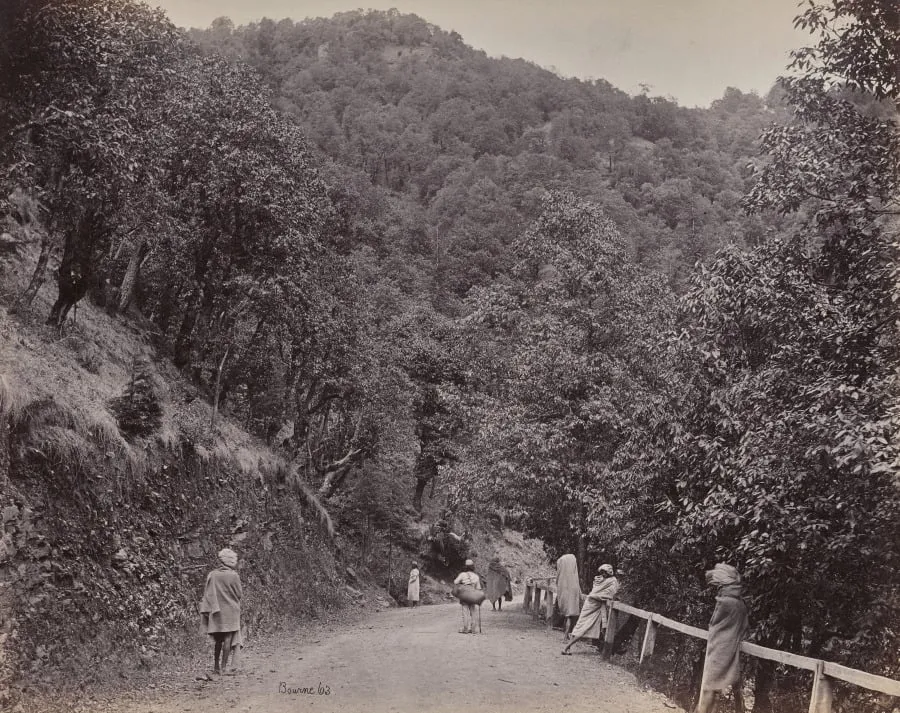
Shimla. The Mall or Principal is a photography by the Impressionist artist Samuel Bourne. It dates from 1866 and is held in the collection of the Cleveland Museum of Art. This photograph, taken in the 1860s, captures The Mall in Shimla, a hill station developed by the British as a summer capital.
About this work
It’s one of the earliest images of the city, showing how the British built their own version of home in the Himalayas.
You see a busy street in Shimla, India, lined with British-style buildings and people walking under a bright sky.
This photo was taken in the 1860s by a British photographer who traveled across India. It’s one of the earliest images of the city, showing how the British built their own version of home in the Himalayas. The photo also helps us see what the place looked like before modern changes.
If you like old photos of faraway places, look up Samuel Bourne (British, 1834–1912).
Overview
This photograph, taken in the 1860s, captures The Mall in Shimla, a hill station developed by the British as a summer capital. Part of a larger album of fifty images, it documents urban life across northern India during the early years of photographic documentation. The image reflects the colonial project of transplanting European urban forms into the Himalayan landscape, offering one of the earliest visual records of the city in its formative phase.
Subject & Meaning
The scene depicts a bustling pedestrian thoroughfare lined with neoclassical and Victorian-style buildings, evoking a sense of British domesticity amid the Indian hills. Figures in contemporary dress—both European and Indian—move along the pavement, suggesting a layered social environment. The composition reveals the deliberate design of Shimla as a symbolic retreat, where colonial authority was visually reinforced through architecture and public space.
Technique & Style
The photograph exhibits the technical precision typical of mid-19th-century wet-plate collodion processes, with sharp detail in architectural elements and clear tonal gradations in the sky. The composition is carefully balanced, emphasizing linear perspective along the street and the scale of buildings relative to human figures. The absence of overt staging suggests an observational approach, characteristic of early topographical photography.
History & Provenance
The image is attributed to Samuel Bourne, a British photographer who traveled extensively across India between 1863 and 1870. His albums were widely circulated in Europe and India, serving both as souvenirs and documentary records. This photograph likely originated from one of his personal collections, later acquired by institutions interested in colonial-era visual archives.
Context
Shimla was chosen by the British Raj as a seasonal administrative center due to its cool climate and accessibility. The Mall was planned as the civic heart of the hill station, modeled after British promenades. This photograph captures the city during its rapid expansion, before later 20th-century modifications altered its original layout and character.
Legacy
As one of the earliest photographic records of Shimla, the image remains a key reference for historians studying colonial urbanism in India. It contributes to broader discussions on how imperial powers reshaped landscapes to reflect their cultural ideals. Bourne’s work, including this photograph, continues to inform preservation efforts and scholarly analysis of 19th-century Indian architecture.
Artist & collection

Artist
Samuel Bourne was a British photographer known for his prolific seven years' work in India, from 1863 to 1870.

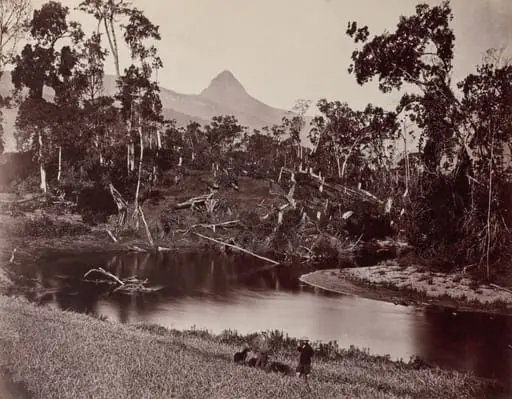 Ceylon Views to Adam's Tooth
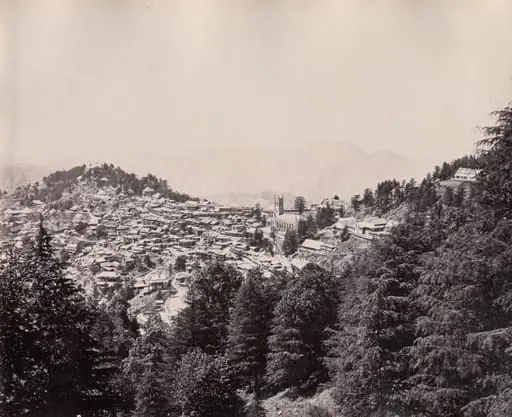 Shimla
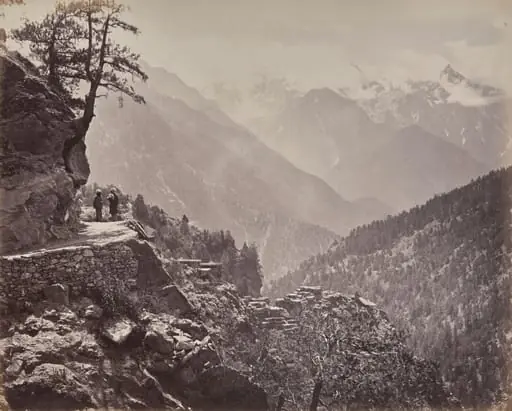 The Upper Himmalayahs. View on the New Road between India and China. Mt. Pangi with the Snowy Peaks of China in the Distance
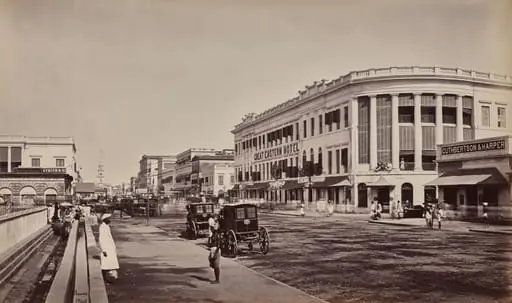 Calcutta. Old Court House Street
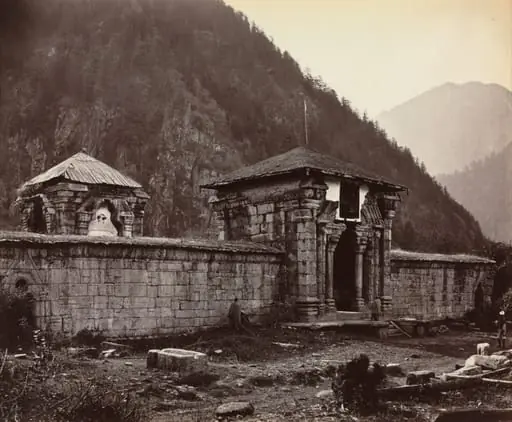 Temple at Naveshera, Kashmir, India
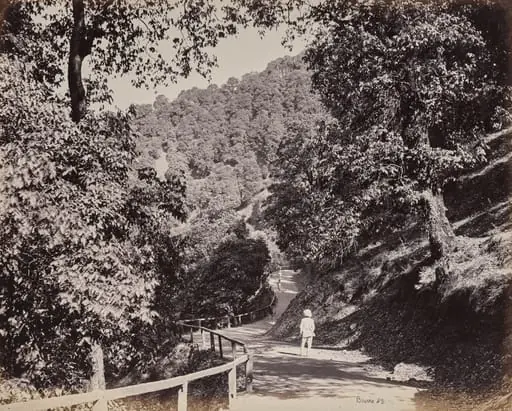 Shimla. The Mall near Rabq Lodge
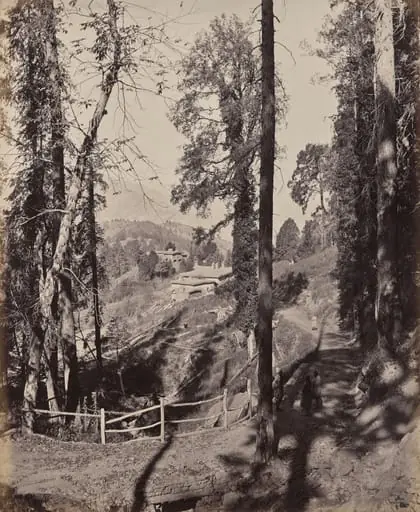 Murree. A Hill Station in the Himmalayahs, View Through the Forest
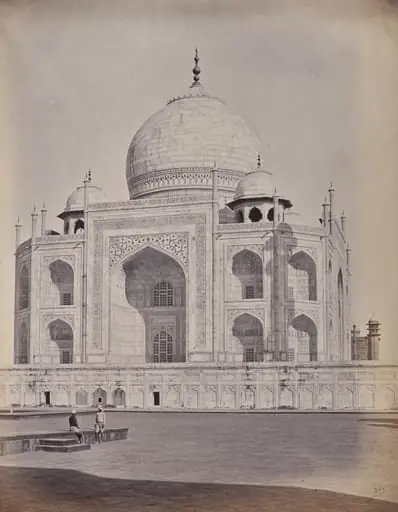 Agra. The Taj, the Central of Principal City
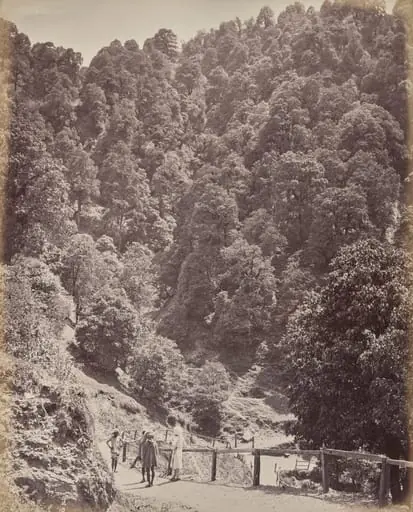 Shimla. View North of Mount Jakko
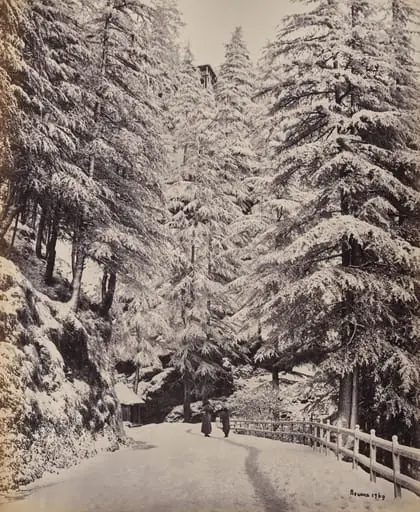 Shimla. View on the Mall in Winter
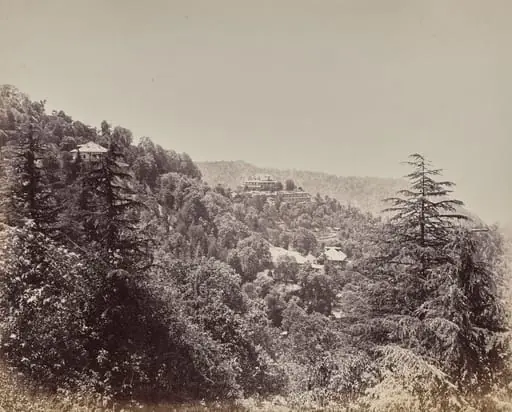 Shimla. The Yarrows and Neighboring Hills
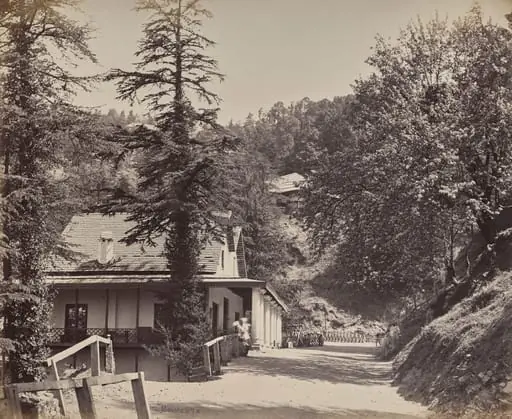 Simla. The Mall near Combermere Bridge
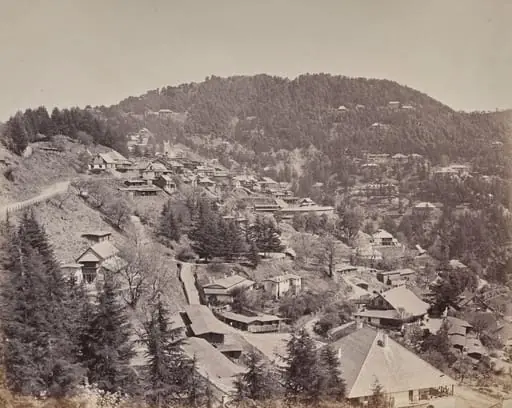 Shimla. Houses of European Residents, Looking East
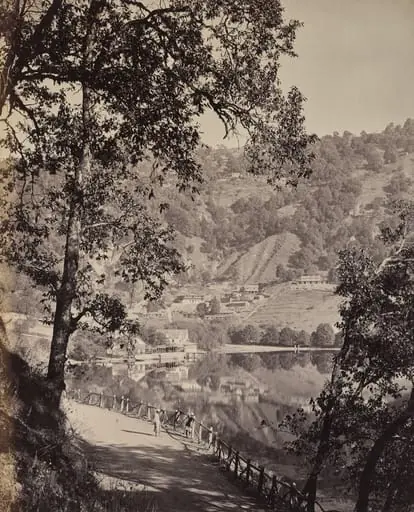 Hyree Lake. Hill Station in the Himmalayahs. View of the Taj Lake with Assembly Rooms, Lhutse
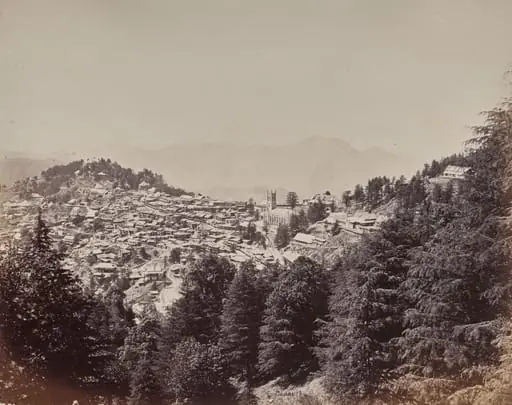 Shimla. From Mount Jakko, Looking West
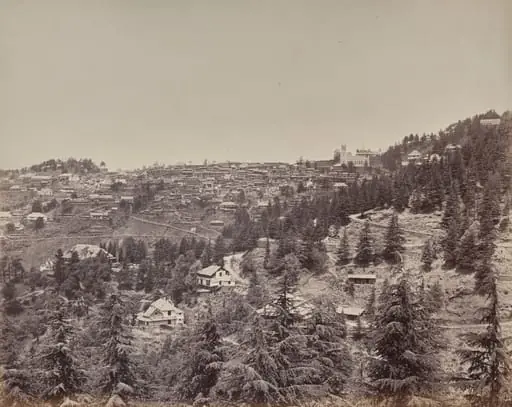 Shimla. View from Oakover House
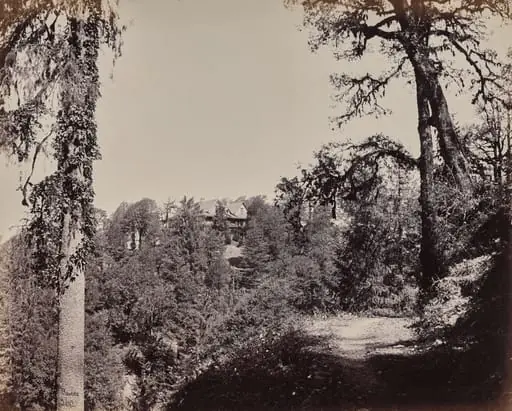 Shimla. Sir Hugh Rose's Bungalow at Mahasso