Artwork
View from Murichon looking northward up the channel of the Teenchoo on the road to Tacissudon, Bhutan
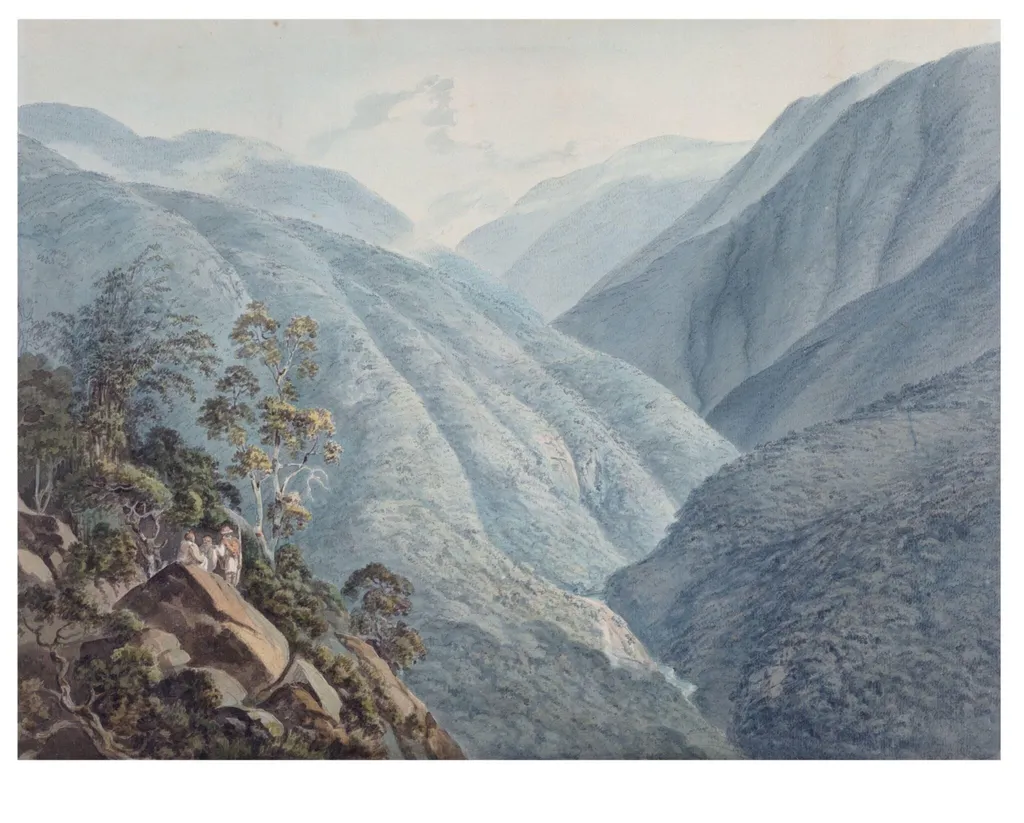
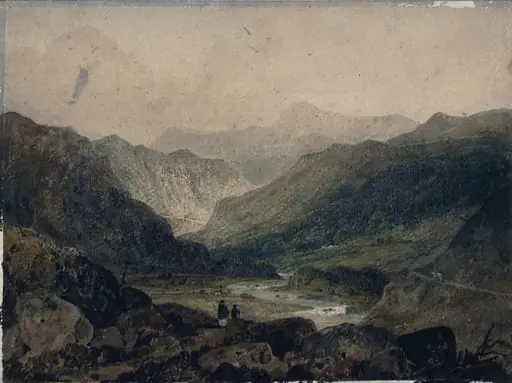
View from Murichon looking northward up the channel of the Teenchoo on the road to Tacissudon, Bhutan is a watercolor work on paper by the Rococo painting artist Samuel Davis. It dates from 1794 and is held in the collection of the Victoria and Albert Museum.
About this work
Overview
Painted in 1794 by Samuel Davis, this watercolour captures a northern vista from Murichon along the Teenchoo channel toward Tacissudon in Bhutan.
Painted in 1794 by Samuel Davis, this watercolour captures a northern vista from Murichon along the Teenchoo channel toward Tacissudon in Bhutan. It is one of the earliest known Western artistic records of the eastern Himalayas, created during Davis’s journey through the region. The work is signed and inscribed by the artist, affirming its direct connection to his travels and observations in a landscape rarely depicted by Europeans at the time.
Subject & Meaning
The scene presents a remote mountain valley, dominated by steep cliffs and distant, fading peaks under a pale sky. Two diminutive figures on a ledge observe the expanse, emphasizing the scale and solitude of the terrain. Rather than depicting human activity, the focus lies in the quiet presence of nature, suggesting a contemplative encounter with the sublime—a theme emerging in late 18th-century European responses to unfamiliar landscapes.
Technique & Style
Davis employed delicate watercolour washes to render the subtle gradations of light across the mountainside. The soft edges and muted tones convey atmospheric depth, while the sparse vegetation and minimal detail in the foreground reinforce the sense of isolation. The scale of the landscape is heightened by the inclusion of tiny human figures, a compositional choice that aligns with emerging aesthetic interests in nature’s overwhelming grandeur.
History & Provenance
Created during Davis’s travels in the eastern Himalayas as part of a British diplomatic mission, the watercolour belongs to a series of topographical studies he produced between 1783 and 1795. These works were later used for documentation and were among the first visual records of Bhutanese terrain by a Western artist. The piece remains within institutional collections, preserving its historical and artistic significance.
Context
Davis’s work emerged amid growing European interest in South Asian geography and culture, spurred by colonial expansion and scientific exploration. While Romanticism was beginning to shape perceptions of nature as awe-inspiring and transcendent, Davis’s approach remained grounded in observation rather than idealization. His images served both as records and as cultural artifacts, bridging empirical survey and emerging aesthetic sensibilities.
Legacy
Samuel Davis’s watercolours of Bhutan laid foundational visual documentation for later ethnographic and geographic studies of the region. His restrained, observational style influenced subsequent artists and travelers who sought to depict the Himalayas with accuracy rather than fantasy. These works remain important for their early representation of a culturally distinct landscape, offering a rare pre-colonial glimpse into its topography and atmosphere.
Own this work as a print
Artist & collection
Artist
Samuel Davis (1760–1819) was an English soldier turned diplomat who later became a director of the East India Company (EIC).

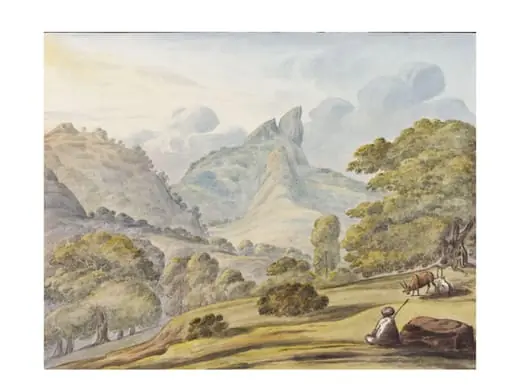 Bhore Ghauts
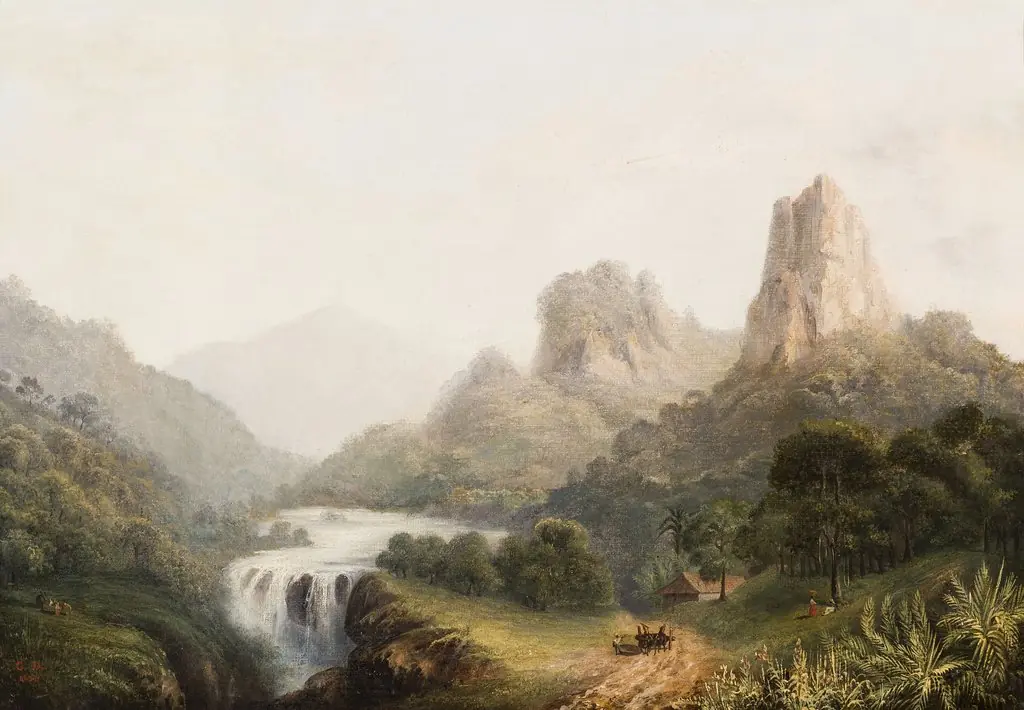 Arredores da Fazenda Mandioca, Rio de Janeiro (atribuído)
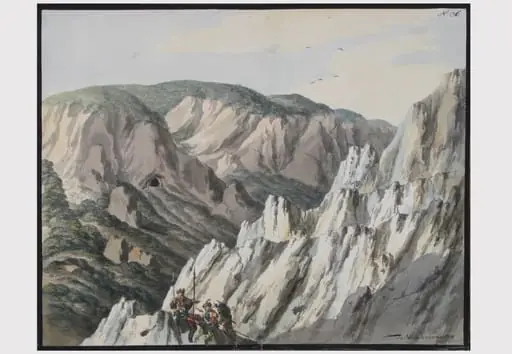 Cheile Turzii
 Landscape with waterfall
 Near Dolgelly
 Mawddach Falls near Dolgelly
 Panorama of the Western Ghats from Mahabaleshwar
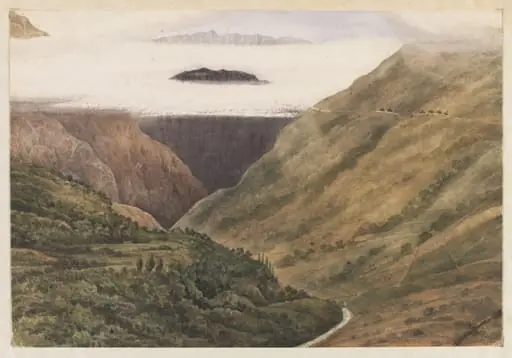 Hazar Chum Mazenderan - Persia
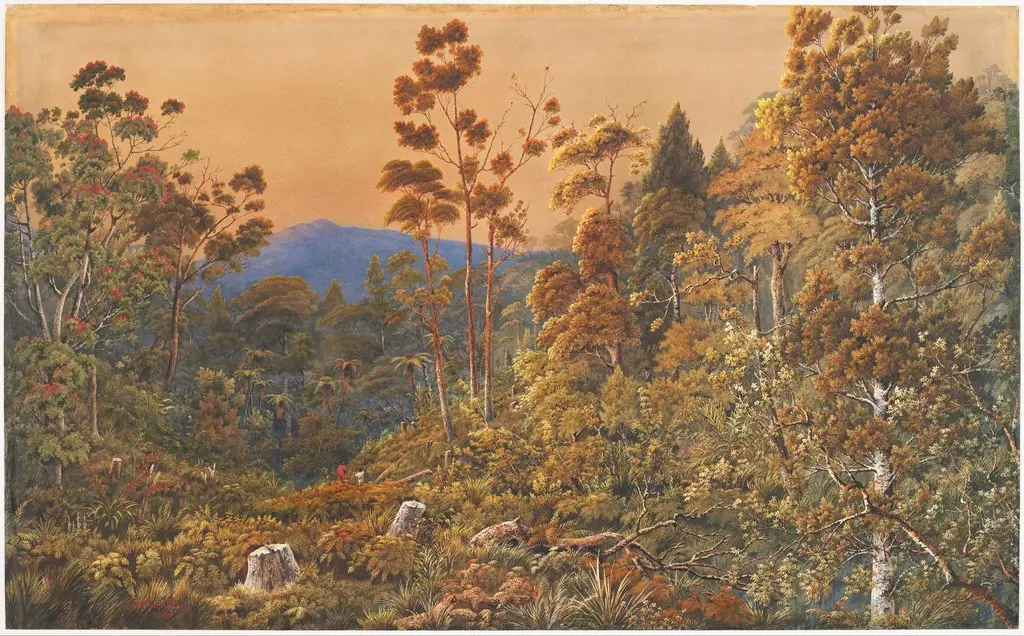 A golden eve, Waiheke Island
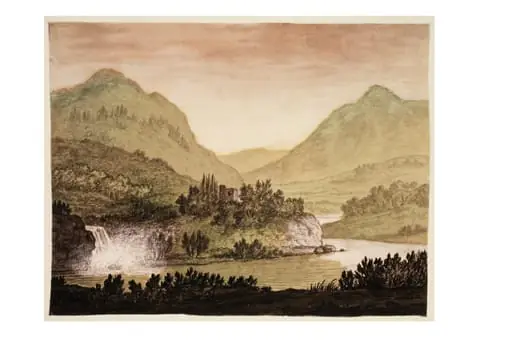 Mountainous Landscape with a Castle and Waterfall
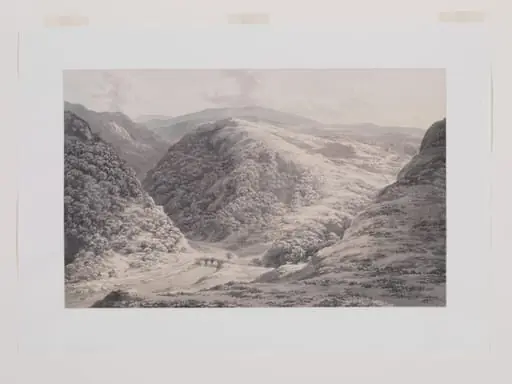 The Teign near Drewsteignton, Devonshire
 Distant View of Snowdon