Artwork
Hazar Chum Mazenderan - Persia
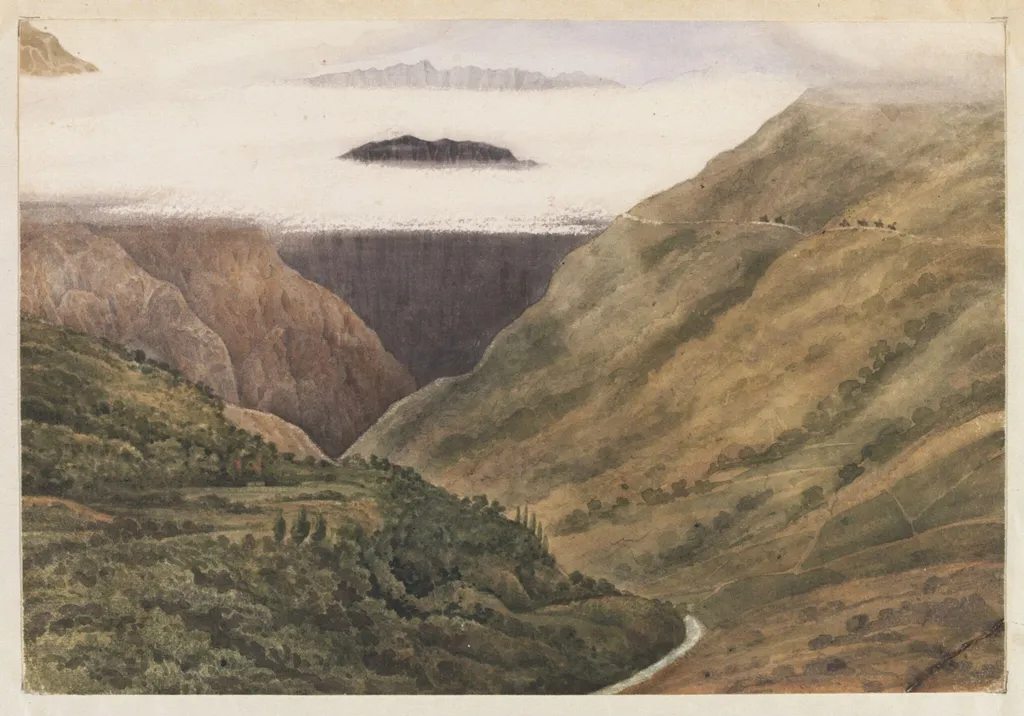
Hazar Chum Mazenderan - Persia is a watercolor work on paper by the Orientalist artist Godfrey Thomas Vigne. It dates from 1833 and is held in the collection of the Victoria and Albert Museum. This watercolour captures the Hezar Cham pass in Mazanderan, a mountainous corridor linking Tehran to the Caspian coast.
About this work
Overview
Executed in delicate washes, the scene conveys the region’s rugged topography through muted tones and atmospheric perspective.
This watercolour captures the Hezar Cham pass in Mazanderan, a mountainous corridor linking Tehran to the Caspian coast. Executed in delicate washes, the scene conveys the region’s rugged topography through muted tones and atmospheric perspective. The work stems from a journey undertaken by Godfrey Thomas Vigne in the 1830s, part of his broader documentation of Persian landscapes during a period of increasing European interest in the region.
Subject & Meaning
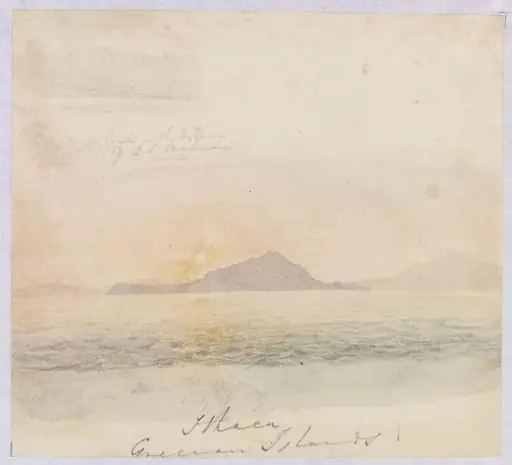
The painting portrays a narrow gorge carved by the Chalus River, flanked by steep, eroded cliffs and veiled in mist. A distant, shadowy island in a hazy lake suggests a remote, almost mythical landscape. Rather than emphasizing human presence, the focus lies in the scale and silence of nature, reflecting a Romantic sensibility that valued sublime terrain as a source of awe and introspection.
Technique & Style
Vigne employed translucent watercolour washes to create a soft, diffused effect, allowing layers of pale ochre, green, and grey to blend seamlessly. The absence of sharp outlines and the gradual fading of forms into the sky enhance the sense of depth and distance. This technique aligns with 19th-century topographical drawing practices that prioritized atmospheric realism over precise detail.
History & Provenance
The work was produced during Vigne’s travels in northern Persia, later referenced in his 1839 report to the Royal Geographical Society and his 1842 book *Travels in Kashmir*. It remained within the artist’s family until 1971, when it was acquired from his great-nephew, Henry D’Olier Vigne, alongside other sketches and documents from the journey. Its preservation reflects the family’s role in maintaining a record of early Victorian exploration.
Context
Created during a time when European travelers were mapping and illustrating lesser-known regions of Persia, the work aligns with scientific and aesthetic interests of the era. While not overtly political, it contributes to a visual archive shaped by colonial-era curiosity, where natural landscapes were documented as both geographical data and emotional experiences, influenced by Romantic ideals of wilderness.
Legacy
The watercolour endures as a quiet record of a specific place at a specific moment, offering insight into how Western observers interpreted Persian geography. Its modest scale and restrained palette distinguish it from grander Orientalist works, instead presenting a contemplative view of nature’s endurance. It remains a valuable artifact in understanding the intersection of travel, art, and early ethnographic documentation.
Artist & collection


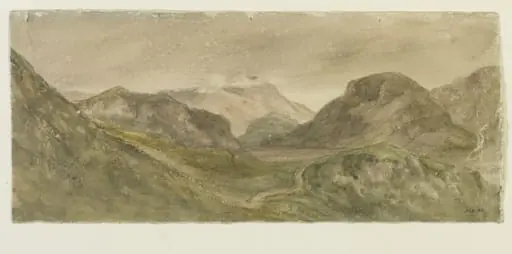 Hellvellyn
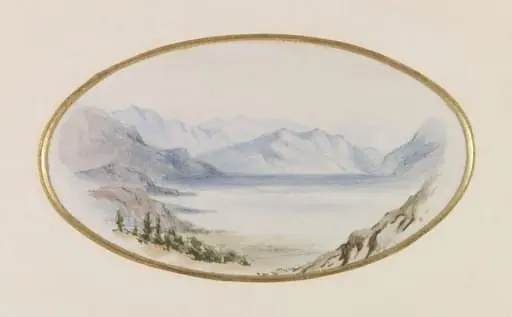 Dead Sea. -
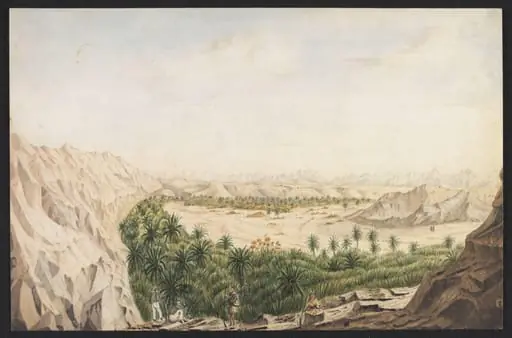 View of the valley of Eynounah. Coast of Arabia in the Red Sea
 View from the Mountains on the Peninsula of Sinai
 Valley with winding streams, a range of mountains in the background, and a village on the left
 Near Dolgelly
 View in the Lake District
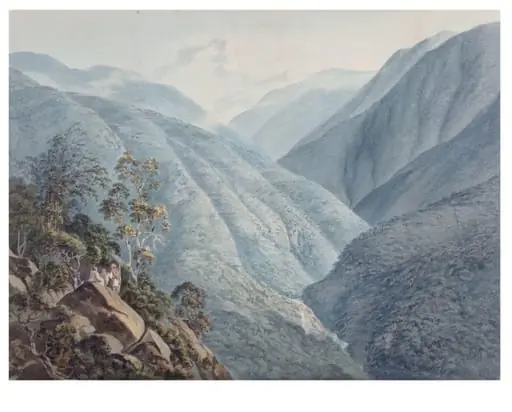 View from Murichon looking northward up the channel of the Teenchoo on the road to Tacissudon, Bhutan
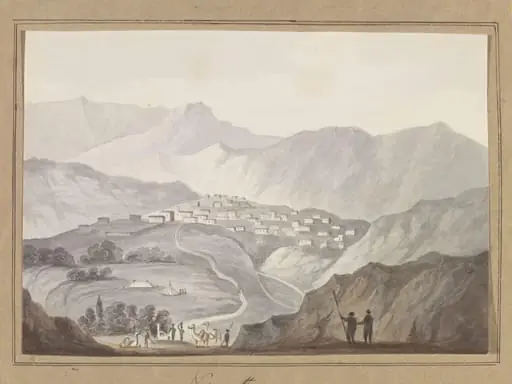 Nazareth
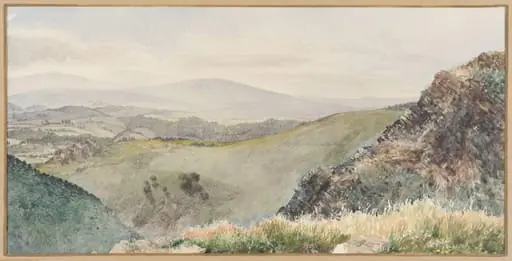 Untitled
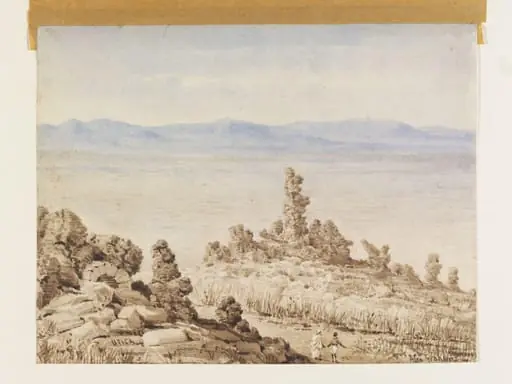 Utica
Utica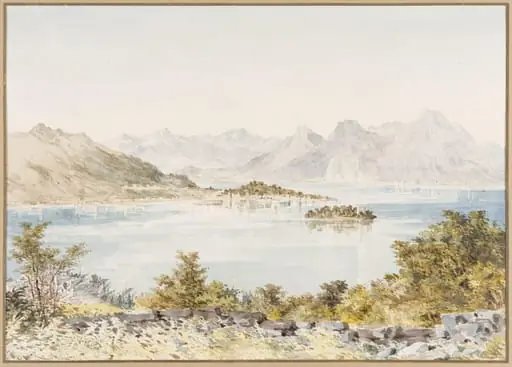 View on Lake Maggiore