Artwork
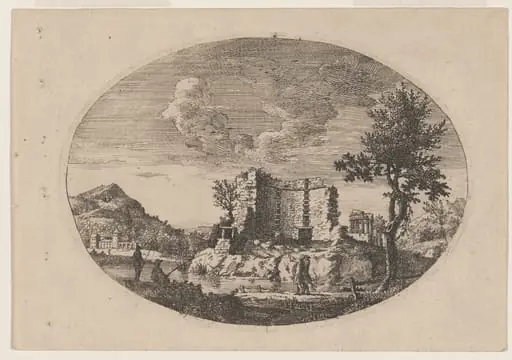
Ruined Gateway
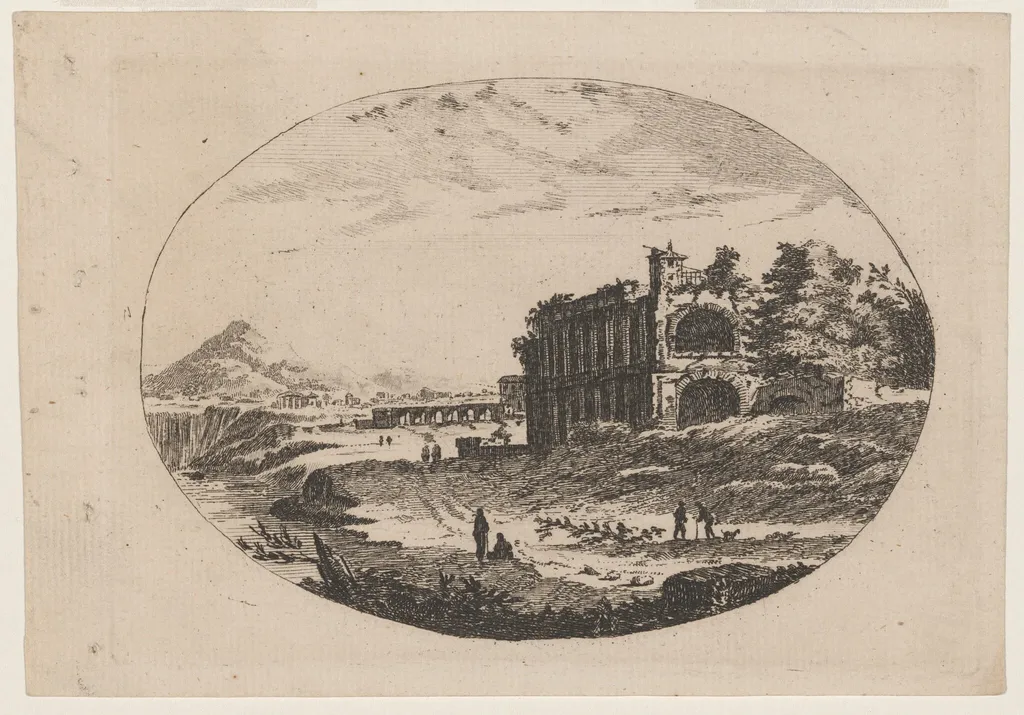
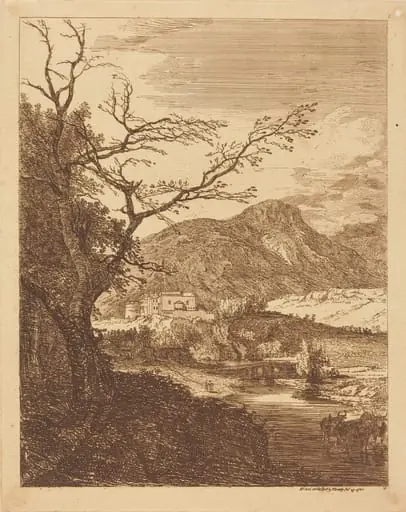
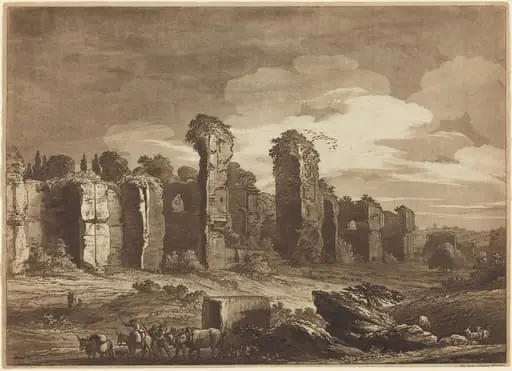
Ruined Gateway is an ink print by the Baroque artist Paul Sandby. It dates from 1750 and is held in the collection of the National Gallery of Art.
About this work
Overview
Ruined Gateway, an etching on laid paper circa 1750, is a work by Paul Sandby, an English artist and mapmaker who later co-founded the Royal Academy. This print exemplifies his focus on landscape and architectural subjects.
Subject & Meaning
The etching depicts a crumbling stone archway set amidst a natural landscape with trees, a riverbank, and distant structures. Figures in the foreground and a bridge in the background add depth. The scene conveys a sense of antiquity and decay.
Technique & Style
Sandby employed fine linework to capture light, shadow, and texture, emphasizing the weathered state of the ruins. The dark, wavy sky adds atmospheric depth. The etching showcases Sandby's topographical precision and his ability to evoke mood through detailed rendering.
History & Provenance
Created around 1750, Ruined Gateway reflects Sandby's early specialization in landscape and architectural themes. His later role as a founding member of the Royal Academy underscores his influence in English artistic circles.
Context
This work is characteristic of 18th-century European interest in ruins and landscape, often exploring themes of decay and the passage of time. Sandby's approach blends meticulous topography with expressive interpretation of natural and built environments.
Legacy
Ruined Gateway contributes to Sandby's legacy as a pivotal figure in English landscape art. His detailed etchings, like this one, influenced subsequent generations of artists in capturing the interplay between nature and architecture.
Artist & collection
Artist
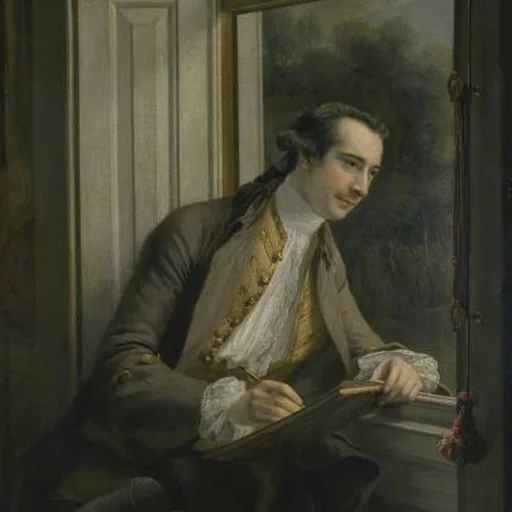
Paul Sandby, (1731 – 7 November 1809) was an English mapmaker and painter who specialised in landscape art. Along with his older brother Thomas Sandby, he was one of the founding members of the Royal Academy in 1768.

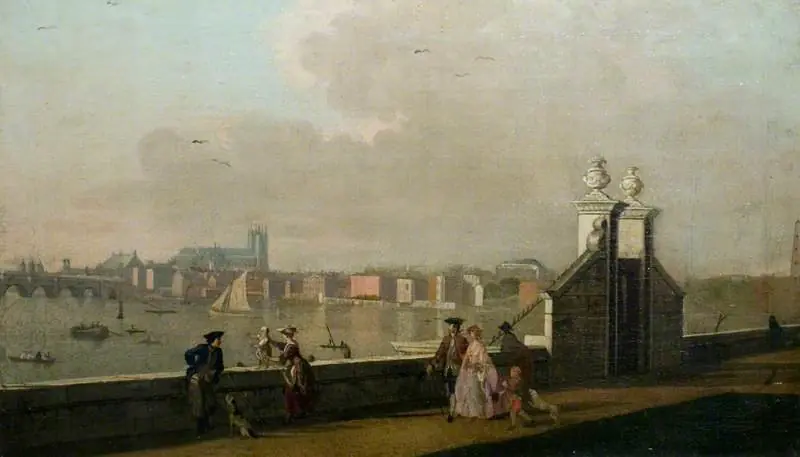
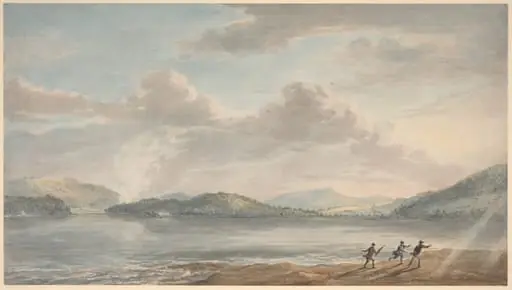
 Ruined Two-Story Building with Mountains in Distance
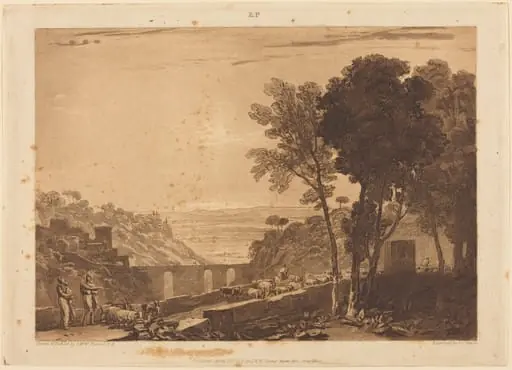 The Bridge and Goats
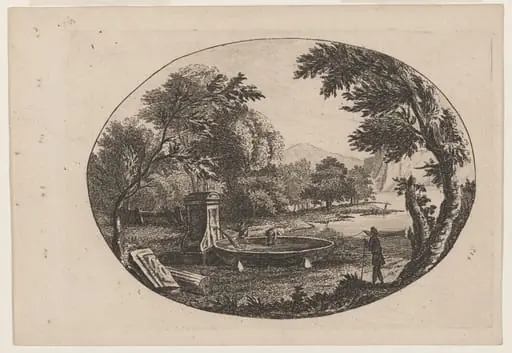 Wooded Landscape with Drinking Spout and Basin
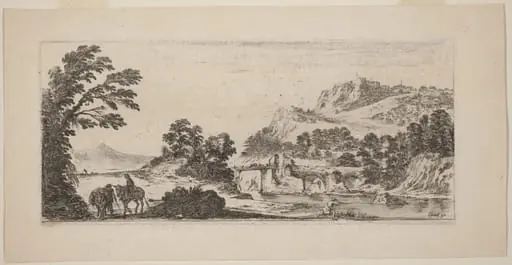 Landscape with Bridge
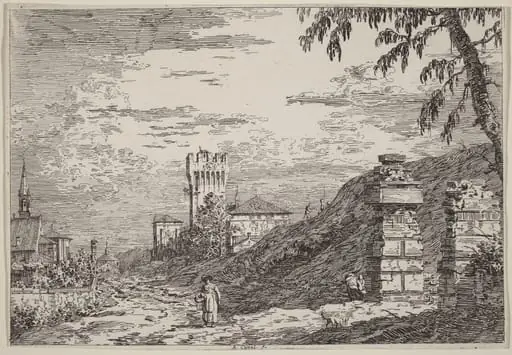 Landscape with Tower and Two Ruined Pillars
![Landscape with Tower and Two Ruined Pillars [left], by Canaletto](https://artifactworldgallery.com/img/canaletto--landscape-with-tower-and-two-ruined-pillars-left--60d58ba162fec5aa-w320.webp) Landscape with Tower and Two Ruined Pillars [left]
Landscape with Tower and Two Ruined Pillars [left]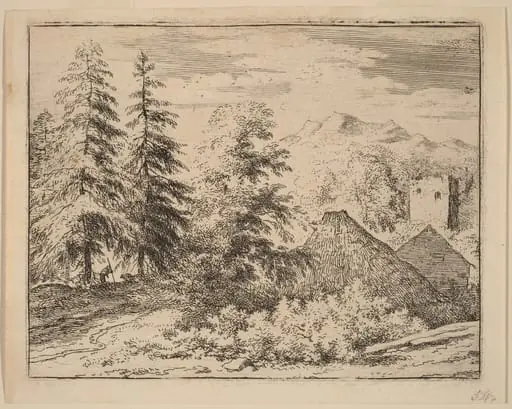 Man between Two Fir Trees
 View of the Remains of Caracalla's Baths, Taken from the Jesuits Gardens at Rome