Artwork
Singers' Contest on the Wartburg
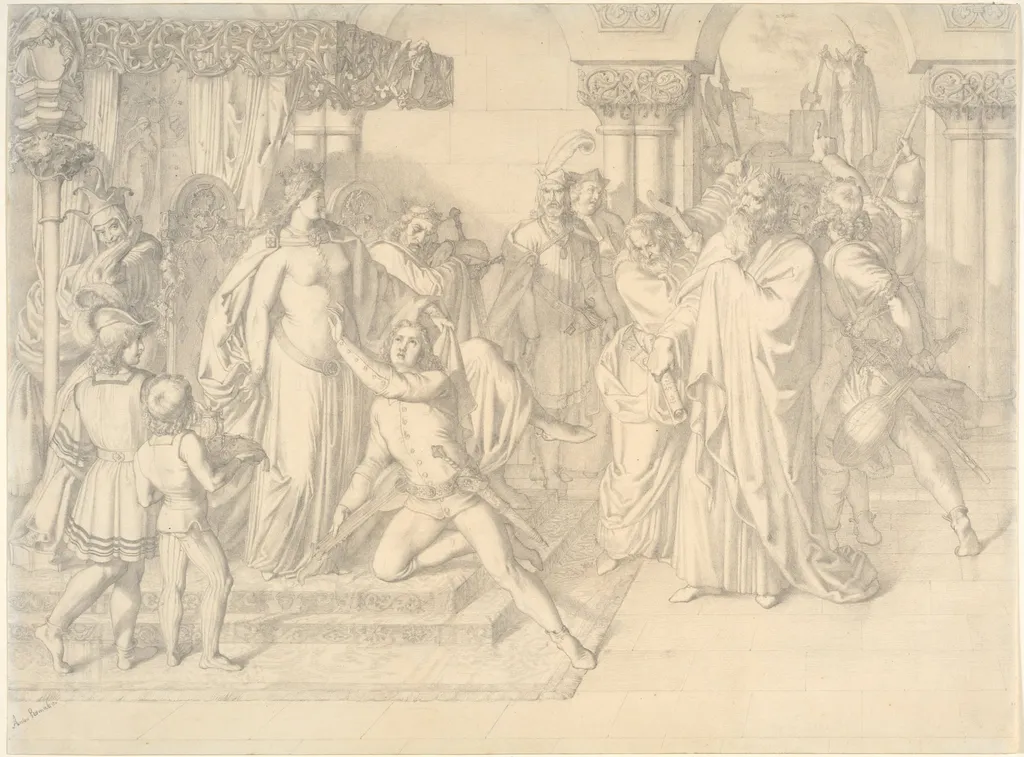
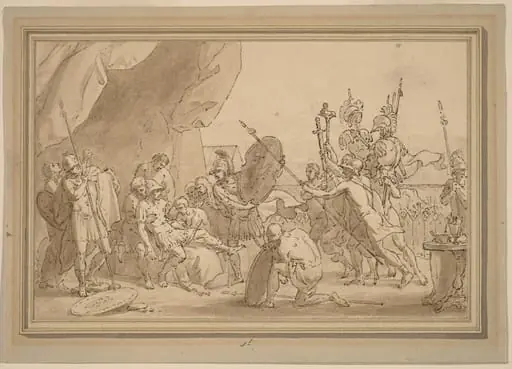
Singers' Contest on the Wartburg is a drawing by the Romanticist artist Anton Romako. It dates from 1853 and is held in the collection of the Cleveland Museum of Art. This drawing by Romako illustrates a pivotal moment from the medieval German legend known as the Sängerkrieg, or Minstrels' Contest.
About this work
Overview
This drawing by Romako illustrates a pivotal moment from the medieval German legend known as the Sängerkrieg, or Minstrels' Contest.
This drawing by Romako illustrates a pivotal moment from the medieval German legend known as the Sängerkrieg, or Minstrels' Contest. It captures the climax of a deadly competition among court poets, where the victor, Heinrich von Ofterdingen, faces execution until he pleads for clemency before Countess Sophia. The scene is rendered with emotional intensity, emphasizing the tension between mercy and vengeance.
Subject & Meaning
Heinrich von Ofterdingen, a young and gifted minstrel, has won the singing contest but is condemned by his envious rivals. His plea to Countess Sophia—a figure of moral authority—offers a chance at redemption. The composition contrasts his vulnerability with the hostility of the surrounding musicians, underscoring themes of artistic merit versus jealousy, and the power of grace over retribution.
Technique & Style
Romako employs chiaroscuro to heighten the drama, directing light toward Heinrich’s face and outstretched hands, isolating him from the shadowed figures behind. The contrast enhances the emotional weight of his appeal, while the restrained line work and tonal gradations convey both intimacy and grandeur. The setting, suggested rather than fully detailed, focuses attention on the psychological interplay between the central figures.
History & Provenance
The drawing stems from Romako’s engagement with 19th-century German romanticism, which revived medieval legends as symbols of national identity. Created during a period of renewed interest in Minnesang poetry and Wartburg Castle’s cultural legacy, the work reflects scholarly and artistic fascination with the mythic past. Its precise origin remains undocumented, but it aligns with Romako’s known thematic interests.
Context
The Wartburg Castle in Thuringia was a real site associated with medieval minstrelsy and the legendary contest, later immortalized in literary works like Wagner’s Tannhäuser. Romako’s depiction draws from these traditions, filtering them through a romantic lens that valued emotional truth over historical accuracy. The scene reflects broader 19th-century efforts to reconnect with a mythologized Germanic past.
Legacy
Though not widely exhibited, the drawing contributes to a body of 19th-century illustrations that reimagined medieval tales for modern audiences. It exemplifies how historical legends were visually reinterpreted to explore timeless human conflicts—artistic rivalry, moral authority, and the fragility of life. Its quiet power lies in its restraint, avoiding spectacle in favor of psychological nuance.
Artist & collection

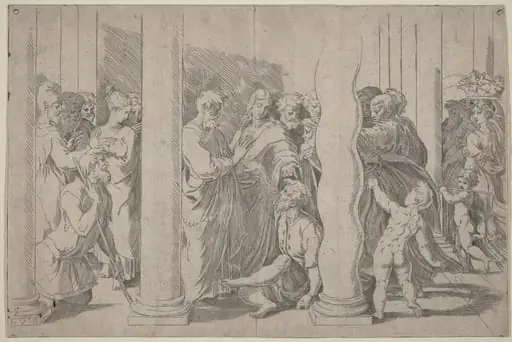 Saints Peter and John Healing the Lame Man at the Golden Gate
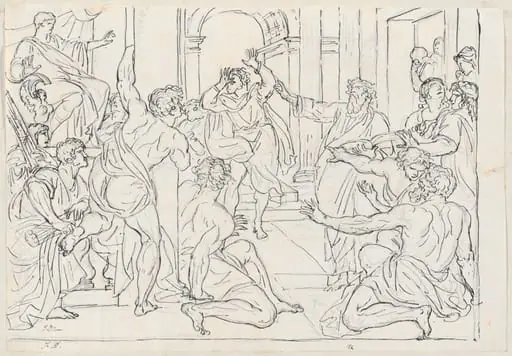 The Blinding of Elymas
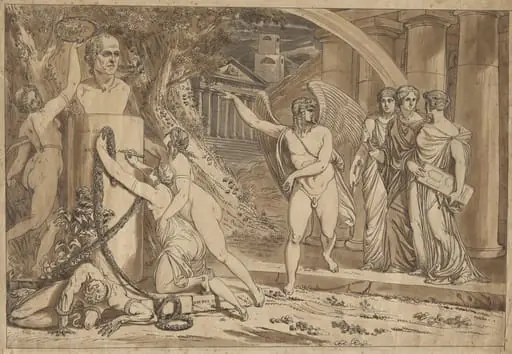 Virtues Crowning the Bust of Canova
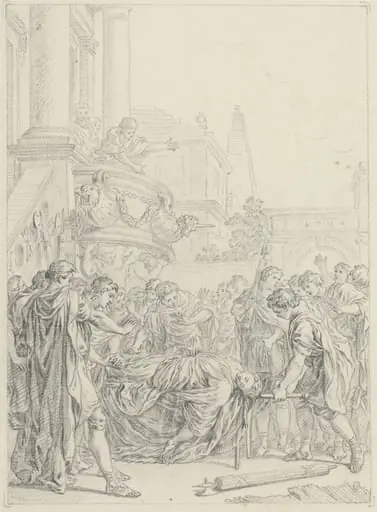 Du plus grand des Romains voilà ce qui vous reste
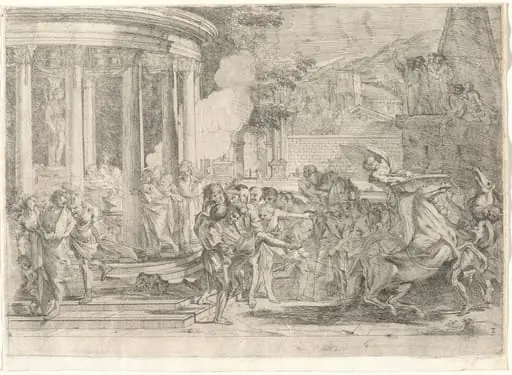 Camma and Sinorix
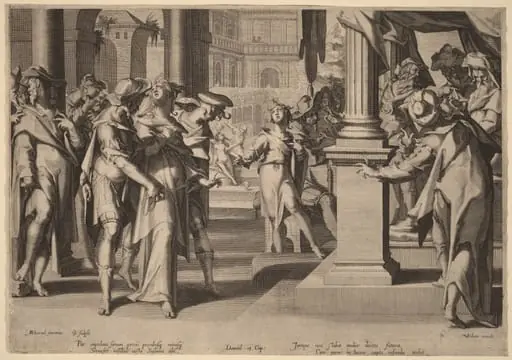 Suzannah before Daniel
 Meeting of Solomon and Queen of Sheba
![The Martyrdom of Saints Peter and Paul [recto], by Antonio da Trento](https://artifactworldgallery.com/img/antonio-da-trento--the-martyrdom-of-saints-peter-and-paul-recto--a51e90060085a207-w320.webp) The Martyrdom of Saints Peter and Paul [recto]
The Martyrdom of Saints Peter and Paul [recto] Death of Iphigenia (?)
 A Performance by the Commedia dell'Arte
 Esther before Ahasuerus
 Death of a General