Artwork
Perspektivhändler (Telescope Seller)
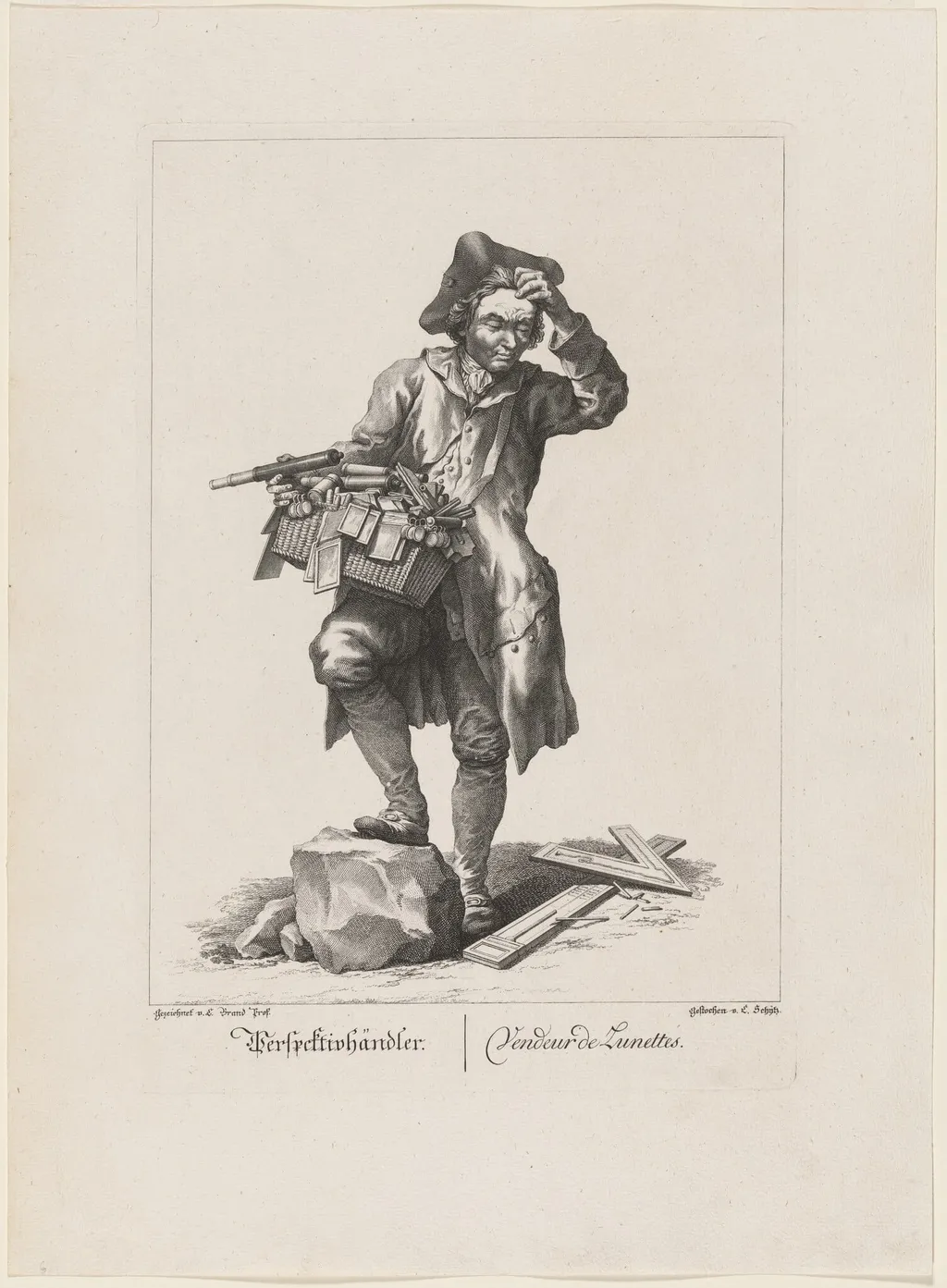
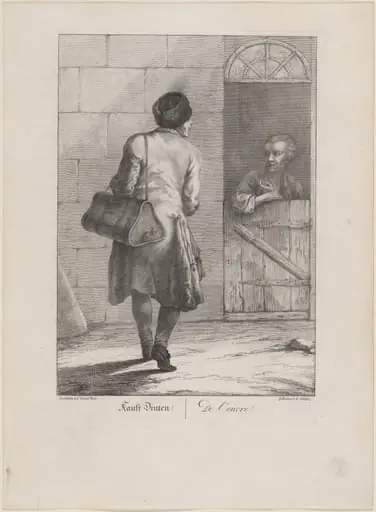
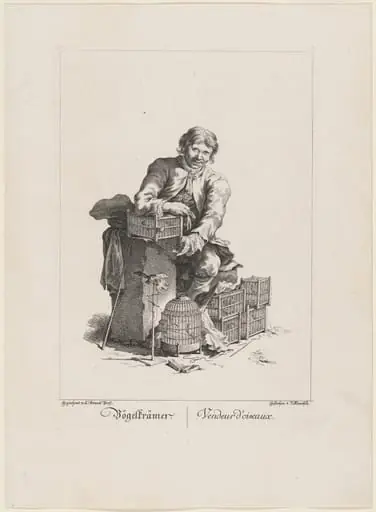
Perspektivhändler (Telescope Seller) is an ink print by the Romanticist artist Carl Schütz. It dates from 1775 and is held in the collection of the National Gallery of Art.
About this work
Overview
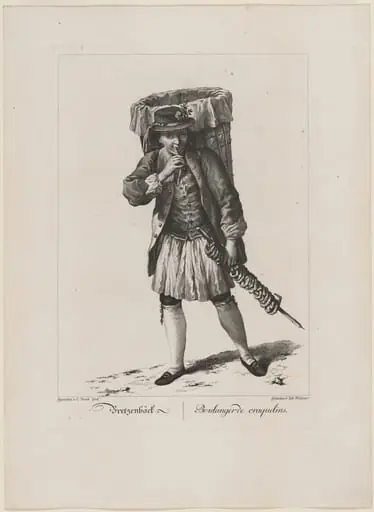
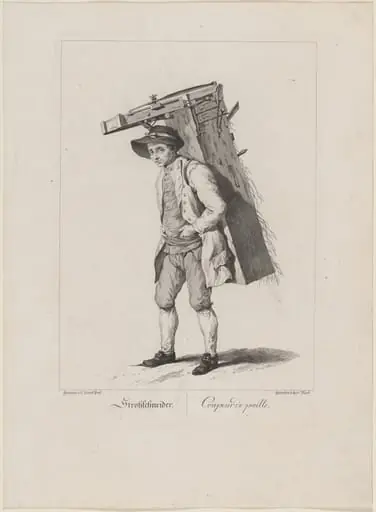
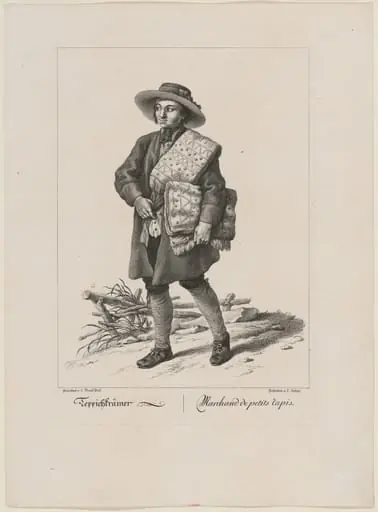
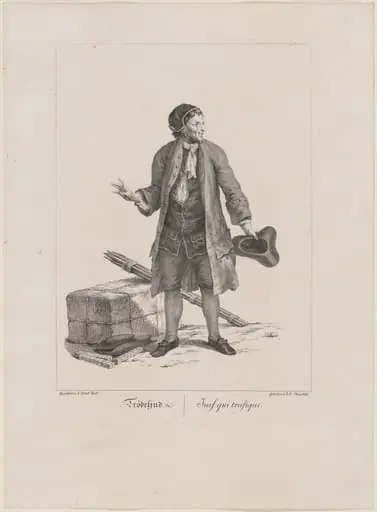
Carl Schütz’s 1775 engraving, titled *Perspektivhändler* (Telescope Seller), depicts a solitary figure on a rocky outcrop. The man, dressed in typical eighteenth‑century clothing with a tricorn hat and knee‑high boots, holds a basket of assorted items while peering through a telescope held in his right hand.
Subject & Meaning
The composition centers on the act of observation, suggesting a curiosity about the surrounding landscape or distant objects. The basket’s contents—a small box and a sheet of paper—hint at the merchant’s trade, while the telescope emphasizes the period’s growing interest in scientific instruments and exploration.
Technique & Style
Executed as an engraving, the work relies on incised lines to render texture and depth, allowing subtle gradations of light across the figure’s coat and the rocky ground. Schütz’s handling of line creates a clear contrast between the crisp details of the telescope and the softer rendering of the background.
History & Provenance
Created in 1775, the print belongs to the late‑Baroque tradition of German printmaking, a period when engravers often produced genre scenes for a burgeoning market of collectors. The work is documented in several museum catalogues, confirming its attribution to Schütz and its circulation among eighteenth‑century prints.
Context
The image reflects the Enlightenment era’s fascination with optics and travel. Telescopes, increasingly accessible to merchants and scholars, symbolized the expanding horizons of knowledge, a theme frequently explored in contemporary visual culture.
Artist & collection