Artwork
Kauft Tinter (Ink Seller)
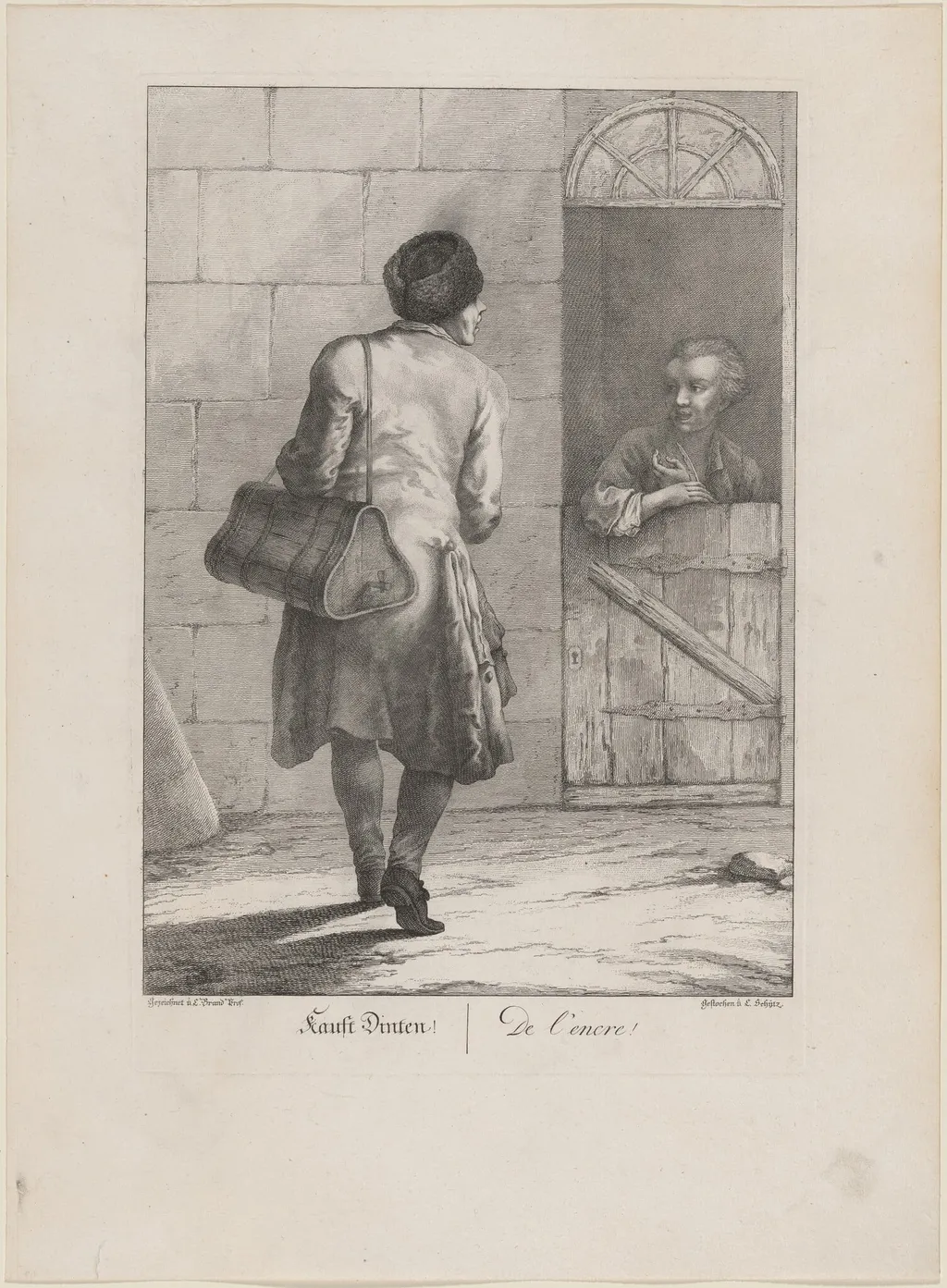
Kauft Tinter (Ink Seller) is an ink print by the Romanticist artist Carl Schütz. It dates from 1775 and is held in the collection of the National Gallery of Art.
About this work
Overview
It depicts a street vendor walking away from the viewer, carrying a bag over his shoulder, while a woman observes him from a window above.
Carl Schütz created this print in 1775 using engraving and etching on laid paper. It depicts a street vendor walking away from the viewer, carrying a bag over his shoulder, while a woman observes him from a window above. The scene captures a quiet moment of urban commerce, framed by a modest stone building with a small arched window. The inscription 'Kauft Tinten!' suggests the figure is offering ink, a common writing material of the era.
Subject & Meaning
The figure is likely a traveling ink seller, a common itinerant tradesperson in 18th-century Europe. His movement away from the window implies a transaction may have just occurred or is being considered. The woman’s gaze introduces a subtle narrative tension—curiosity, hesitation, or perhaps indifference. The scene reflects daily economic life, emphasizing the quiet persistence of small-scale vendors in urban settings.
Technique & Style
Schütz employed fine, controlled lines typical of engraving, combined with the tonal flexibility of etching. The contrast between the man’s dark coat and the textured stone wall creates depth, while delicate hatching models light across surfaces. The woman’s figure is rendered with lighter, looser strokes, distinguishing her as a background element. The precision of the lines enhances the realism without overt dramatization.
History & Provenance
The print was made in 1775, during Schütz’s active period as a German printmaker. Few of his works survive in significant numbers, and this piece is among the better-documented examples. It likely circulated as a standalone image or was included in collections of genre scenes. Its survival suggests it was valued for its observational detail rather than its artistic fame.
Context
In late 18th-century German towns, itinerant sellers supplied essential goods like ink, needles, and thread to households without easy access to markets. Such figures were familiar yet unglamorous, often overlooked in official art. Schütz’s focus on this subject aligns with a growing interest in everyday life, reflecting Enlightenment-era curiosity about ordinary people and their routines.
Legacy
Schütz’s print contributes to a modest but persistent tradition of genre prints that documented working-class life without idealization. Though not widely influential in the broader art world, it remains a clear example of how skilled printmakers captured the textures of daily existence. Its preservation offers insight into the visual culture of provincial German communities in the late 1700s.
Artist & collection


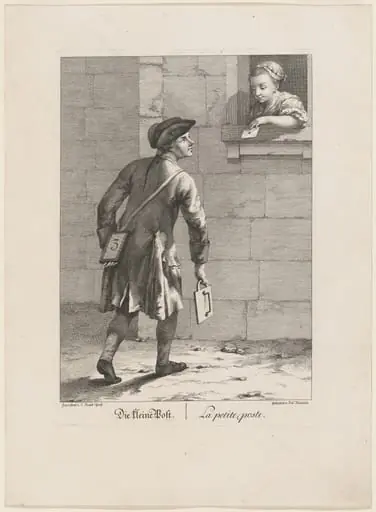 Die kleine Post (The Small Post)
 Saint-Preux sort de chez des femmes du monde
 Strohschneider (Straw Cutter)
 A New Love Song Only a Ha'Penny a Piece
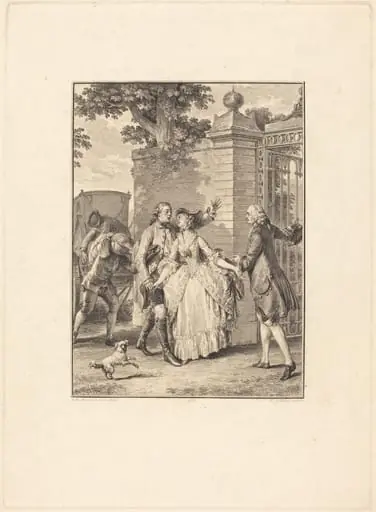 La confiance des belles âmes
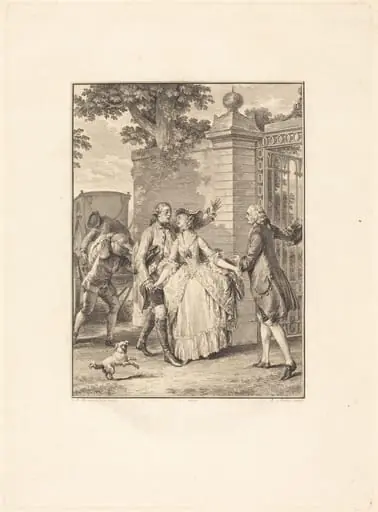 La confiance des belles âmes
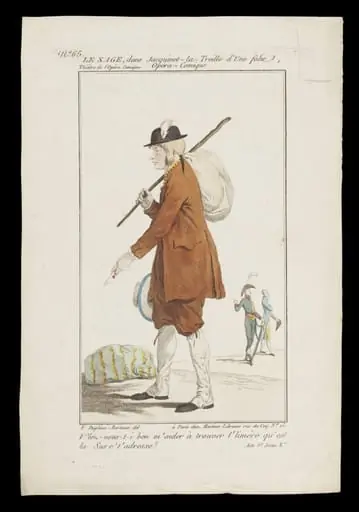 H Beard Print Collection
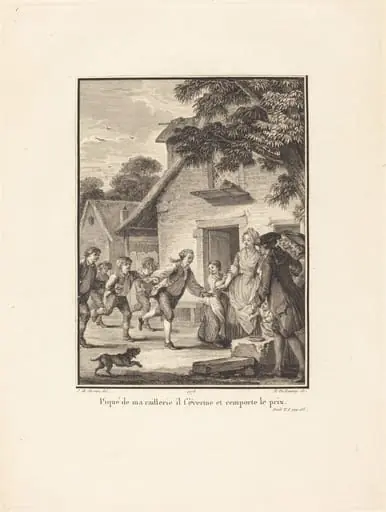 Piqué de ma raillerie, il s'évertue et remporte le prix
 Alix malade
 Kupferstichhändler (Print Seller)
 Trödeljud (Jewish Peddler)