Artwork
Lowland Marsh with Water Birds
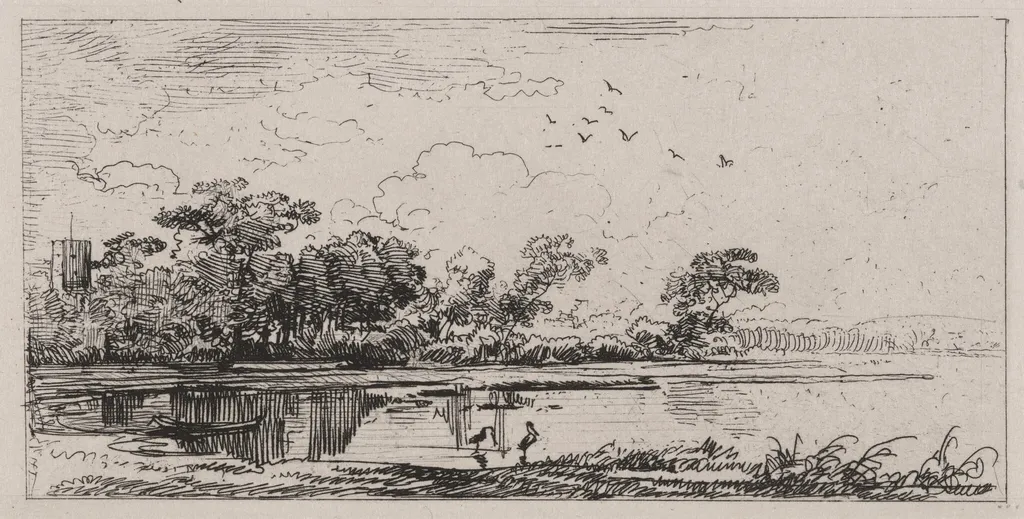
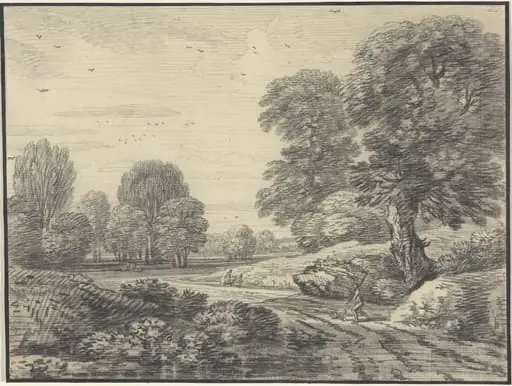
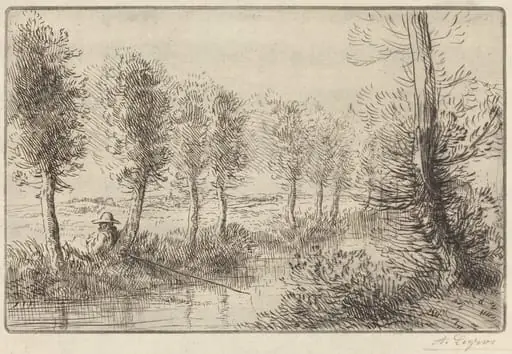
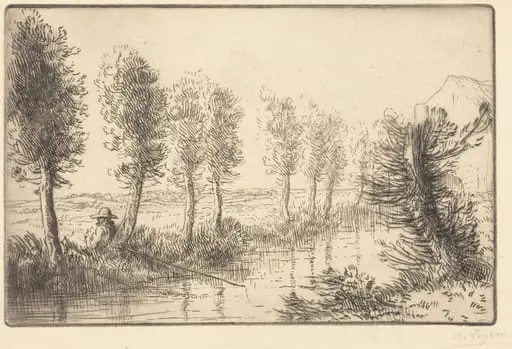
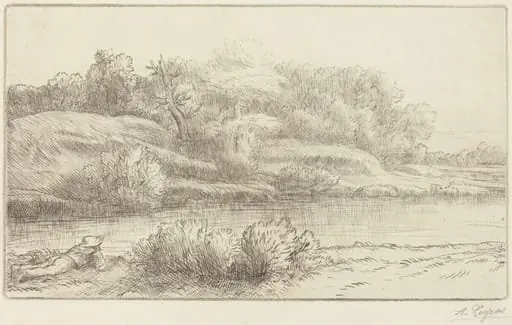
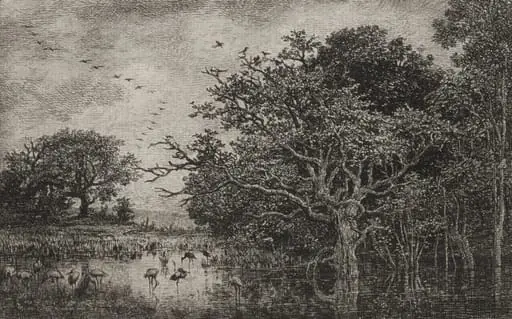
Lowland Marsh with Water Birds is an ink print by the Romanticist artist Caspar Johann Nepomuk Scheuren. It dates from 1842 and is held in the collection of the National Gallery of Art.
About this work
Overview
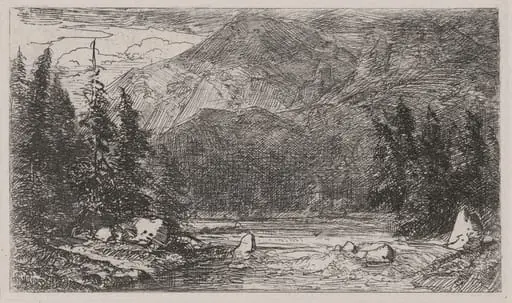
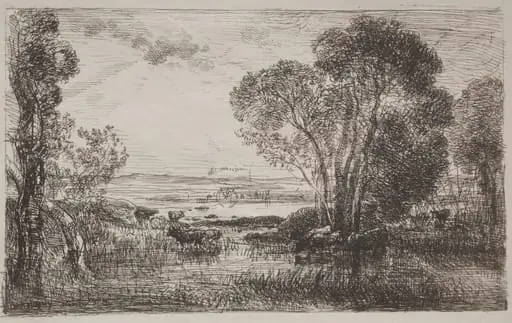
Created in 1842, this etching by Caspar Johann Nepomuk Scheuren depicts a tranquil lowland marsh at transitional light.
Created in 1842, this etching by Caspar Johann Nepomuk Scheuren depicts a tranquil lowland marsh at transitional light. The composition emphasizes stillness and subtle movement, with reeds, water, and distant trees forming a quiet horizon. The work belongs to the printmaking tradition of the 19th century, where direct observation informed delicate tonal effects achieved through incised lines on copper.
Subject & Meaning
The scene portrays a marsh at dawn or dusk, inhabited by water birds drifting near the surface. Tall reeds and low vegetation frame the water, while a dark band of trees recedes into the sky. There is no human presence; the focus lies in the natural rhythm of the wetland, suggesting an appreciation for quiet, unaltered landscapes common in Romantic-era naturalism.
Technique & Style
Scheuren employed rapid, incised lines to suggest texture and light reflection on water. The etching’s scratchy, fluid strokes convey immediacy, as if drawn on-site. Acid-bitten grooves on a copper plate allowed for fine gradations of tone, capturing the soft glow of twilight and the feathery edges of reeds without heavy shading or detail.
History & Provenance
The print was produced in 1842 during Scheuren’s active period in Germany, when landscape etching was gaining traction among artists seeking intimate natural studies. While specific early ownership records are sparse, the work aligns with private collections of the time that favored detailed, atmospheric prints over grand historical subjects.
Context
In mid-19th-century Europe, artists increasingly turned to everyday natural scenes as subjects worthy of serious attention. Scheuren’s etching reflects this shift, echoing contemporaries who valued direct observation and technical precision in printmaking. It stands apart from idealized landscapes, favoring quiet realism and the transient effects of light.
Legacy
Though not widely exhibited today, the etching exemplifies the quiet precision of German Romantic printmaking. Its emphasis on atmosphere over narrative influenced later generations of landscape artists who sought to capture fleeting moments in nature through direct, hand-crafted techniques.
Artist & collection