Artwork
Watchtower on a Cliff with a Stream
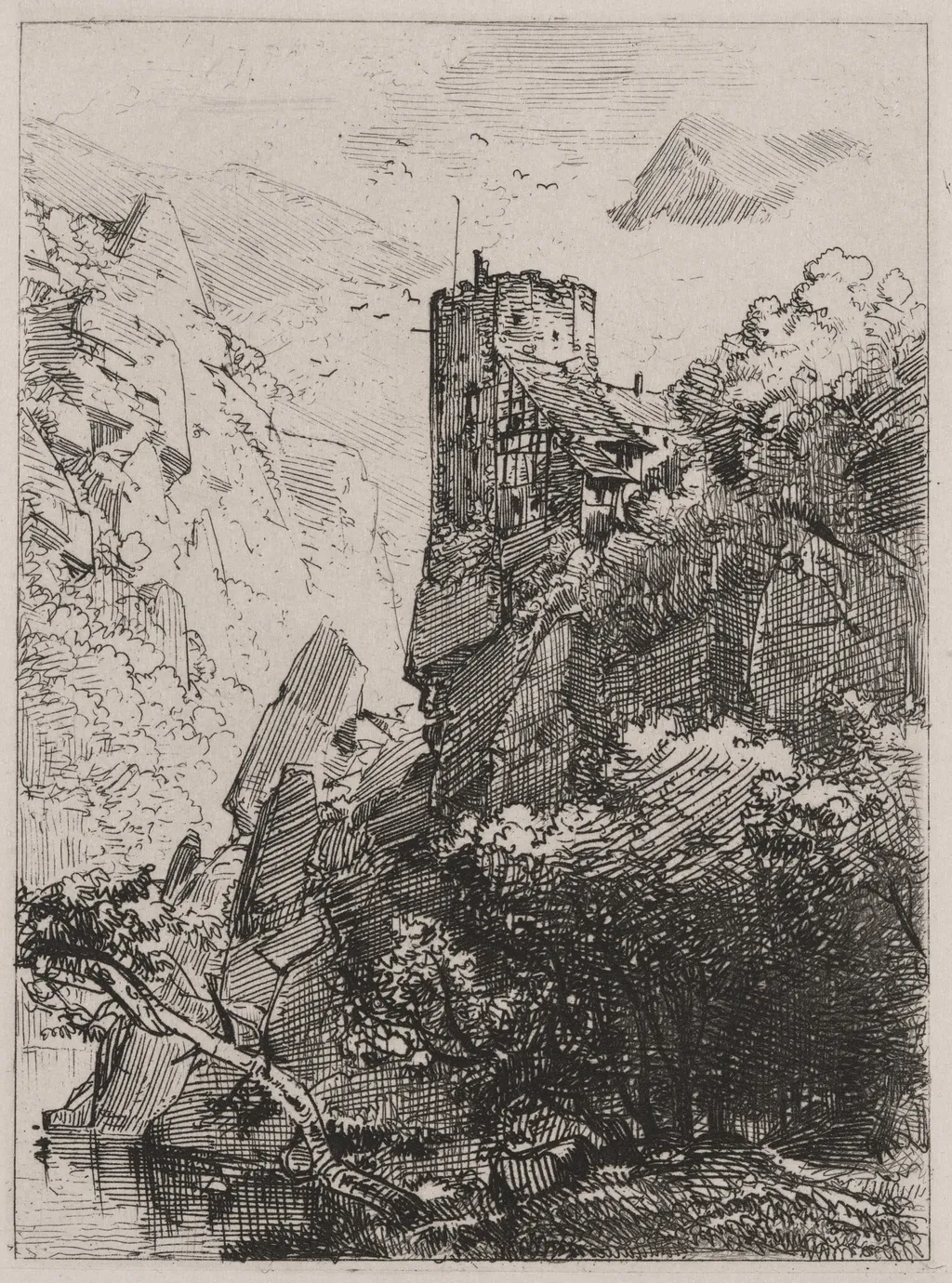
Watchtower on a Cliff with a Stream is an ink print by the Romanticist artist Caspar Johann Nepomuk Scheuren. It dates from 1842 and is held in the collection of the National Gallery of Art.
About this work
Overview
Created in 1842, this etching by Caspar Johann Nepomuk Scheuren depicts a solitary watchtower perched on a rocky cliff above a winding stream.
Created in 1842, this etching by Caspar Johann Nepomuk Scheuren depicts a solitary watchtower perched on a rocky cliff above a winding stream. The work belongs to the printmaking tradition of the early 19th century and exemplifies the artist’s interest in landscape as a subject worthy of careful observation. Its composition balances architectural detail with natural elements, inviting contemplation rather than narrative.
Subject & Meaning
The watchtower, though functional in form, appears abandoned, its flagpole bare and window small. It stands as a silent sentinel over a tranquil, untouched stream and dense vegetation. The scene evokes solitude and the passage of time, suggesting human presence as fleeting against the enduring rhythms of nature. There is no indication of activity, reinforcing a mood of quiet isolation.
Technique & Style
Scheuren employed fine, controlled lines and varied hatching to model form and depth. The cliff’s texture is rendered through dense cross-hatching, while the stream is suggested by lighter, fluid strokes. Light falls unevenly across the scene, casting subtle shadows that enhance the tower’s solidity and the foliage’s density. The technique reflects a disciplined approach to etching, prioritizing atmospheric effect over dramatic contrast.
History & Provenance
The etching was produced during Scheuren’s active period in Germany, when topographical and romantic landscapes were popular among collectors. It likely circulated as a standalone print or within a series of Alpine and riverine views. No documented early ownership is recorded, but its preservation suggests it was valued by private collectors interested in detailed landscape prints of the era.
Context
Emerging in the wake of Romanticism’s emphasis on nature’s emotional power, this work aligns with a broader European trend of depicting wild or remote landscapes as sites of introspection. Unlike grander Romantic paintings, Scheuren’s etching avoids theatricality, instead offering a restrained, intimate view that reflects the quiet dignity of the natural world and the modest traces of human habitation within it.
Legacy
Scheuren’s etchings, including this one, are noted for their technical precision and understated mood. While not widely exhibited today, they remain part of the 19th-century German printmaking canon, appreciated for their sensitivity to light and terrain. The work contributes to a quieter strand of Romanticism—one that finds significance in the subtle, the overlooked, and the still.
Artist & collection

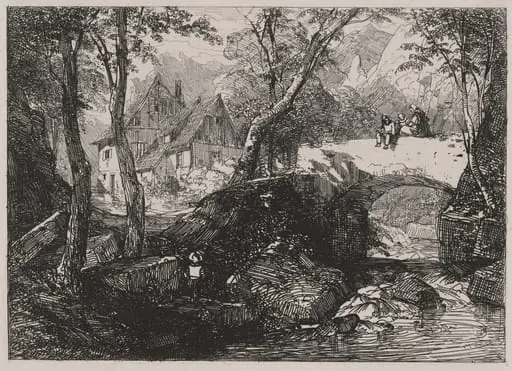
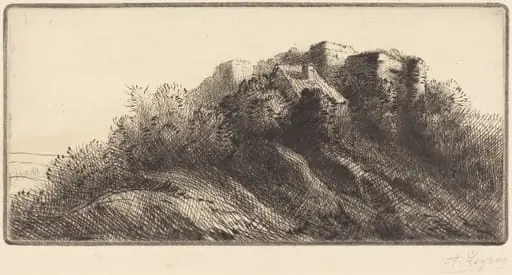 Landscape (Paysage)
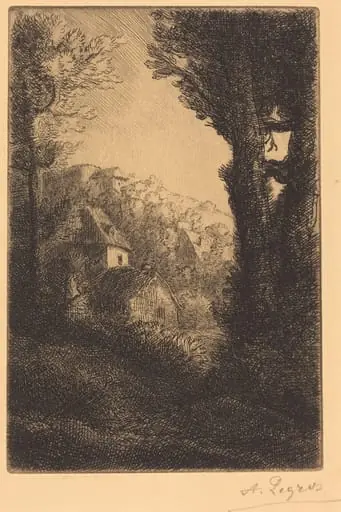 Farm on a Hillside in Sunlight (La ferme du coteau; Effet de soleil sur le coteau)
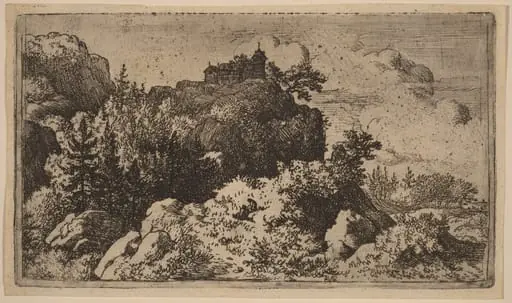 Firs in the Defile
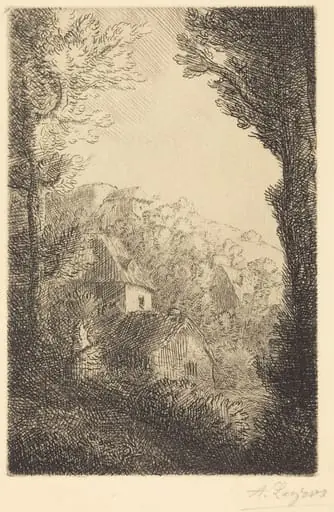 Old Chateau (Un vieux chateau)
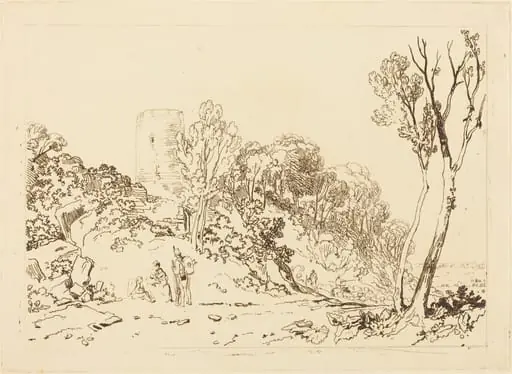 Winchelsea, Sussex
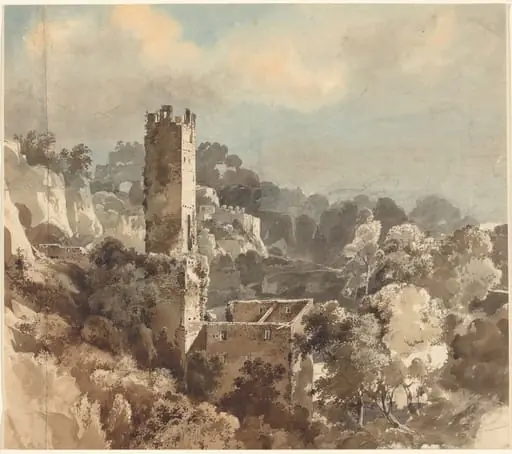 Ruins of a Fortified Tower among Wooded Hills
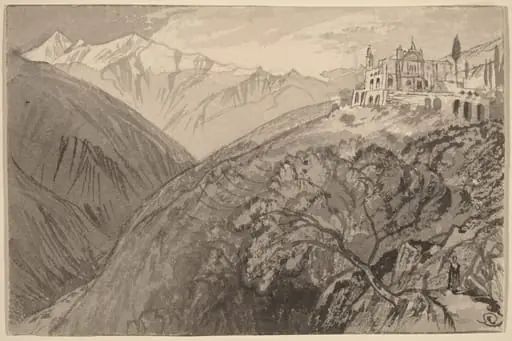 A Town on a Hilltop (Sanctuary of Lampedusa)
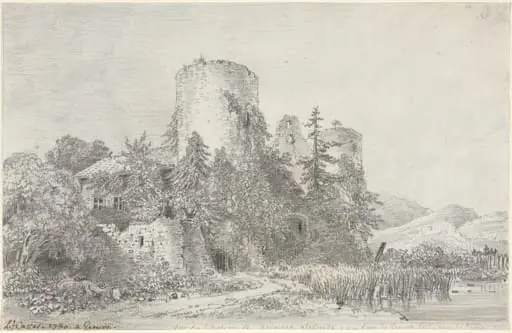 Vue du Chateau de Saconnex
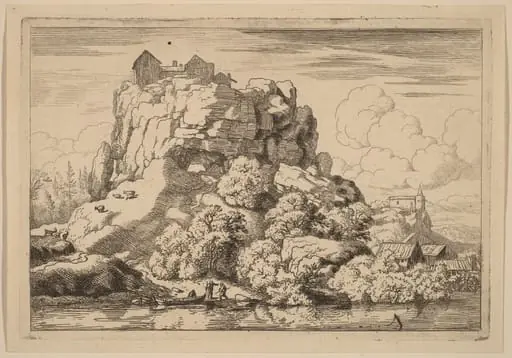 River at the Foot of a High Rock
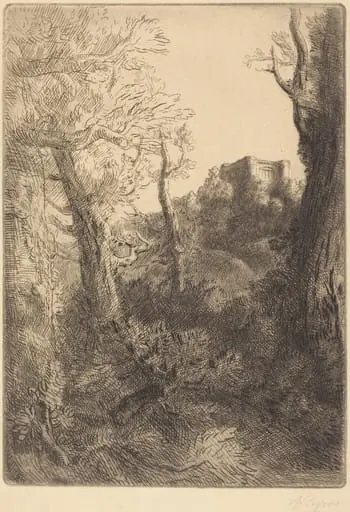 Landscape (Paysage)
![Convent of Theokiario [Dochiarion], by Unknown](https://artifactworldgallery.com/img/unknown--convent-of-theokiario-dochiarion--203f17a28859cf34-w320.webp) Convent of Theokiario [Dochiarion]
Convent of Theokiario [Dochiarion]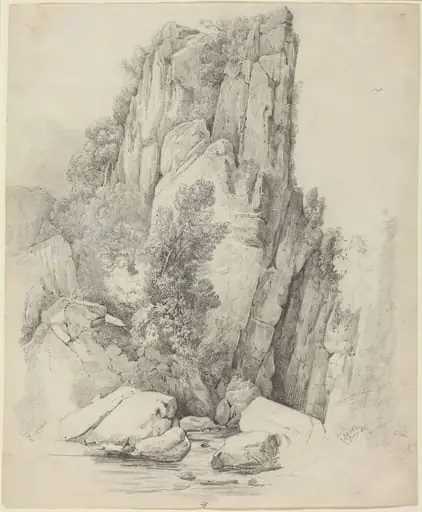 Rock Cliffs above a Stream