Artwork
A Town on a Hilltop (Sanctuary of Lampedusa)
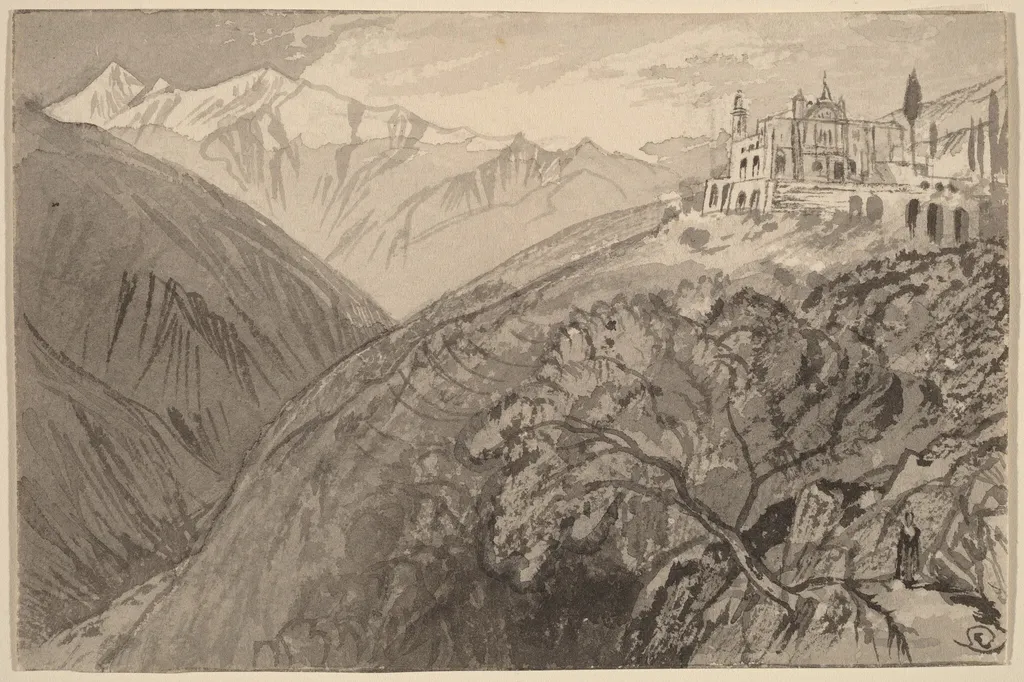
A Town on a Hilltop (Sanctuary of Lampedusa) is an ink drawing by the Impressionist artist Edward Lear. It dates from 1884 and is held in the collection of the National Gallery of Art.
About this work
Overview
Edward Lear’s 1884 drawing *A Town on a Hilltop (Sanctuary of Lampedusa)* is executed in gray wash with selective pen and black ink on card.
Edward Lear’s 1884 drawing *A Town on a Hilltop (Sanctuary of Lampedusa)* is executed in gray wash with selective pen and black ink on card. Part of his broader practice of recording landscapes during travels, the work balances observational precision with a fluid, almost improvisational handling of medium. The composition centers on a hilltop settlement, rendered with economical yet expressive strokes.
Subject & Meaning
The drawing depicts a remote church perched atop rugged terrain, likely the Sanctuary of Lampedusa. A winding path ascends toward the structure, punctuated by diminutive figures that emphasize scale and isolation. The scene reflects Lear’s interest in documenting marginal landscapes—places where human presence appears precarious against the dominance of natural forms. The work functions as both topographical record and atmospheric study.
Technique & Style
Lear employs a restrained palette of grays, layered through wash and selective ink detailing. The terrain’s uneven texture emerges from rapid, sketch-like strokes, while cross-hatching builds shadow and depth. This approach prioritizes immediacy over finish, capturing the landscape’s rough character through suggestive rather than meticulous linework. The technique aligns with Lear’s practice of producing on-site studies for later refinement.
History & Provenance
Created during Lear’s travels in the Mediterranean, the drawing belongs to a series of works intended for publication as illustrations. Like many of his landscape studies, it remained part of his personal collection until dispersed posthumously. Its current ownership and exhibition history reflect the broader market for 19th-century travel drawings, where such works are valued as both artistic and documentary objects.
Context
The drawing exemplifies the 19th-century tradition of travel sketching, where artists documented landscapes for both personal reference and public consumption. Lear’s focus on Lampedusa—a geographically peripheral site—aligns with contemporary interest in remote or exotic locales. His dual identity as writer and draftsman further situates the work within a period where visual and literary travel narratives often intersected.
Own this work as a print
Artist & collection

Artist
Edward Lear (12 May 1812 – 29 January 1888) was an English artist, illustrator, musician, author and poet, who is known mostly for his literary nonsense in poetry and prose and especially his limericks, a form he popularised but which term…


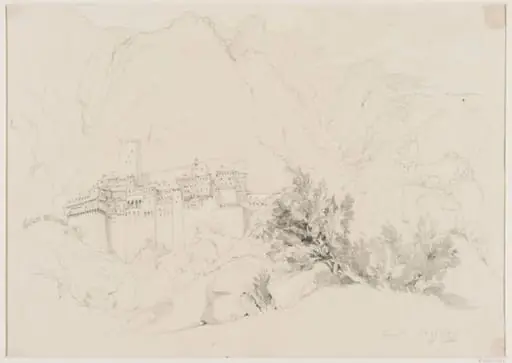 Convent F<sup>t</sup> of Paul, M<sup>t</sup> Athos
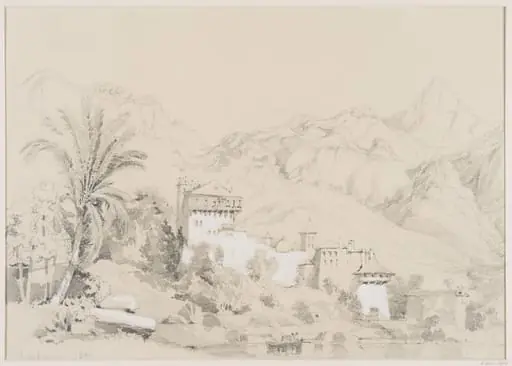 Russikon, 1843
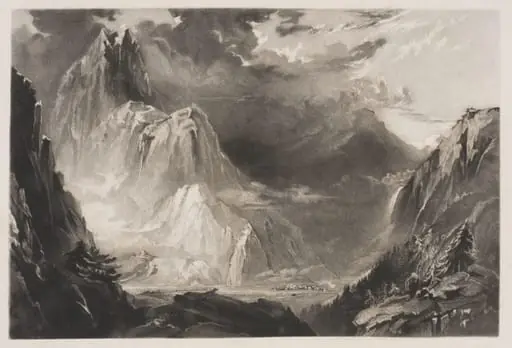 The Pass Between Dale and Dalsjed
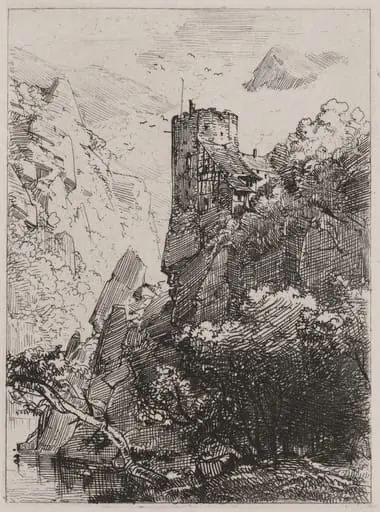 Watchtower on a Cliff with a Stream
 Mount Kinchinjunga (All Things Fair)
 The Shining Rocks, Delphi
 Veduta di Albe e Monte Velino negli Abruzzi
 Mountain View with Lake
 An Alpine Village in Summertime
 A View Near Rome
 Eglise Saint-Jean, Thiers