Artwork
Ruined Stairs at Neuss
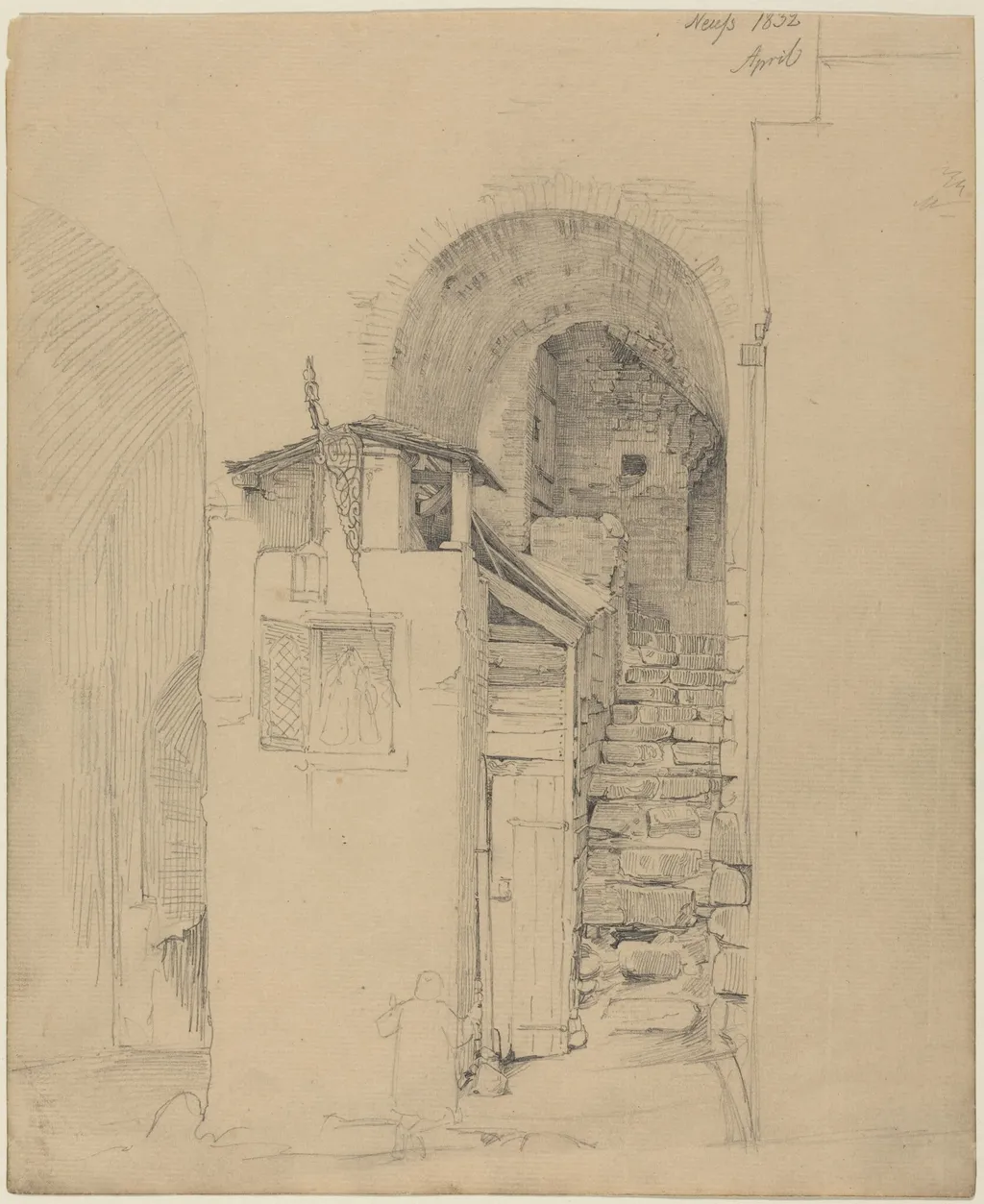
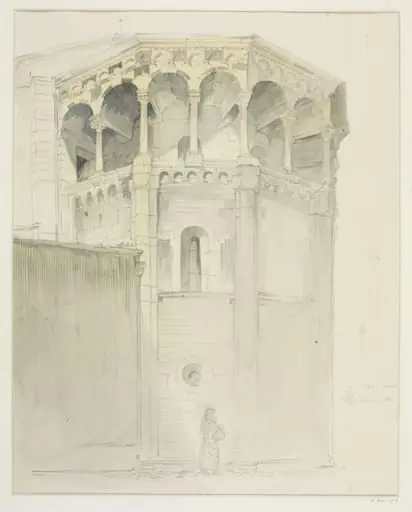
Ruined Stairs at Neuss is a graphite drawing by the Romanticist artist Johann Wilhelm Schirmer. It dates from 1832 and is held in the collection of the National Gallery of Art.
About this work
Overview
Johann Wilhelm Schirmer’s 1832 drawing *Ruined Stairs at Neuss* presents a quiet, decaying architectural fragment rendered in graphite on laid paper. The composition centers on a set of weathered stone steps that ascend amid surrounding walls and vegetation, offering a study of ruin and the passage of time within a modest landscape format.
Subject & Meaning
The work captures a fragment of a once‑functional stairway, now overtaken by moss and the encroaching foliage of Neuss. By isolating the stairs, Schirmer invites contemplation of the interplay between human construction and natural reclamation, suggesting a narrative of abandonment and the subtle beauty found in decay.
Technique & Style
Executed in graphite, the drawing relies on fine hatching and tonal variation to convey the texture of stone, the softness of plant life, and the atmospheric depth of the scene. The laid paper surface adds a slight grain that enhances the impression of age, while the restrained palette underscores the work’s contemplative mood.
History & Provenance
Schirmer, born in Jülich in 1807, emerged as a prominent German landscape painter and draughtsman. *Ruined Stairs at Neuss* dates from an early period of his career, reflecting his interest in integrating architectural remnants within natural settings. The drawing has remained in private collections before entering its current institutional holding.
Artist & collection

Artist
Johann Wilhelm Schirmer (5 September 1807 in Jülich – 11 September 1863 in Karlsruhe) was a German landscape artist born in Jülich, within the Prussian Duchy of Jülich.