Artwork
La galerie Notre-Dame, Paris (The Gallery of Notre Dame, Paris)
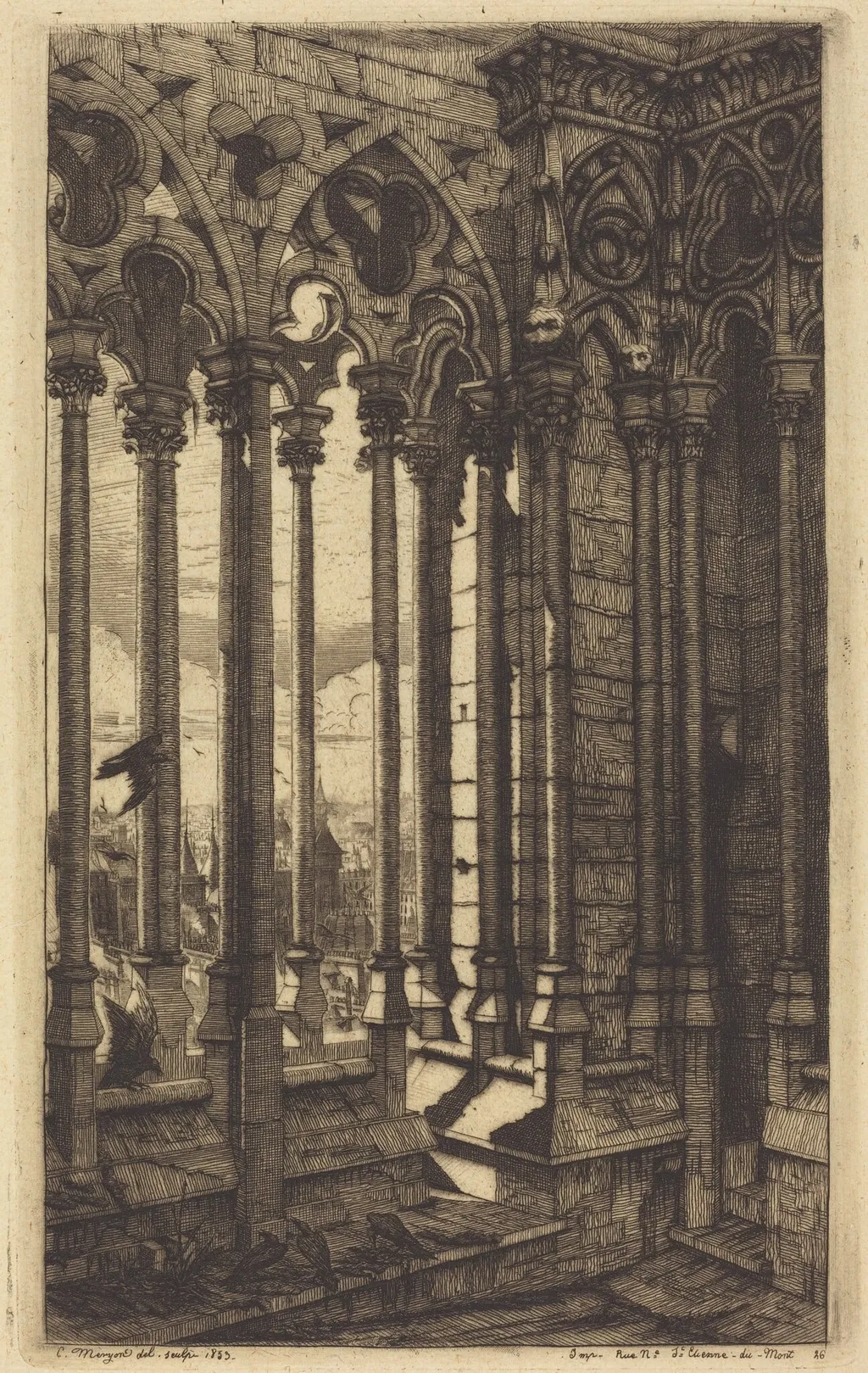
La galerie Notre-Dame, Paris (The Gallery of Notre Dame, Paris) is an ink print by the Impressionist artist Charles Meryon. It dates from 1853 and is held in the collection of the National Gallery of Art.
About this work
Overview
The work belongs to a series documenting Parisian architecture, rendered in monochrome to emphasize form and atmosphere.
Created in 1853, *La galerie Notre-Dame, Paris* is an etching and engraving on green laid paper by Charles Meryon. The work belongs to a series documenting Parisian architecture, rendered in monochrome to emphasize form and atmosphere. Meryon, largely self-taught and colorblind, focused exclusively on printmaking, using line and tone to capture the city’s structural character rather than its color or movement.
Subject & Meaning
The print depicts a narrow alleyway flanked by timber-framed buildings near Notre-Dame, stripped of contemporary life. Sparse, distant figures suggest human presence without narrative. The absence of activity, combined with the oppressive verticality of the structures, evokes a sense of isolation and timelessness. Meryon’s vision frames the urban fabric not as a bustling scene but as a silent, enduring monument to medieval urbanism.
Technique & Style
Meryon employed fine etched lines and precise engraving to render the rough textures of weathered wood, cracked plaster, and clustered chimneys. The green paper subtly enhances the tonal depth, lending the scene a cool, somber hue. His meticulous handling of cross-hatching and stippling gives each surface a tactile quality, while the leaning facades and receding perspective intensify the alley’s claustrophobic depth.
History & Provenance
The print was produced during Meryon’s most active period, when he was systematically recording Paris’s disappearing medieval quarters. Though exhibited in France and collected by institutions such as the Bibliothèque nationale, his work remained obscure outside Francophone circles. *La galerie Notre-Dame* was likely issued as part of a limited portfolio, circulated among print collectors and artists rather than the general public.
Context
In the 1850s, Baron Haussmann’s renovations were rapidly altering Paris’s historic core. Meryon’s prints, including this one, serve as quiet elegies to neighborhoods slated for demolition. His focus on Gothic architecture and neglected alleys contrasted sharply with the era’s push toward modernization, positioning his work as a counter-narrative to official urban progress.
Legacy
Meryon’s influence endures among printmakers drawn to atmospheric line work and urban melancholy. Though overlooked in Anglophone art history for much of the 20th century, his technical precision and emotional restraint have since been reassessed. *La galerie Notre-Dame* exemplifies his singular ability to transform architectural detail into a meditation on decay, memory, and the passage of time.
Artist & collection
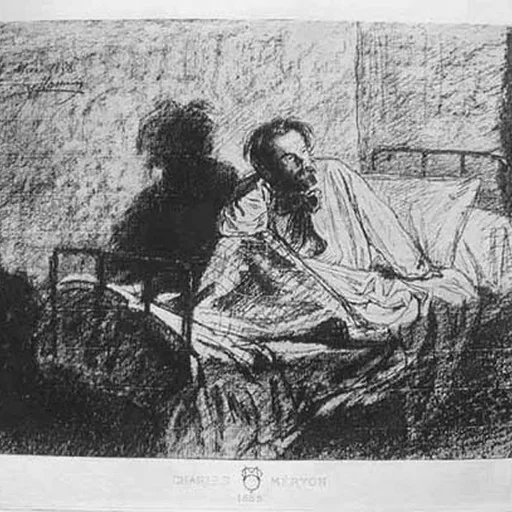
Artist
Charles Meryon (sometimes Méryon, 23 November 1821 – 14 February 1868) was a French artist who worked almost entirely in etching, as he had colour blindness.

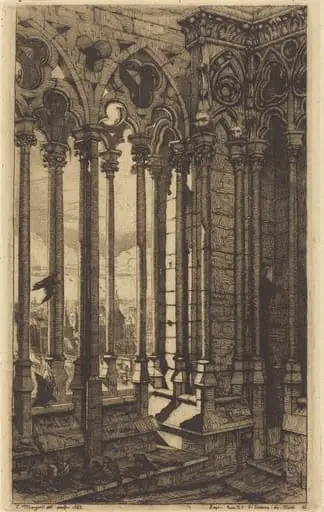 La galerie Notre-Dame, Paris (The Gallery of Notre Dame, Paris)
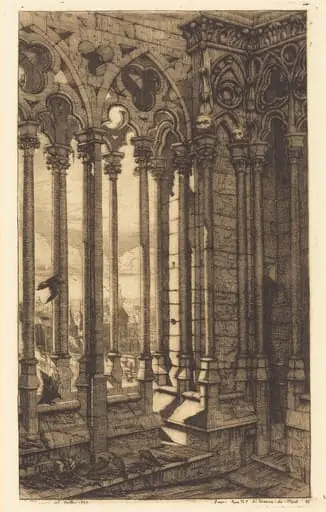 La galerie Notre-Dame, Paris (The Gallery of Notre Dame, Paris)
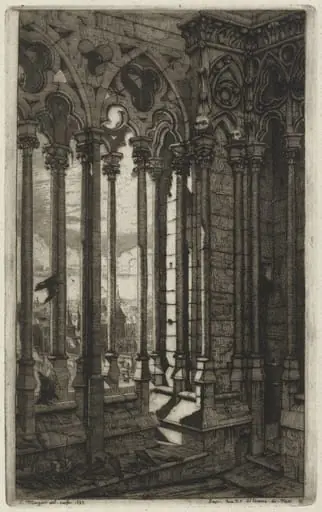 La galerie Notre-Dame, Paris (The Gallery of Notre Dame, Paris)
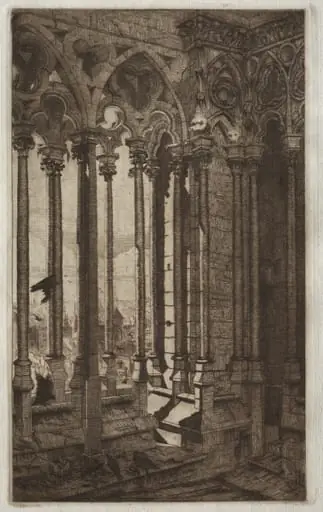 La Galerie Notre Dame
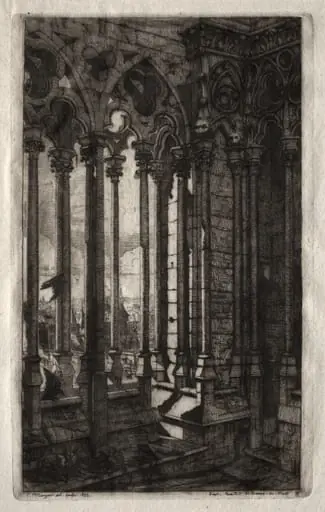 Etchings of Paris: The Gallery of Notre Dame
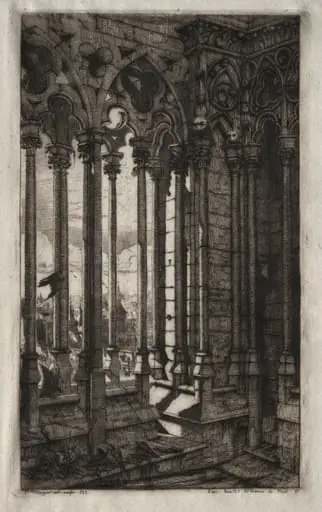 The Etchings of Paris: The Gallery of Notre Dame
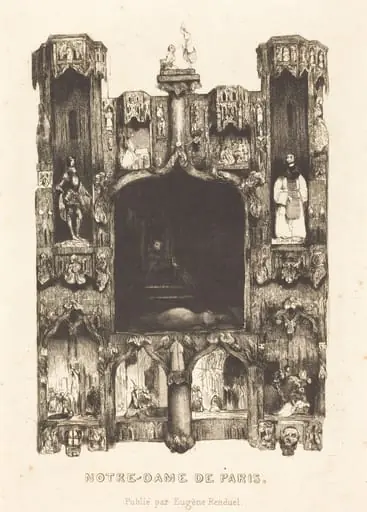 Notre-Dame de Paris