Artwork
Man with a Plumed Cap
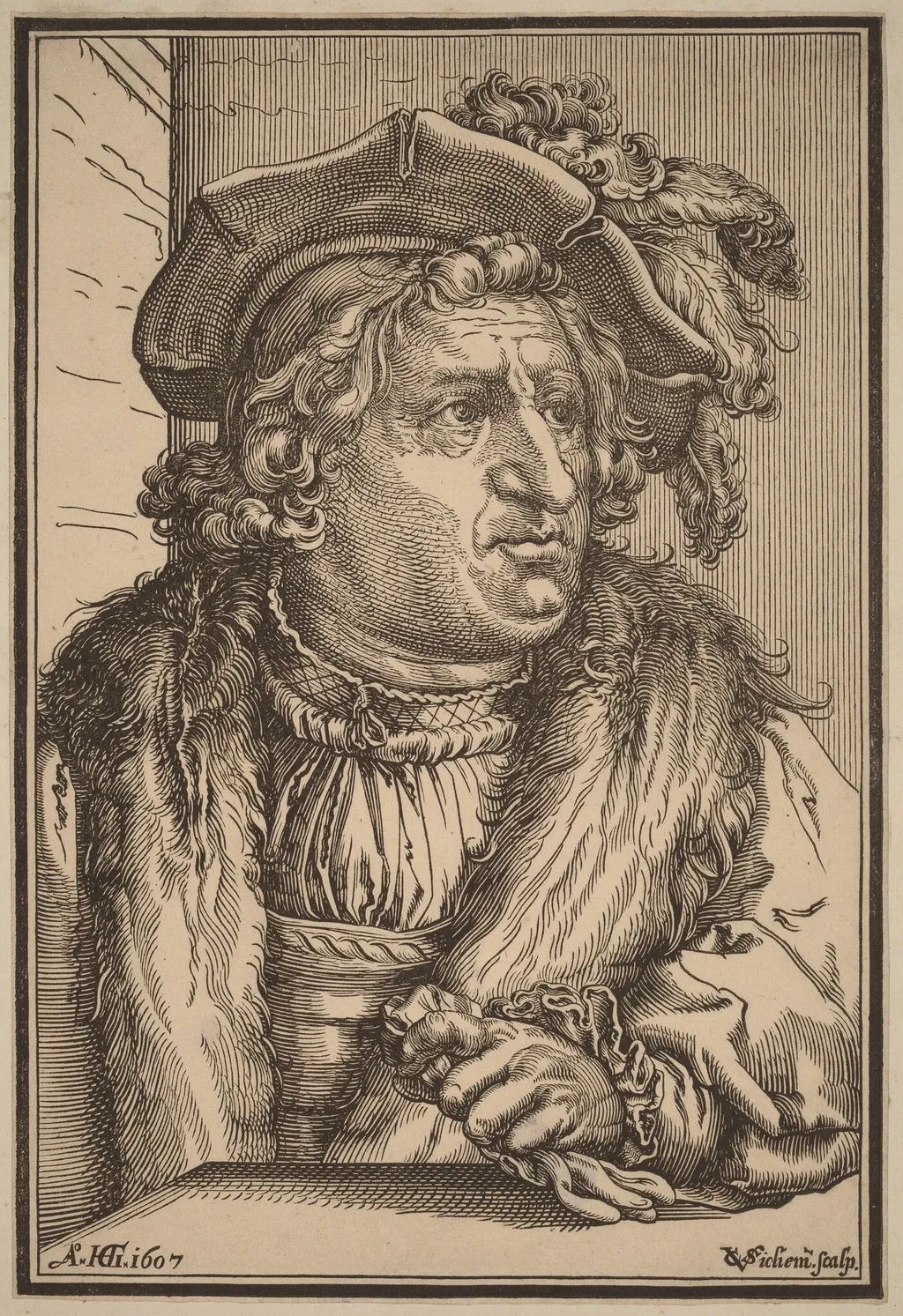
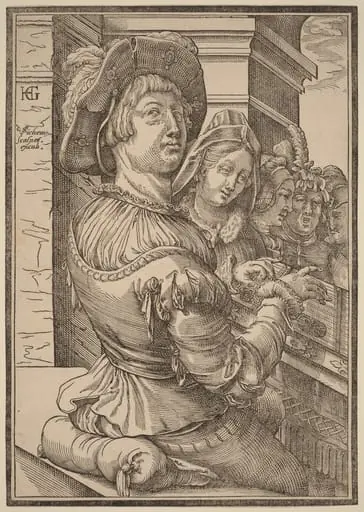
Man with a Plumed Cap is an ink print by the Baroque artist Christoffel van Sichem I. It dates from 1607 and is held in the collection of the National Gallery of Art.
About this work
His hands are clasped in front of him, and he looks straight ahead with a serious expression.
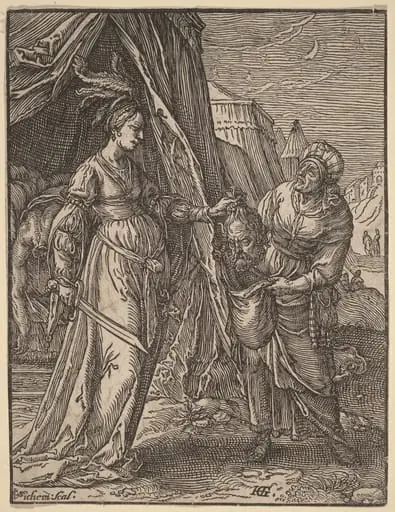
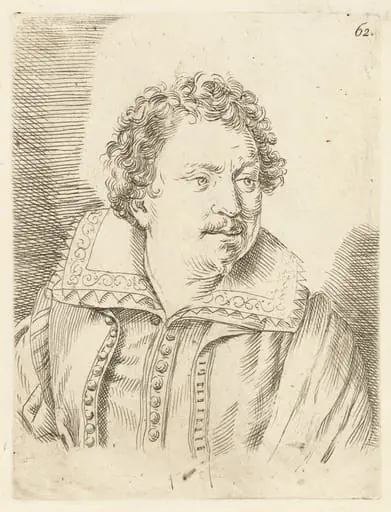
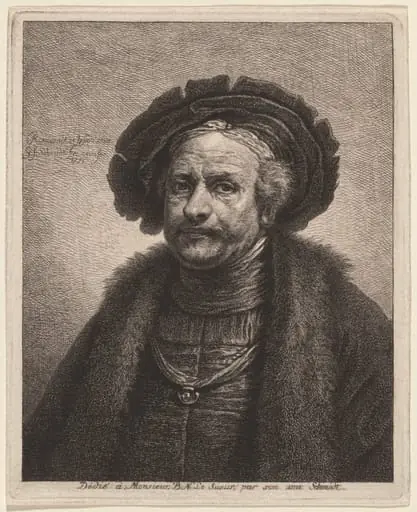
This is a black-and-white portrait of a man in a big, fur-lined coat with a wide collar. His hat has tall, curly feathers poking up from it. His hands are clasped in front of him, and he looks straight ahead with a serious expression. The lines are rough and textured, like the artist used a tool to carve into the wood.
The date "1607" is stamped in the corner, showing this was made over 400 years ago. The artist’s signature is also there, but it’s hard to read.
If you like this style, look up woodcut to see how artists carved images into wood blocks.
Overview
Created in 1607 by Christoffel van Sichem I, this woodcut depicts a formal male portrait rendered in monochrome. Executed on laid paper, the image captures a figure in a fur-trimmed coat and an elaborate feathered hat, his hands folded before him. The date and artist’s mark are inscribed in the lower corner, confirming its origin. The print’s texture arises from carved wood grain, characteristic of early 17th-century relief printing techniques.
Subject & Meaning
The subject is portrayed with solemn dignity, facing the viewer directly with a restrained gaze. His attire—dense fur collar and towering plumed cap—suggests status, possibly civic or military rank. The clasped hands imply composure or reverence, aligning with conventions of portraiture meant to convey authority rather than individual personality. No narrative context is given, emphasizing the figure’s presence over story.
Technique & Style
The image was produced through woodcut printing, where lines were incised into a wooden block and inked for impression. The surface exhibits coarse, deliberate strokes that define texture in fabric and feather, with minimal shading. The artist’s hand is evident in the uneven edges and bold contours, typical of Northern European printmaking before the rise of finer engraving methods.
History & Provenance
The print bears the artist’s signature and the year 1607, placing it within van Sichem’s active period in the Netherlands. Few records detail its early ownership, but its survival suggests it was part of a broader circulation of printed portraits among collectors or artisans. Its preservation reflects the durability of woodcut as a medium and its role in disseminating visual culture before photography.
Context
In early 17th-century Northern Europe, woodcuts were commonly used for book illustrations and portrait reproductions. Van Sichem, active in Utrecht, contributed to this tradition, often depicting figures from civic or clerical life. This print aligns with contemporaneous efforts to standardize visual identity through reproducible imagery, serving both documentary and decorative functions in domestic and institutional settings.
Legacy
Though not widely known today, the work exemplifies the transition from hand-drawn portraiture to mechanical reproduction. It preserves the aesthetic of pre-industrial printmaking, where craftsmanship and material limits shaped visual expression. The print remains a reference point for understanding how identity was visually encoded in early modern Europe through accessible, repeatable media.
Artist & collection