Artwork
A Bishop's Crosier
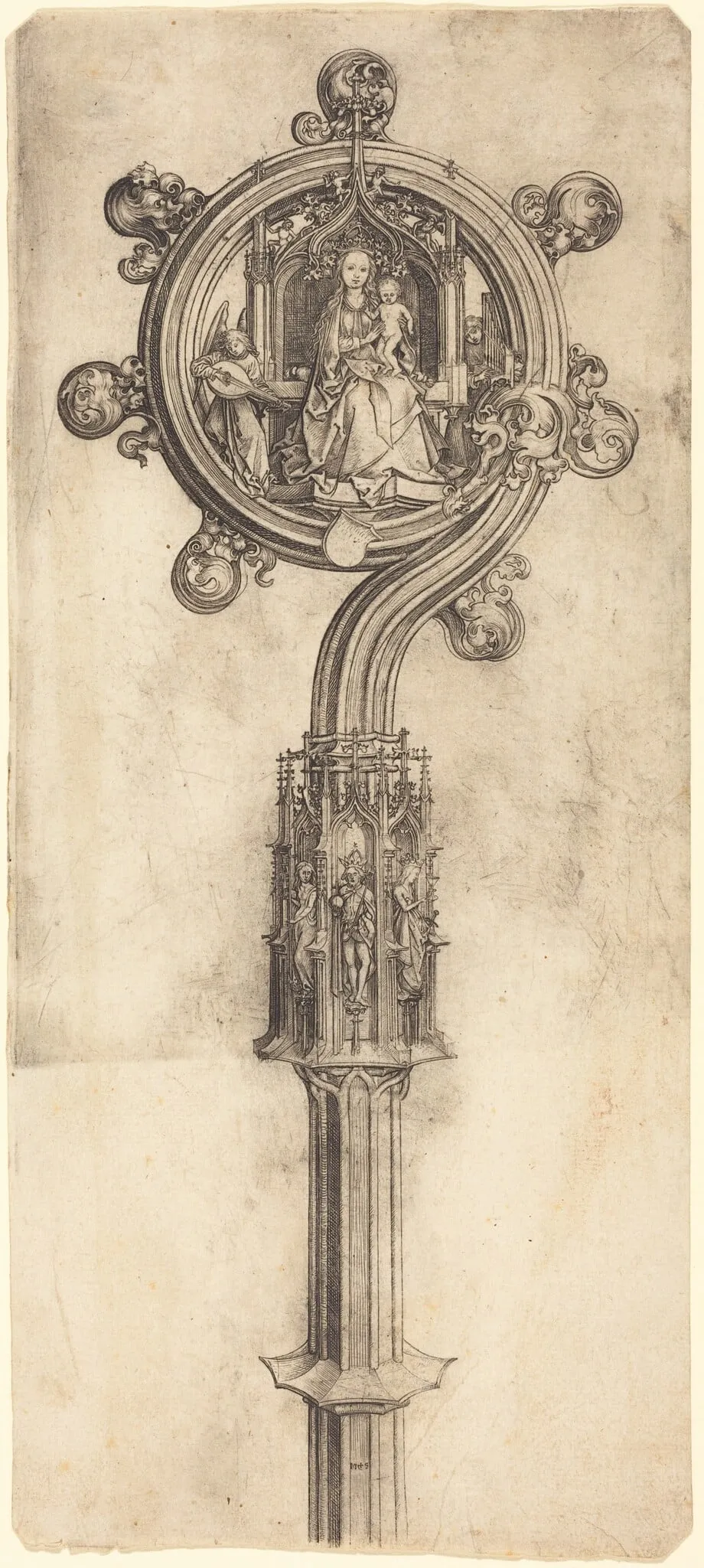
A Bishop's Crosier is an ink print by the Renaissance artist Martin Schongauer. It dates from 1478 and is held in the collection of the National Gallery of Art.
About this work
Overview
Martin Schongauer’s engraving entitled *A Bishop’s Crosier* was produced circa 1478. Executed on laid paper, the print belongs to the corpus of roughly 116 engravings that bear Schongauer’s monogram, confirming his authorship. It exemplifies the mature phase of his printmaking career, during which he was the pre‑eminent German engraver before the arrival of Albrecht Dürer.
Subject & Meaning
The image presents a richly ornamented bishop’s staff, its shaft encircled by intricate, pointed scrollwork. At the top, a female figure cradles an infant, flanked by two diminutive angels. The composition merges ecclesiastical symbolism—the crosier as a sign of episcopal authority—with a tender depiction of the Virgin and Child, suggesting a devotional narrative within the decorative framework.
Technique & Style
This meticulous line work demonstrates the artist’s mastery of the burin and his ability to render intricate detail on a relatively small surface.
Schongauer employed a dense network of fine, parallel lines to model volume and convey shadow, a hallmark of late‑fourteenth‑century engraving. The delicate hatching creates a subtle gradation of tone, while the crisp incised outlines define the ornamental motifs. This meticulous line work demonstrates the artist’s mastery of the burin and his ability to render intricate detail on a relatively small surface.
History & Provenance
The print emerges from Schongauer’s workshop in the Alsace region, where he was active as both painter and engraver. His background in a family of goldsmiths likely informed his precise handling of metal tools. The work circulated among collectors of the period, contributing to Schongauer’s reputation as the leading printmaker north of the Alps prior to Dürer’s ascendancy.
Context
Created during the late Gothic era, the engraving reflects contemporary tastes for elaborate ornamental design and devotional imagery. The inclusion of a bishop’s crosier aligns with the period’s emphasis on ecclesiastical patronage, while the Virgin and Child motif resonates with widespread Marian devotion in the late fifteenth century.
Legacy
Schongauer’s engravings, including *A Bishop’s Crosier*, were widely copied and served as models for subsequent Northern European artists. His sophisticated line technique influenced the development of printmaking in Germany, paving the way for the more complex works of Dürer and his successors.
Artist & collection

Artist
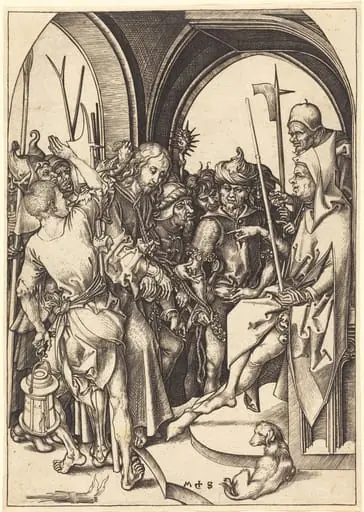
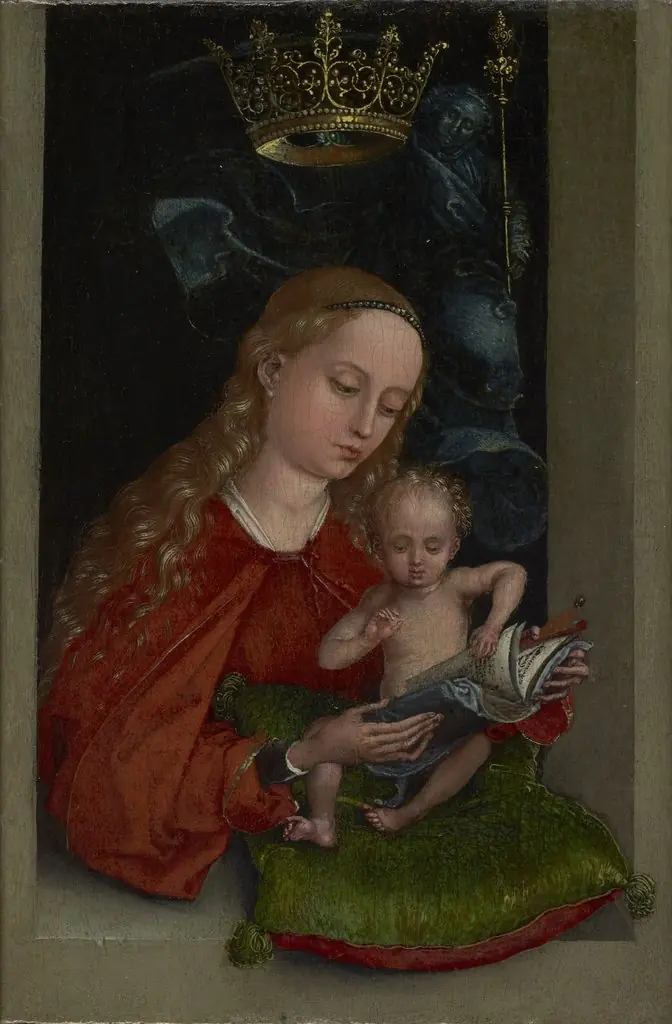
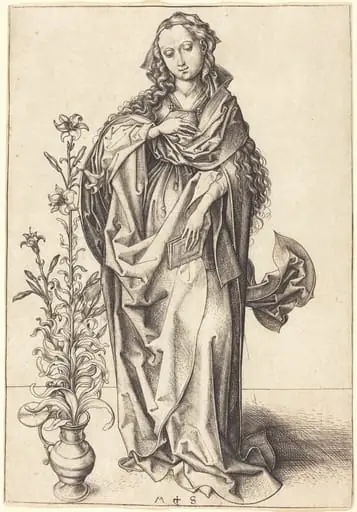
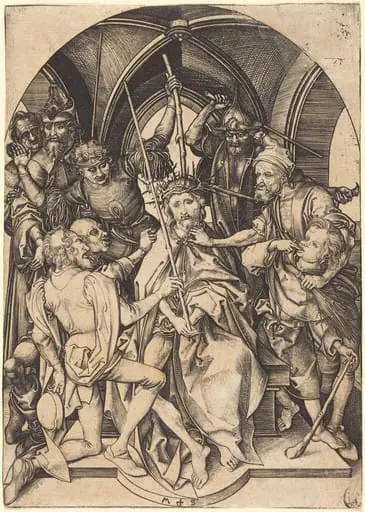
Martin Schongauer, also known as Martin Schön or Hübsch Martin by his contemporaries, was an Alsatian engraver and painter.

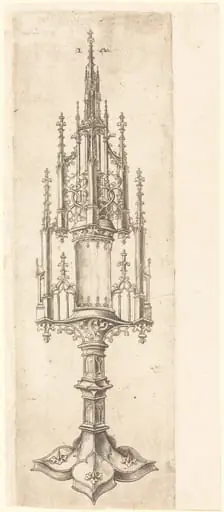 A Gothic Monstrance
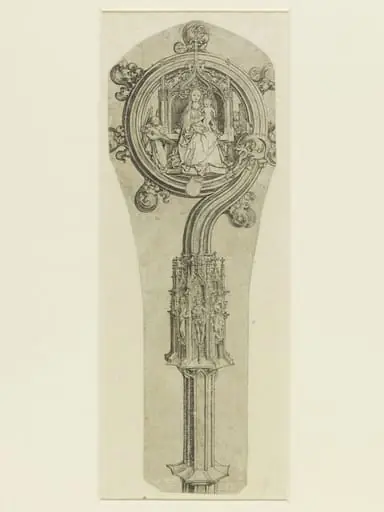 A Bishop's Crozier
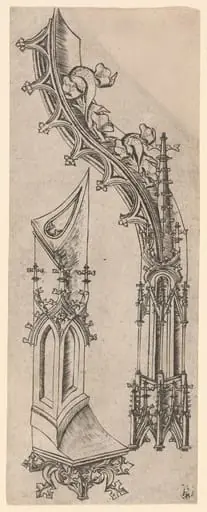 Gothic Letter "d"
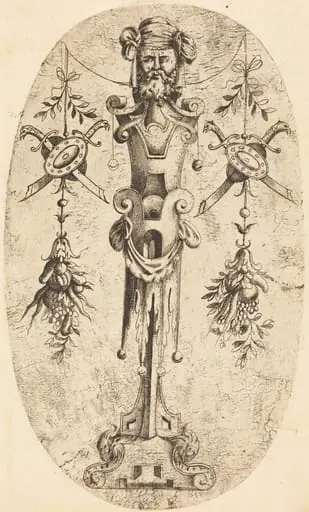 Bearded Head on a Pedestal
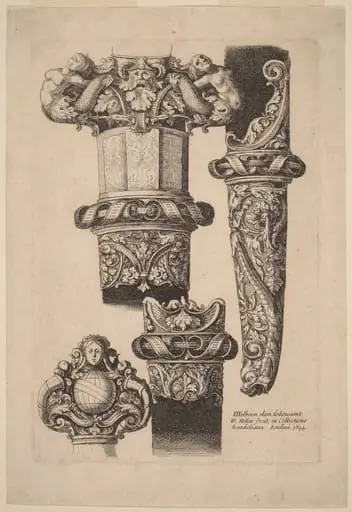 Ornamentation for a Dagger and Scabbard
 Ornament Panel: Two Sphinxes and Two Children Holding Palms
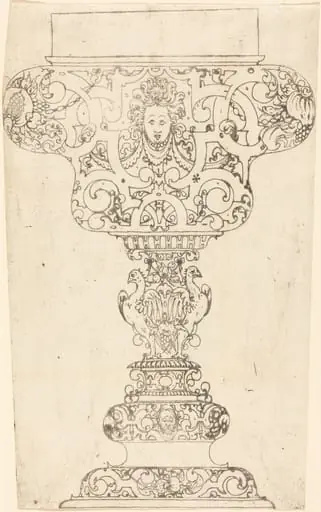 Ornament - Large Goblet
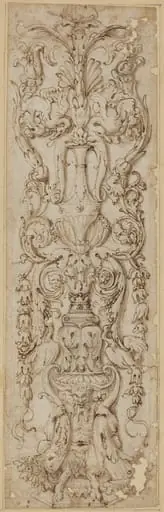 Grotesque with a Satyr
 Grotteschi
 Catafalque for the Funeral of Giulio Thieni, Marquis of Scandiano
 Gothic Ornament with a Lady and a Parrot
 Two Architectural Studies