Artwork
Ornamentation for a Dagger and Scabbard
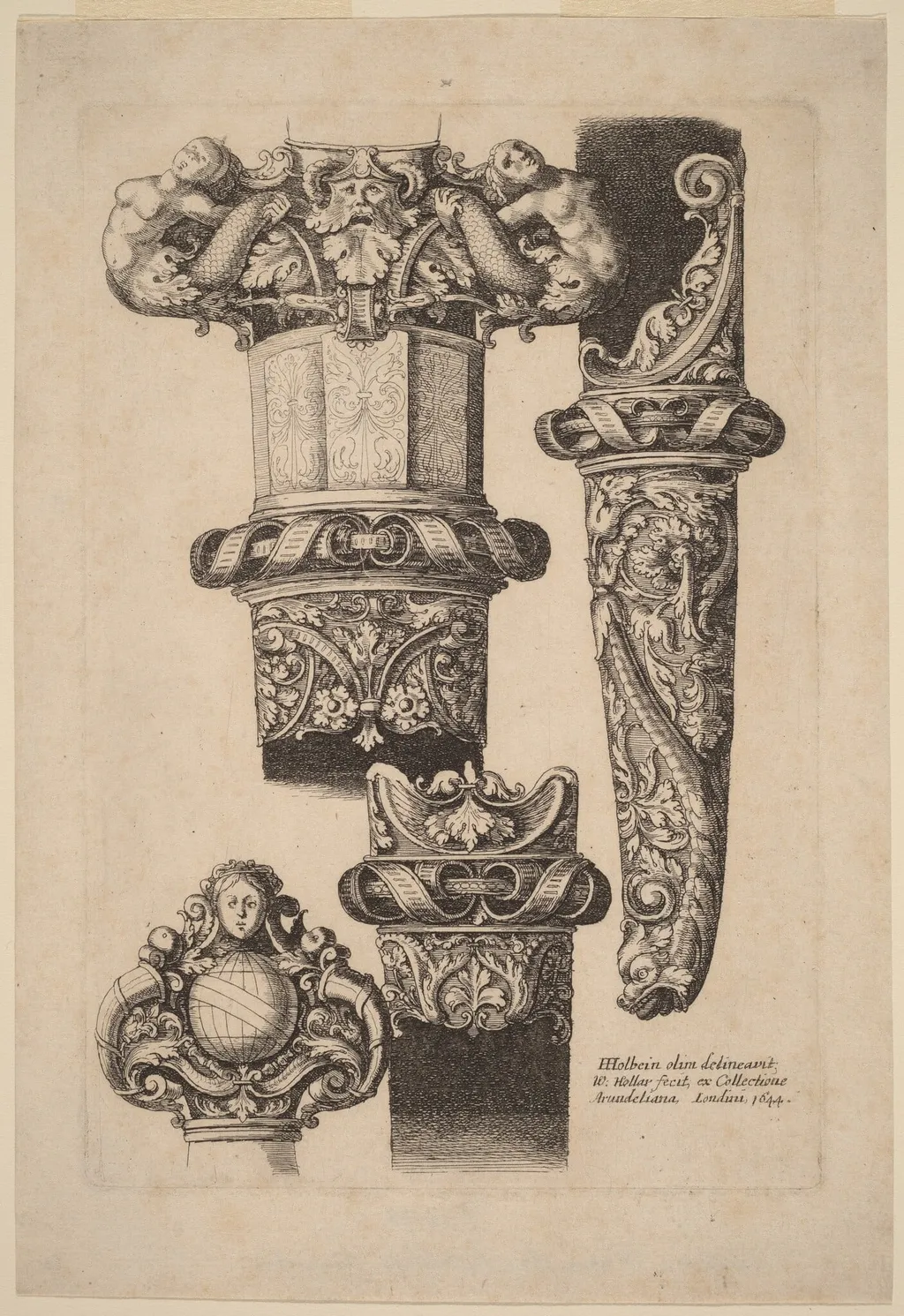
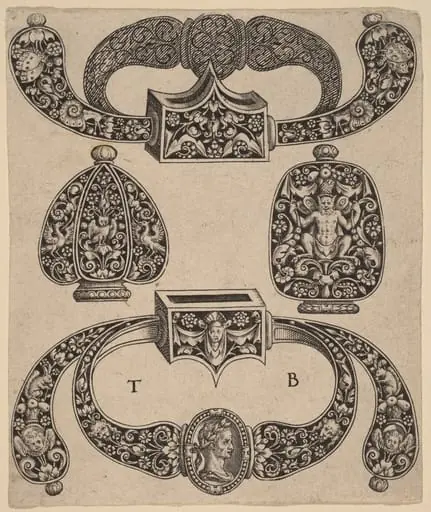
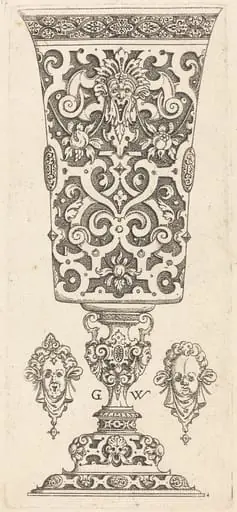
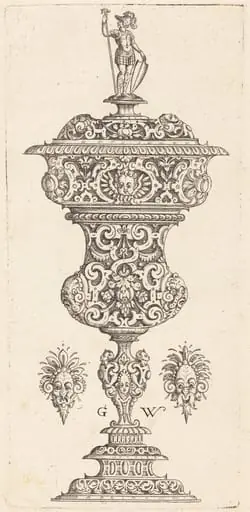
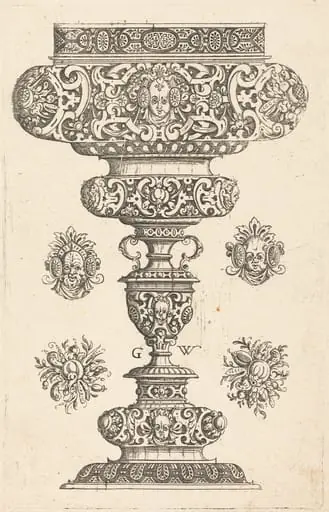
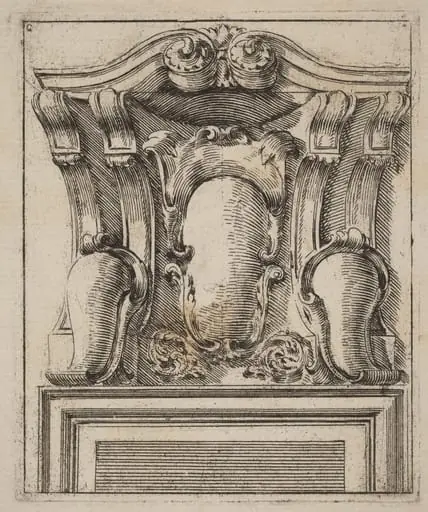
Ornamentation for a Dagger and Scabbard is an ink print by the Baroque artist Wenceslaus Hollar. It dates from 1644 and is held in the collection of the National Gallery of Art.
About this work
The metalwork is packed with swirling patterns—leaves, scrolls, and tiny faces peeking out.
This drawing shows two fancy dagger handles and a scabbard. The metalwork is packed with swirling patterns—leaves, scrolls, and tiny faces peeking out. One handle has a globe with a crowned head on it, like a king’s emblem.
The artist used fine lines to pack so much detail into a small space. This was made in 1644 as a design guide for real daggers.
Look up etching to see how artists like this carved their images into metal plates.
Overview
Created in 1644 by Wenceslaus Hollar, this etching serves as a design template for ornate dagger and scabbard fittings. Hollar, a Czech artist active in England, specialized in precise graphic work that bridged artistic detail and artisanal application. The piece was not intended as a finished artwork but as a reference for metalworkers, capturing the elaborate decorative language of mid-17th-century European weaponry.
Subject & Meaning
The design features two dagger handles and a scabbard adorned with dense, interlaced motifs: scrolling foliage, acanthus leaves, and miniature human faces. One handle incorporates a crowned globe, suggesting royal or aristocratic association. These elements reflect contemporary ideals of power and refinement, where personal weapons were not only tools of defense but also symbols of status, encoded with symbolic imagery drawn from classical and natural sources.
Technique & Style
Hollar employed fine-line etching to render intricate patterns with remarkable clarity. The plate was incised with a needle, then acid-bitten to create delicate lines that hold ink. His technique allowed for extreme detail within a compact format, mimicking the precision required by goldsmiths and armorers. The density of ornamentation demonstrates his mastery of spatial compression, translating three-dimensional metalwork into a flat, reproducible format.
History & Provenance
Produced during Hollar’s time in London, the etching emerged from a period when printmaking served practical roles in artisanal trades. It likely circulated among craftsmen or patrons commissioning custom weapons. Hollar, who settled in England after leaving Prague, maintained a prolific output of technical and topographical prints. The work survived through private collections and institutional archives, reflecting its utility rather than its status as fine art.
Context
In mid-17th-century Europe, personal arms were highly decorated, especially among nobility and military elites. Design books like this one functioned as visual catalogs, guiding artisans in the application of fashionable motifs. Hollar’s work aligns with broader trends in Northern Mannerism and Baroque ornamentation, where complexity and symbolism dominated decorative arts, blending natural forms with allegorical references to authority and cosmology.
Legacy
Though not widely exhibited as art, Hollar’s ornamental prints influenced the visual vocabulary of European metalwork for decades. His ability to translate intricate designs into reproducible prints helped standardize decorative elements across workshops. Today, the etching remains a valuable record of craftsmanship practices, offering insight into the intersection of art, industry, and personal adornment in early modern Europe.
Artist & collection
Artist
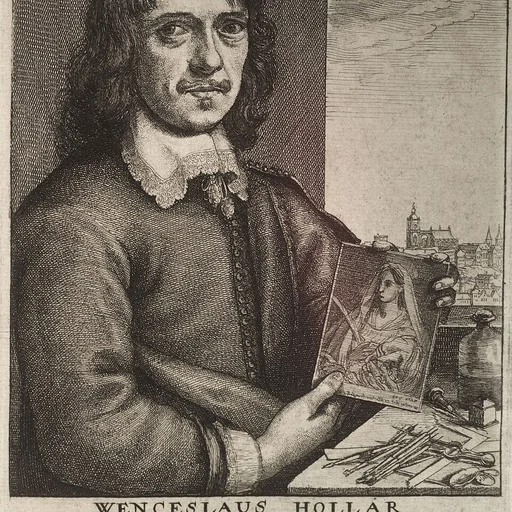
Wenceslaus Hollar (Czech: Václav Hollar (Czech pronunciation: ), German: Wenzel Hollar; 23 July 1607 – 25 March 1677) was a Czech engraver, etcher and painter.