Artwork
The Coronation of the Virgin
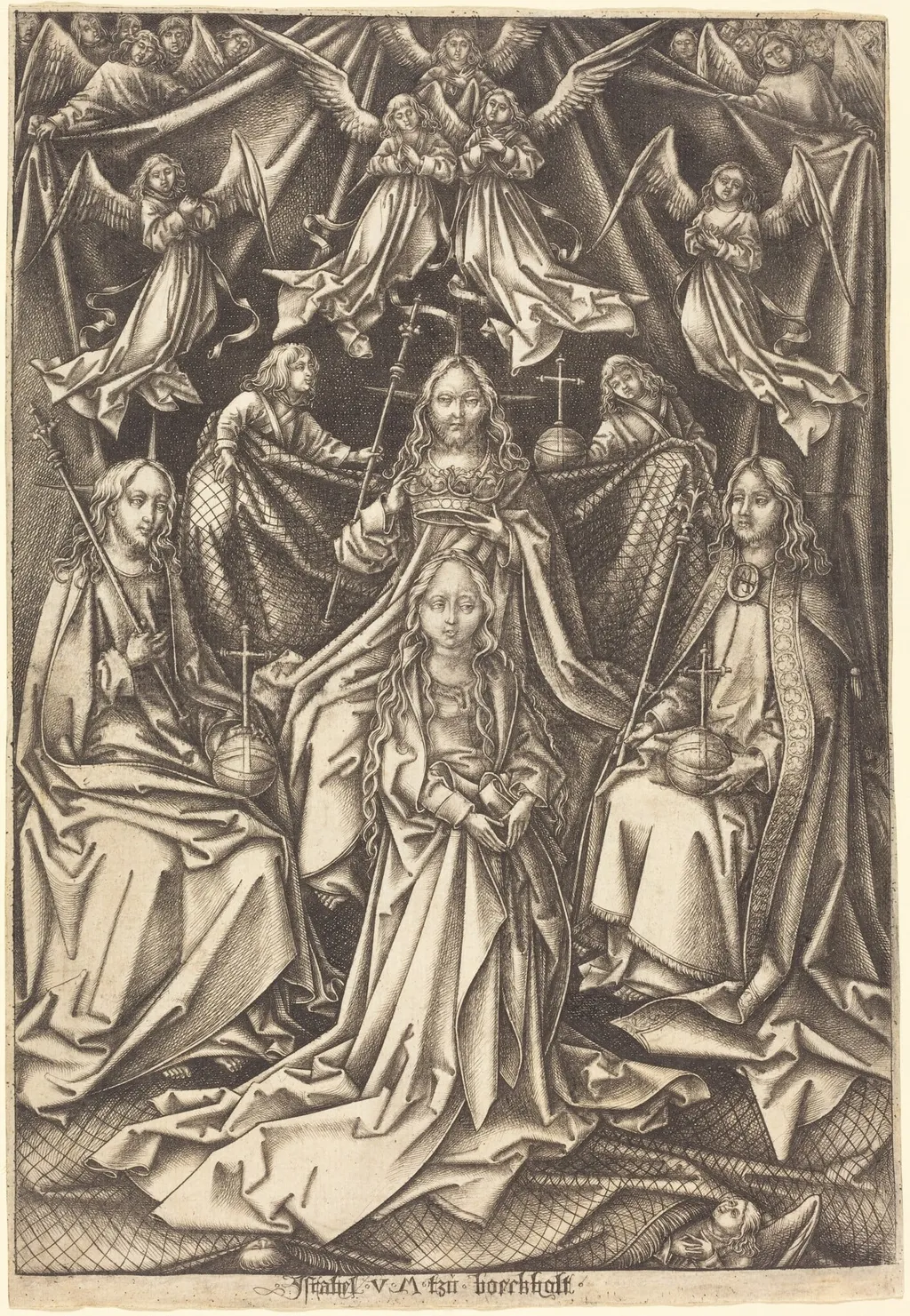
The Coronation of the Virgin is an ink print by the Renaissance artist Israhel van Meckenem. It dates from 1495 and is held in the collection of the National Gallery of Art. Created circa 1495, this copper‑plate engraving portrays the Virgin Mary receiving a crown in a celestial setting.
About this work
Overview
The composition is densely populated with saints, angels, and symbolic objects, all arranged around the central coronation moment.
Created circa 1495, this copper‑plate engraving portrays the Virgin Mary receiving a crown in a celestial setting. The composition is densely populated with saints, angels, and symbolic objects, all arranged around the central coronation moment. The work exemplifies the Northern European print tradition of the late fifteenth century, where devotional subjects were rendered for a broad audience through reproducible media.
Subject & Meaning
The image illustrates the theological concept of Mary’s heavenly coronation, a motif that celebrates her role as Queen of Heaven. Central figures include the crowned Virgin and a cleric bearing a cross, flanked by angels holding globes and scepters, symbols of divine authority and the cosmos. The surrounding crowd of saints reinforces the idea of a universal church witnessing the event.
Technique & Style
Executed with fine, intersecting lines, the engraving achieves depth through cross‑hatching and stippling, creating subtle shadows on the heavy drapery. The figures display a rigid, almost sculptural quality typical of the period’s printmaking, while intricate details—such as tiny angelic faces peering from folds—demonstrate the artist’s skill in rendering complex textures on a flat surface.
History & Provenance
The piece is attributed to Israhel van Meckenem, a German goldsmith and printmaker active between 1465 and 1503, who is recognized as the most prolific engraver of his century, producing over six hundred prints. Many of his works, including this one, were adaptations of existing compositions, reflecting the collaborative and derivative nature of early print culture.
Context
During the late Gothic period, Northern Europe saw a surge in the production of devotional prints, which served both private contemplation and public instruction. Van Meckenem’s engraving aligns with this trend, offering a portable visual narrative of a key Marian doctrine that could be disseminated beyond the confines of illuminated manuscripts and altarpieces.
Artist & collection
Artist
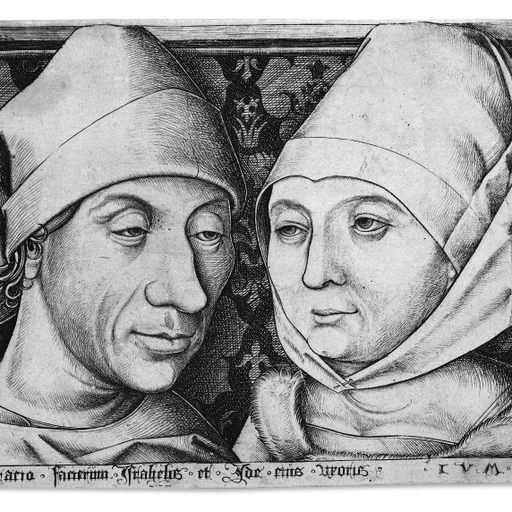
Israhel van Meckenem (c. 1445 – 10 November 1503), also known as Israhel van Meckenem the Younger, was a German printmaker and goldsmith, perhaps of a Dutch family origin. He was the most prolific engraver of the…

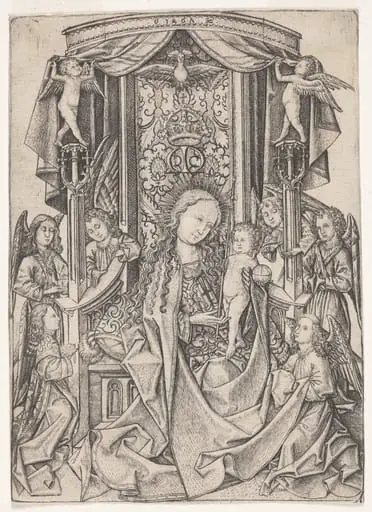 Madonna Enthroned with Eight Angels
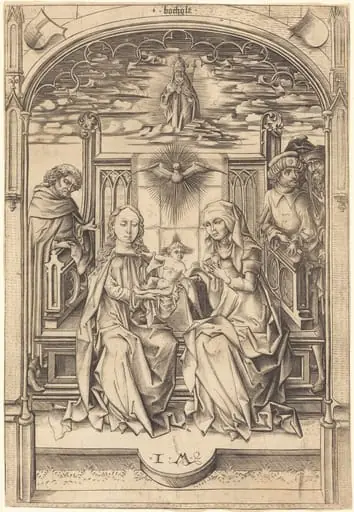 The Holy Family
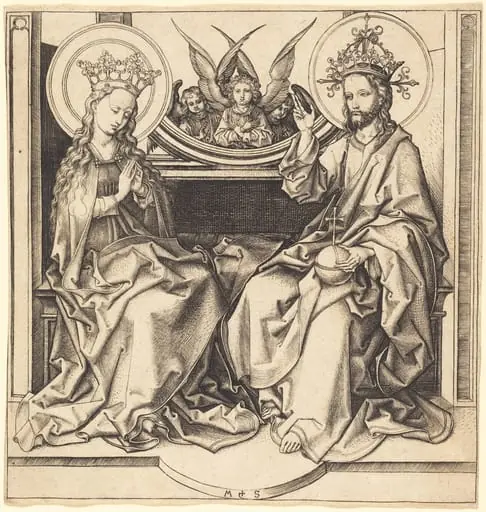 Christ Blessing the Virgin
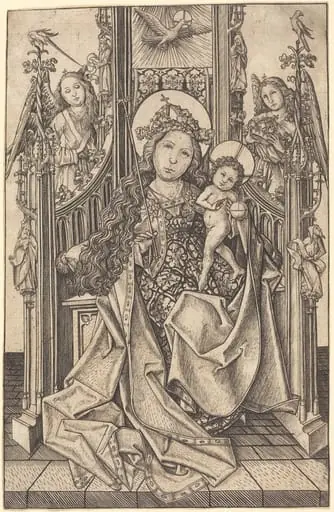 Madonna and Child Enthroned
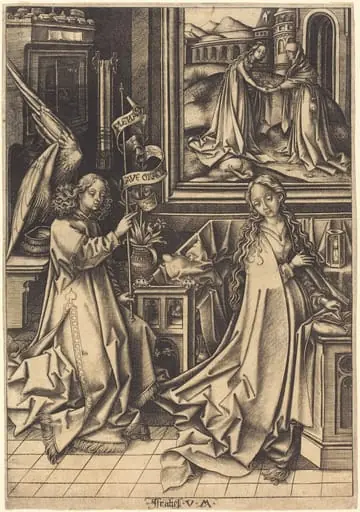 The Annunciation
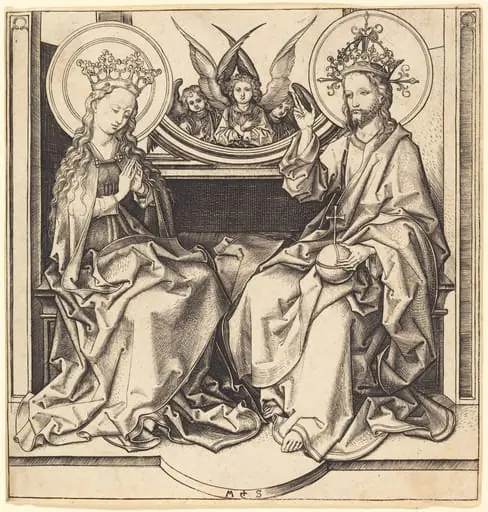 Christ Blessing the Virgin
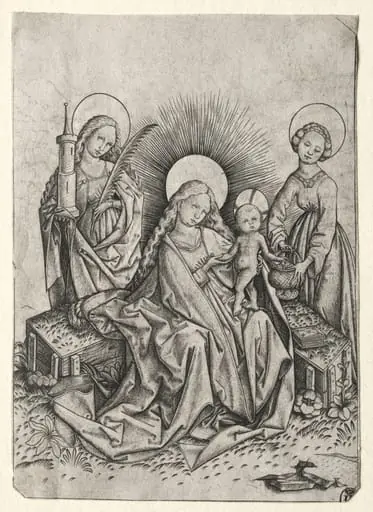 Madonna and Child in a Garden between St. Barbara and st. Dorothy
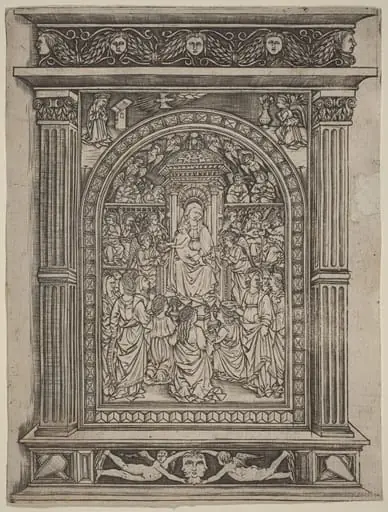 The Virgin and Child Enthroned, with Angels and Saints
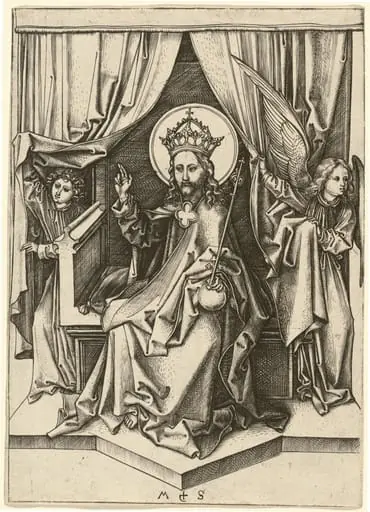 Christ Enthroned, with Two Angels
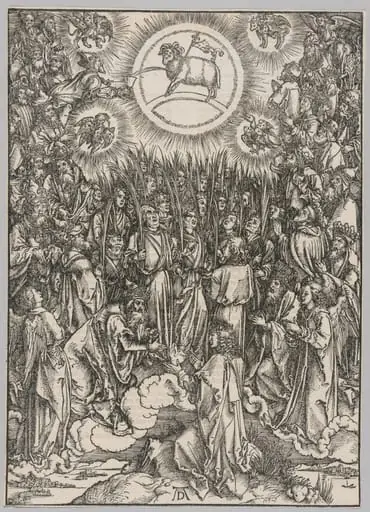 Apocalypse: The Adoration of the Lamb—The Hymn of the Chosen