Artwork
The Resurrection
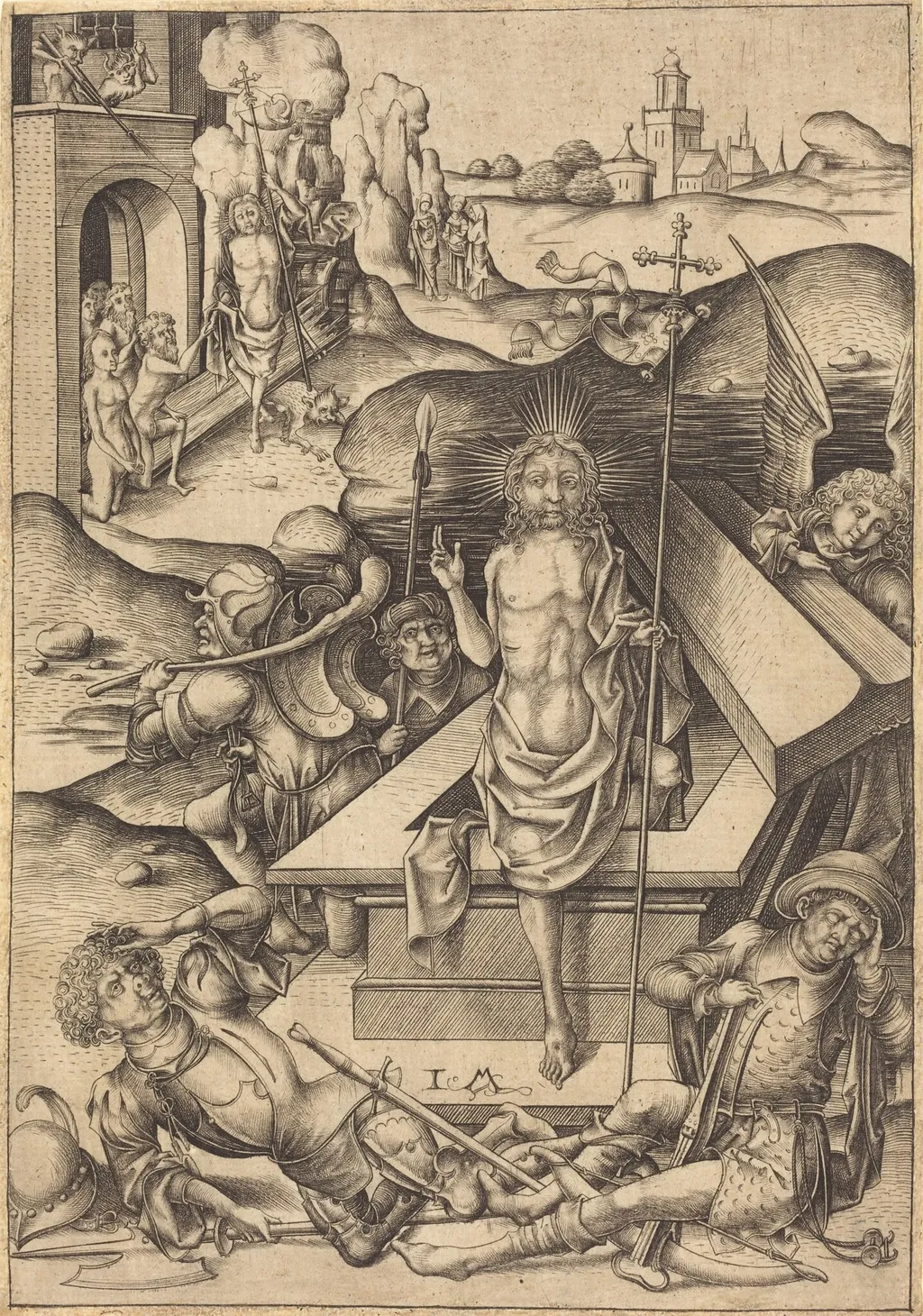
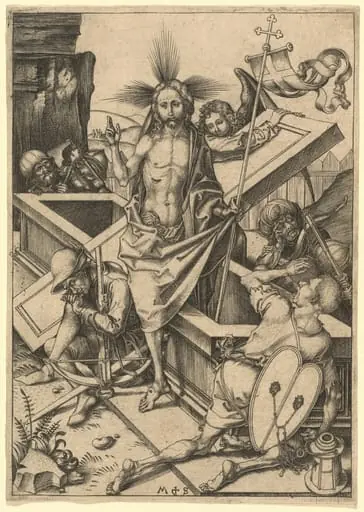
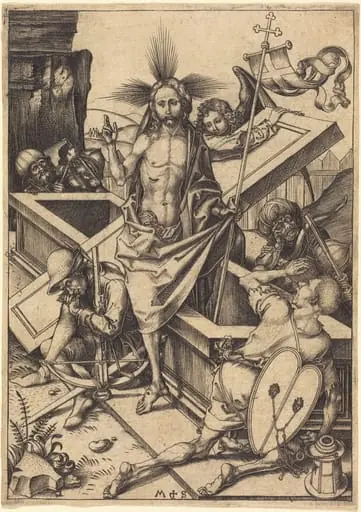
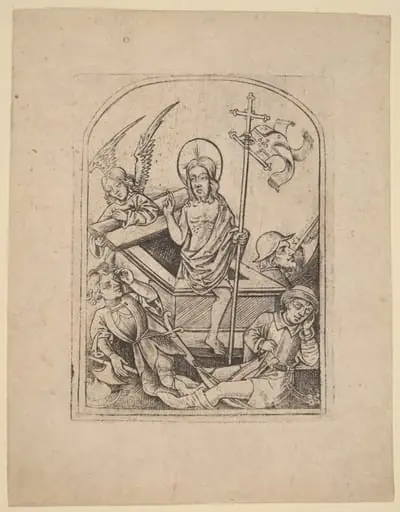
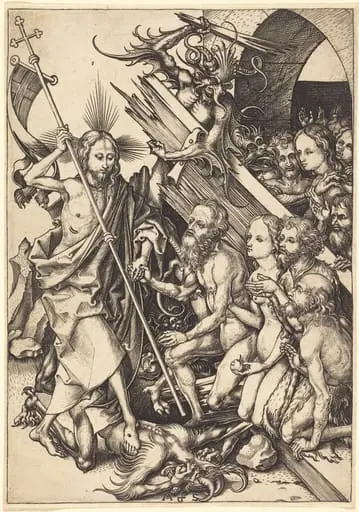
The Resurrection is an ink print by the Renaissance artist Israhel van Meckenem. It dates from 1480 and is held in the collection of the National Gallery of Art.
About this work
Overview
The Resurrection is an engraving created by Israhel van Meckenem, a prolific German printmaker and goldsmith, around 1480. This work exemplifies his significant contribution to Northern European print production during the fifteenth century.
Subject & Meaning
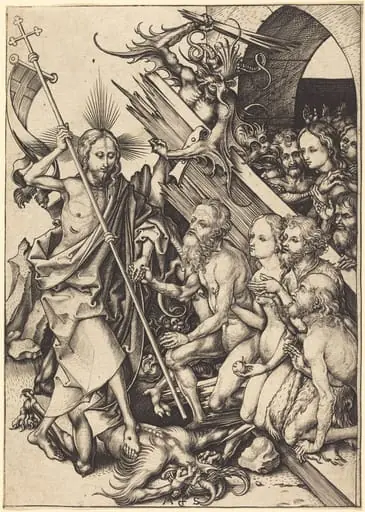
The engraving depicts the moment of Jesus Christ's resurrection. Central to the composition, Jesus stands on a stone slab, staff in hand, with a halo, surrounded by sleeping and awakening soldiers, set against a backdrop of hills and buildings.
Technique & Style
Characterized by intricate details and textures, the engraving showcases Meckenem's mastery of the medium, reflecting early Renaissance aesthetics in its precise and detailed execution.
History & Provenance
Produced circa 1480, The Resurrection is one of over 620 prints by Meckenem, many of which were reproductions of existing works, highlighting his role in disseminating artistic themes through printmaking.
Context
As a key figure in fifteenth-century Northern European art, Meckenem's work, including The Resurrection, contributed to the development of old master printmaking, a crucial aspect of Renaissance artistic proliferation.
Legacy
The Resurrection, through Meckenem's prolific output and technical skill, represents a significant example of early Renaissance printmaking, influencing the spread of religious and artistic themes across Northern Europe.
Artist & collection
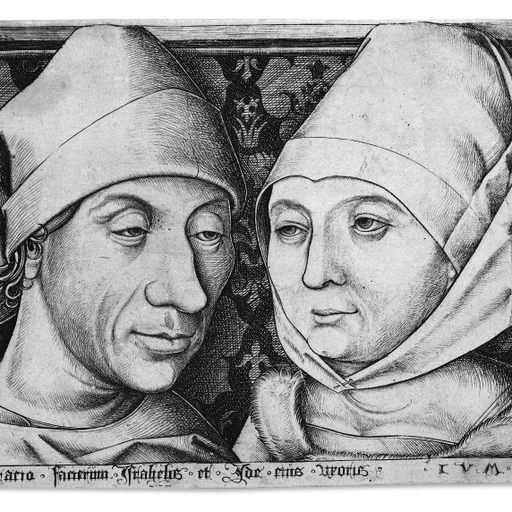
Artist
Israhel van Meckenem (c. 1445 – 10 November 1503), also known as Israhel van Meckenem the Younger, was a German printmaker and goldsmith, perhaps of a Dutch family origin. He was the most prolific engraver of the…