Artwork
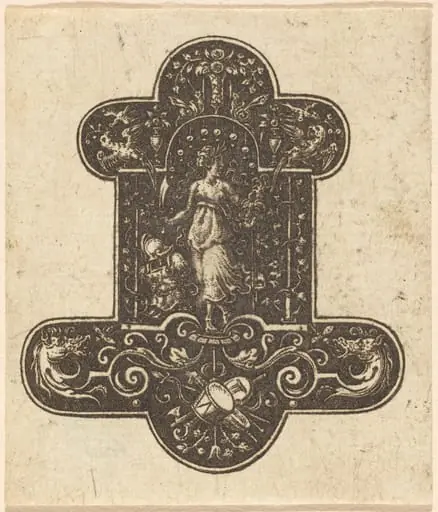
Shield with Unicorn, Held by Woman
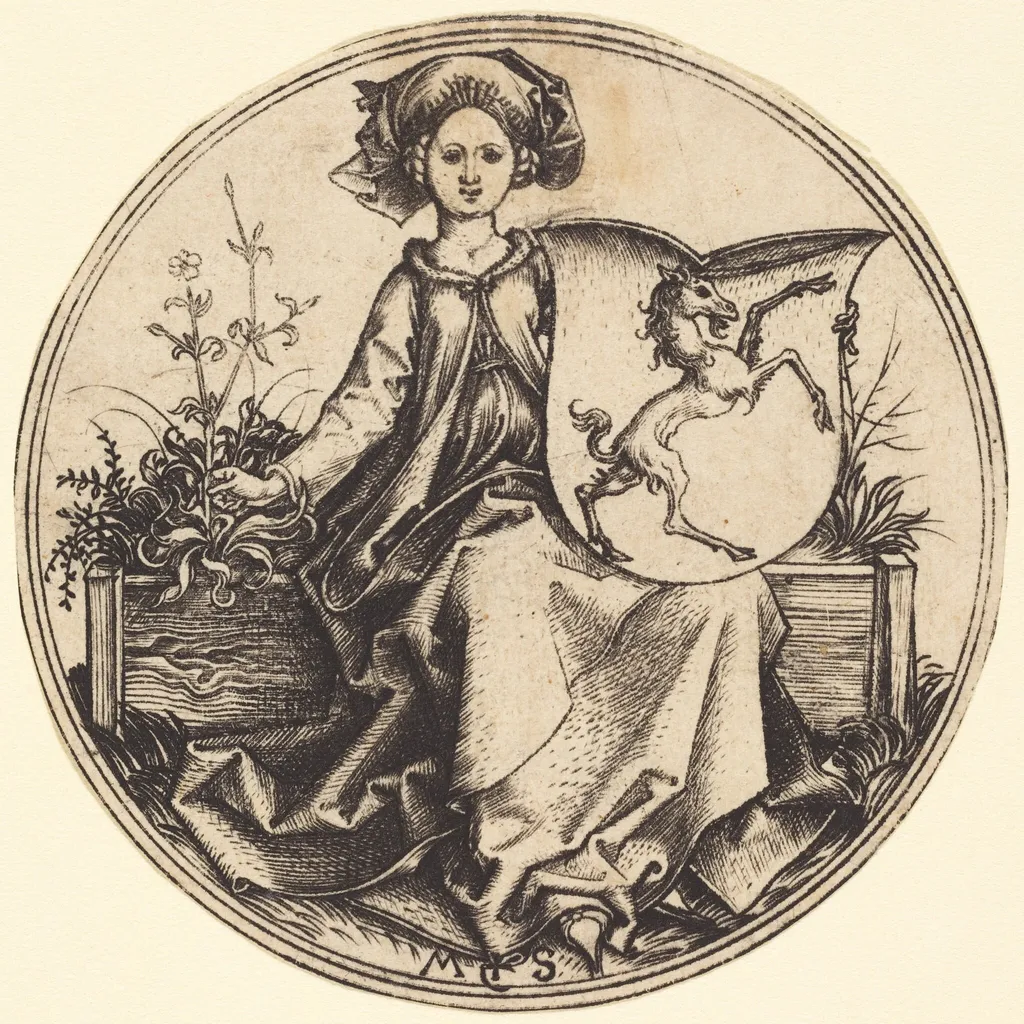
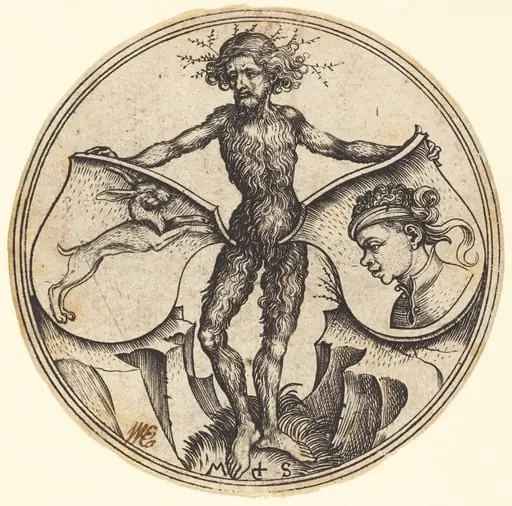
Shield with Unicorn, Held by Woman is an ink print by the Renaissance artist Martin Schongauer. It dates from 1485 and is held in the collection of the National Gallery of Art.
About this work
Overview
Created around 1485, this engraving on laid paper is one of Martin Schongauer’s smaller-scale works, showcasing his mastery of fine-line technique.
Created around 1485, this engraving on laid paper is one of Martin Schongauer’s smaller-scale works, showcasing his mastery of fine-line technique. As an Alsatian artist active in Colmar and Breisach, Schongauer elevated printmaking in northern Europe, preceding Dürer in influence. The image presents a seated woman cradling a shield bearing a unicorn, rendered with meticulous precision. The composition balances stillness and symbolic weight, typical of late medieval emblematic imagery.
Subject & Meaning
The woman, dressed in period attire with a high collar and ornate headdress, holds a shield bearing a unicorn—a creature long associated with purity, grace, and chivalric virtue. Her composed posture and the unicorn’s calm, upright stance suggest allegorical intent, possibly representing virtue, nobility, or divine protection. The shield’s wavy background may allude to water or cosmic order, reinforcing the emblem’s symbolic depth rather than depicting a literal scene.
Technique & Style
Schongauer employed fine, incised lines to model form and texture with remarkable control. The unicorn’s fur, the woman’s garments, and the shield’s surface are defined through dense cross-hatching and delicate parallel strokes, creating subtle gradations of light and shadow. The engraving’s clarity and precision reflect the artist’s skill in translating painterly effects into the rigid medium of metalplate printing, demonstrating his command over tonal nuance.
History & Provenance
The work originates from Schongauer’s mature period in the 1480s, when his engravings circulated widely across Europe. Though no early ownership records are documented for this specific impression, similar prints from his workshop were collected by nobility and clergy. Its survival in multiple copies suggests it was reproduced and distributed as a devotional or decorative object, reflecting its popularity among educated patrons of the time.
Context
In late 15th-century northern Europe, heraldic imagery was commonly adapted for personal and spiritual symbolism. Unicorns appeared in tapestries, manuscripts, and prints as emblems of chastity or Christ-like purity. Schongauer’s integration of such motifs into intimate prints catered to a growing literate class seeking visual allegories. This work aligns with broader trends in devotional and moral iconography, bridging religious symbolism and secular aesthetics.
Legacy
Schongauer’s engraved compositions, including this one, influenced generations of northern artists, notably Albrecht Dürer, who studied his techniques. The precision and emotional restraint of his imagery set a standard for printmaking as a serious artistic medium. Though less monumental than his religious scenes, this small engraving exemplifies how symbolic motifs were refined into enduring visual language, shaping the evolution of Northern Renaissance graphic art.
Artist & collection

Artist
Martin Schongauer, also known as Martin Schön or Hübsch Martin by his contemporaries, was an Alsatian engraver and painter.