Artwork
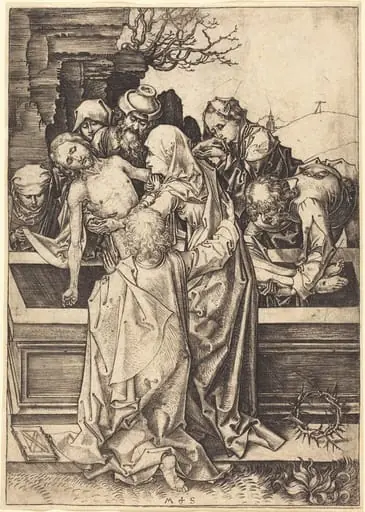
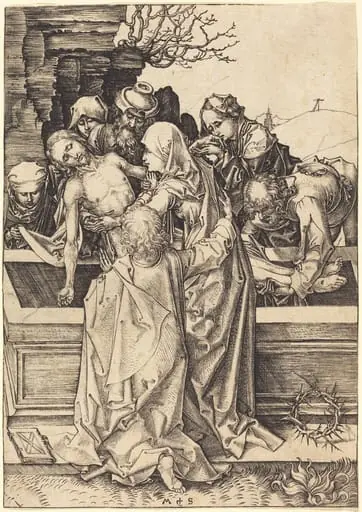
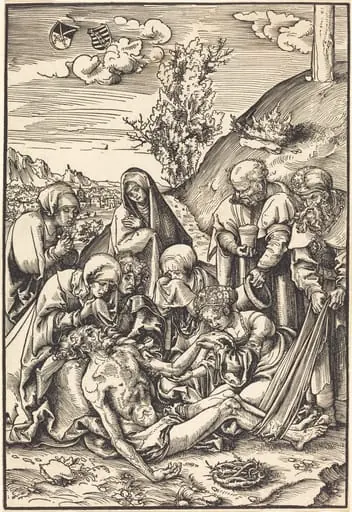
The Entombment
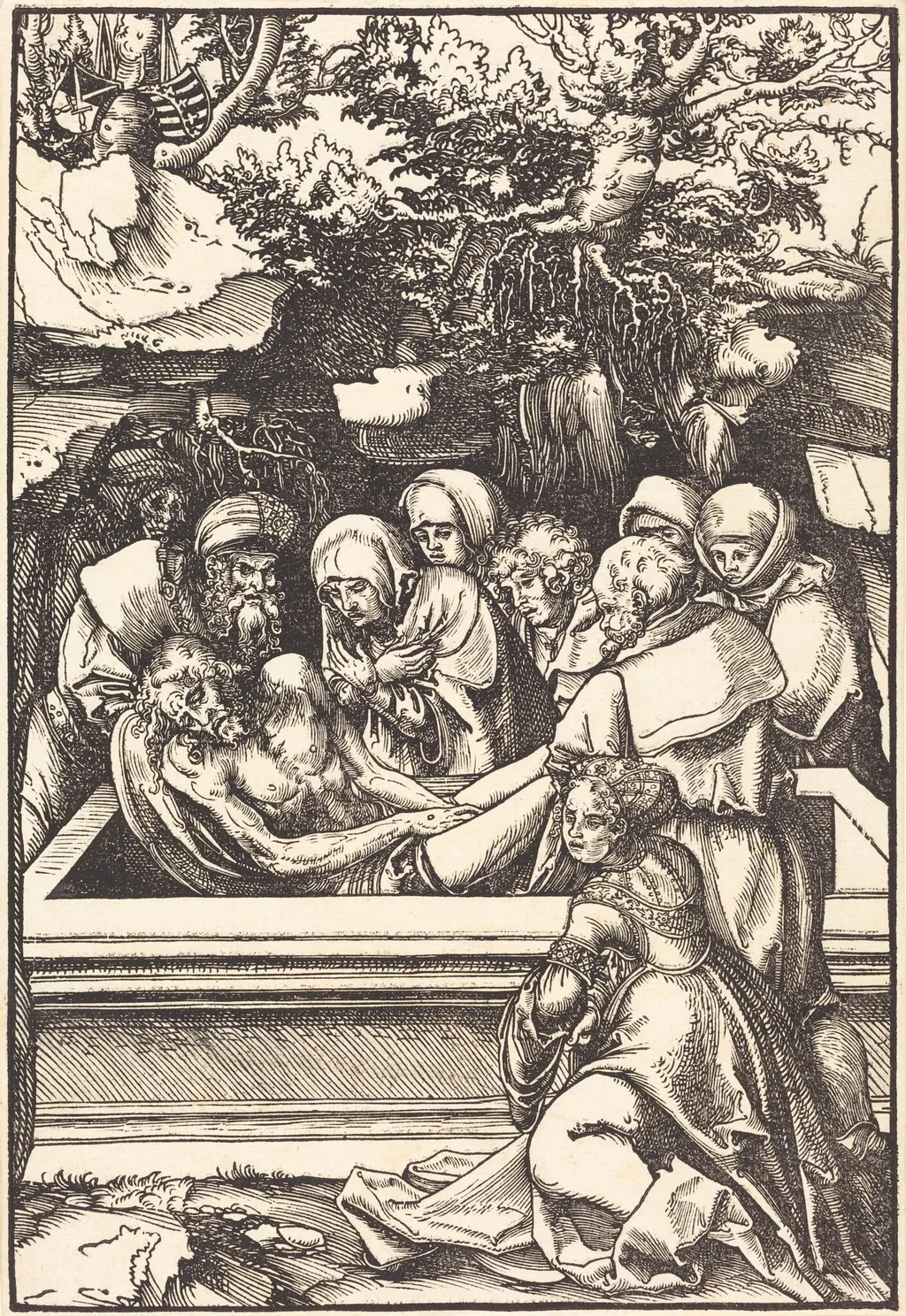
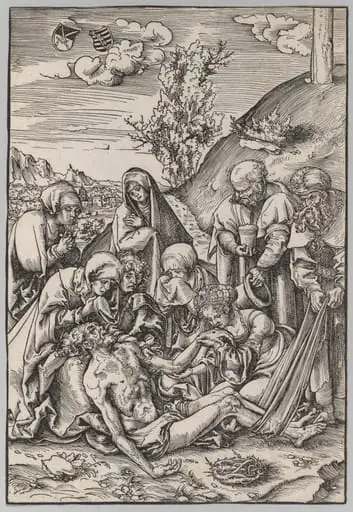
The Entombment is an ink print by the Renaissance artist Lucas Cranach the Elder. It dates from 1509 and is held in the collection of the National Gallery of Art.
About this work
Overview
The Entombment is a 1509 woodcut by Lucas Cranach the Elder, depicting the burial of Christ. Created during Cranach's tenure as court painter to the Electors of Saxony, the work reflects his transitional approach to religious art amidst the emerging Protestant Reformation.
Subject & Meaning
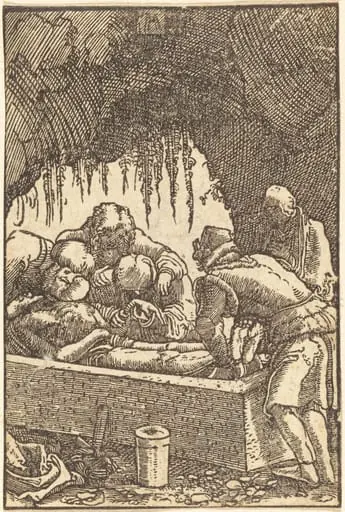
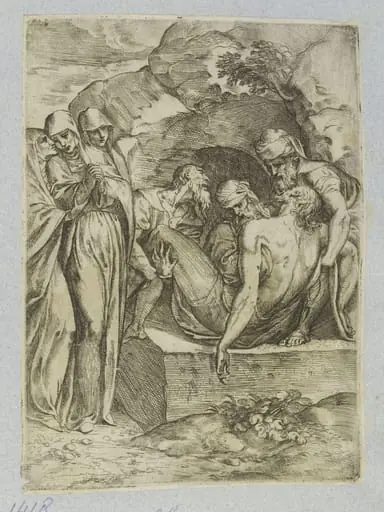
The woodcut illustrates a crowded scene of Christ's entombment, blending traditional Catholic iconography with Cranach's evolving Protestant influences. Figures, including those kneeling and standing, surround the body, with one covering its face, set against a backdrop of trees, rocky hills, and a building.
Technique & Style
Executed in sharp, detailed black and white, The Entombment utilizes the woodcut technique, where a design is carved into wood, inked, and printed. This method, popular in the 16th century, facilitated widespread dissemination of images.
History & Provenance
Created in 1509, The Entombment predates Cranach's full alignment with the Protestant Reformation, though it hints at his shifting religious perspectives. Originally, the work would have been part of a broader circulation of religious imagery through woodcut prints.
Context
Within the early 16th-century German Renaissance, The Entombment sits at the intersection of religious upheaval and artistic innovation. Cranach's dual role as court painter and Reformation supporter contextualizes the work's blend of traditional and emerging themes.
Legacy
As one of Cranach's early religious woodcuts, The Entombment contributes to the artist's legacy in navigating the visual transition from Catholic to Protestant themes, influencing subsequent generations of printmakers and religious artists.
Artist & collection
Artist
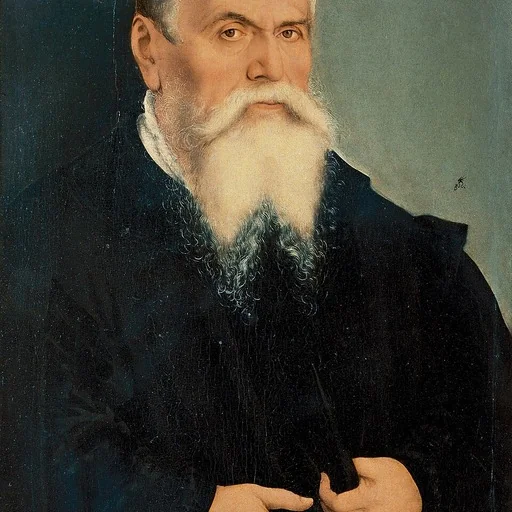
Lucas Cranach the Elder was a German Renaissance painter and printmaker in woodcut and engraving.