Artwork
Young Woman Wearing a Scarf
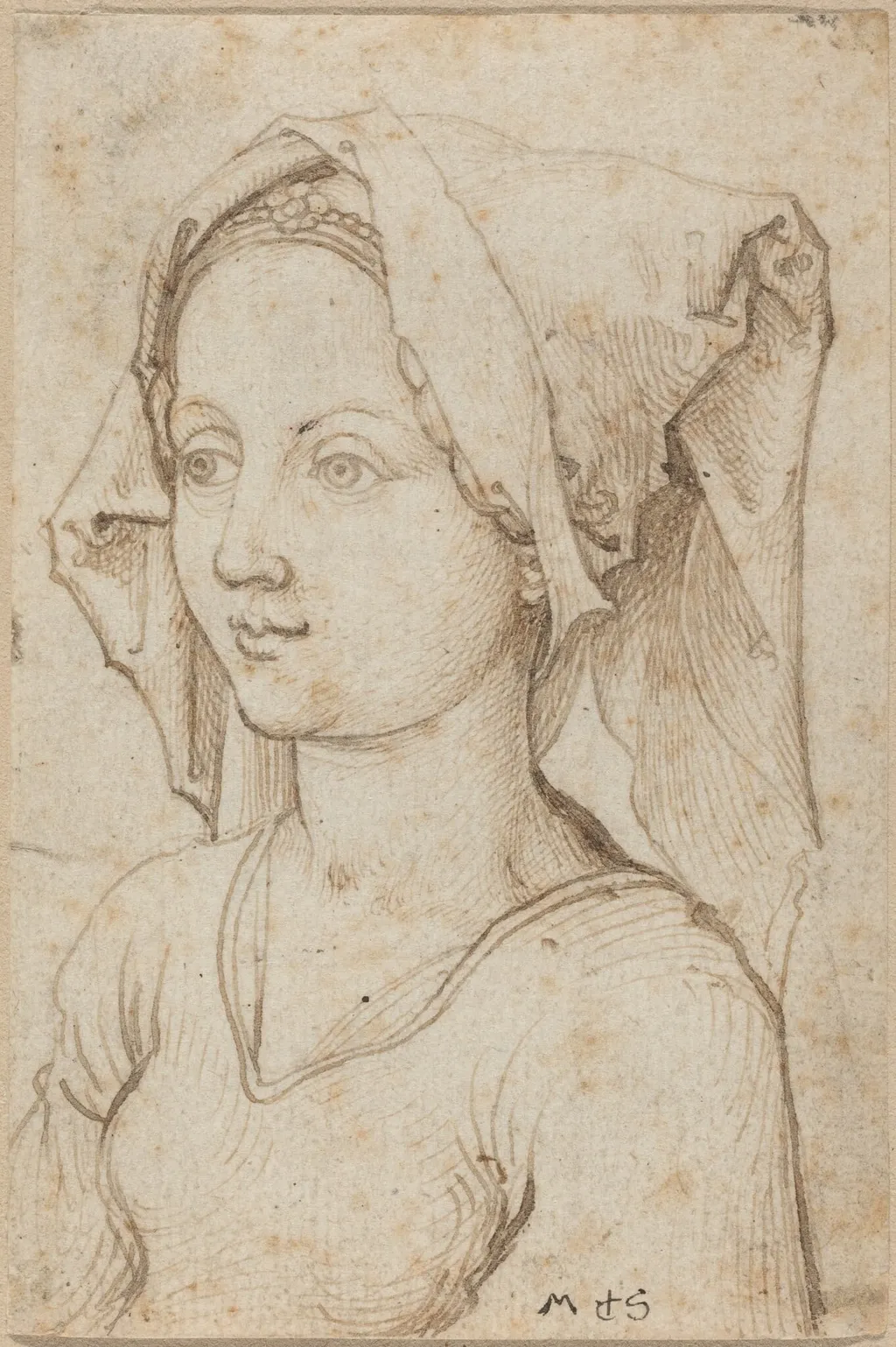
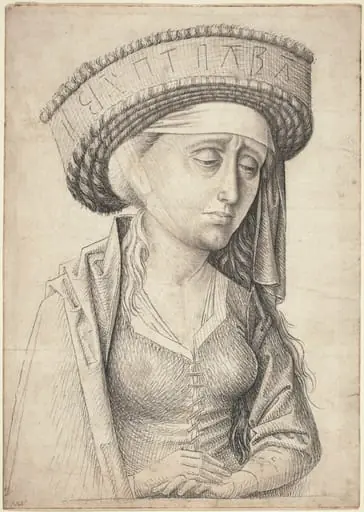
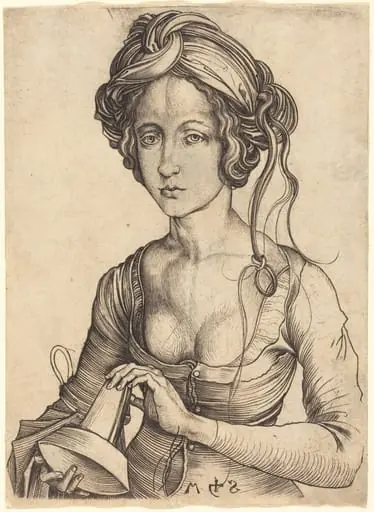
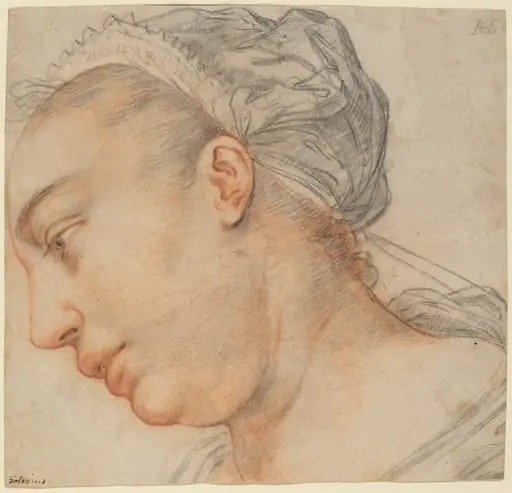
Young Woman Wearing a Scarf is an ink drawing by the Renaissance artist Martin Schongauer. It dates from 1450 and is held in the collection of the National Gallery of Art. This drawing, executed in pen and brown ink on laid paper, portrays a young woman seen in profile, her head covered by a folded scarf.
About this work
This painting is called Young Woman Wearing a Scarf.
It was made by Martin Schongauer between 1470 and 1475.
The artist used pen and brown ink on laid paper to create this portrait, which is a characteristic of the Renaissance period, a time when artists were experimenting with new techniques and mediums, like the use of ink on paper for detailed portraits.
Check out the movement: Renaissance.
Overview
The work is attributed to Martin Schongauer, an Alsatian artist whose precision in draftsmanship bridged the traditions of goldsmithing and printmaking.
This drawing, executed in pen and brown ink on laid paper, portrays a young woman seen in profile, her head covered by a folded scarf. Created between 1470 and 1475, it reflects the growing interest in intimate portraiture during the late 15th century. The work is attributed to Martin Schongauer, an Alsatian artist whose precision in draftsmanship bridged the traditions of goldsmithing and printmaking.
Subject & Meaning
The figure is depicted without idealization, focusing on quiet dignity rather than narrative or symbolic content. The scarf, carefully rendered in folds, suggests modesty and everyday attire, possibly indicating a domestic or middle-class context. There is no overt religious or mythological reference; the emphasis lies in the observation of a single individual, a shift toward secular portraiture in the period.
Technique & Style
Schongauer employed fine, controlled pen strokes to model the contours of the face and the texture of the fabric. The ink’s variation in tone, achieved through line density rather than wash, demonstrates his mastery of linear expression. The use of laid paper, with its subtle chain lines, was typical of the time and suited the delicate precision required for such detailed studies.
History & Provenance
The drawing has been held in major collections since at least the 19th century, though its early ownership remains undocumented. It is not known whether it was a preparatory study or a finished work intended for private circulation. Its survival is notable, as many such drawings from this period were lost or discarded after serving their purpose.
Context
In the decades before Dürer’s rise, Schongauer was among the few artists in northern Europe to elevate drawing to a refined independent art form. While panel painting and engraving dominated his output, this ink drawing reflects a broader trend: artists were increasingly using paper to explore form, light, and individual character outside of commissioned works.
Legacy
Schongauer’s drawings, including this one, influenced later generations of northern artists through their clarity and restraint. Though less known than his engravings, such works helped establish drawing as a legitimate medium for artistic expression beyond mere preparation. They remain key examples of how observation and technique converged in early Renaissance practice.
Artist & collection

Artist
Martin Schongauer, also known as Martin Schön or Hübsch Martin by his contemporaries, was an Alsatian engraver and painter.

![Portrait of a Woman [recto], by Hans Holbein the Elder](https://artifactworldgallery.com/img/hans-holbein-the-elder--portrait-of-a-woman-recto--193982c12461e0d4-w320.webp)