Artwork
Port la Hydra
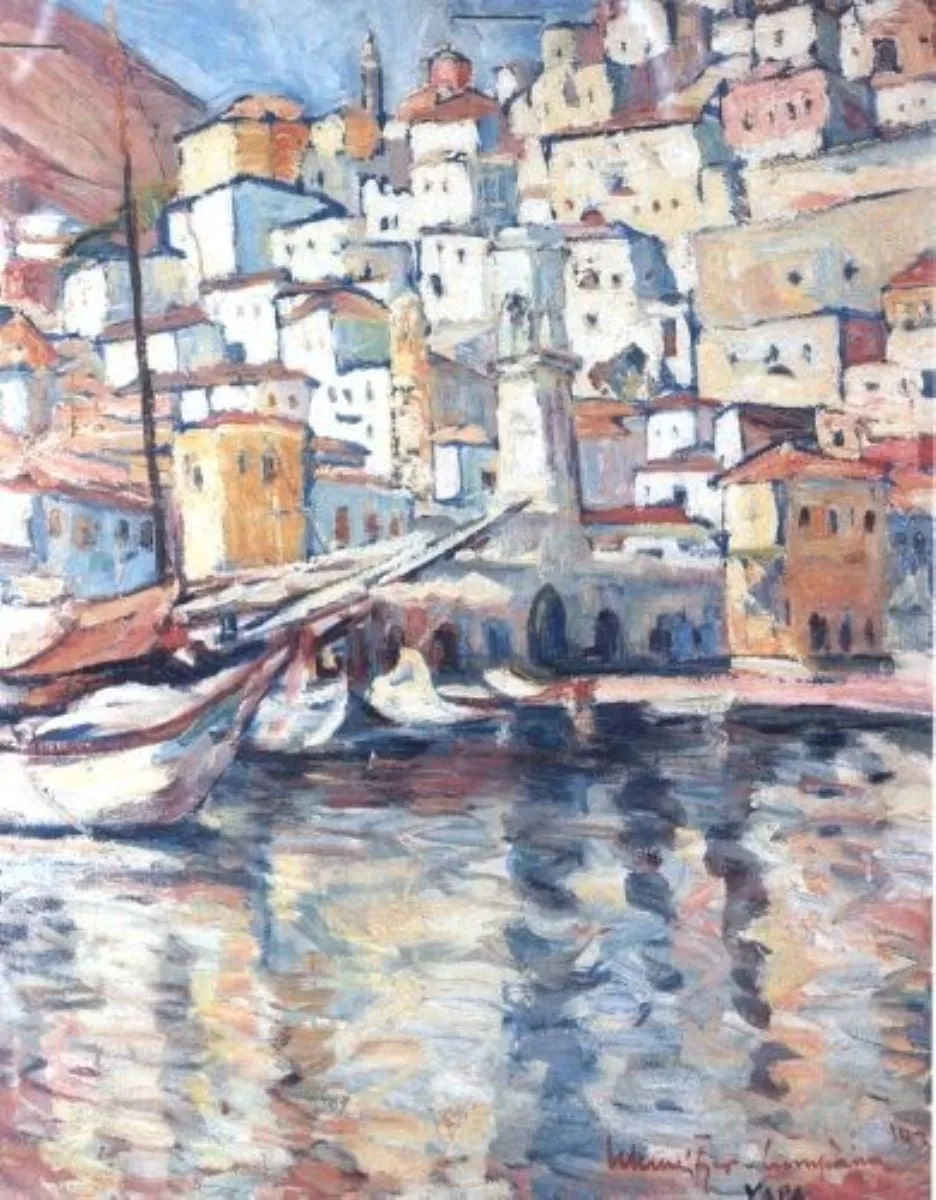
Port la Hydra is an unspecified painting by Rudolf Schweitzer-Cumpăna. It dates from 1929 and is held in the collection of the Colecție particulară - București.
About this work
The painting is called "Port la Hydra" and was made by Rudolf Schweitzer-Cumpăna in 1929.
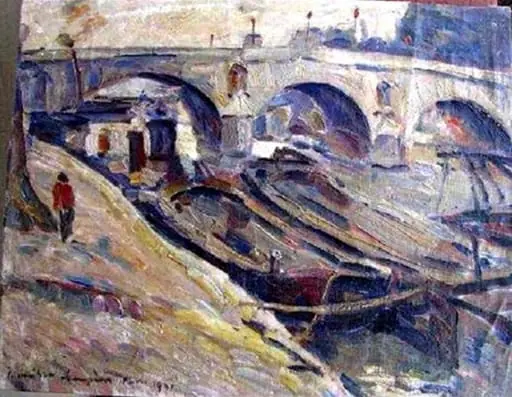
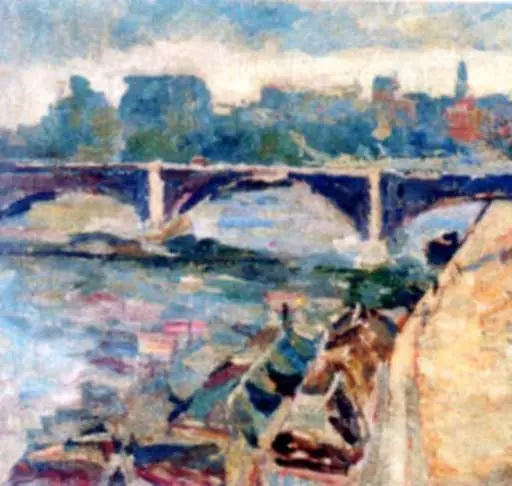
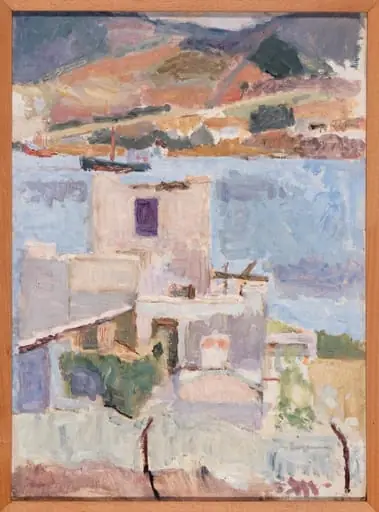
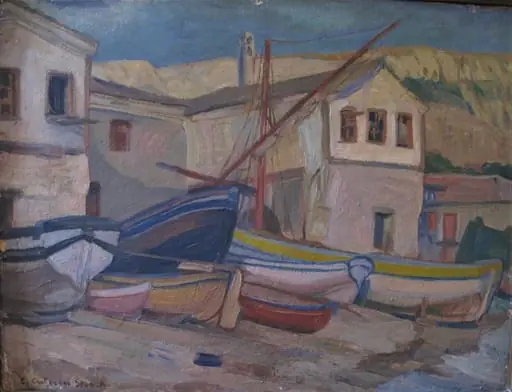
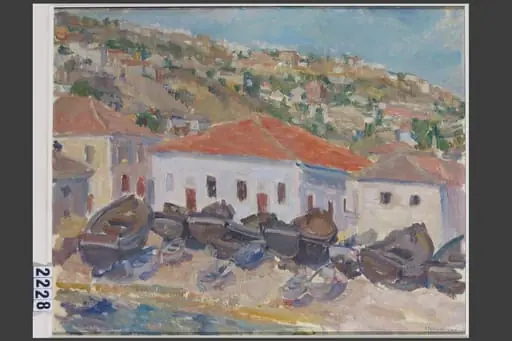
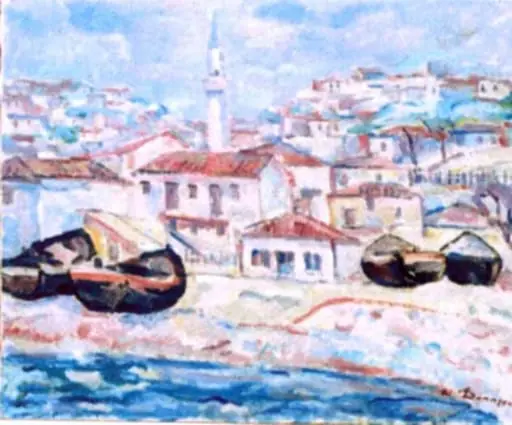
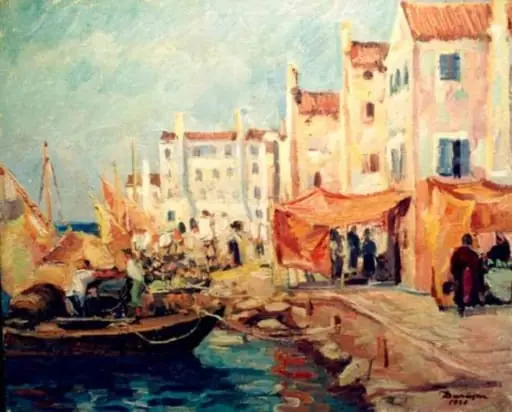
This painting shows a seaside town with white buildings and red roofs. There are boats in the water in front of the town. The painting is colorful, with lots of blues and whites.
The painting has a lot of details, like the windows and doors on the buildings. The boats in the water are also detailed, with ropes and sails. The artist used a lot of colors to make the painting look lively.
The painting is called "Port la Hydra" and was made by Rudolf Schweitzer-Cumpăna in 1929. It's held at the Museum of Ethnography. You might also like to look at the work of other artists who use impasto.
Overview
Painted in 1929 by Rudolf Schweitzer-Cumpăna, Port la Hydra depicts a coastal settlement on the Greek island of Hydra. The work is part of the Museum of Ethnography’s collection and reflects the artist’s interest in Mediterranean architecture and maritime life. Rendered with vibrant pigments and careful observation, the scene captures a quiet harbor at midday, emphasizing light and structure over narrative.
Subject & Meaning
The painting presents Hydra’s traditional urban fabric—white-washed buildings with terracotta roofs clustered along a rocky shore. Boats moored in the harbor suggest daily activity, though no figures are visible. The absence of human presence invites contemplation of place rather than event, aligning the work with a quiet, observational tradition in early 20th-century landscape painting.
Technique & Style
Schweitzer-Cumpăna employed a detailed, almost illustrative approach, rendering individual windows, doorways, and rigging with precision. Color is used expressively: cool blues and whites dominate, contrasted by warm red roofs and accents of ochre. Brushwork is controlled but not rigid, allowing texture to emerge through layered pigments without heavy impasto.
History & Provenance
Created during a period when European artists increasingly traveled to the eastern Mediterranean, the painting entered the Museum of Ethnography’s holdings shortly after its completion. Its acquisition reflects the institution’s early 20th-century focus on documenting vernacular architecture and regional life through visual art, rather than ethnographic artifacts alone.
Context
In the late 1920s, Hydra was a quiet port, largely untouched by modernization, attracting artists seeking authentic coastal scenes. Schweitzer-Cumpăna’s depiction aligns with broader European trends of documenting non-urban landscapes, distinct from urban modernism. The work stands apart from avant-garde movements, instead favoring a descriptive, almost documentary sensibility.
Legacy
Though not widely exhibited beyond its institutional home, Port la Hydra remains a representative example of interwar European engagement with Mediterranean vernacular. It contributes to the Museum of Ethnography’s broader archive of visual records of traditional seascapes, offering insight into how artists of the time interpreted place through color and form.
Artist & collection
Artist
Rudolf Schweitzer-Cumpăna was a Romanian painter. Born in Pitești into an ethnic German family, he finished high school in his native town before attending the Royal Academy of Arts at Berlin from 1904 to 1909, studying…