Artwork
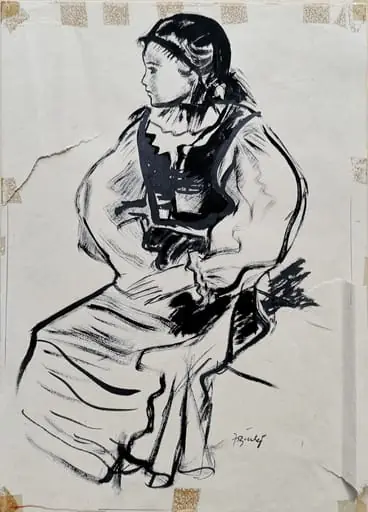
Țărancă
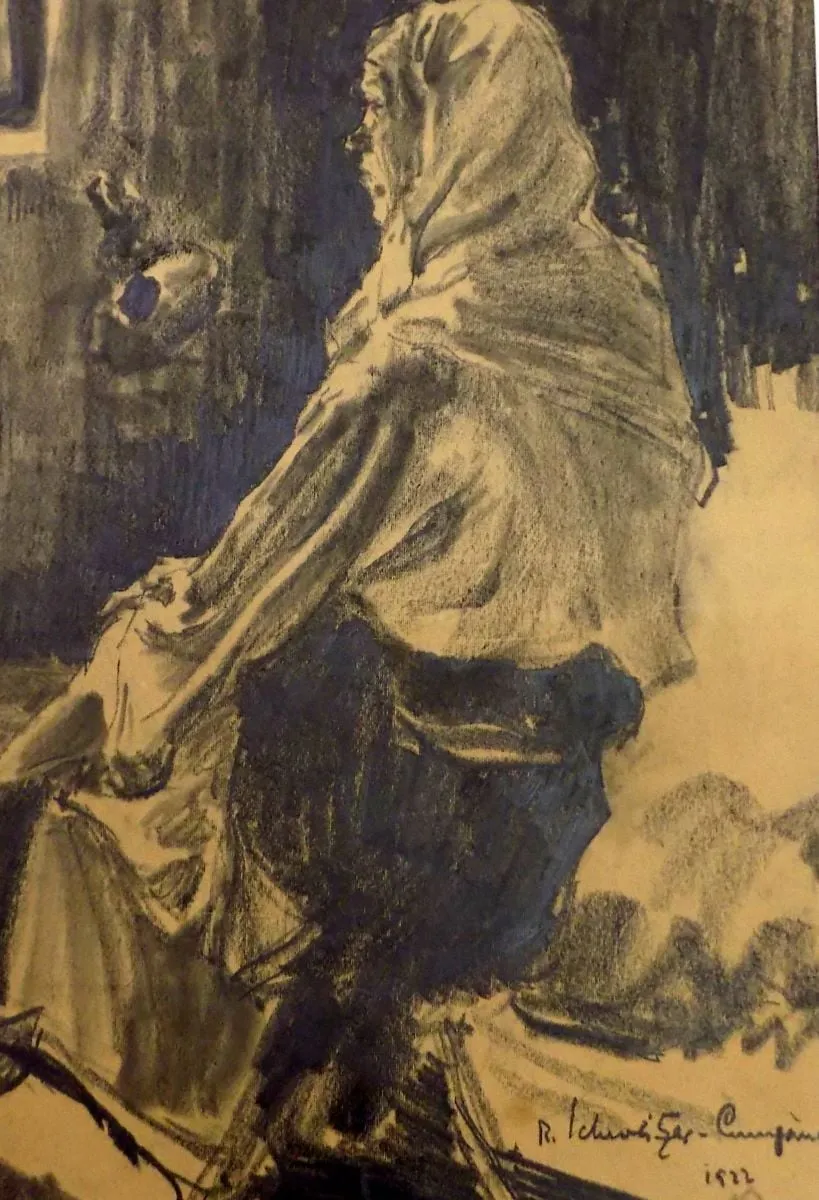
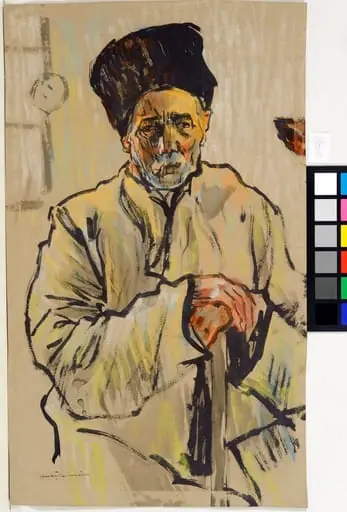
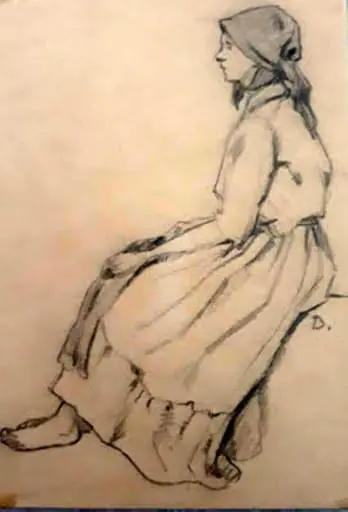
Țărancă is a drawing by Rudolf Schweitzer-Cumpăna. It dates from 1922 and is held in the collection of the Bucharest Municipality Museum.
About this work
Overview
The work is part of the collection at the Museum of Ethnography, where it is preserved as an example of early 20th-century ethnographic portraiture.
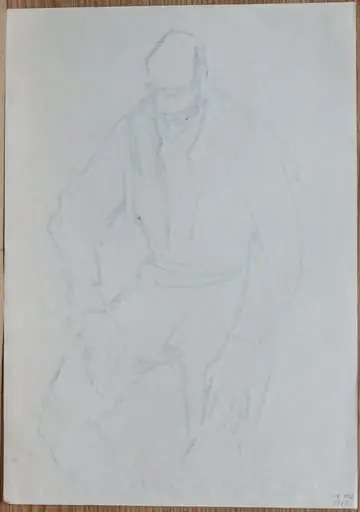
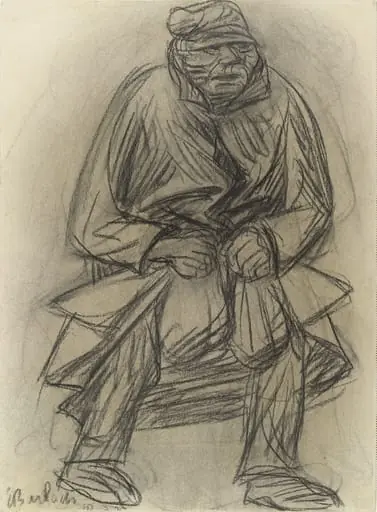
Created in 1922 by Rudolf Schweitzer-Cumpăna, Țărancă is a graphite drawing depicting a rural Romanian woman in quiet repose. The work is part of the collection at the Museum of Ethnography, where it is preserved as an example of early 20th-century ethnographic portraiture. Rendered in monochrome, the piece emphasizes form and expression over detail, capturing a moment of stillness with restrained precision.
Subject & Meaning
The subject is a woman dressed in traditional rural attire—a headscarf and long, unadorned dress—seated with hands folded in her lap. Her gaze, directed outward and slightly distant, suggests contemplation or weariness. The absence of narrative context invites interpretation rooted in social observation rather than storytelling, reflecting the artist’s interest in documenting the quiet dignity of peasant life during a period of rapid change.
Technique & Style
Executed in grayscale graphite, the drawing relies on subtle tonal variations to define form and texture. The background is uniformly dark, isolating the figure and heightening focus on her posture and facial expression. Lines are deliberate but unembellished, avoiding idealization; the style aligns with documentary realism, prioritizing authenticity over aesthetic flourish.
History & Provenance
The drawing was completed in 1922 and entered the collection of the Museum of Ethnography shortly thereafter. Its preservation there indicates its significance as a record of Romanian rural life during the interwar period. No record of prior ownership or exhibition history beyond the museum’s custody is documented, suggesting it was acquired directly from the artist or through institutional collection efforts.
Context
In the early 1920s, Romania was consolidating national identity after territorial expansion. Artists and ethnographers increasingly turned to rural communities as symbols of cultural authenticity. Schweitzer-Cumpăna’s work reflects this trend, contributing to a broader effort to visually archive folk traditions amid modernization pressures and shifting social structures.
Legacy
Țărancă remains a representative example of ethnographic drawing from interwar Romania. It is not widely reproduced outside institutional contexts, but its presence in the Museum of Ethnography ensures its role as a reference for studies on visual anthropology and regional identity. The work’s quiet intensity continues to inform how rural subjects are portrayed in academic and curatorial settings.
Artist & collection
Artist
Rudolf Schweitzer-Cumpăna was a Romanian painter. Born in Pitești into an ethnic German family, he finished high school in his native town before attending the Royal Academy of Arts at Berlin from 1904 to 1909, studying…
![Man Wearing a Cloak [verso], by Edouard Manet](https://artifactworldgallery.com/img/edouard-manet--man-wearing-a-cloak-verso--0bd057994533d120-w320.webp)