Artwork
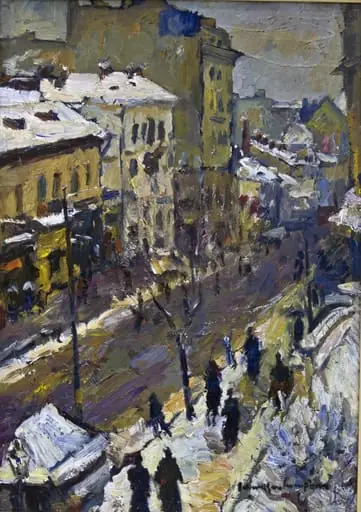
Stradă din Sibiu
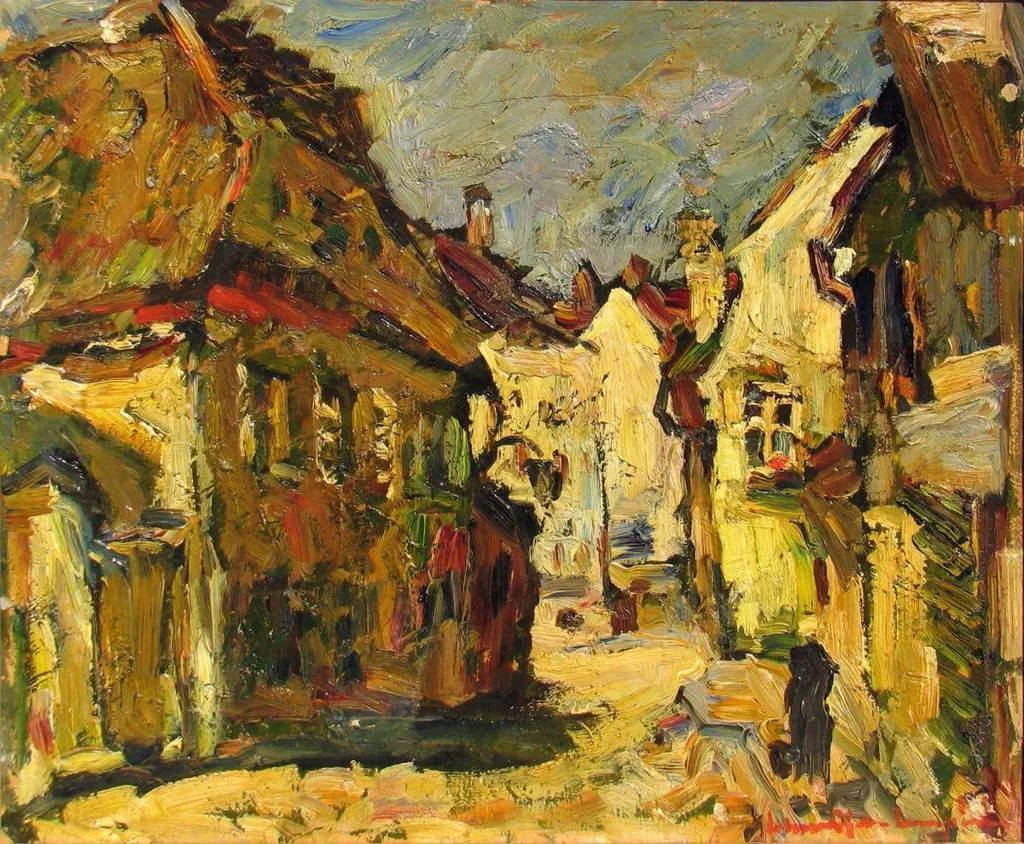
Stradă din Sibiu is an unspecified painting by Rudolf Schweitzer-Cumpăna. It dates from 1936 and is held in the collection of the Brukenthal National Museum.
About this work
Overview
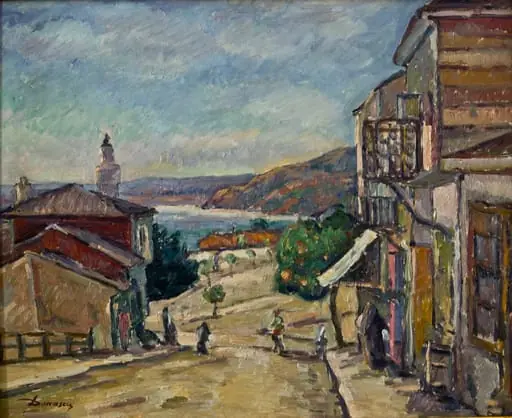
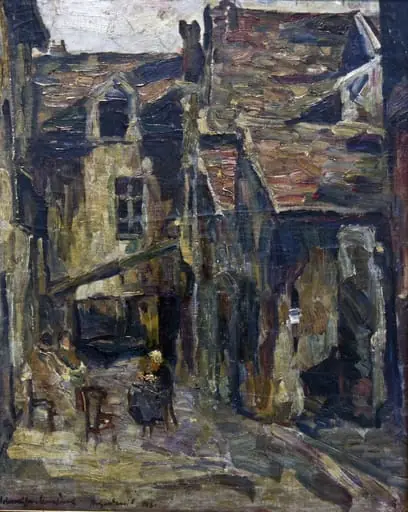
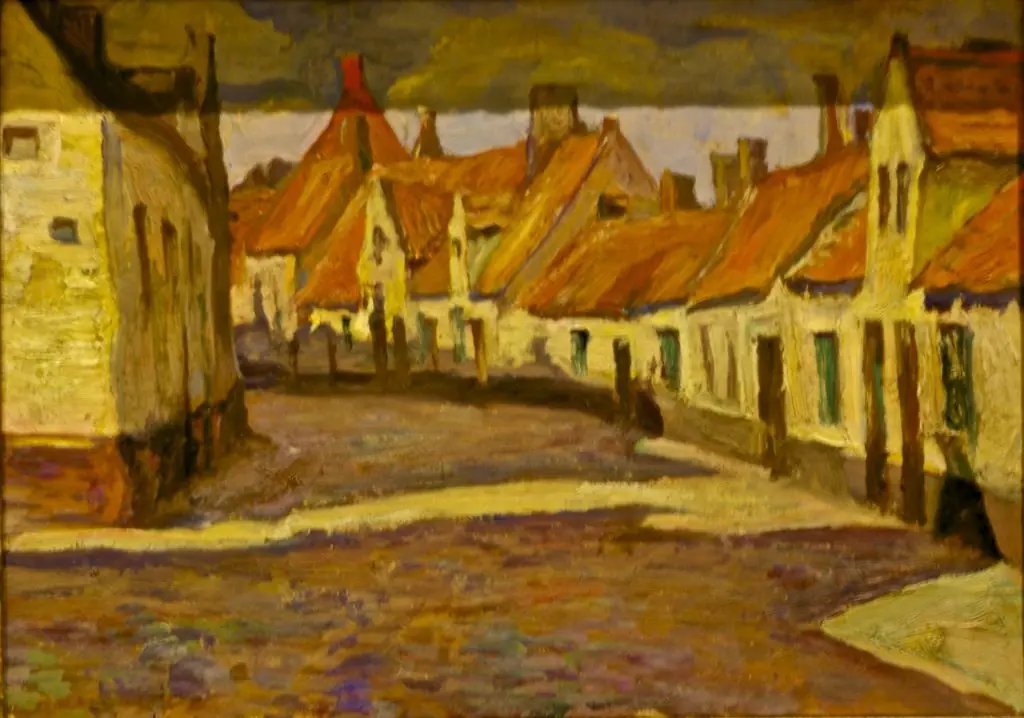
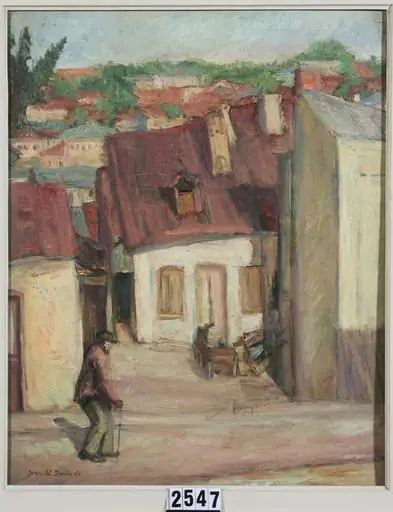
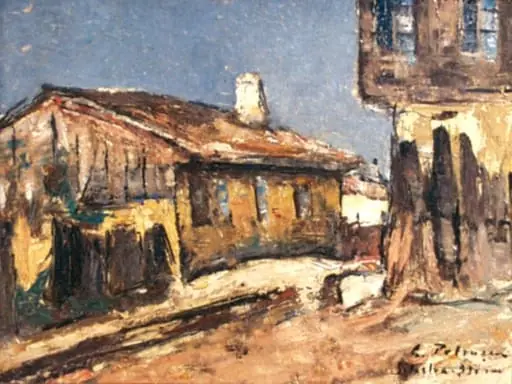
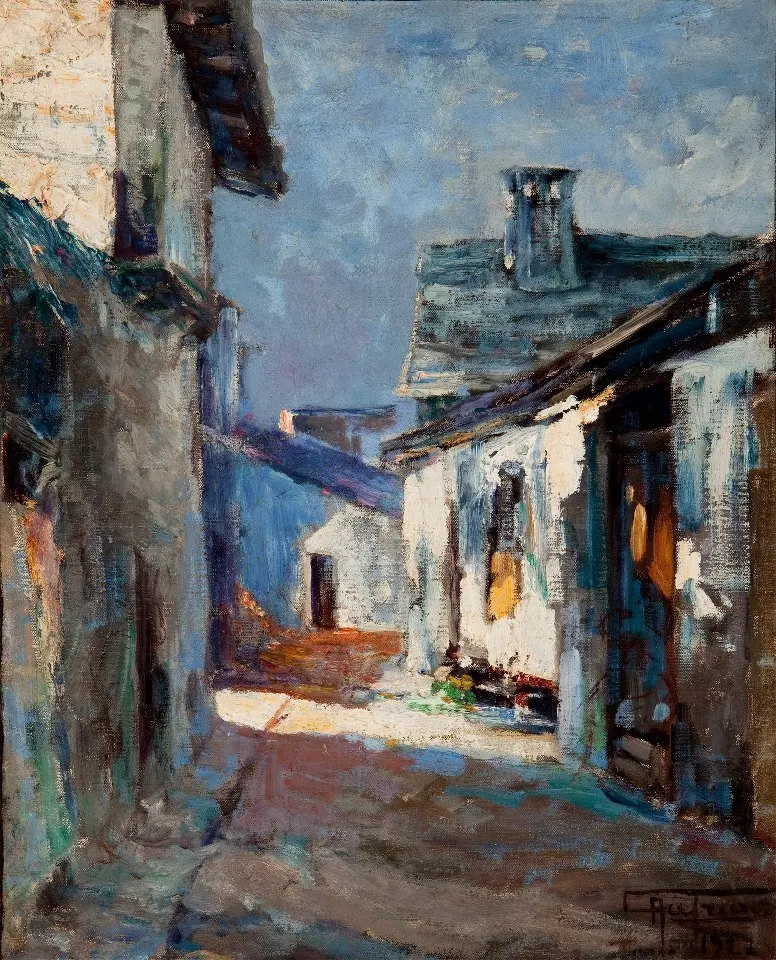
Rudolf Schweitzer‑Cumpăna’s Stradă din Sibiu, executed around 1936, depicts a narrow urban lane in the historic Romanian city of Sibiu.
Rudolf Schweitzer‑Cumpăna’s Stradă din Sibiu, executed around 1936, depicts a narrow urban lane in the historic Romanian city of Sibiu. The composition is dominated by tightly packed façades whose tiled roofs overlap like a series of shingles, while a stationary horse‑drawn cart occupies the central foreground. A subdued palette evokes the gentle illumination of early morning, lending the scene a calm, almost timeless atmosphere.
Subject & Meaning
The painting records everyday life in Sibiu at a moment when horse‑drawn transport still traversed the streets. By focusing on the stillness of the cart and the intimate proximity of the buildings, the work suggests a pause in urban rhythm, inviting contemplation of a community rooted in tradition and the gradual encroachment of modernity.
Technique & Style
Schweitzer‑Cumpăna employs a restrained brushwork that softens architectural details, allowing forms to merge into one another. The muted chromatic scheme—dominated by earth tones and pale blues—captures the diffused light of dawn. The overall effect is one of atmospheric subtlety rather than precise rendering, characteristic of his early‑20th‑century approach to urban genre scenes.
History & Provenance
Created circa 1936, the canvas entered the collection of the Museum of Ethnography in Sibiu, where it remains part of the institution’s holdings of regional visual culture. The work has been displayed in several exhibitions highlighting the city’s architectural heritage and the artist’s contribution to Romanian painting.
Context
During the interwar period, Sibiu retained a distinctive medieval layout, with narrow streets and closely spaced houses. Schweitzer‑Cumpăna’s depiction reflects this urban fabric before widespread automobile adoption, offering a visual document of the city’s social and spatial organization in the 1930s.
Artist & collection
Artist
Rudolf Schweitzer-Cumpăna was a Romanian painter. Born in Pitești into an ethnic German family, he finished high school in his native town before attending the Royal Academy of Arts at Berlin from 1904 to 1909, studying…