Artwork
Vedere din Argenteuil
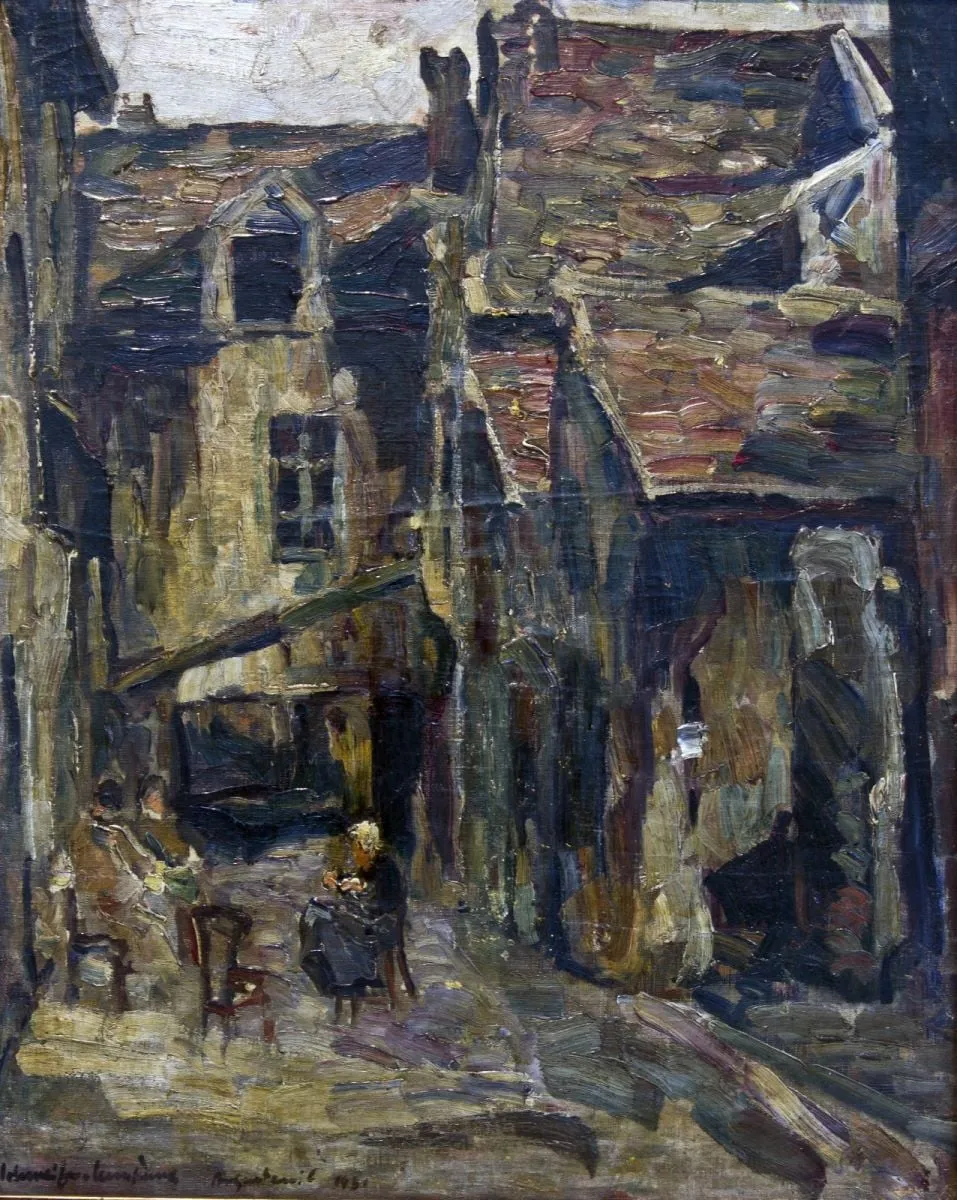
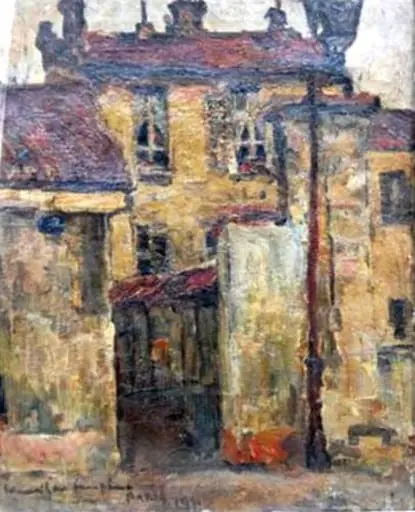
Vedere din Argenteuil is a print by Rudolf Schweitzer-Cumpăna. It dates from 1931 and is held in the collection of the National Museum of Art of Romania.
About this work
Overview
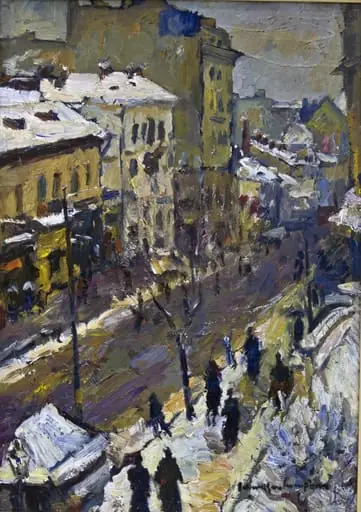
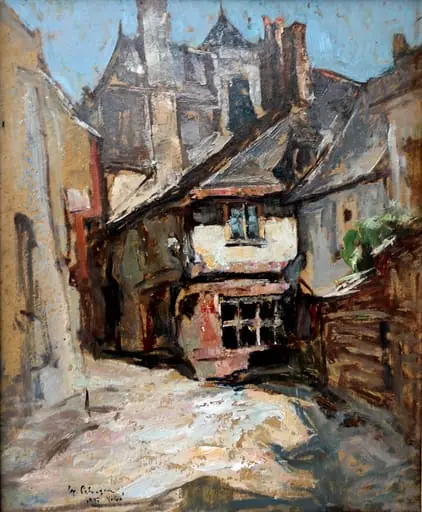
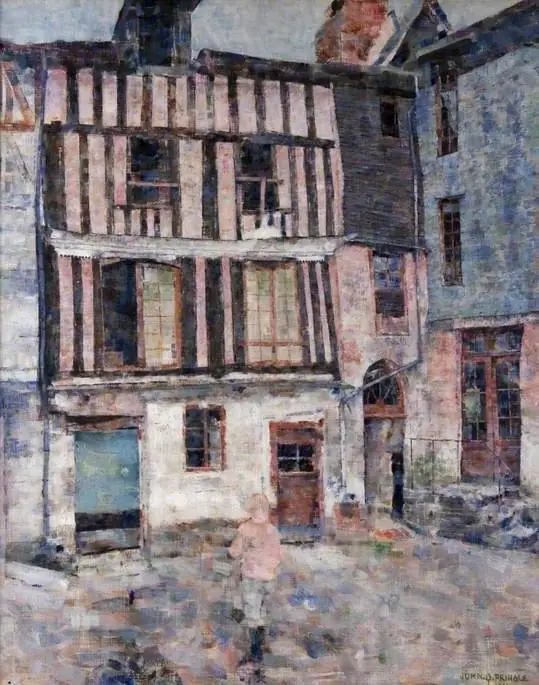
The sky is reduced to a faint horizontal band at the upper edge, emphasizing the weight and density of the architecture below.
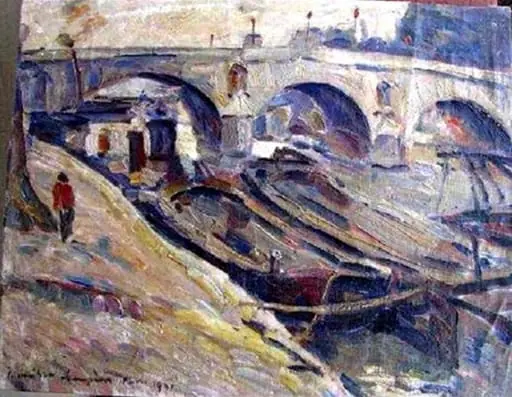
Created in 1931 by Rudolf Schweitzer-Cumpăna, this oil painting depicts a narrow urban street in Argenteuil. The composition is tightly framed, with closely packed buildings dominating the view. The sky is reduced to a faint horizontal band at the upper edge, emphasizing the weight and density of the architecture below. The work’s physical surface is marked by heavy, visible brushwork that gives it a tactile, sculptural quality.
Subject & Meaning
The scene captures a quiet, unremarkable street corner, devoid of clear narrative or focal point. Figures are present but indistinct, their forms dissolved into the surrounding textures. This anonymity suggests a focus on environment over individuality, conveying a sense of urban isolation. The lack of detail in faces and the muted palette reinforce a mood of quiet detachment, reflecting the everyday rhythms of city life without sentimentality.
Technique & Style
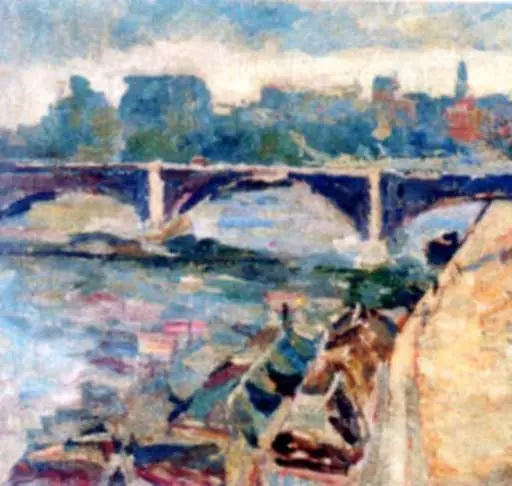
Schweitzer-Cumpăna employs impasto to build the painting’s surface, applying thick layers of paint with deliberate, uneven strokes. Dark blues, muted browns, and pale yellows are layered aggressively, creating ridges and shadows that catch light differently across the canvas. This technique emphasizes materiality over realism, transforming the street into a textured landscape of pigment rather than a photographic record of place.
History & Provenance
The painting was completed in 1931 during a period when Schweitzer-Cumpăna was exploring urban themes in northern France. It remained in private collections in Romania and France before entering institutional hands. No major exhibitions or documented public displays are recorded until the late 20th century, suggesting it was not widely exhibited during the artist’s lifetime.
Context
Created between the World Wars, the work aligns with broader European trends in post-impressionist and expressionist urban realism. While contemporaries like Chaim Soutine and George Grosz rendered city life with heightened emotion or satire, Schweitzer-Cumpăna’s approach is restrained, focusing on structural weight and material presence rather than social commentary or psychological intensity.
Legacy
Though not widely known outside specialized circles, the painting exemplifies a quiet, material-focused approach to urban representation that diverges from both academic realism and avant-garde abstraction. Its emphasis on texture and subdued tone has influenced later artists interested in the physicality of paint and the emotional resonance of ordinary spaces.
Artist & collection
Artist
Rudolf Schweitzer-Cumpăna was a Romanian painter. Born in Pitești into an ethnic German family, he finished high school in his native town before attending the Royal Academy of Arts at Berlin from 1904 to 1909, studying…