Artwork
The Harihar Kshetra festival
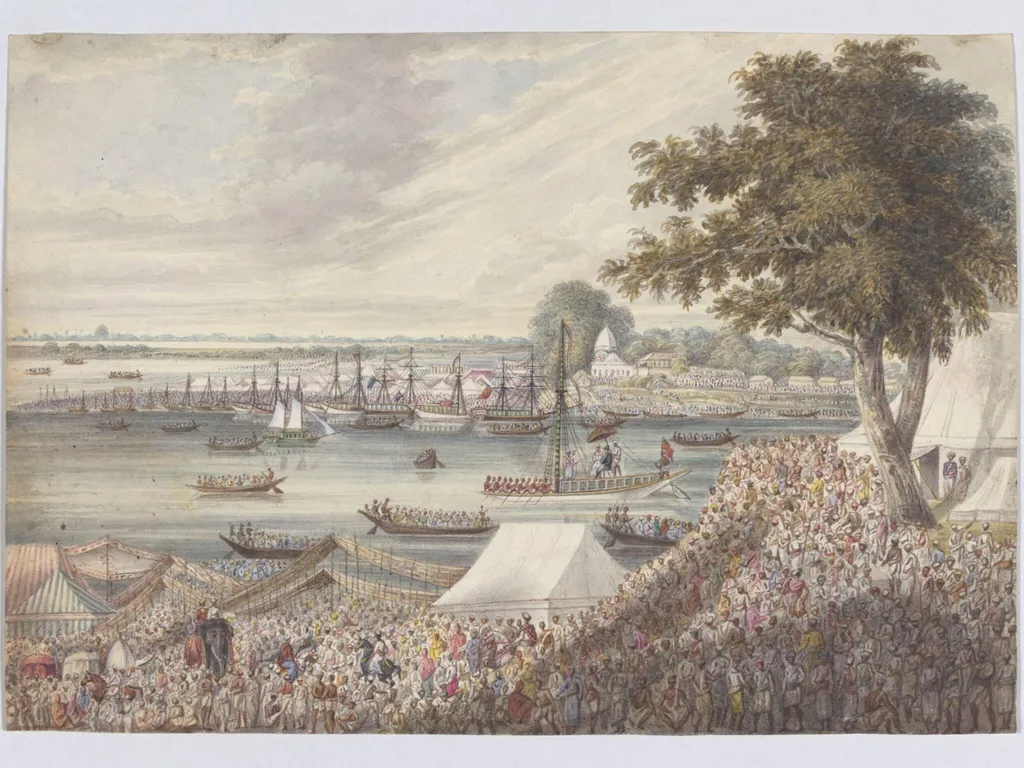
The Harihar Kshetra festival is a paint painting by the Patna School of Painting artist Sewak Ram. It dates from 1826 and is held in the collection of the Victoria and Albert Museum. This painting belongs to the Company style, a genre developed in India during the late 18th and early 19th centuries for British patrons.
About this work
Overview
This painting belongs to the Company style, a genre developed in India during the late 18th and early 19th centuries for British patrons.
This painting belongs to the Company style, a genre developed in India during the late 18th and early 19th centuries for British patrons. It depicts the Harihar Kshetra festival at Sonepur, a major annual event near Patna. Artists trained in Indian traditions adapted their techniques to meet European expectations, blending detailed local observation with Western compositional conventions. The work serves as both record and souvenir, capturing a cultural moment for colonial audiences.
Subject & Meaning
The scene centers on the Harihar Nath temple and the Sonepur Mela, a longstanding gathering for religious devotion and trade, particularly in livestock. Crowds fill the grounds, while tents for dignitaries mark social hierarchy. The presence of a European couple, likely Lord Amherst and his wife, signals colonial engagement with indigenous rituals. The painting frames the festival as both spectacle and subject of imperial curiosity, reflecting the complex dynamics of observation and power.
Technique & Style
Executed in watercolor on paper, the work displays meticulous attention to detail in textiles, architecture, and individual figures. The artist employs linear perspective and soft shading, influenced by European conventions, while retaining Indian sensibilities in color and ornamentation. Flags, canopies, and boat details are rendered with precision, suggesting a hybrid approach: local artisans adapting their craft to satisfy foreign tastes without abandoning indigenous visual language.
History & Provenance
Created during the tenure of Lord Amherst as Governor-General (1823–1828), the painting likely originated as a commissioned work for a British official or institution. It entered the collection of the Victoria and Albert Museum, where many Company paintings are preserved. Its survival reflects the institutional interest in documenting colonial India’s cultural life, though the artist’s identity remains unrecorded, typical of the genre’s anonymous production.
Context
The Sonepur Mela, held each November, has roots stretching back centuries as a confluence of pilgrimage and commerce. During British rule, such events became focal points for colonial ethnographic interest. Artists working for the East India Company produced hundreds of such images, aiming to capture India’s diversity for audiences back home. This painting is one of many that transformed local rituals into visual commodities for imperial consumption.
Legacy
Company paintings like this one now serve as historical documents, offering insight into cross-cultural exchange and colonial perception. While once created as decorative objects for British elites, they are today studied for their hybrid aesthetics and the subtle tensions they reveal between observation and representation. Museums preserve them not as artistic triumphs, but as artifacts of a complex historical moment.
Artist & collection

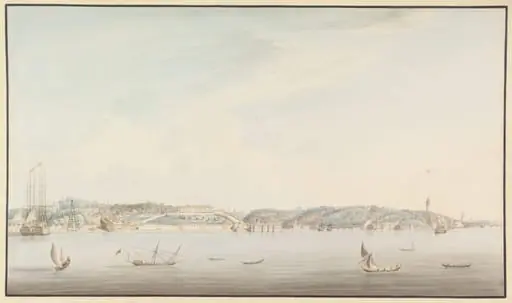 Kasim Pasa, the former Ottoman Naval Arsenal, from the Golden Horn
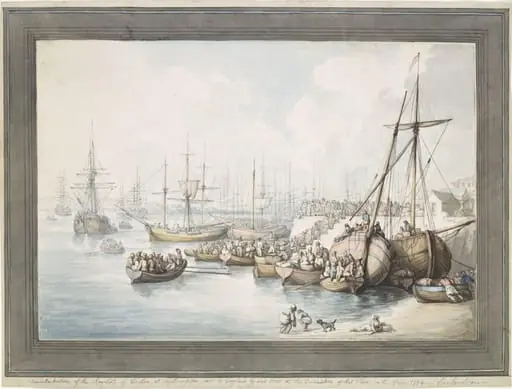 Disembarkation of the Royalists of Toulon at Southampton, 1794
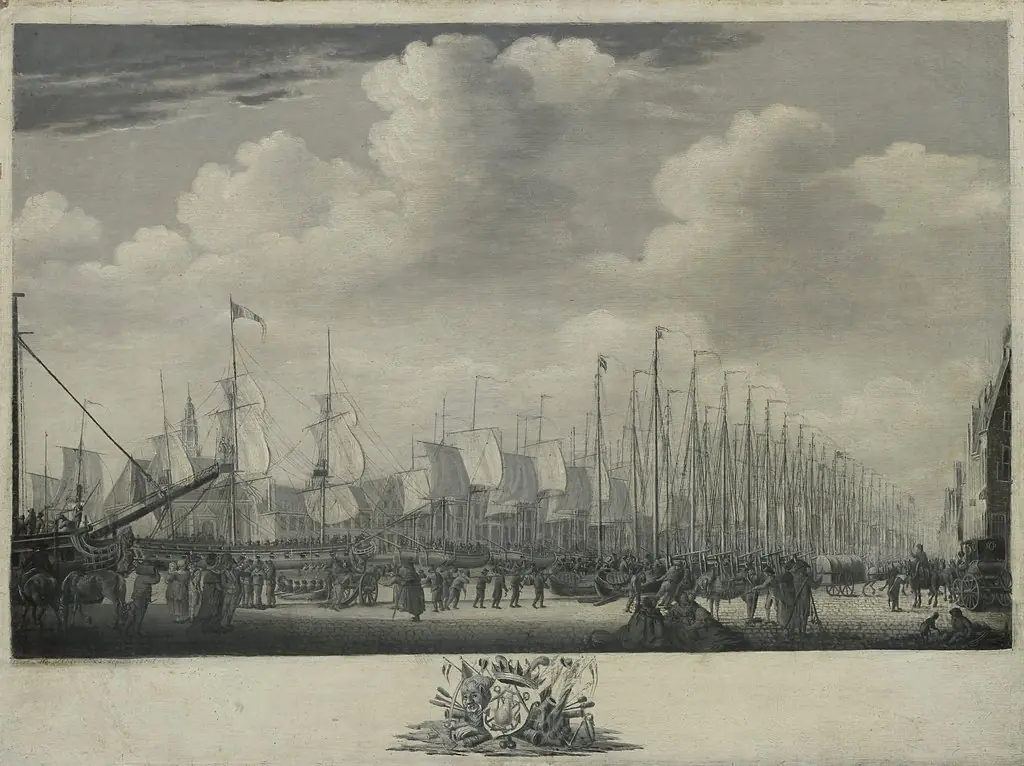 Manning the Fleet in the Harbor of Flushing, 1804
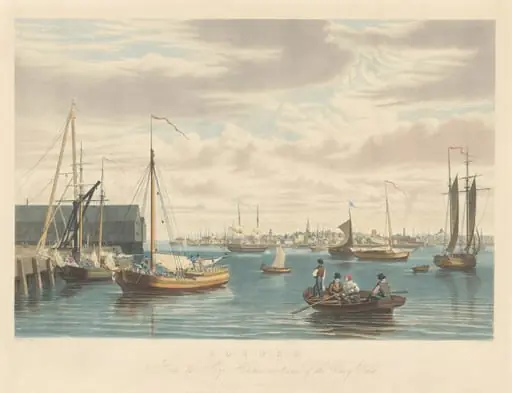 Boston: From the Ship House West End of the Navy Yard
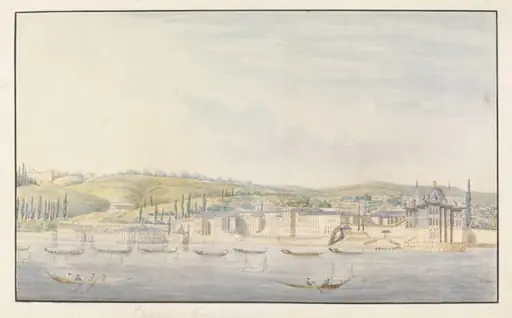 Former Dolmabahçe Palace and Mosque
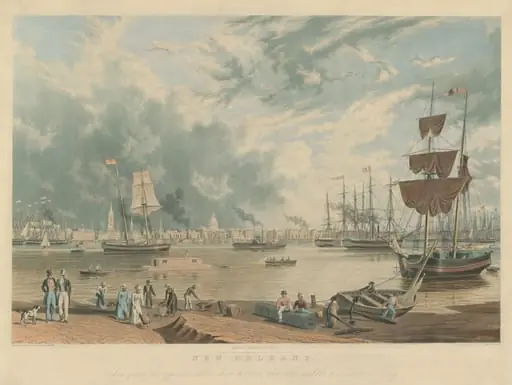 New Orleans: Taken from the Opposite Side, a Short Distance above the Middle or Picayyune Ferry
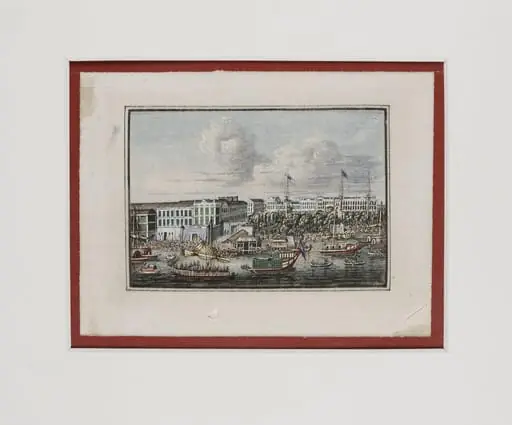 The Canton Waterfront
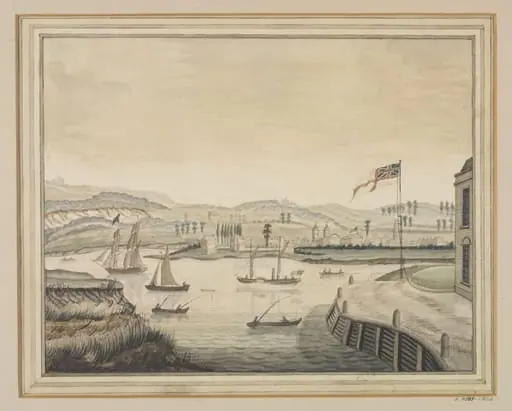 Mouth of the River Lea facing Greenwich
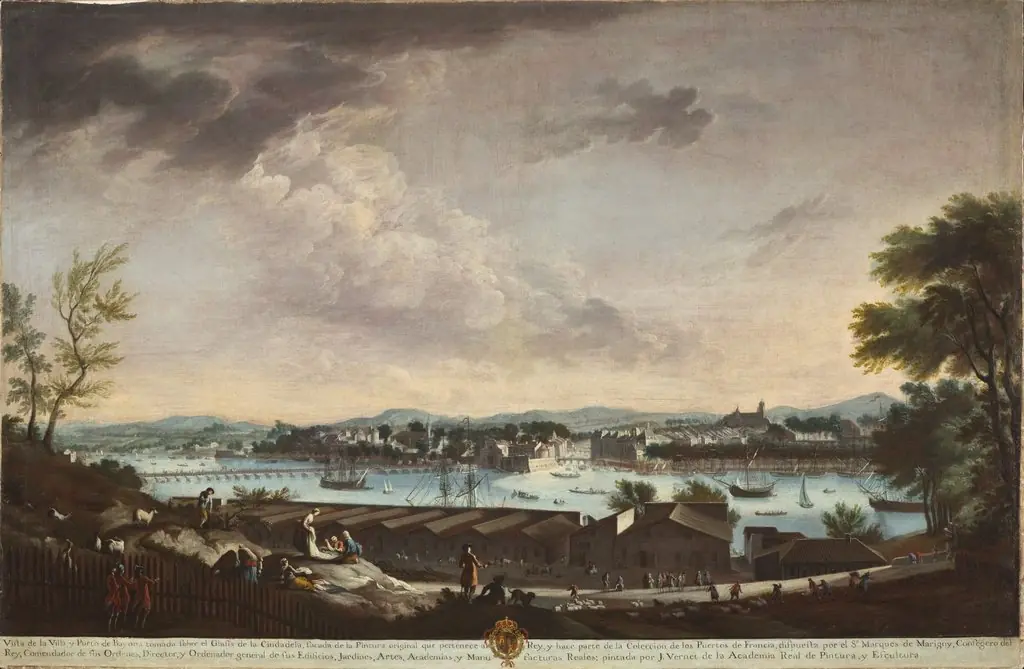 View of the Town and Port of Bayonne (La villa y puerto de Bayona)
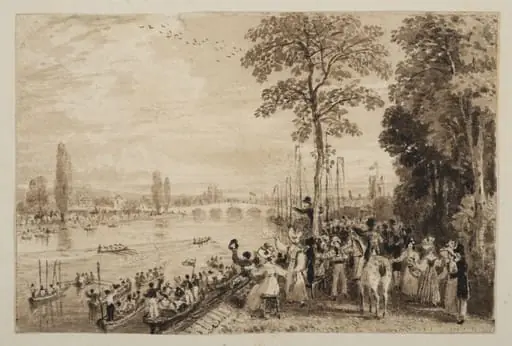 The Oxford and Cambridge Rowing Match at Henley-on-Thames