Artwork
Christ Appearing to St. Peter
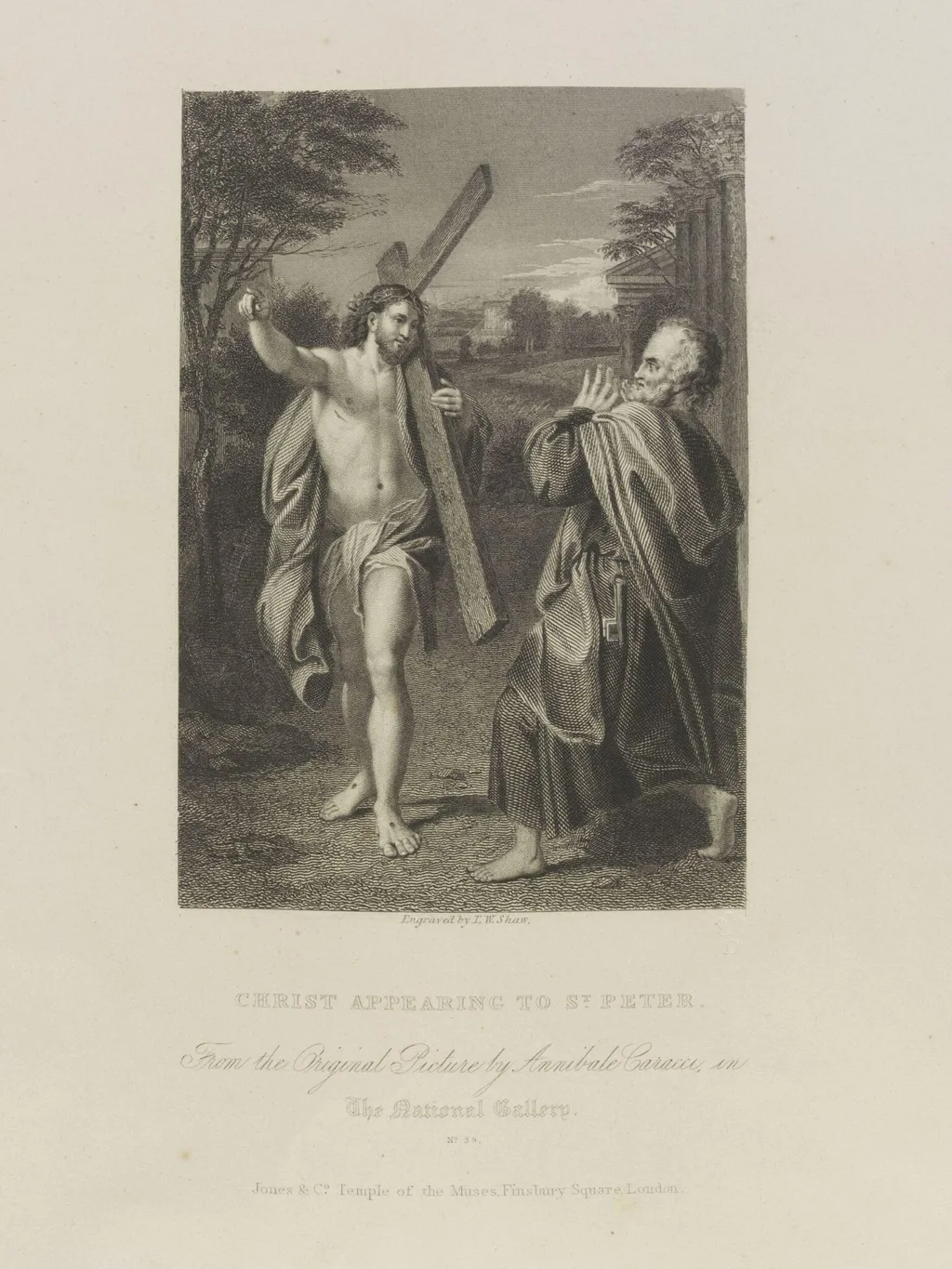
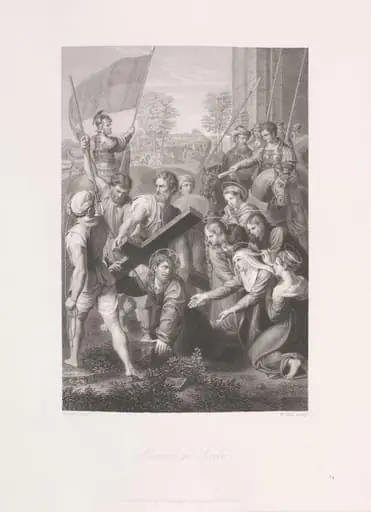
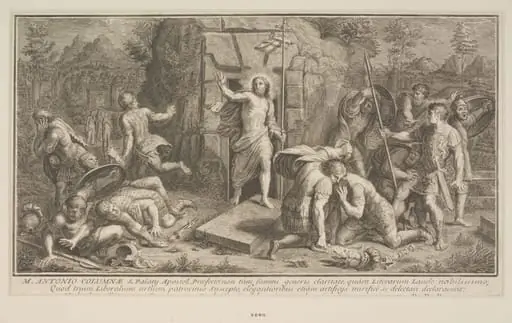
Christ Appearing to St. Peter is a print by T. W. Shaw. It dates from 1850 and is held in the collection of the Victoria and Albert Museum. This 1850 print by T.
About this work
Overview
Shaw depicts a biblical moment from the New Testament, rendered as an engraved reproduction of a composition originally painted by Annibale Carracci.
This 1850 print by T. W. Shaw depicts a biblical moment from the New Testament, rendered as an engraved reproduction of a composition originally painted by Annibale Carracci. Made on paper, it belongs to a 19th-century tradition of disseminating religious imagery through printmaking. The scene captures Christ’s post-resurrection appearance to Peter, rendered with careful line work and muted tonal contrasts typical of engraved reproductions of the period.
Subject & Meaning
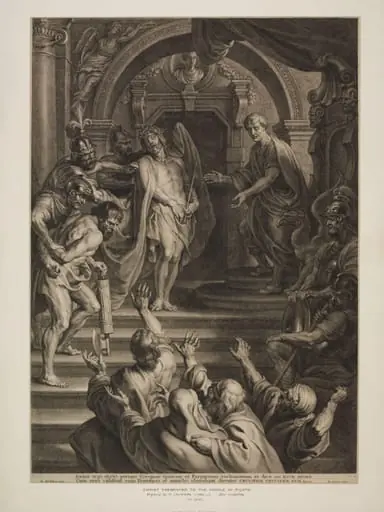
The image portrays Christ, barefoot and bearing a wooden cross, encountering Saint Peter, who wears a long robe and carries a key suspended from his neck—a traditional emblem of his role as keeper of the keys to heaven. Peter’s gesture suggests recognition or reverence. The moment alludes to Christ’s commissioning of Peter as the foundation of the Church, as described in the Gospel of Matthew, and reflects themes of divine authority and spiritual succession.
Technique & Style
Shaw employed engraving to translate Carracci’s painted composition into a monochromatic print, using fine lines to define form and shadow. The figures are rendered with restrained naturalism, their drapery and musculature suggested through careful hatching. The background features simplified trees and architecture, creating depth without distraction. The overall tone is somber, enhanced by the cloudy sky and dim lighting, aligning with the solemnity of the subject.
History & Provenance
The print derives from a lost or lesser-known painting by Annibale Carracci, likely created in the early 17th century. Shaw’s 1850 version was produced during a revival of interest in Renaissance art, when reproductive engravings served as accessible educational tools. While the original painting’s whereabouts are unrecorded, Shaw’s print survives in institutional collections, including the Victoria and Albert Museum, as part of a broader archive of religious prints from the Victorian era.
Context
In mid-19th-century Britain, religious imagery was widely circulated through prints for domestic devotion and moral instruction. Shaw’s work reflects this cultural trend, adapting High Renaissance compositions for a Protestant audience. The emphasis on scriptural accuracy and symbolic detail—such as Peter’s key—demonstrates an effort to align visual art with biblical literacy, even as artistic styles evolved beyond the Baroque.
Legacy
Though not an original work of major artistic innovation, Shaw’s print contributed to the preservation and dissemination of Carracci’s compositional ideas. It exemplifies how reproductive engraving sustained the influence of earlier masters in an age before photographic reproduction. Today, such prints serve as historical artifacts, revealing how religious narratives were visually transmitted and interpreted across centuries.
Artist & collection
Artist
T. W. Shaw carved their name into early 19th-century religious prints. In Christ Appearing to St. Peter, a radiant figure breaks through darkness to grasp a kneeling saint’s shoulder—a single beam of light slashing…