Artwork
見立琴碁書画屏風|Parody of the Four Accomplishments
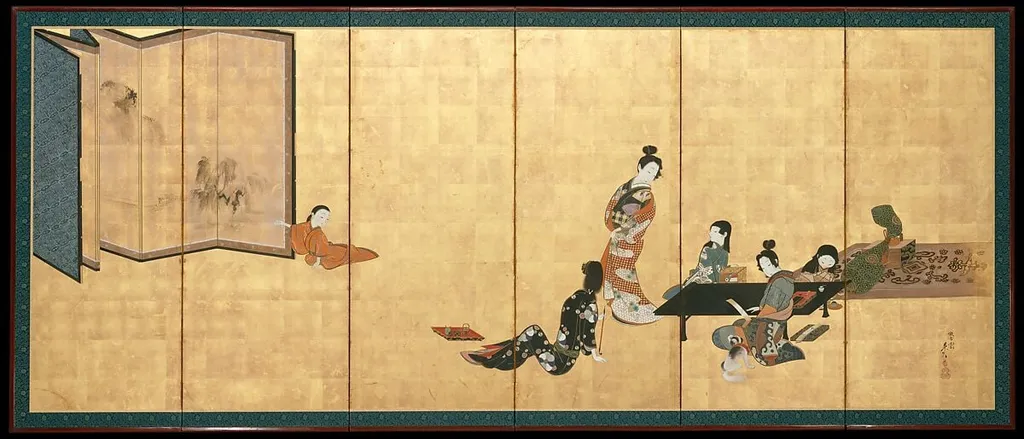
見立琴碁書画屏風|Parody of the Four Accomplishments is an ink painting by the Impressionist artist Shibata Zeshin. It dates from 1874 and is held in the collection of the Metropolitan Museum of Art.
About this work
Overview
Created in 1874 by the Japanese artist Shibata Zeshin, this work consists of two six‑panel folding screens painted with ink and color on gold‑leafed paper. The pair, titled "Parody of the Four Accomplishments," is part of the collection of the Metropolitan Museum of Art.
Subject & Meaning
The screens present two domestic scenes set against a luminous gold ground. On the left a solitary man is seated beside a screen displaying monochrome bird‑and‑tree motifs, suggesting contemplation of traditional scholarly pursuits. On the right, a group of women in vivid kimonos gather around a low table, engaged in conversation and leisurely games, offering a lighthearted counterpoint.
Technique & Style
Zeshin employs a restrained line work for the inked elements while applying bold, saturated pigments to the figures’ garments. The gold leaf background unifies the composition, allowing the bright colors of the women's attire to stand out sharply, a visual strategy that elevates ordinary moments into a stylized tableau.
History & Provenance
The screens were produced during the Meiji period, a time when Japanese artists often blended classical themes with contemporary life. After changing hands several times, they entered the Metropolitan Museum of Art’s collection, where they remain on view as an example of late‑nineteenth‑century Japanese screen painting.
Artist & collection


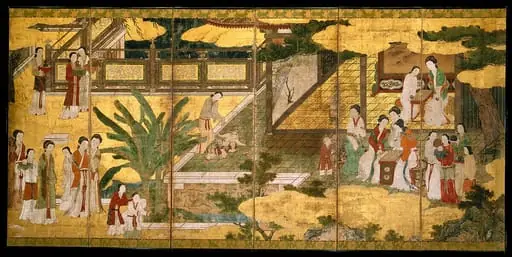 伝狩野永徳筆 唐美人唐子図屏風|Chinese Women and Children in a Palace Garden
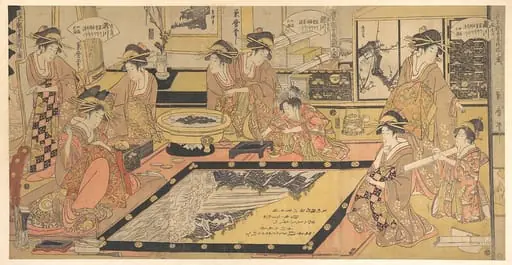 『浅草観音奉掛額之 図』 「扇屋内滝川 富川、粂川、玉川、津川、歌川、清川 め浪、お浪」|A Votive Picture to Be Donated to the Kannon of Asakusa (Asakusa Kannon hō kakegaku no zu), by Takigawa of the Ōgiya, Kamuro Menami and Onami, with Tomikawa, Kumegawa, Tamagawa, Tsugawa, Utagawa, and Kiyokawa
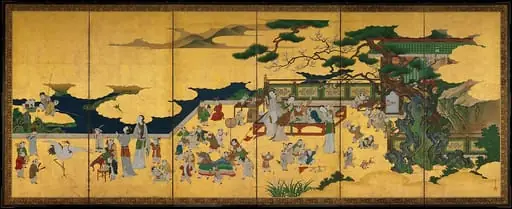 狩野永納筆 唐子遊図屏風|One Hundred Boys
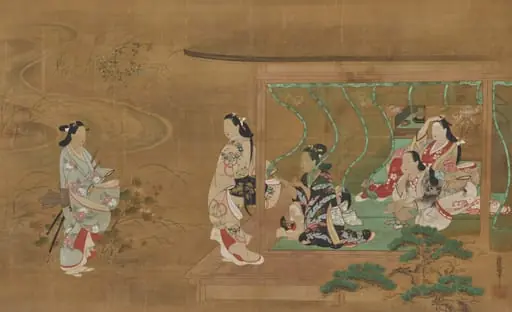 Beauty Receiving a Visitor
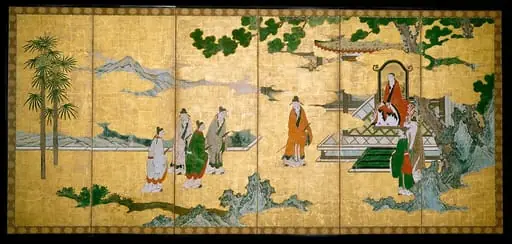 商山四皓・蘇東坡風水洞|The Return to Court of the Four Graybeards of Mount Shang (left); Su Shi’s Visit to the Wind and Water Cave (right
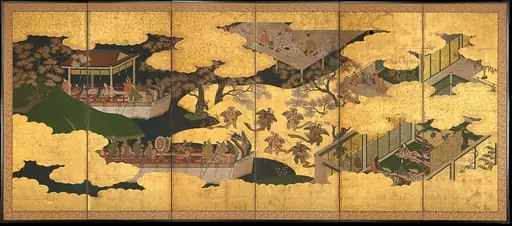 源氏物語図屏風 (胡蝶)|“Butterflies”
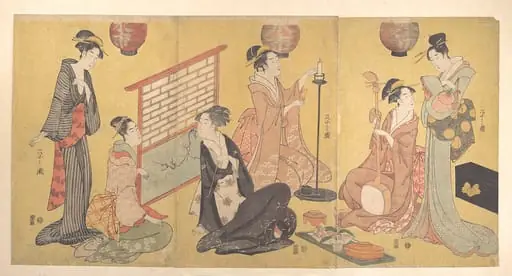 Untitled
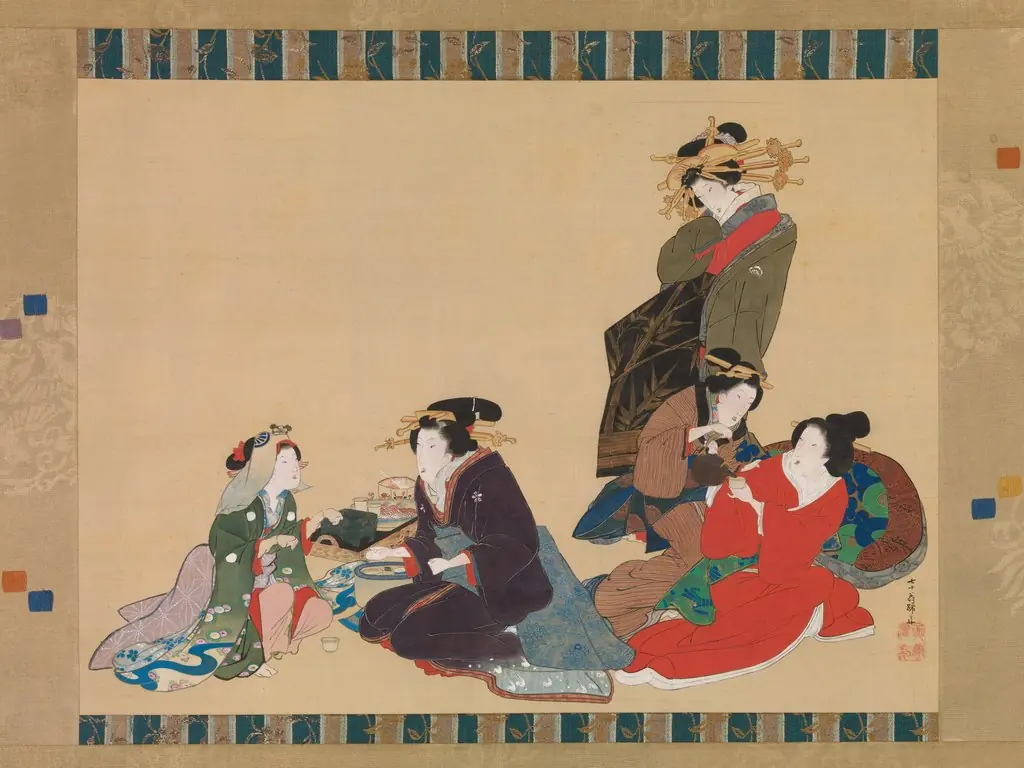 Five Beauties
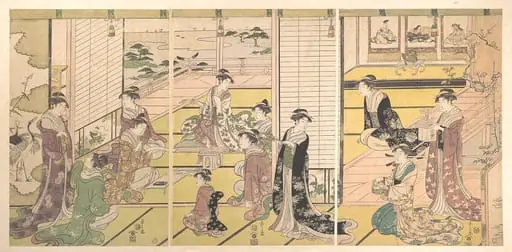 鳥文斎栄之画 和歌三神図|Honoring the Three Gods of Poetry: Women Composing Poems
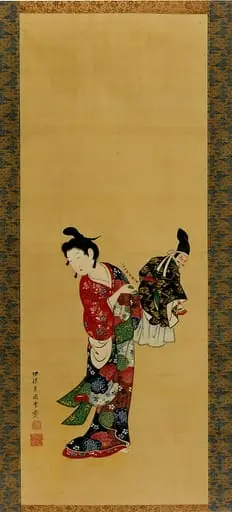 Untitled
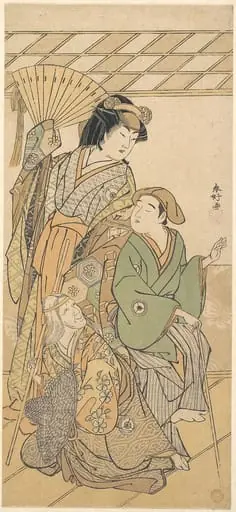 Untitled
 Untitled