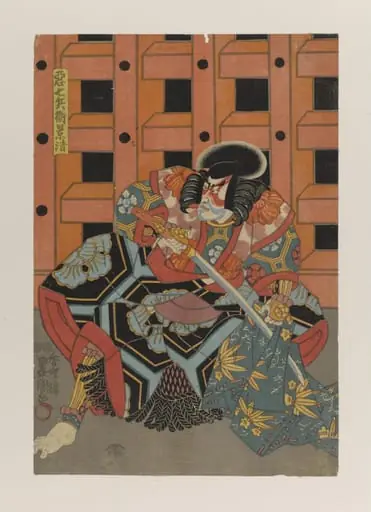
Artwork
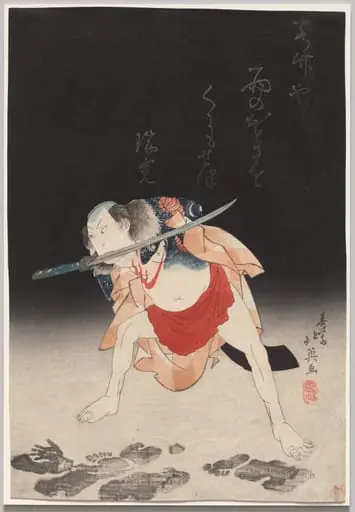
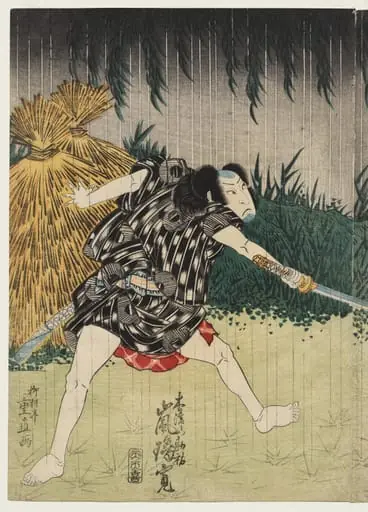
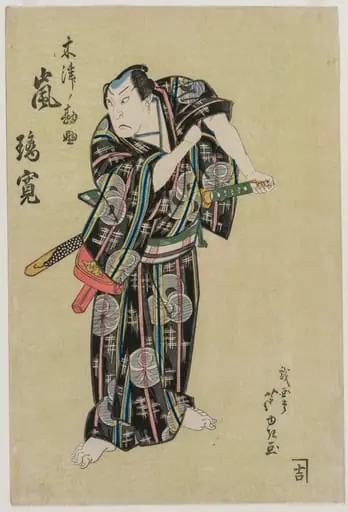
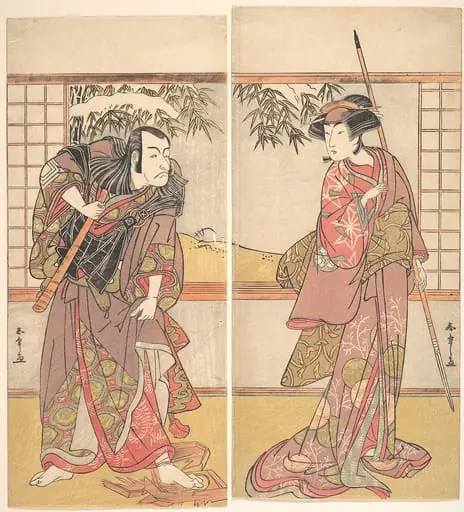
Arashi Rikan II as Kizu Kansuke and Nakayama Bunshichi III as Hayashi Sanzemon from the Kabuki Play "Eight Views of the Kizu River by Boating Song"
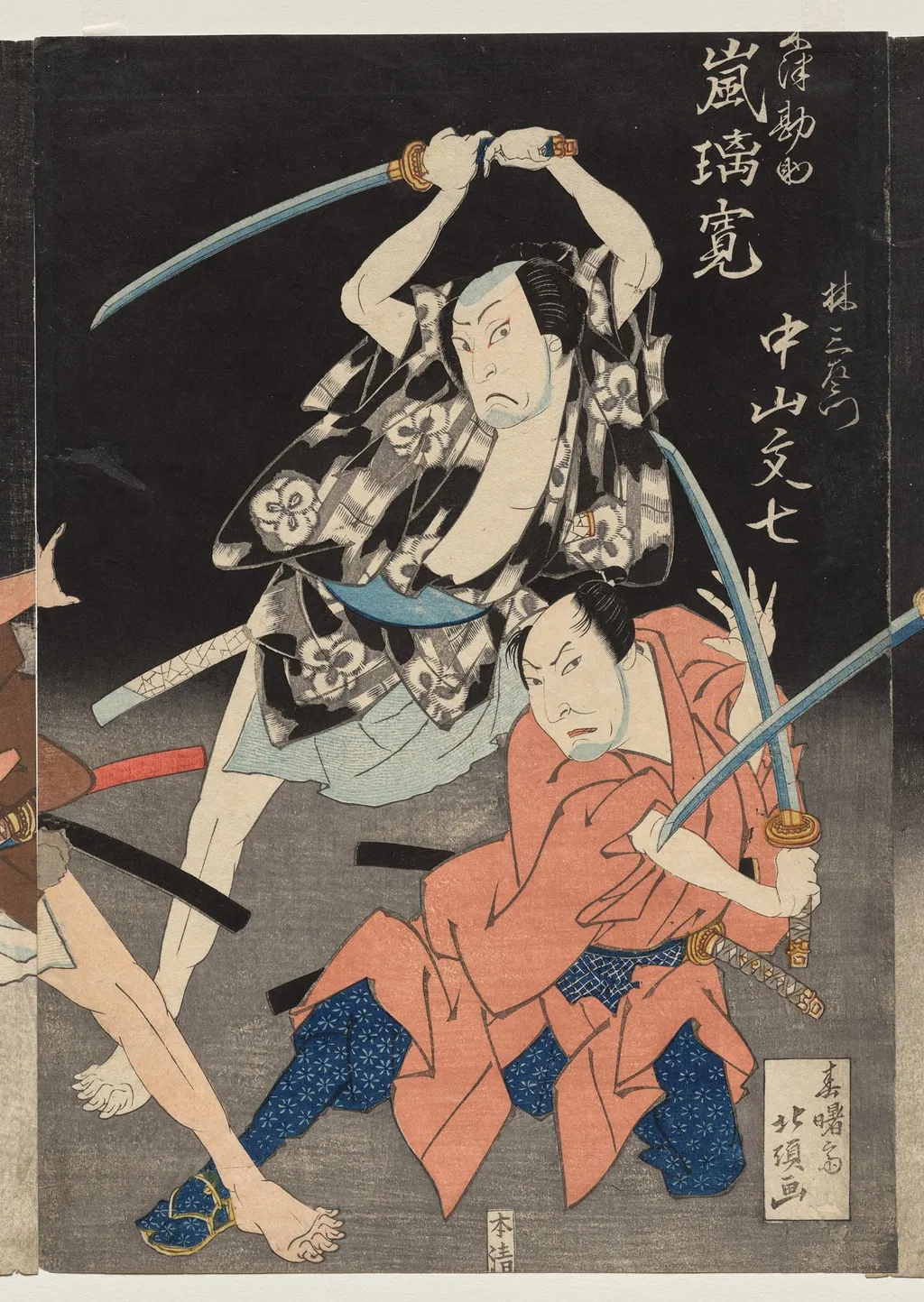
Arashi Rikan II as Kizu Kansuke and Nakayama Bunshichi III as Hayashi Sanzemon from the Kabuki Play "Eight Views of the Kizu River by Boating Song" is a print by the Romanticist artist Shunshosai Hokuchō. It dates from 1829 and is held in the collection of the Cleveland Museum of Art. This triptych print captures a scene from the 1778 Kabuki play 'Eight Views of the Kizu River by Boating Song,' staged in Osaka in 1829.
About this work
You can learn more about Japanese art by looking up the museum that has this painting, The Cleveland Museum of Art.
You see two actors on stage in a Kabuki play.
They are dressed in traditional Japanese clothing.
The actors are Arashi Rikan II and Nakayama Bunshichi III, playing specific roles.
This painting is interesting because it shows a moment from a play.
The play was written in 1778 and performed in 1829.
It was also the last performance for one of the actors, who got sick and died soon after.
You can learn more about Japanese art by looking up the museum that has this painting, The Cleveland Museum of Art.
Overview
This triptych print captures a scene from the 1778 Kabuki play 'Eight Views of the Kizu River by Boating Song,' staged in Osaka in 1829. Created as part of the yakusha-e tradition, it depicts two leading actors in their roles, commemorating a significant moment in theatrical history. The performance marked the final appearance of Ichikawa Ebijūrō II, who died shortly after. Such prints were widely circulated among theater enthusiasts as collectible mementos of popular performances.
Subject & Meaning
The print portrays Arashi Rikan II as Kizu Kansuke and Nakayama Bunshichi III as Hayashi Sanzemon, characters engaged in a dramatic confrontation from the play. Their roles reflect the moral tensions and emotional intensity typical of Kabuki narratives. The scene likely highlights a climactic moment, where identity, loyalty, or vengeance come to a head. The actors' stylized postures and expressions convey the heightened drama central to Kabuki storytelling, inviting viewers to recognize the emotional weight of the moment.
Technique & Style
Rendered in woodblock print form, the image employs bold outlines, vivid pigments, and precise linework characteristic of early 19th-century Osaka prints. The actors are depicted in dynamic mie poses, frozen at dramatic peaks of the performance. Background elements are minimal, focusing attention on costume details and facial expressions. The composition balances theatricality with realism, using color and form to emphasize character status and emotional tension without elaborate scenery.
History & Provenance
Produced in 1829 by the Kado Theater in Osaka, the print was created to commemorate the final performance of Ichikawa Ebijūrō II, a celebrated villain actor who passed away months later. The triptych format was common for major theatrical events, allowing multiple scenes to be viewed together. These prints were often sold at theater exits as souvenirs. The work entered the collection of The Cleveland Museum of Art, where it remains as a documented artifact of Edo-period performance culture.
Context
Kabuki theater, emerging in the early Edo period, evolved into a sophisticated art form blending music, dance, and elaborate staging. By the 1820s, actor popularity rivaled that of today’s celebrities, and yakusha-e prints served as both advertising and fan memorabilia. Performances were held in urban centers like Osaka and Edo, where audiences appreciated complex plots and virtuosic acting. This print reflects the close relationship between theater and print culture, where visual art preserved fleeting moments of live performance.
Legacy
The print endures as a record of a specific theatrical moment and the life of a performer whose career ended abruptly. It exemplifies how Japanese printmakers documented and immortalized stage culture, preserving the likenesses and roles of actors for posterity. Today, such works inform scholarship on Edo-period entertainment, visual culture, and the social role of performance. The triptych remains a key example of yakusha-e’s function as both art and historical testimony.
Artist & collection

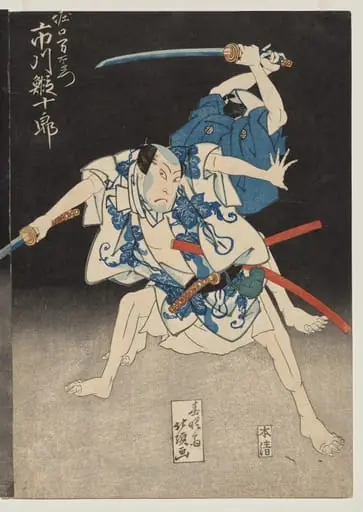 Ichikawa Ebijūrō II as Horiguchi Manzaemon from the Kabuki Play "Eight Views of the Kizu River by Boating Song"
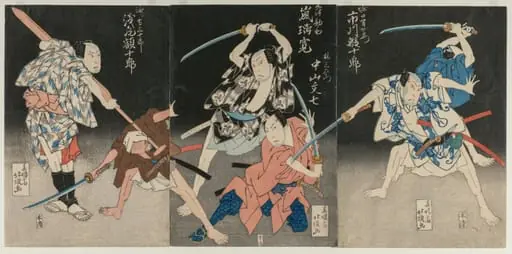 Ichikawa Ebijūrō II as Horiguchi Manzaemon (right), Arashi Rikan II as Kizu Kansuke, Nakayama Bunshichi III as Hayashi Sanzemon (center), and Asao Gakujurō as the Ferryman Sanjūrō (left) from the Kabuki Play "Eight Views of the Kizu River by Boating Song"
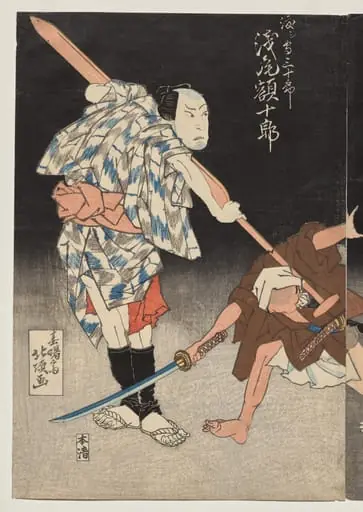 Asao Gakujurō as the Ferryman Sanjūrō from the Kabuki Play "Eight Views of the Kizu River by Boating Song"