Artwork
Arashi Rikan II as Danshichi Kurōbei in "Mirror of Naniwa: The Summer Festival"
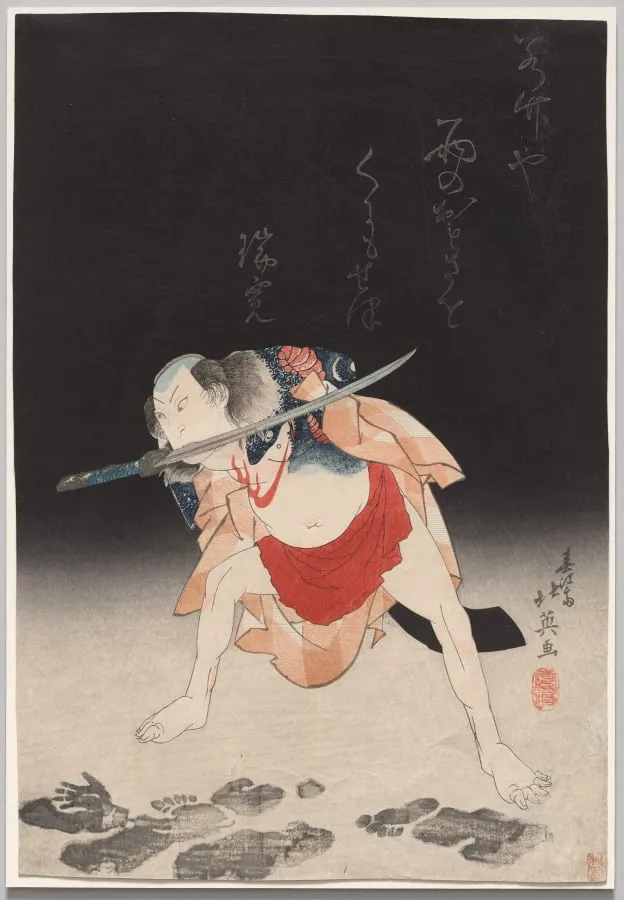
Arashi Rikan II as Danshichi Kurōbei in "Mirror of Naniwa: The Summer Festival" is a print by the Romanticist artist Shunbaisai Hokuei. It dates from 1832 and is held in the collection of the Cleveland Museum of Art.
About this work
Overview
The actor’s dynamic posture and intense expression reflect the dramatic mie pose, a hallmark of Kabuki’s physical storytelling.
This ukiyo-e woodblock print captures Arashi Rikan II in the role of Danshichi Kurōbei during a 1832 performance of 'Mirror of Naniwa: The Summer Festival' at Osaka’s Chikugoza Theater. The image freezes a climactic moment from the play, rendered in the bold, stylized conventions of Kabuki theater. The actor’s dynamic posture and intense expression reflect the dramatic mie pose, a hallmark of Kabuki’s physical storytelling. The plain yellow background isolates the figure, emphasizing emotional intensity over environmental detail.
Subject & Meaning
Danshichi Kurōbei is an otokodate, a type of character who defends the vulnerable against corrupt authority. In this scene, he commits a violent act of retribution against his father-in-law, Mikawaya Giheiji, a wealthy merchant who has exploited the poor. The murder, one of the most recognized in Kabuki history, underscores themes of justice and moral reckoning. Rikan’s portrayal transforms personal vengeance into a public spectacle of righteous fury, resonating with audiences who saw in Danshichi a symbol of social balance.
Technique & Style
The print employs the traditional ukiyo-e woodblock method, with strong outlines and flat areas of color to heighten theatricality. Rikan’s blue-and-white robe contrasts sharply with the unmodulated yellow background, drawing focus to his contorted form. Veins bulge on his neck, his eyes widen, and his raised arm suggests imminent motion—all rendered with precise linework typical of Osaka-style prints. The use of real mud on stage during performances is implied through textured brushwork in the lower portion, bridging live theater and printed image.
History & Provenance
Created in 1832, the print was produced shortly after the play’s premiere at the Chikugoza Theater in Osaka. It was likely commissioned to commemorate Rikan’s acclaimed performance, a common practice for popular Kabuki actors. The print circulated among theatergoers and collectors, preserving the ephemeral nature of live performance. Surviving impressions are rare, as many were handled or discarded after the play’s run, making this image a valuable record of early 19th-century Osaka theater culture.
Context
During the 1830s, Osaka was a center of commercial theater and print culture, where ukiyo-e served as both advertising and memorabilia. Kabuki plays like 'Mirror of Naniwa' drew large crowds by blending melodrama with social commentary, often critiquing class inequality under the guise of historical fiction. The popularity of otokodate roles reflected public sympathy for marginalized figures, while the use of realistic stage effects—like mud—brought visceral immediacy to the performance, a quality the print sought to capture.
Legacy
The murder scene from 'Mirror of Naniwa' continues to be performed in modern Kabuki, maintaining its emotional and dramatic power. Rikan’s portrayal remains a benchmark for the otokodate archetype, influencing later actor portrayals and artistic interpretations. The print itself is studied for its synthesis of theatrical gesture and printmaking technique, offering insight into how live performance was documented and memorialized in pre-modern Japan. It endures as a cultural artifact of a moment when theater, print, and social critique converged.
Artist & collection

Artist
Shunbaisai Hokuei, also known as Shunkō III, was a designer of ukiyo-e style Japanese woodblock prints in Osaka, and was active from about 1824 to 1837.

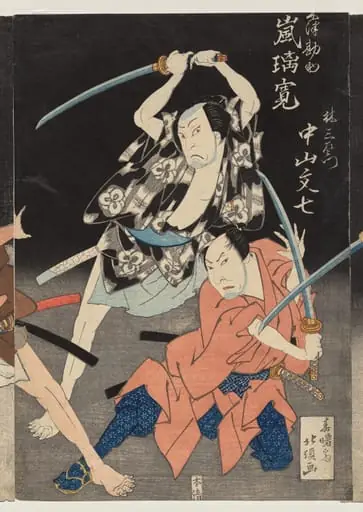 Arashi Rikan II as Kizu Kansuke and Nakayama Bunshichi III as Hayashi Sanzemon from the Kabuki Play "Eight Views of the Kizu River by Boating Song"
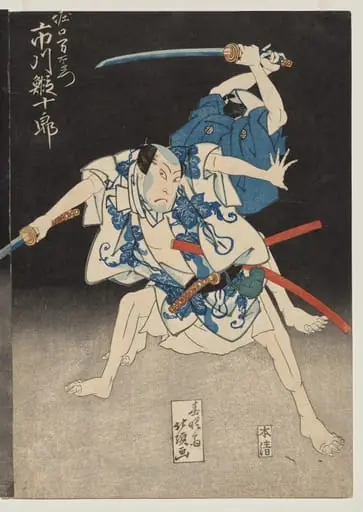 Ichikawa Ebijūrō II as Horiguchi Manzaemon from the Kabuki Play "Eight Views of the Kizu River by Boating Song"
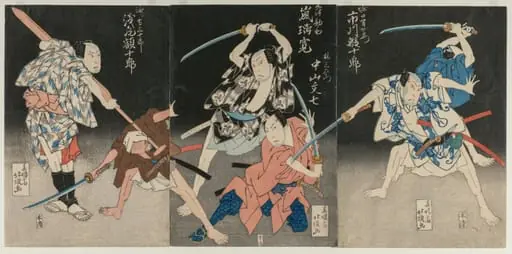 Ichikawa Ebijūrō II as Horiguchi Manzaemon (right), Arashi Rikan II as Kizu Kansuke, Nakayama Bunshichi III as Hayashi Sanzemon (center), and Asao Gakujurō as the Ferryman Sanjūrō (left) from the Kabuki Play "Eight Views of the Kizu River by Boating Song"
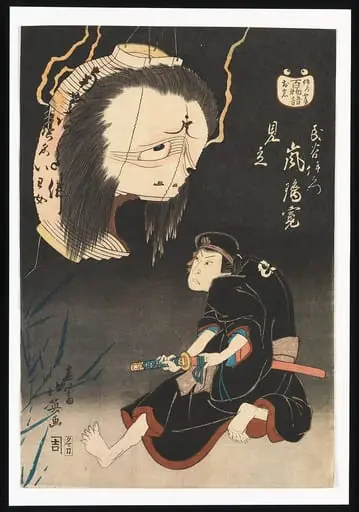 春江斎北英画 二代目嵐璃寛 見立 「百物語」|Kabuki Actor Arashi Rikan II as Iemon Confronted by an Image of His Murdered Wife, Oiwa, on a Broken Lantern, Referring to Katsushika Hokusai’s Hyaku monogatari (One Hundred Ghost Stories)
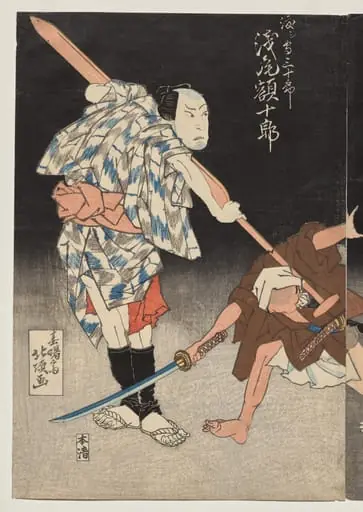 Asao Gakujurō as the Ferryman Sanjūrō from the Kabuki Play "Eight Views of the Kizu River by Boating Song"
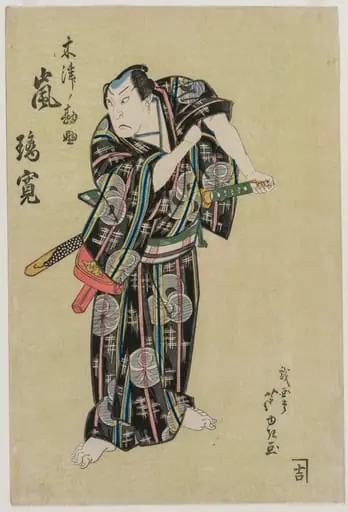 Arashi Rikan II as Kizu Kansuke
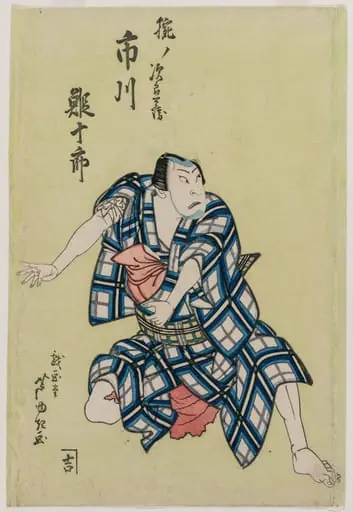 Ichikawa Ebijuro II as Ude no Jirobei
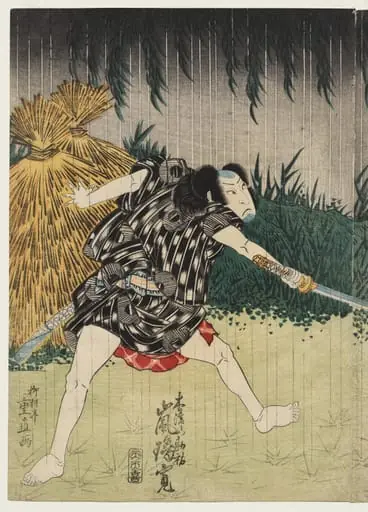 Arashi Rikan II as Kizu Kansuke
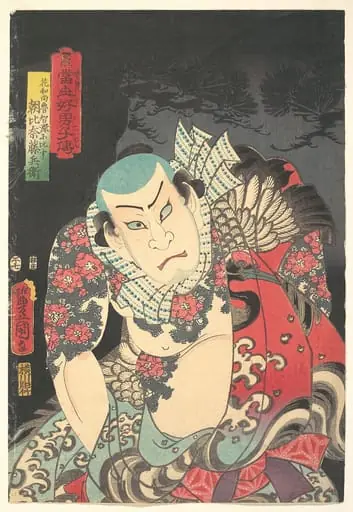 当世好男子伝」松 「花和尚魯智深に比す朝比奈藤兵衛」|The Actor Nakamura Fukusuke I as Asahina Tōbei, likened to Lu Zhishen the Tattooed Priest (Kaoshō Rochishin ni hisu), from the “Pine” triptych of the series A Modern Water Margin (Tōsei suikoden)
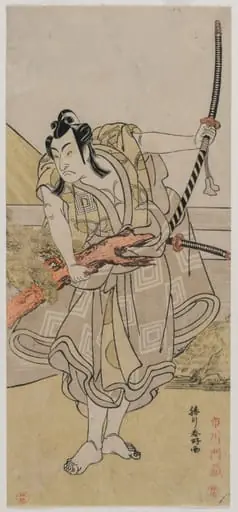 Ichikawa Monnosuke II as Soga no Gorō
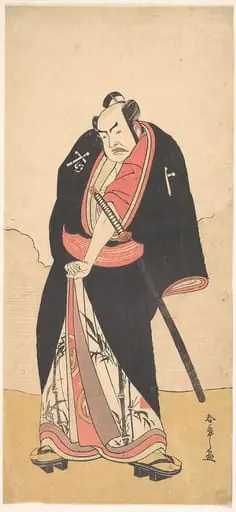 二代目中村助五郎|Kabuki Actor Nakamura Sukegorō II as Kaminari Shōkurō
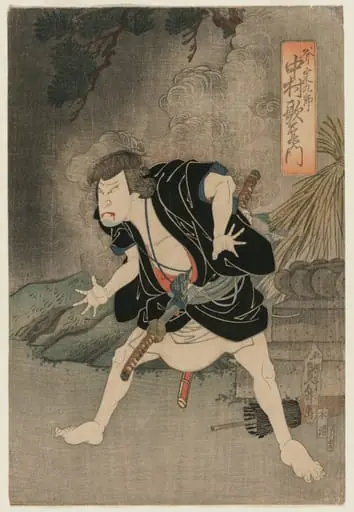 Nakamura Utaemon IV as Ono Sadakuro in Act Five of Kanadehon Chushingura, Naka Theater
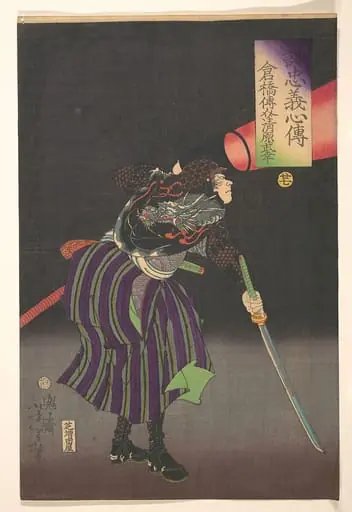 Untitled
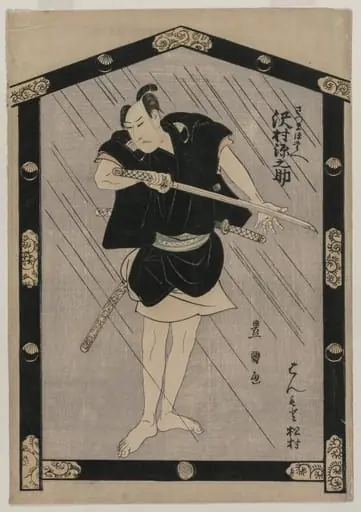 Sawamura Gennosuke as Satsuma Gengobei
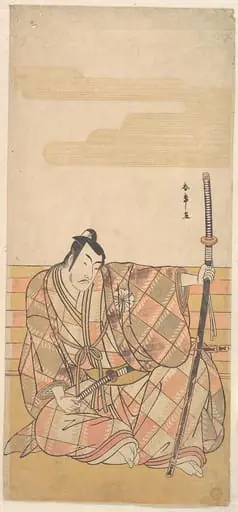 Untitled
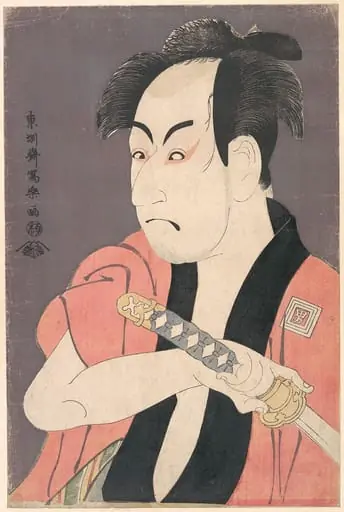 東洲斎写楽画 初代市川男女蔵の奴一平 『恋女房染分手綱』|Ichikawa Omezō I in the Role of Yakko Ippei from the Play "Koinyōbō somewake tazuna"
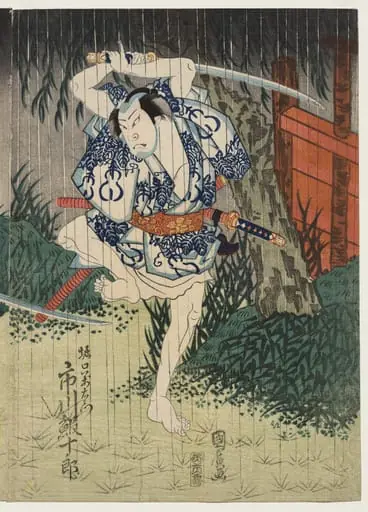 Ichikawa Ebijuro II as Horiguchi Manzaemon
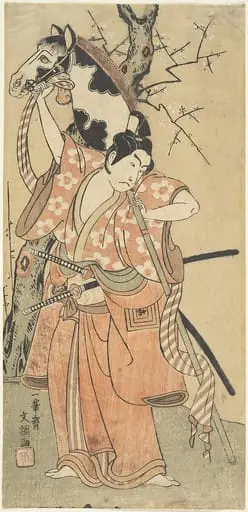 Untitled
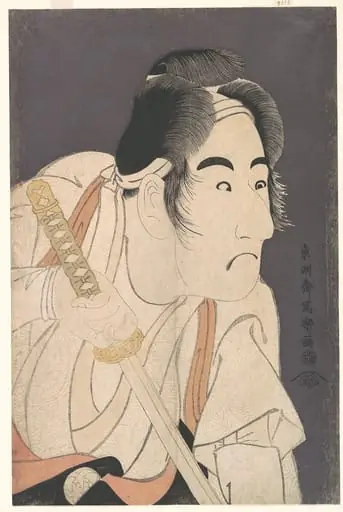 東洲斎写楽画 二世坂東三津五郎の石井源蔵 『花菖蒲文禄曽我』|Bandō Mitsugorō II as Ishii Genzō in the Play "Hana-ayame Bunroku Soga"