Artwork
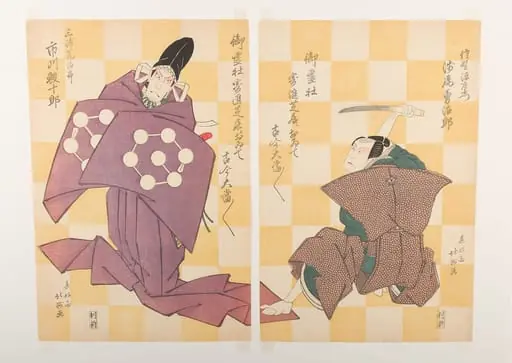
Ichikawa Ebijūrō II as Horiguchi Manzaemon (right), Arashi Rikan II as Kizu Kansuke, Nakayama Bunshichi III as Hayashi Sanzemon (center), and Asao Gakujurō as the Ferryman Sanjūrō (left) from the Kabuki Play "Eight Views of the Kizu River by Boating Song"
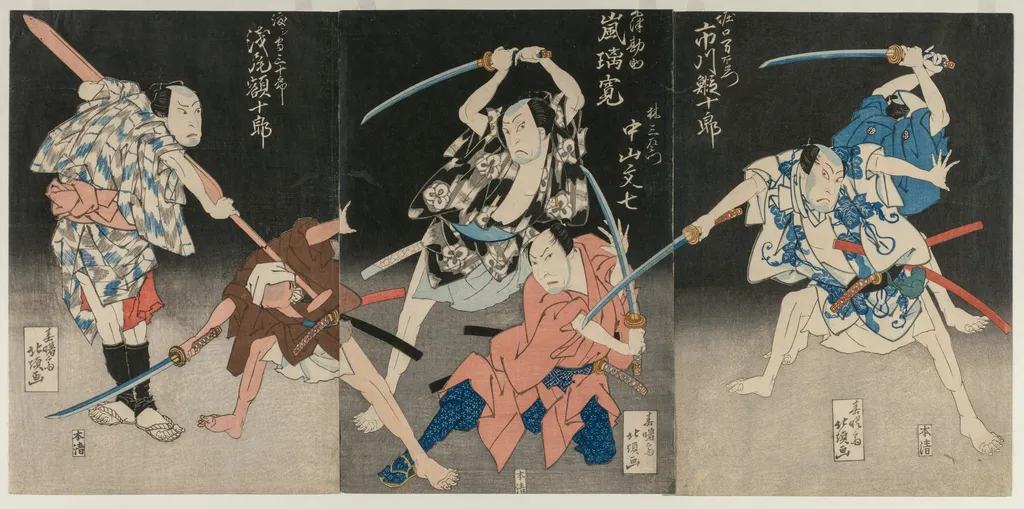
Ichikawa Ebijūrō II as Horiguchi Manzaemon (right), Arashi Rikan II as Kizu Kansuke, Nakayama Bunshichi III as Hayashi Sanzemon (center), and Asao Gakujurō as the Ferryman Sanjūrō (left) from the Kabuki Play "Eight Views of the Kizu River by Boating Song" is a print by the Romanticist artist Shunshosai Hokuchō. It dates from 1829 and is held in the collection of the Cleveland Museum of Art.
About this work
It was the last performance for one of the actors, Ichikawa Ebijūrō II, who died later that year.
This painting shows four actors from a Kabuki play.
They are dressed in traditional Japanese clothes.
The actors are performing a scene from "Eight Views of the Kizu River by Boating Song".
This play was written in 1778 and performed in 1829.
It was the last performance for one of the actors, Ichikawa Ebijūrō II, who died later that year.
To learn more about the artist who created this work, look up Shunshosai Hokuchō.
Overview
This triptych print captures a climactic moment from the Kabuki play 'Eight Views of the Kizu River by Boating Song,' performed in Osaka in 1829. Designed by Shunshosai Hokuchō, it depicts four leading actors in character, each frozen in a dramatic pose. The work belongs to the yakusha-e tradition—portraits of stage performers produced for enthusiastic fans. It is especially notable as the final documented appearance of Ichikawa Ebijūrō II, who passed away months after the performance.
Subject & Meaning
The scene portrays four characters from a narrative centered on betrayal and justice along the Kizu River. Ichikawa Ebijūrō II plays Horiguchi Manzaemon, a villainous figure, while the others portray allies and a ferryman caught in the unfolding drama. Each actor’s expression and posture convey their role’s emotional weight, aligning with Kabuki’s emphasis on heightened theatricality. The composition reflects the play’s moral tensions, rendered through costume, gesture, and facial makeup typical of the genre’s visual language.
Technique & Style
Hokuchō employed woodblock printing techniques common in early 19th-century Osaka, using fine linework and layered colors to define fabric textures and facial details. The actors’ mie poses—stylized, frozen gestures marking narrative turning points—are rendered with precision. Background elements are minimal, focusing attention on the figures. Subtle gradations in ink and color suggest depth without realism, adhering to the aesthetic conventions of ukiyo-e portraiture rather than naturalistic depiction.
History & Provenance
The print was produced shortly after the Kado Theater’s 1829 performance, timed to capitalize on public interest in the actors’ final appearance. Ichikawa Ebijūrō II’s death later that year elevated the print’s significance among collectors. Surviving impressions are rare, as such prints were often discarded after use. The work’s survival reflects its early reception as a commemorative artifact, preserved by devoted fans and later by institutional collections seeking to document Kabuki’s theatrical culture.
Context
Kabuki theater, emerging in the early Edo period, had by the 1820s become a major urban entertainment form in Osaka and Edo. Plays like this one blended historical legend with moral drama, performed with elaborate costumes, stylized speech, and musical accompaniment. Actor portraits like this one functioned as both advertisements and memorabilia, linking public admiration for performers to the commercial print market. The genre thrived in cities where theater-going was a social ritual among merchants and artisans.
Legacy
This print remains a key example of yakusha-e’s role in documenting Kabuki’s ephemeral performances. It preserves the likenesses and stage personas of actors whose careers were otherwise recorded only in written accounts or oral tradition. Shunshosai Hokuchō’s work contributed to the visual archive of Osaka’s theatrical scene, influencing later printmakers and offering modern scholars insight into performance practices, actor hierarchies, and audience culture in early 19th-century Japan.
Artist & collection

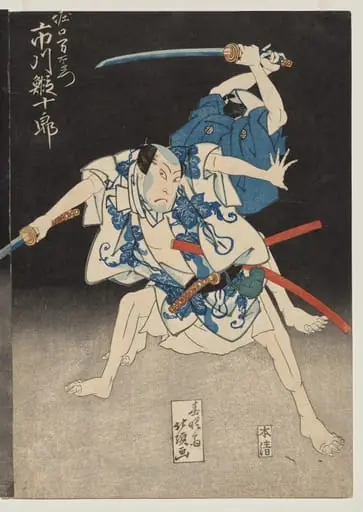 Ichikawa Ebijūrō II as Horiguchi Manzaemon from the Kabuki Play "Eight Views of the Kizu River by Boating Song"
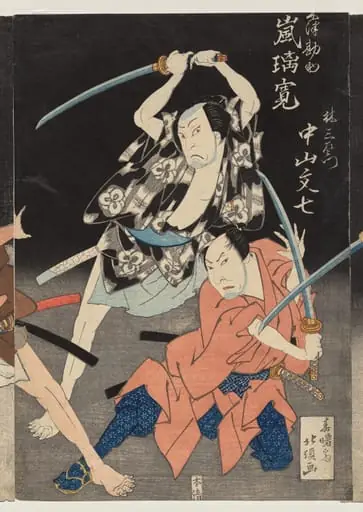 Arashi Rikan II as Kizu Kansuke and Nakayama Bunshichi III as Hayashi Sanzemon from the Kabuki Play "Eight Views of the Kizu River by Boating Song"
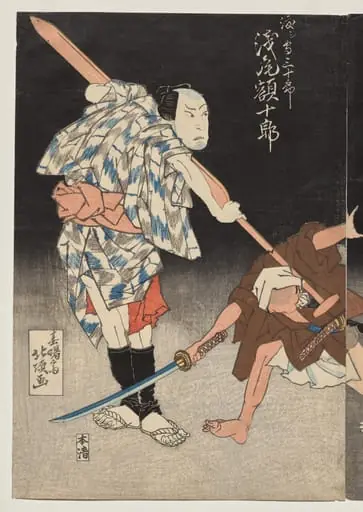 Asao Gakujurō as the Ferryman Sanjūrō from the Kabuki Play "Eight Views of the Kizu River by Boating Song"
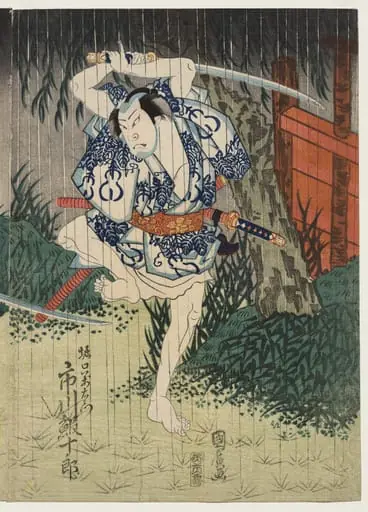 Ichikawa Ebijuro II as Horiguchi Manzaemon
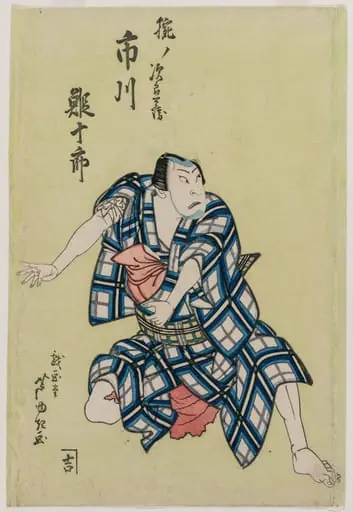 Ichikawa Ebijuro II as Ude no Jirobei
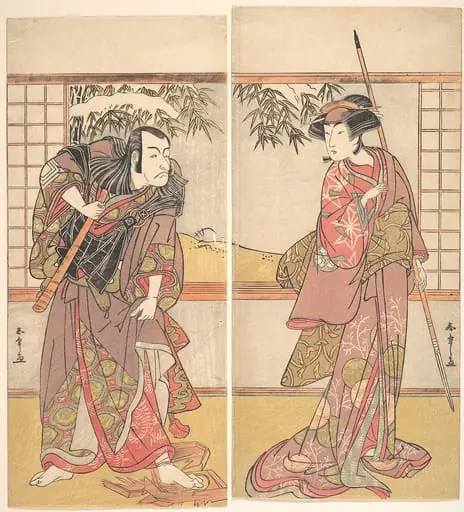 勝川春章画 二代目小佐川常世・五代目市川団十郎|Kabuki Actors Osagawa Tsuneyo II and Ichikawa Danjūrō V
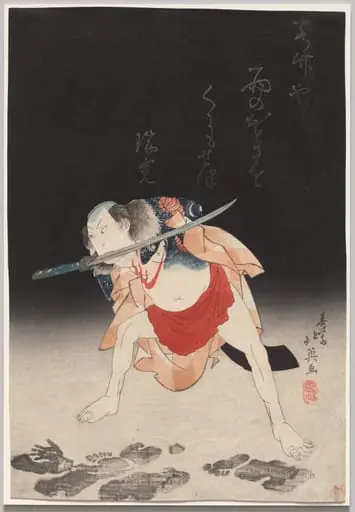 Arashi Rikan II as Danshichi Kurōbei in "Mirror of Naniwa: The Summer Festival"
 春好斎北洲画 初代浅尾勇次郎・初代市川鰕十郎 『傾城佐野の船橋』|Kabuki Actors Asao Yūjirō as Sano Genzaemon and Ichikawa Ebijūrō I as Miura Arajirō, in the play Keisei Sano no Funabashi