Artwork
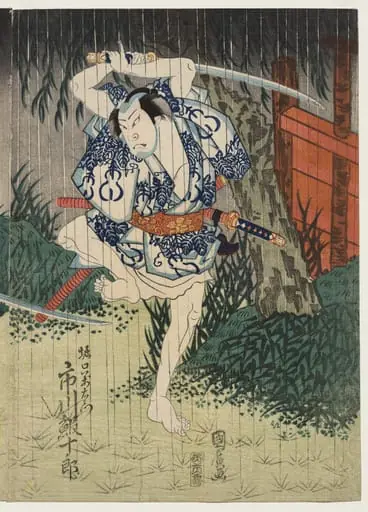
Ichikawa Ebijūrō II as Horiguchi Manzaemon from the Kabuki Play "Eight Views of the Kizu River by Boating Song"
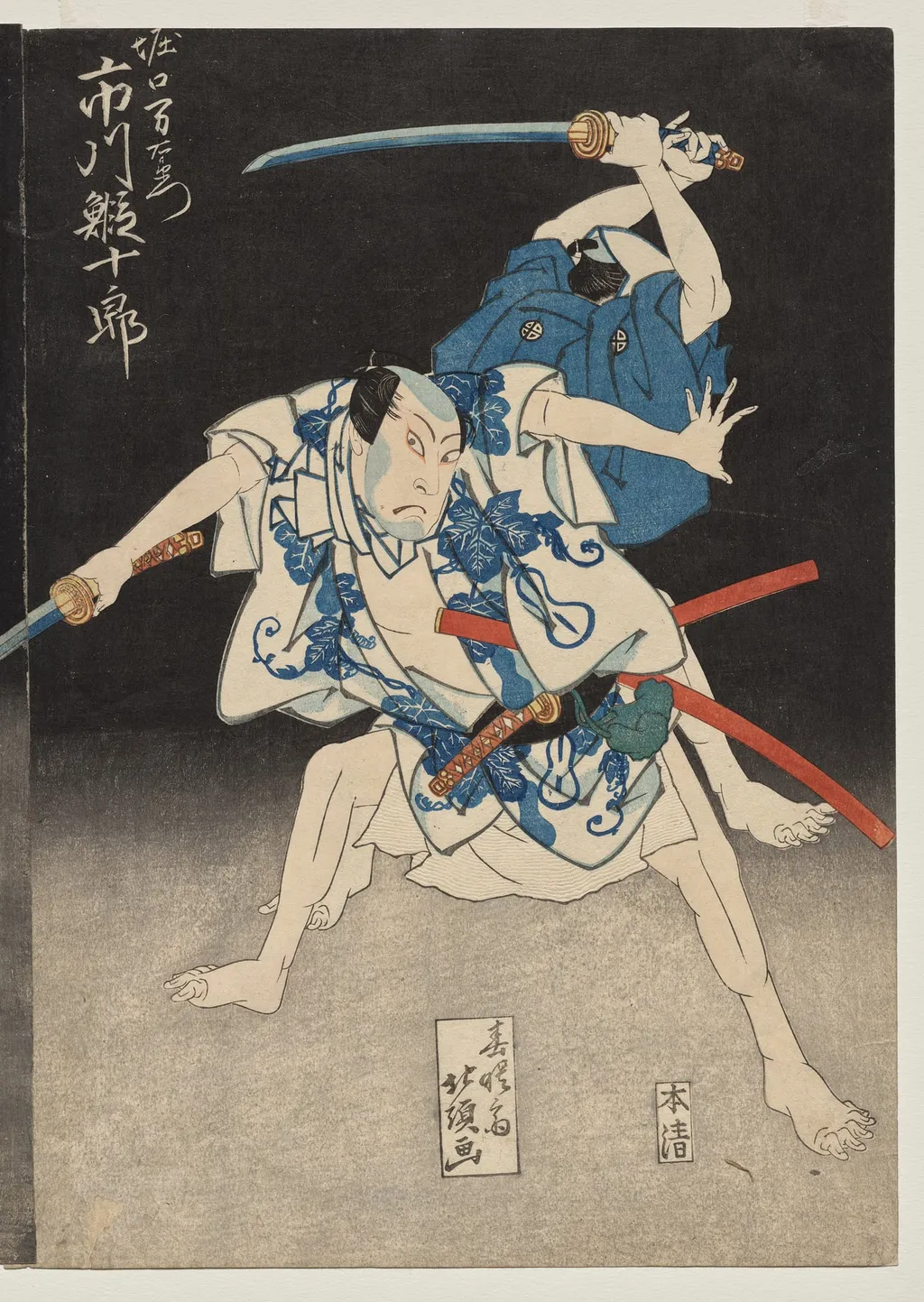
Ichikawa Ebijūrō II as Horiguchi Manzaemon from the Kabuki Play "Eight Views of the Kizu River by Boating Song" is a print by the Romanticist artist Shunshosai Hokuchō. It dates from 1829 and is held in the collection of the Cleveland Museum of Art.
About this work
Overview
This Japanese print depicts Ichikawa Ebijūrō II as Horiguchi Manzaemon in a scene from the 1778 Kabuki play 'Eight Views of the Kizu River by Boating Song', produced in Osaka's Kado Theater during the summer of 1829.
Subject & Meaning
The print captures Ichikawa Ebijūrō II, renowned for his villainous roles, in a dramatic pose (mie), characteristic of Kabuki's stylized performances. Notably, this was one of his final performances before his death a few months later.
Technique & Style
As a 'yakusha-e' (actor image) print, it exemplifies a category of Japanese art popular among Kabuki fans, featuring vivid, elaborate costumes and makeup, reflecting the play's theatrical intensity.
History & Provenance
Part of a three-print set forming a continuous scene, it was created for the 1829 production of a play written by Namiki Gohei I in 1778. The print is now part of The Cleveland Museum of Art's collection.
Context
Emerging from the Edo period, Kabuki's evolution is reflected in the print: from humble dance origins to complex, musically accompanied plays with dramatic poses and stylized dialogue.
Legacy
This print serves as a poignant reminder of Ichikawa Ebijūrō II's career, while also illustrating the enduring appeal of 'yakusha-e' in capturing the essence of Kabuki's theatrical heritage.
Artist & collection

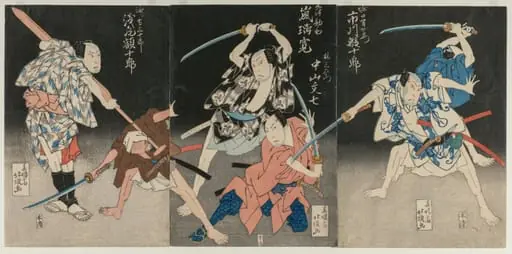 Ichikawa Ebijūrō II as Horiguchi Manzaemon (right), Arashi Rikan II as Kizu Kansuke, Nakayama Bunshichi III as Hayashi Sanzemon (center), and Asao Gakujurō as the Ferryman Sanjūrō (left) from the Kabuki Play "Eight Views of the Kizu River by Boating Song"
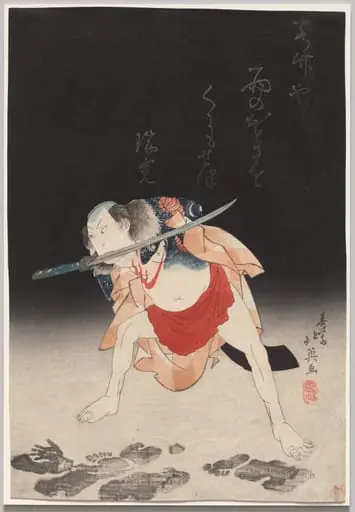
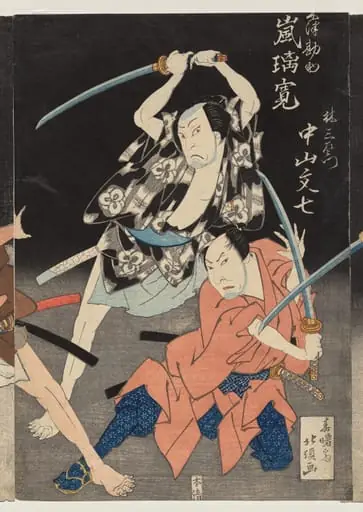 Arashi Rikan II as Kizu Kansuke and Nakayama Bunshichi III as Hayashi Sanzemon from the Kabuki Play "Eight Views of the Kizu River by Boating Song"
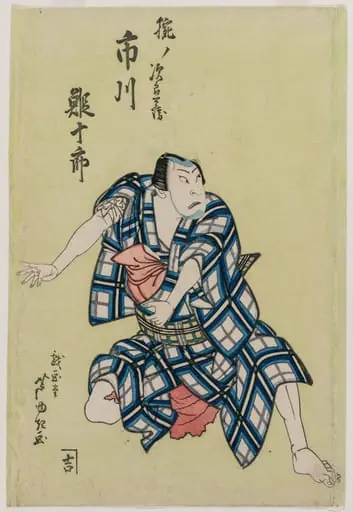
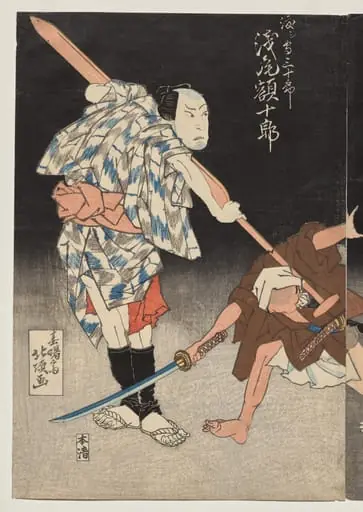 Asao Gakujurō as the Ferryman Sanjūrō from the Kabuki Play "Eight Views of the Kizu River by Boating Song"