Artwork
Arashi Rikan II as Kizu Kansuke
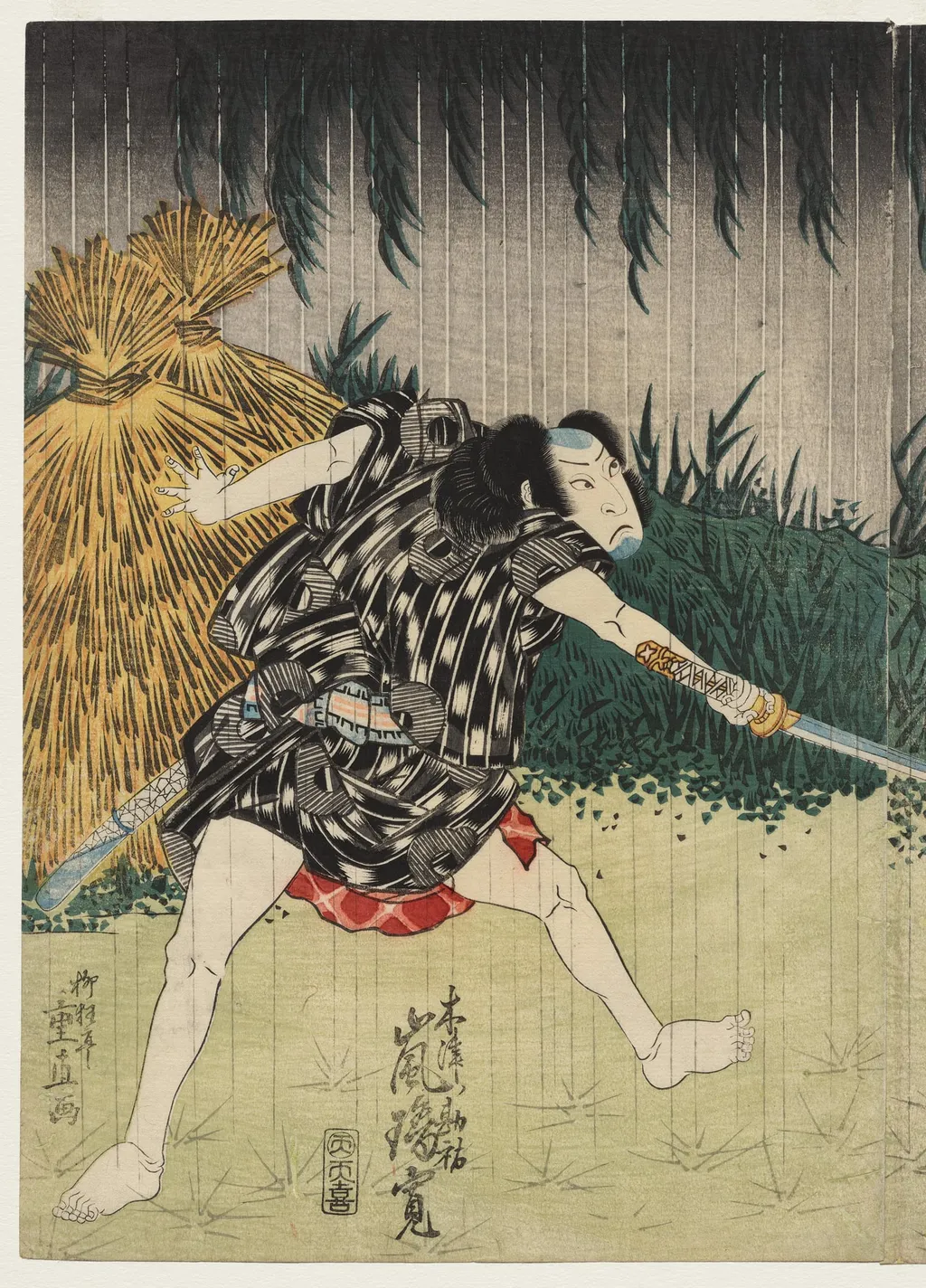
Arashi Rikan II as Kizu Kansuke is a print by the Romanticist artist Shigenao. It dates from 1829 and is held in the collection of the Cleveland Museum of Art.
About this work
Overview
It is part of the collection at The Cleveland Museum of Art and exemplifies the dynamic style of early 19th-century ukiyo-e theater portraiture.
Created in 1829 by the artist Shigenao, this woodblock print depicts the kabuki actor Arashi Rikan II in the role of Kizu Kansuke. It is part of the collection at The Cleveland Museum of Art and exemplifies the dynamic style of early 19th-century ukiyo-e theater portraiture. The composition captures a moment of violent motion, emphasizing the actor’s physicality and the theatricality of the scene.
Subject & Meaning
Kizu Kansuke is a fictional warrior from a popular kabuki drama, known for his fierce loyalty and dramatic entrances. Here, he is shown mid-leap, sword raised, embodying a climactic moment of confrontation. The burning thatched roof and bare earth suggest a battlefield or raided homestead, reinforcing themes of chaos and personal sacrifice. The blue facial paint signals his role as a vengeful or supernatural figure within the narrative.
Technique & Style
Shigenao employed bold, unmodulated colors and strong outlines typical of ukiyo-e prints. The contrast between the black-and-white striped armor, crimson trousers, and smoky background heightens visual tension. Flat planes of color and minimal shading focus attention on movement and gesture rather than realism. The flames are rendered with sharp, angular strokes, amplifying the sense of sudden destruction.
History & Provenance
The print was produced during the late Edo period, a time when actor portraits were widely collected by urban audiences. It likely circulated as a single-sheet print, sold to fans of kabuki theater. The Cleveland Museum of Art acquired it as part of its broader collection of Japanese prints, preserving it as a record of popular visual culture from the 1820s.
Context
This print belongs to a genre known as yakusha-e, images of kabuki actors in character. Such prints were mass-produced and served as both advertising and memorabilia. The dramatic pose and fiery setting reflect theatrical conventions of the time, where physical expression and symbolic color were prioritized over naturalism. Audiences would have recognized the character and scene instantly, even without textual context.
Legacy
Shigenao’s work contributes to the enduring visual language of Japanese theater imagery. While not widely known outside specialist circles, the print remains a clear example of how ukiyo-e artists translated live performance into static form. Its preservation in a major museum underscores its value as a cultural artifact reflecting the intersection of performance, printmaking, and public taste in Edo-period Japan.
Artist & collection

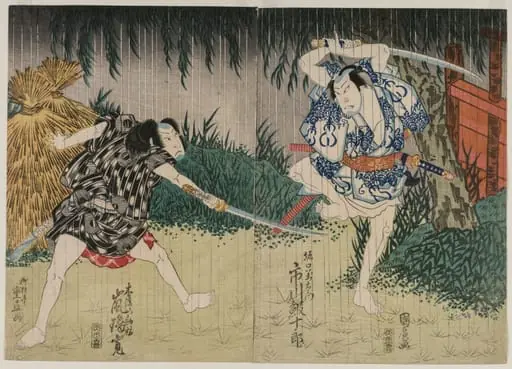 Arashi Rikan II as Kizu Kansuke; Ichikawa Ebijuro II as Horiguchi Manzaemon
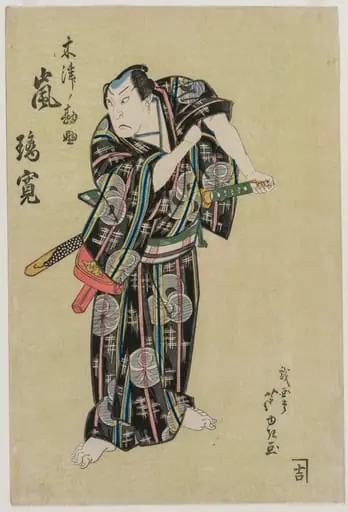 Arashi Rikan II as Kizu Kansuke
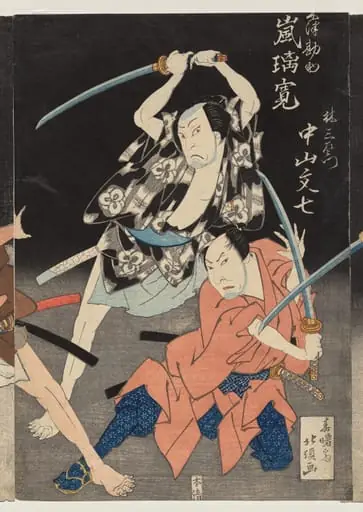 Arashi Rikan II as Kizu Kansuke and Nakayama Bunshichi III as Hayashi Sanzemon from the Kabuki Play "Eight Views of the Kizu River by Boating Song"
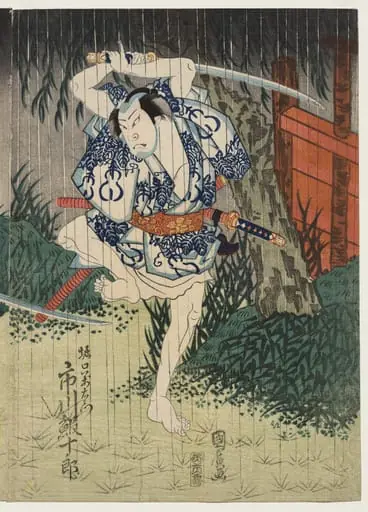 Ichikawa Ebijuro II as Horiguchi Manzaemon
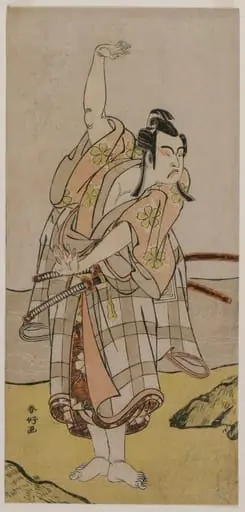 Actor Ichikawa Yaozō II as Sakuramaru
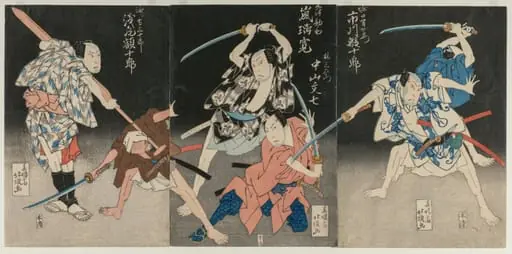 Ichikawa Ebijūrō II as Horiguchi Manzaemon (right), Arashi Rikan II as Kizu Kansuke, Nakayama Bunshichi III as Hayashi Sanzemon (center), and Asao Gakujurō as the Ferryman Sanjūrō (left) from the Kabuki Play "Eight Views of the Kizu River by Boating Song"
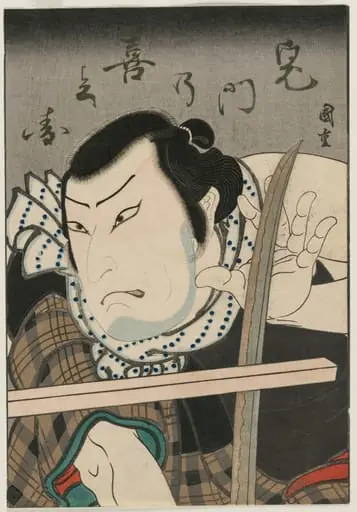 Actor as Kimon no Kihei
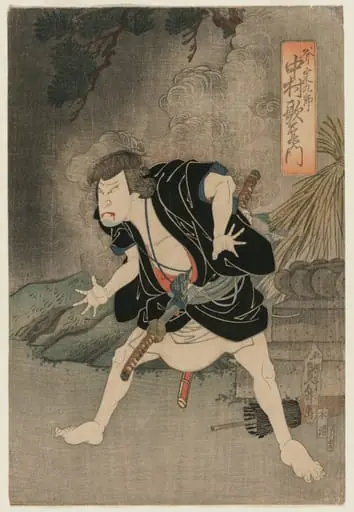 Nakamura Utaemon IV as Ono Sadakuro in Act Five of Kanadehon Chushingura, Naka Theater
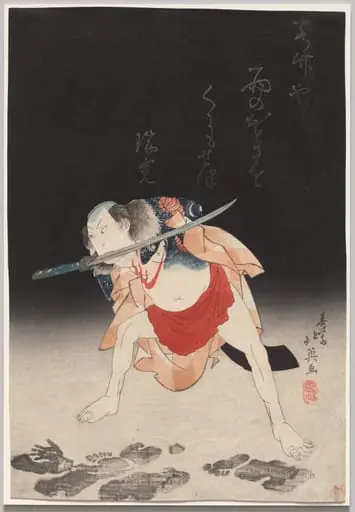 Arashi Rikan II as Danshichi Kurōbei in "Mirror of Naniwa: The Summer Festival"
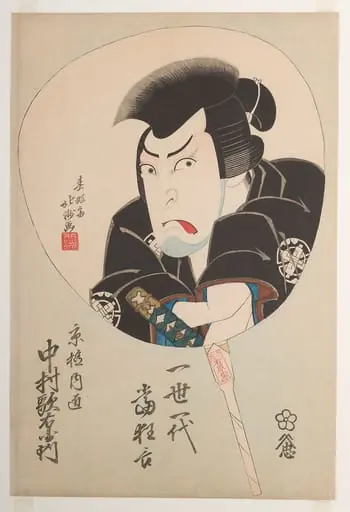 春好斎北洲画 三代目中村歌右衛門 『一世一代当狂言』|Kabuki Actor Nakamura Utaemon III as the Sword Master Kyōgoku Takumi, from the series Issei ichidai atari Kyōgen (Hits of a Lifetime of Kyōgen)
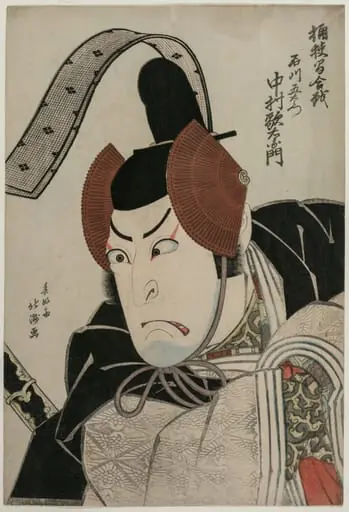 Actor Nakamura Utaemon III (Shikan) as Ishikawa Goemon at the Battle of Okehazama (Okehazama Gassen)
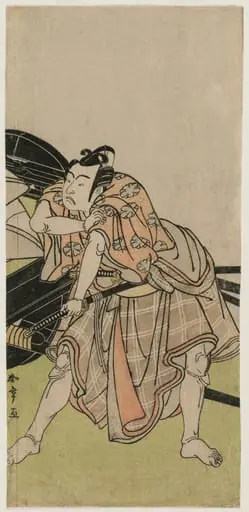 Ichikawa Yaozo II as Sakuramaru
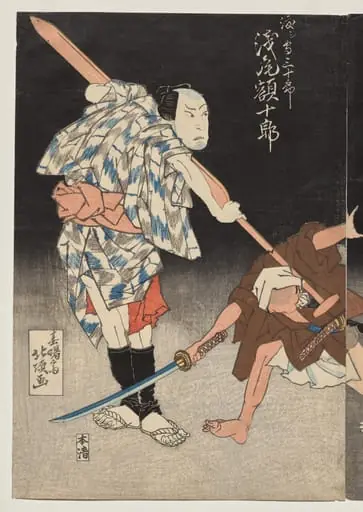 Asao Gakujurō as the Ferryman Sanjūrō from the Kabuki Play "Eight Views of the Kizu River by Boating Song"
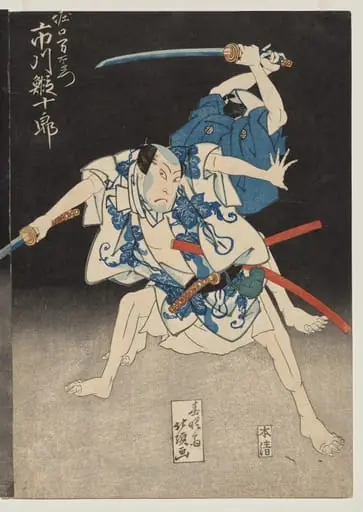 Ichikawa Ebijūrō II as Horiguchi Manzaemon from the Kabuki Play "Eight Views of the Kizu River by Boating Song"
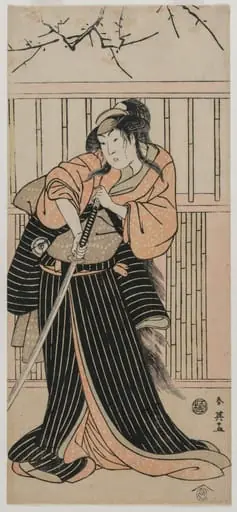 Iwai Hanshirō IV as a Woman with a Sword
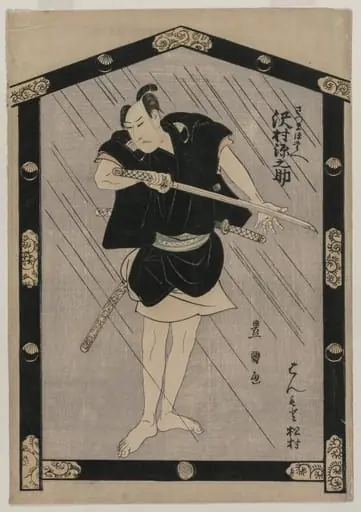 Sawamura Gennosuke as Satsuma Gengobei
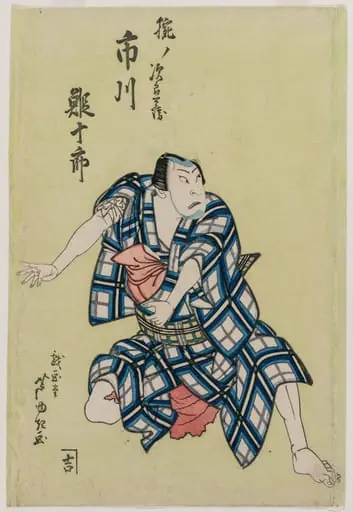 Ichikawa Ebijuro II as Ude no Jirobei
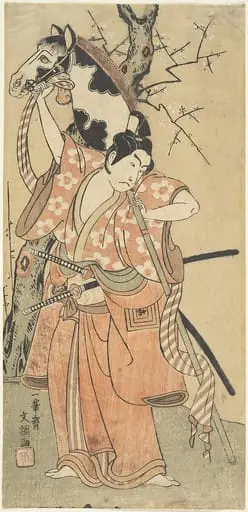 Untitled