Artwork
Arashi Rikan II as Kizu Kansuke
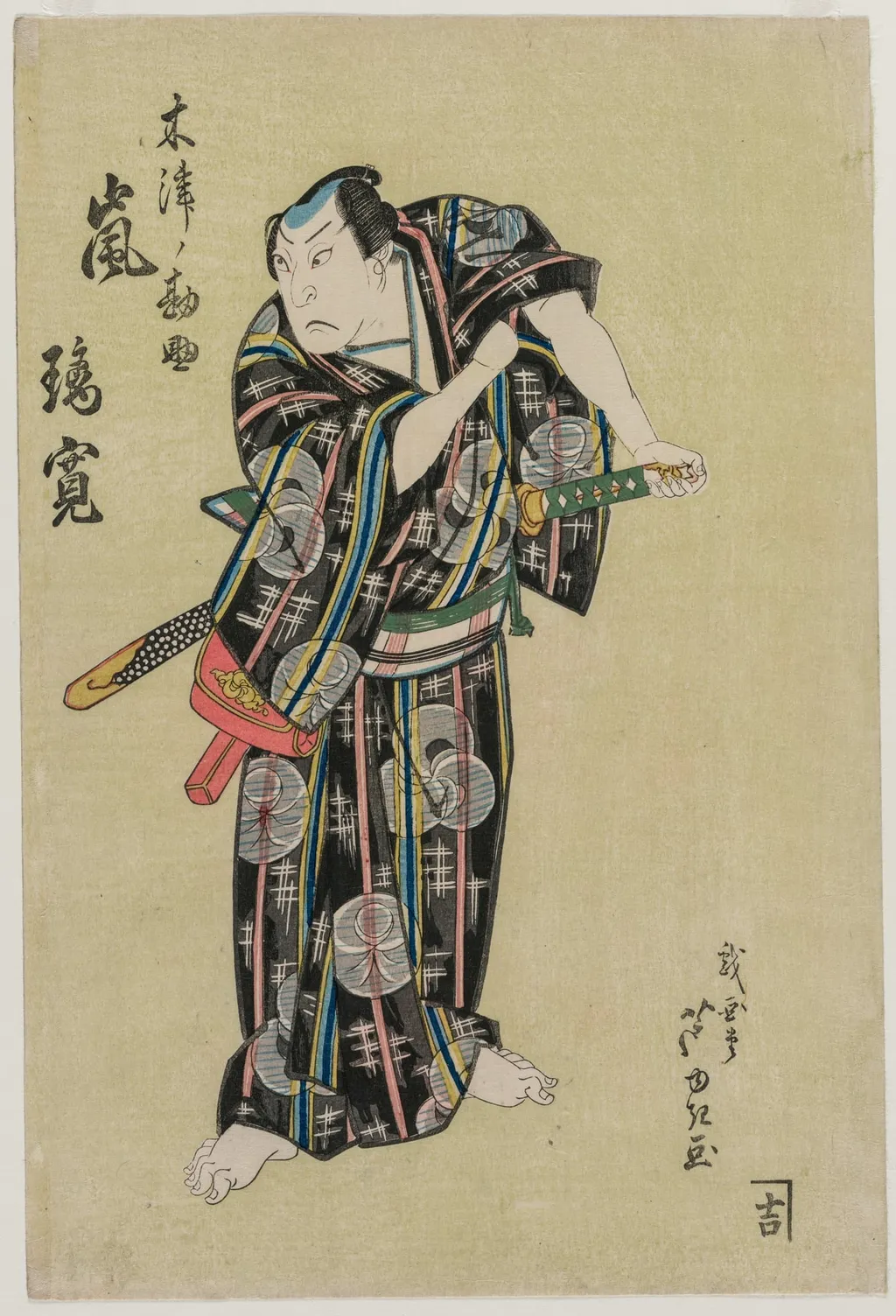
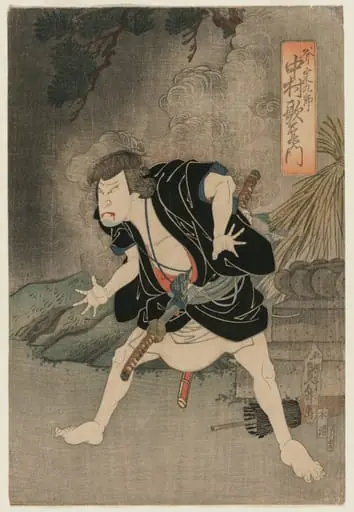
Arashi Rikan II as Kizu Kansuke is a print by the Romanticist artist Gigadō Ashiyuki. It dates from 1829 and is held in the collection of the Cleveland Museum of Art.
About this work
Overview
Arashi Rikan II as Kizu Kansuke is a woodblock print executed by the Edo‑period publisher‑artist Gigadō Ashiyuki in 1829. The image functions as a promotional handbill for a kabuki performance, identifying the celebrated actor Arashi Rikan II in the role of the historic samurai Kizu Kansuke. The work is part of the collection of the Cleveland Museum of Art in Ohio.
Subject & Meaning
The figure is depicted in elaborate stage costume, his posture dignified as he holds a fan in one hand and a sword in the other. Bold kabuki makeup and a stylised wig accentuate the actor’s theatrical persona, while the serious expression conveys the martial character of Kizu Kansuke, a legendary 12th‑century commander.
Technique & Style
Ashiyuki employed the traditional nishiki-e multicolour woodblock method, layering pigments to achieve a striking contrast of black and white garments punctuated by vivid red, blue and yellow accents. The composition is flat and frontal, with a plain background that isolates the performer, a common device in promotional prints to maximise visual impact.
History & Provenance
Printed in 1829 for a specific kabuki run, the handbill circulated among theatre‑goers in Edo (modern Tokyo). It entered the Cleveland Museum of Art’s Asian art holdings through a 20th‑century acquisition, where it remains catalogued as an example of early‑19th‑century actor portraiture.
Context
During the late Edo period, actor prints (yakusha-e) were a popular form of mass media, celebrating star performers and advertising upcoming shows. Arashi Rikan II was among the era’s leading actors, and his portrayal of Kizu Kansuke would have drawn audiences familiar with both the historical figure and the dramatic conventions of kabuki.
Artist & collection

Artist
Gigadō Ashiyuki was a designer of ukiyo-e style Japanese woodblock prints in Osaka, who was active from about 1813 to 1833.

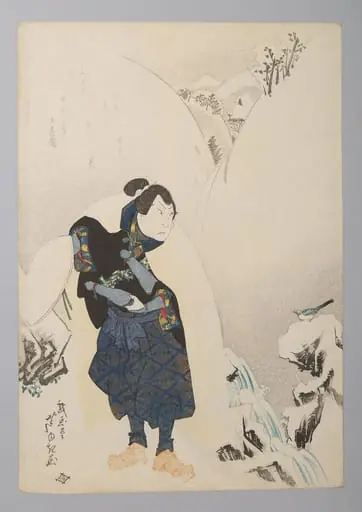
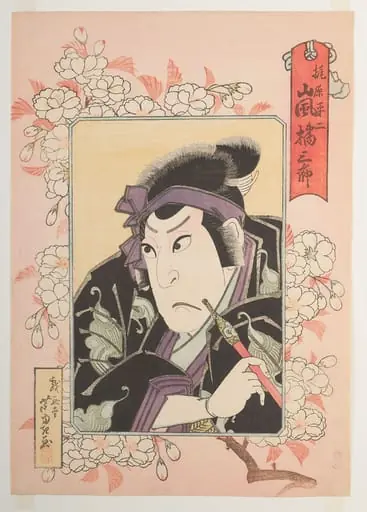
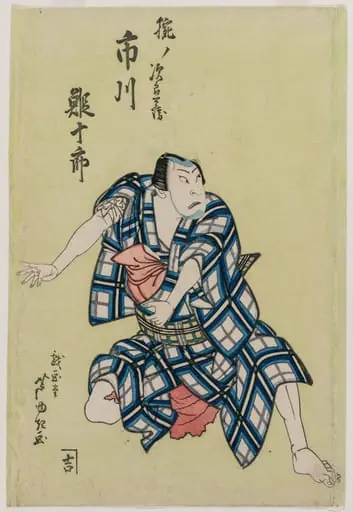
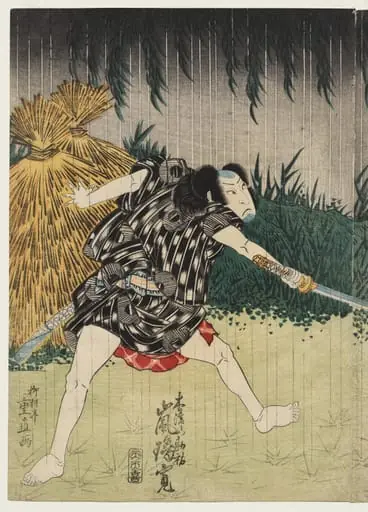 Arashi Rikan II as Kizu Kansuke
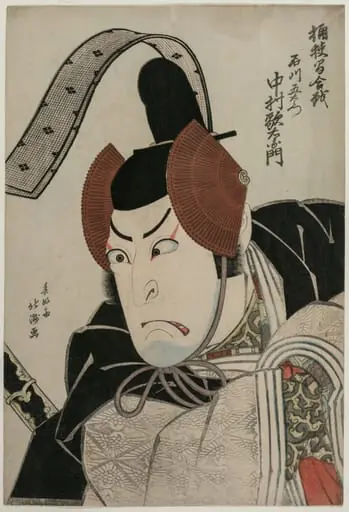 Actor Nakamura Utaemon III (Shikan) as Ishikawa Goemon at the Battle of Okehazama (Okehazama Gassen)
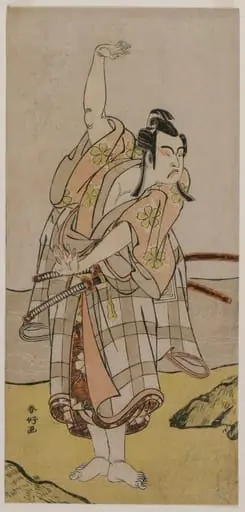 Actor Ichikawa Yaozō II as Sakuramaru
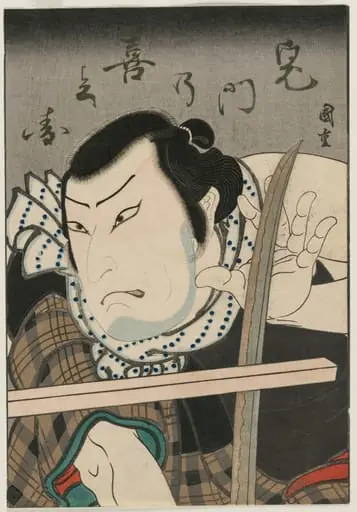 Actor as Kimon no Kihei
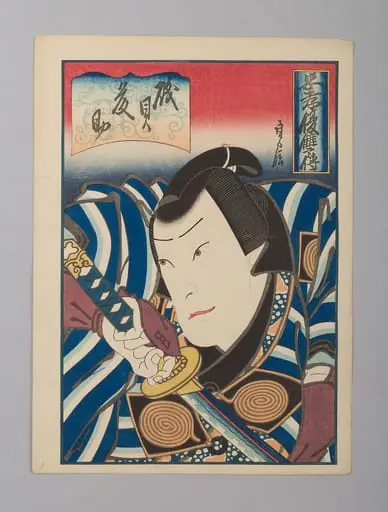 「忠孝復讐傳 磯貝藤助」二代目嵐璃珏|The Actor Arashi Rikaku II as Isogai Tōsuke, from the series Lives of Men who Carried Out Revenge for Loyalty or Filial Piety
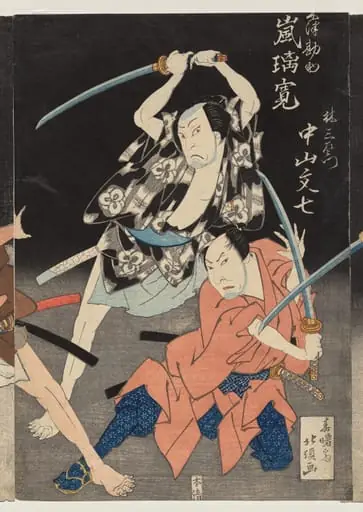 Arashi Rikan II as Kizu Kansuke and Nakayama Bunshichi III as Hayashi Sanzemon from the Kabuki Play "Eight Views of the Kizu River by Boating Song"
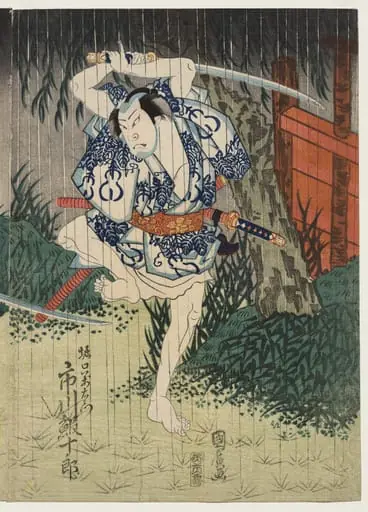 Ichikawa Ebijuro II as Horiguchi Manzaemon
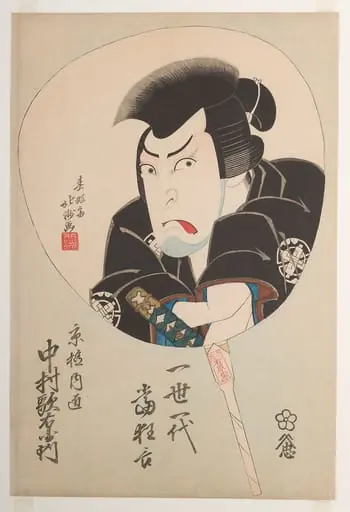 春好斎北洲画 三代目中村歌右衛門 『一世一代当狂言』|Kabuki Actor Nakamura Utaemon III as the Sword Master Kyōgoku Takumi, from the series Issei ichidai atari Kyōgen (Hits of a Lifetime of Kyōgen)
 Nakamura Utaemon IV as Ono Sadakuro in Act Five of Kanadehon Chushingura, Naka Theater