Artwork
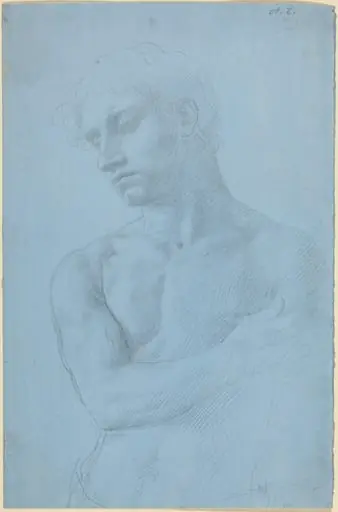
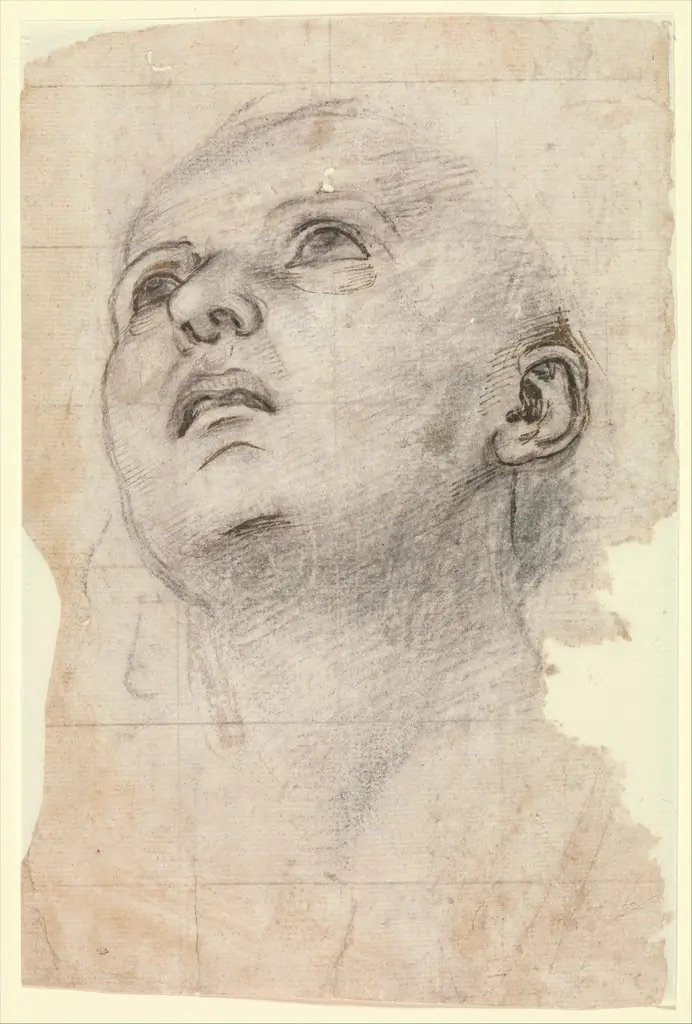
Bust of a Youth Looking Upward [recto]
![Bust of a Youth Looking Upward [recto], by Luca Signorelli, chalk, 1500](https://artifactworldgallery.com/img/luca-signorelli--bust-of-a-youth-looking-upward-recto--98d5b40adccc490b-w1024.webp)
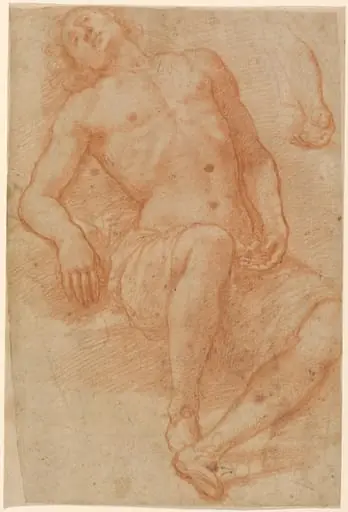
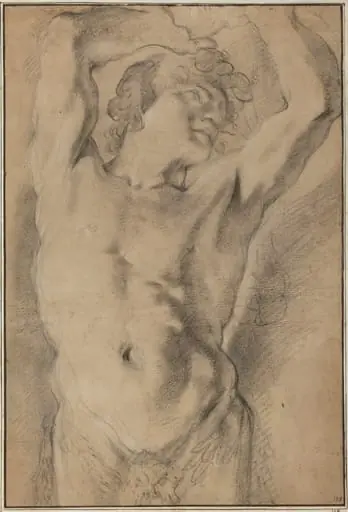
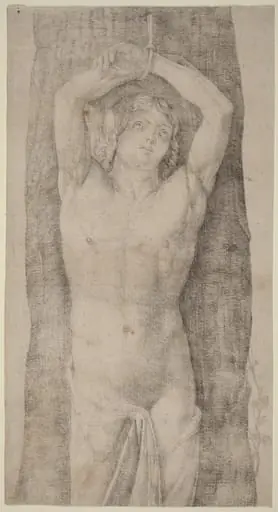
Bust of a Youth Looking Upward [recto] is a chalk drawing by the Renaissance artist Luca Signorelli. It dates from 1500 and is held in the collection of the National Gallery of Art.
About this work
Overview
Created around 1500 by Luca Signorelli, this drawing captures a young male figure gazing upward, rendered in black chalk on tan laid paper.
Created around 1500 by Luca Signorelli, this drawing captures a young male figure gazing upward, rendered in black chalk on tan laid paper. The surface bears subtle indentations made with a stylus, enhancing contour definition. The medium and technique suggest a preparatory study, likely made from direct observation. The paper’s warm tone and textured surface contribute to the drawing’s immediacy, reflecting Signorelli’s focus on form over finish.
Subject & Meaning
The subject is a youth whose head tilts slightly, eyes directed upward—an ambiguous gesture that may suggest contemplation, reverence, or attention to an unseen presence. No narrative context is provided, and the figure lacks identifying attributes, emphasizing anatomical study over storytelling. The pose invites the viewer to consider the relationship between gaze and spatial awareness, a recurring interest in Signorelli’s figure studies.
Technique & Style
Signorelli employed black chalk with variable pressure to model the youth’s features, creating depth through tonal gradations. Delicate indentations, made with a stylus, reinforce key contours without obscuring the chalk lines. The rough texture of the tan paper interacts with the chalk’s granular quality, yielding a tactile, spontaneous effect. The sketch-like quality suggests rapid observation, prioritizing structural accuracy over polished finish.
History & Provenance
The drawing originates from Signorelli’s later years, after his return to Cortona following extensive work in Florence, Siena, and Rome. While its early ownership is undocumented, it aligns with a body of studies from his mature period, when he increasingly focused on figure drawing as a means of refining his sculptural approach to the human form. Its survival reflects its value as a working document within his studio practice.
Context
In early 16th-century Italy, drawing served as a vital tool for artists to explore anatomy, movement, and spatial relationships. Signorelli’s studies, including this one, reflect the broader Renaissance emphasis on direct observation and the human body as a subject of scientific and aesthetic inquiry. His use of indented lines anticipates techniques later refined by contemporaries seeking to enhance contrast and definition in chalk drawings.
Legacy
This drawing exemplifies Signorelli’s enduring contribution to Renaissance draftsmanship, particularly his ability to convey volume and gesture with minimal means. Though less celebrated than his frescoes, such studies influenced later artists interested in the expressive potential of chalk and the discipline of observational drawing. Its preservation offers insight into the quiet, iterative process behind his more monumental works.
Artist & collection
Artist
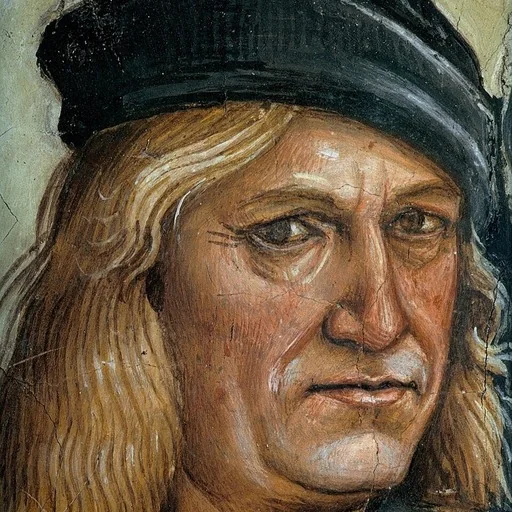
Luca Signorelli (c. 1441/1445 – 16 October 1523) was an Italian Renaissance painter from Cortona, in Tuscany, who was noted in particular for his ability as a draftsman and his use of foreshortening. His massive frescos…