Artwork
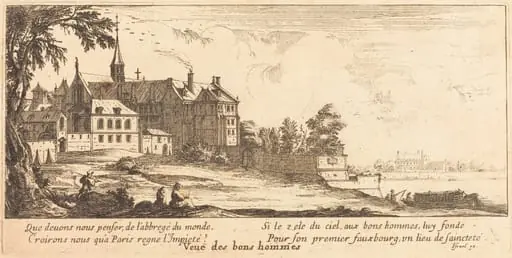
Le coin des Bons hommes proche de Paris
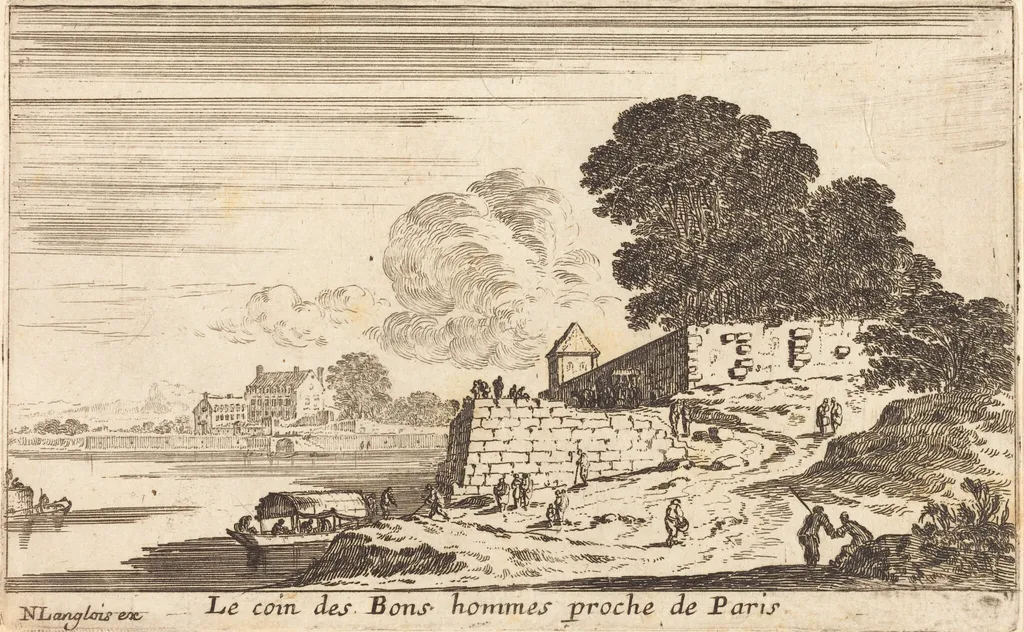
Le coin des Bons hommes proche de Paris is an ink print by the Baroque artist Israël Silvestre. It dates from 1656 and is held in the collection of the National Gallery of Art.
About this work
Overview
Created in 1656, *Le coin des Bons hommes proche de Paris* is an etching by French draughtsman Israel Silvestre. The print captures a tranquil riverside scene near the capital, populated by figures on the bank and framed by a prominent tree, a stone wall, and distant buildings. Silvestre’s work is noted for its careful observation of architecture and landscape.
Subject & Meaning
The composition presents a peaceful riverbank where locals gather, suggesting a leisurely moment in an everyday setting. The inclusion of recognizable structures in the background anchors the scene to a specific locale outside Paris, offering viewers a glimpse of regional life and the interaction between nature and built environment.
Technique & Style
Silvestre employed traditional etching methods, incising fine lines into a metal plate to achieve a range of tonal values from light washes to deep shadows. The delicate hatching and textural details convey depth, while the overall linear clarity reflects his background in topographical drawing.
History & Provenance
Orphaned early, Silvestre was raised by his uncle, an established etcher and print‑seller linked to Jacques Callot. After extensive travel across France, Spain, and Italy, he returned to Paris, producing prints from his sketches. This particular etching was likely sold either singly or as part of a series documenting notable sites.
Context
Silvestre’s output fits within the 17th‑century French tradition of topographical prints, which served both as visual records of architecture and as souvenirs for travelers. His emphasis on precise perspective and landscape detail aligns with contemporary interests in cartography and the scientific observation of place.
Artist & collection
Artist
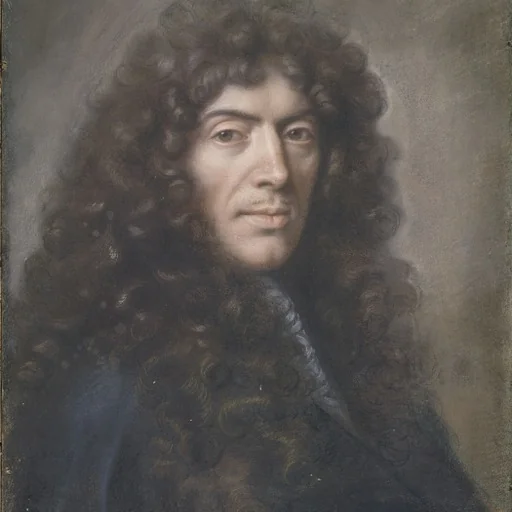
Israel Silvestre (13 August 1621 in Nancy – 11 October 1691 in Paris), called the Younger to distinguish him from his father, was a prolific French draftsman, etcher and print dealer who specialized in topographical views and perspectives…

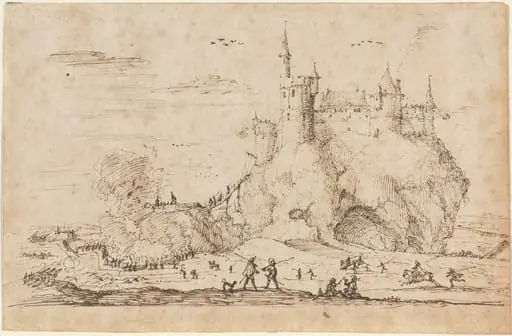 Castle under Siege
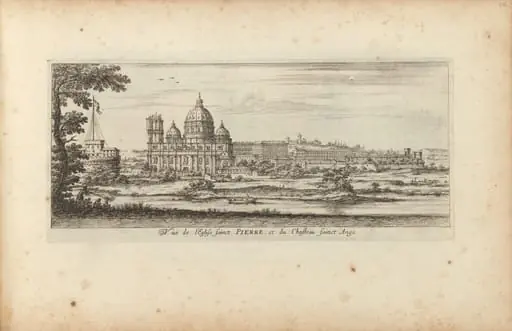 Vuë de l'Eglise sainct Pierre, et du Chasteau Sainct Ange
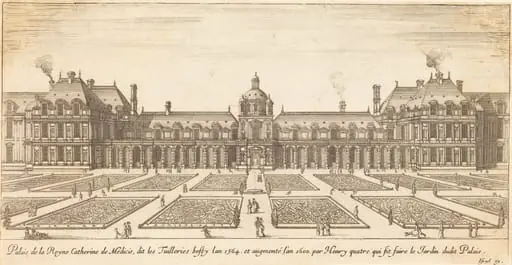 Palais de la Reyne Catherine de Medicis
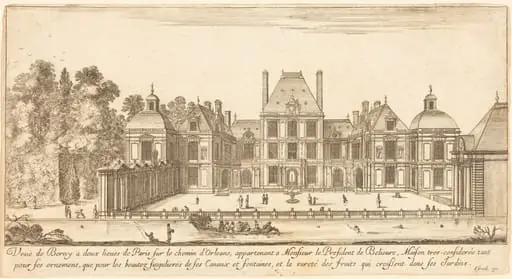 Veue de Berny a deux lieues de Paris sur le chemin d'Orléans
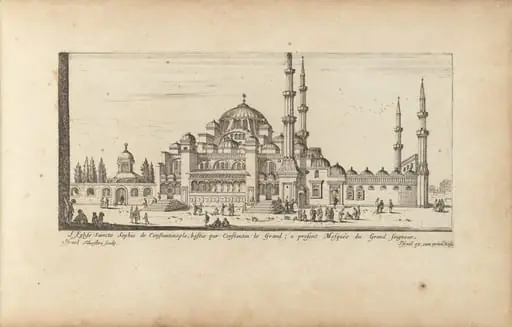 L'Eglise Saincte Sophie de Constantinople, bastie par Constantin le Grand; a present Mosquée du Grand seigneur
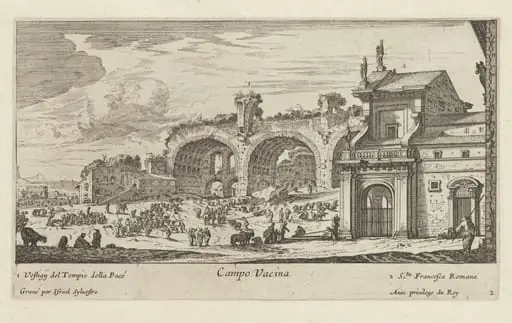 Campo Vacina
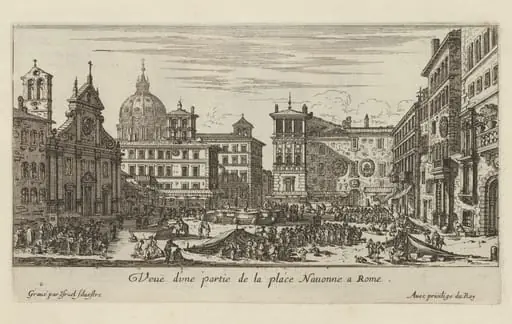 Veuë d'une partie de la place Navonne a Rome
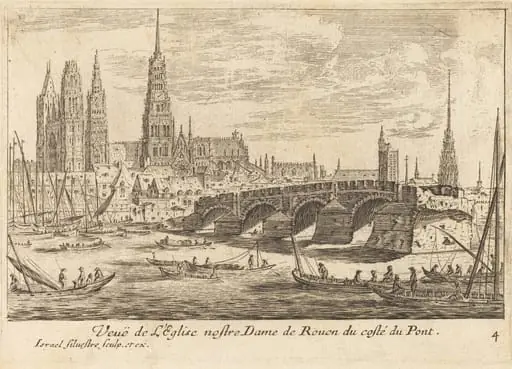 Veue de l'Eglise nostre Dame de Rouen
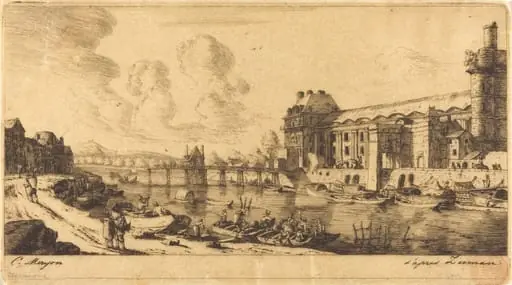 Le Pavillion de Mlle. et une partie du Louvre
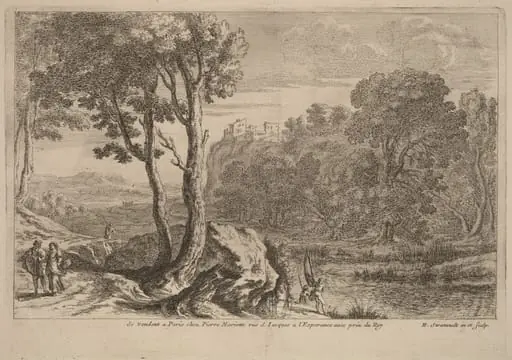 The Fishermen
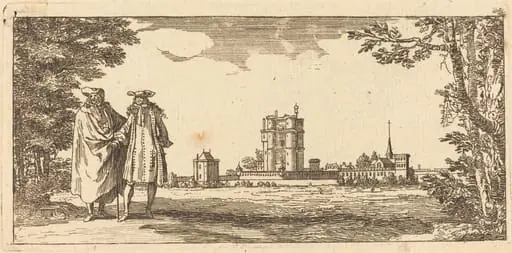 Plan general du Chasteau et petit Parc de Vincennes
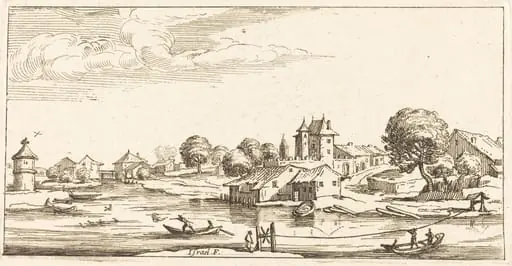 Landscape
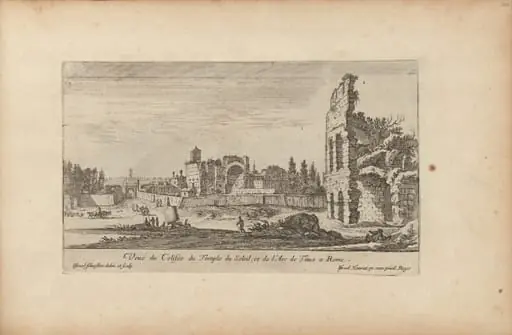 Veuë du Colisée du Temple du Soleil, et de l'Arc de Titus a Rome
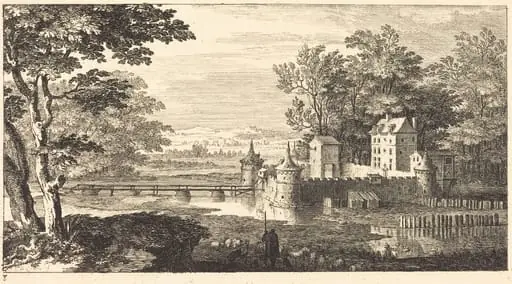 Landscape with Chateau
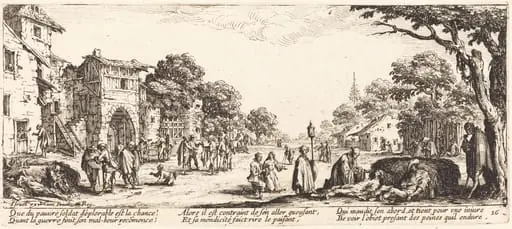 Dying Soldiers by the Roadside
 Dying Soldiers by the Roadside
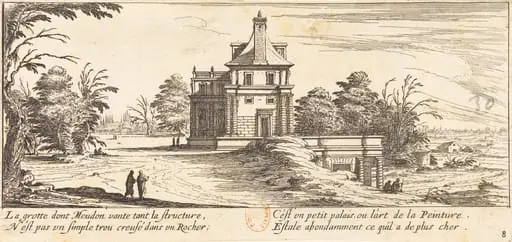 Le Grotte de Meudon
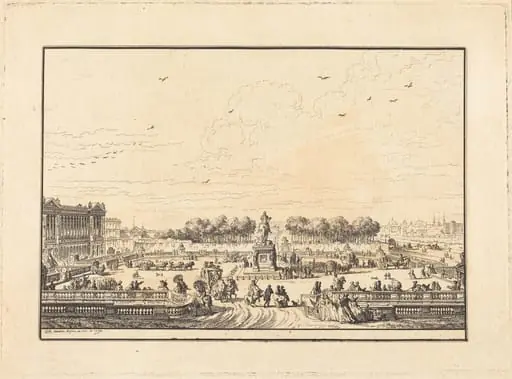 Place de Louis XV
 River Scene
 Veue des bons hommes