Artwork
Veduta del Arco di Septimio Severo, et del Campidoglio
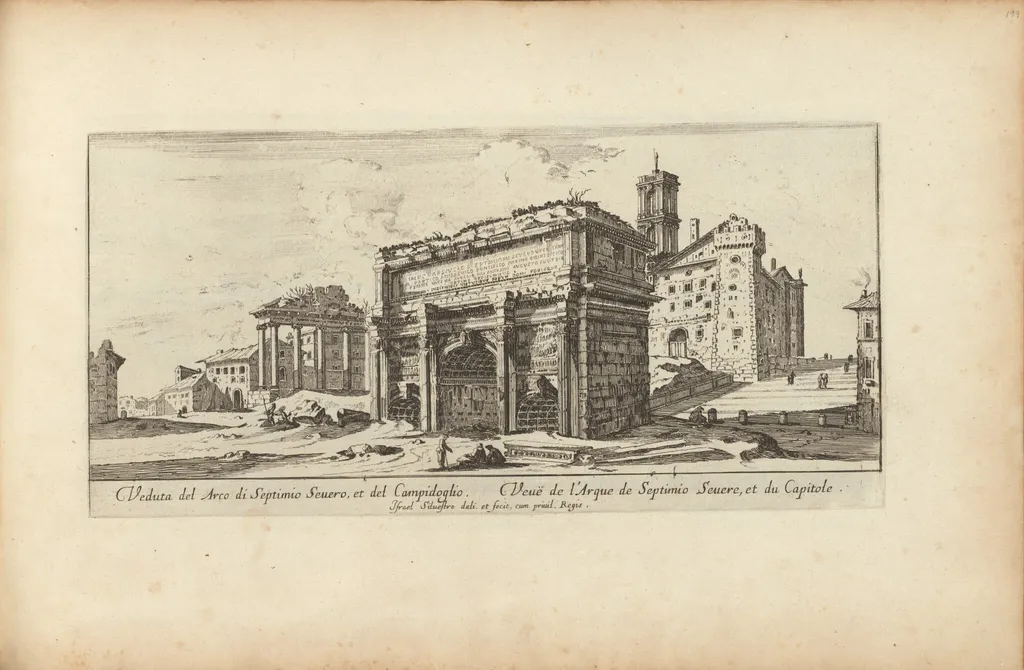
Veduta del Arco di Septimio Severo, et del Campidoglio is an ink print by the Baroque artist Israël Silvestre. It dates from 1650 and is held in the collection of the National Gallery of Art. Created in 1650, this etching by Israel Silvestre captures a precise view of Rome’s Arch of Septimius Severus and the Capitoline Hill.
About this work
Overview
Created in 1650, this etching by Israel Silvestre captures a precise view of Rome’s Arch of Septimius Severus and the Capitoline Hill.
Created in 1650, this etching by Israel Silvestre captures a precise view of Rome’s Arch of Septimius Severus and the Capitoline Hill. Executed on laid paper using the etching technique, the work belongs to a broader tradition of topographical prints that documented architectural landmarks with scientific accuracy. Silvestre, trained in Paris under his uncle, a print-seller linked to Jacques Callot, traveled widely across Europe to record urban landscapes from direct observation.
Subject & Meaning
The scene centers on the ancient Arch of Septimius Severus, framed by the rising mass of the Capitoline complex. A quiet river flows in the foreground, with modest figures and small boats suggesting daily life around the ruins. The inclusion of recognizable structures underscores the print’s function as a documentary record rather than a romanticized vision. Labels identify the monument in Italian, affirming its status as a known site for travelers and scholars of the period.
Technique & Style
Silvestre employed fine, controlled etched lines to render textures of weathered stone, shadowed recesses, and architectural details with remarkable clarity. The use of laid paper, with its subtle chain lines, enhances the tonal subtlety of the ink. Atmospheric perspective is achieved through diminishing line density in the distance, while the sky remains unmodeled, focusing attention on the built environment. The precision of the rendering reflects a commitment to topographical fidelity over expressive flourish.
History & Provenance
Silvestre, orphaned in childhood and raised in a family of printmakers, developed his craft through apprenticeship and travel. He produced hundreds of etchings during extended stays in Italy, where he sketched monuments and cityscapes before translating them into finished prints. This particular view likely originated from on-site drawings made during his Roman sojourn. The work circulated among collectors and antiquarians, valued for its accuracy and detail rather than artistic novelty.
Context
In mid-17th century Europe, there was growing interest in documenting ancient ruins as part of scholarly and Grand Tour culture. Silvestre’s prints contributed to this movement by offering reliable visual references for those unable to travel. His work aligned with the rise of cartographic and architectural recording, where precision replaced idealization. Unlike painters who dramatized ruins, Silvestre prioritized measurable form and spatial relationships.
Legacy
Silvestre’s etchings became reference points for later topographers and architects studying Roman antiquities. His method of combining direct observation with meticulous line work influenced the development of architectural documentation in print. Though not widely celebrated as an artist of high imagination, his output remains a vital resource for historians seeking accurate depictions of Renaissance and Baroque-era Rome.
Artist & collection
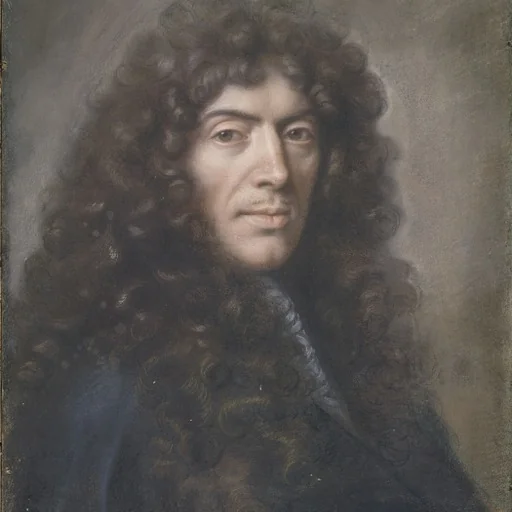
Artist
Israel Silvestre (13 August 1621 in Nancy – 11 October 1691 in Paris), called the Younger to distinguish him from his father, was a prolific French draftsman, etcher and print dealer who specialized in topographical views and perspectives…

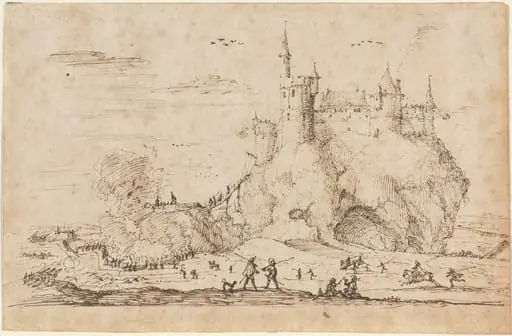 Castle under Siege
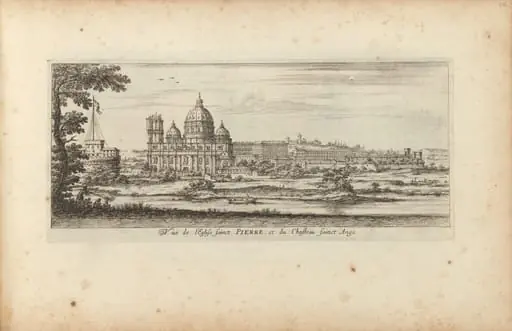 Vuë de l'Eglise sainct Pierre, et du Chasteau Sainct Ange
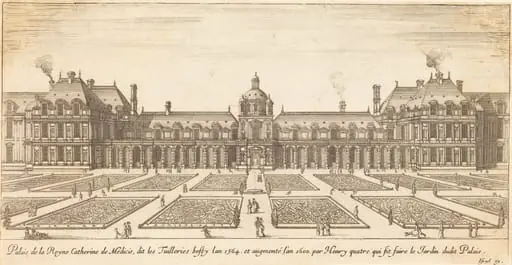 Palais de la Reyne Catherine de Medicis
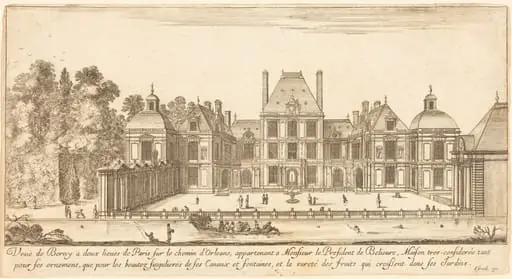 Veue de Berny a deux lieues de Paris sur le chemin d'Orléans
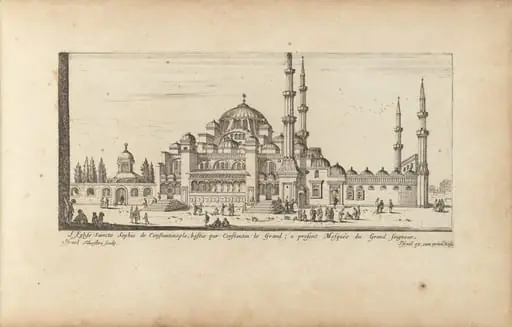 L'Eglise Saincte Sophie de Constantinople, bastie par Constantin le Grand; a present Mosquée du Grand seigneur
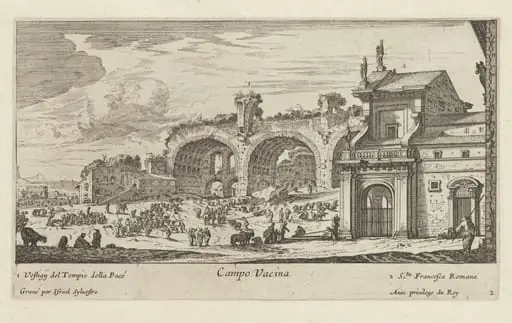 Campo Vacina
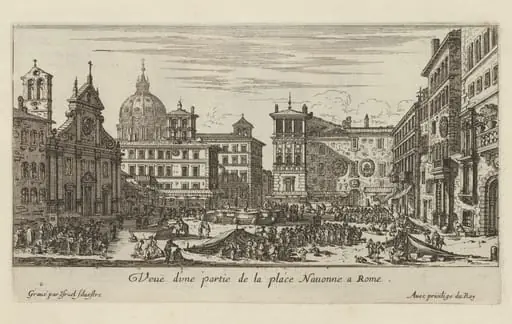 Veuë d'une partie de la place Navonne a Rome
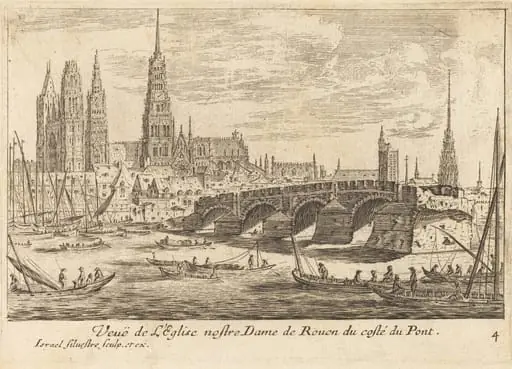 Veue de l'Eglise nostre Dame de Rouen
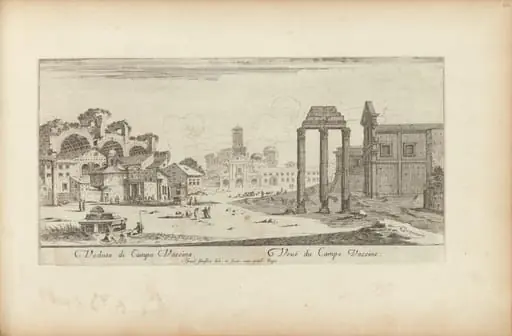 Veduta di Campo Vaccina
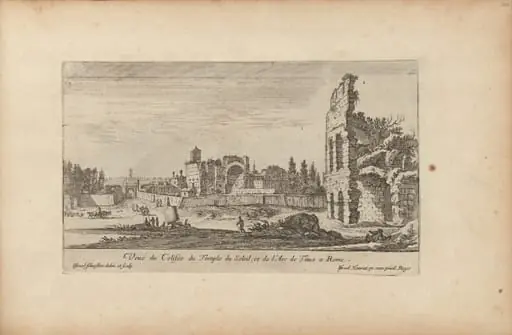 Veuë du Colisée du Temple du Soleil, et de l'Arc de Titus a Rome
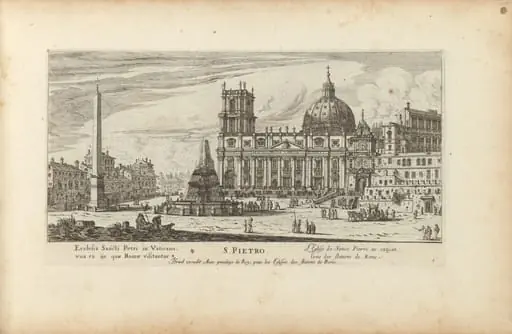 S. Pietro
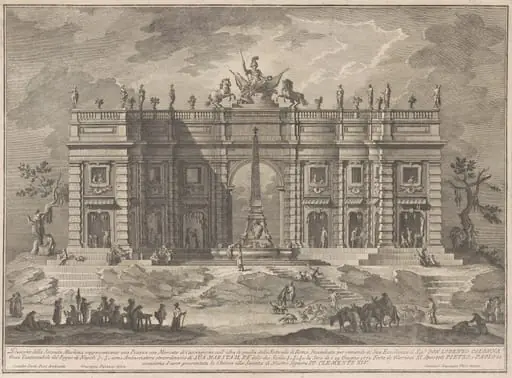 The Seconda Macchina for the Chinea of 1772: A Square with a Game Market and the Pantheon Fountain
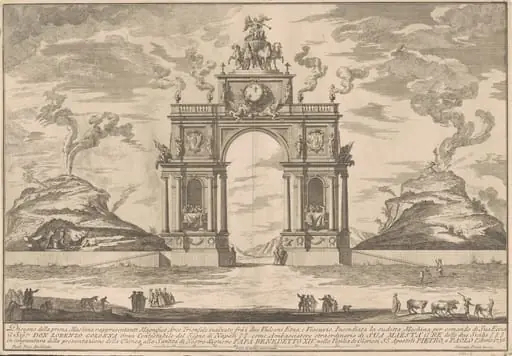 The Prima Macchina for the Chinea of 1756: A Triumphal Arch between Mount Etna and Mount Vesuvius
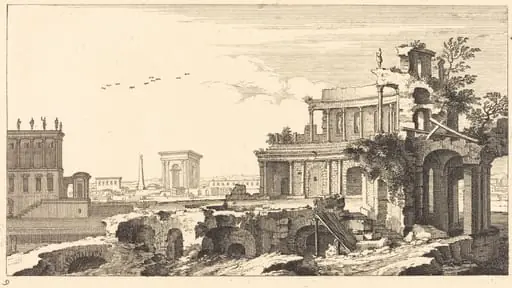 Landscape with Classical Ruins
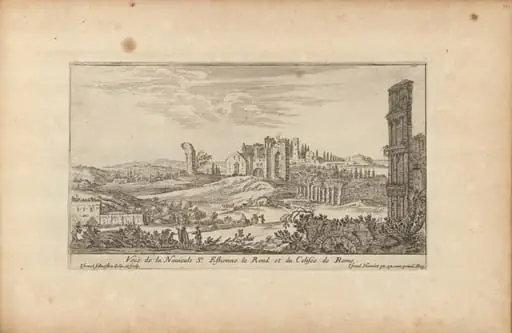 Veuë de la Navicule St. Estienne le Rond et du Colisée de Rome