Artwork
Four Springs in and around Spa: The Fourth Spring, The Spring at Sauvenière
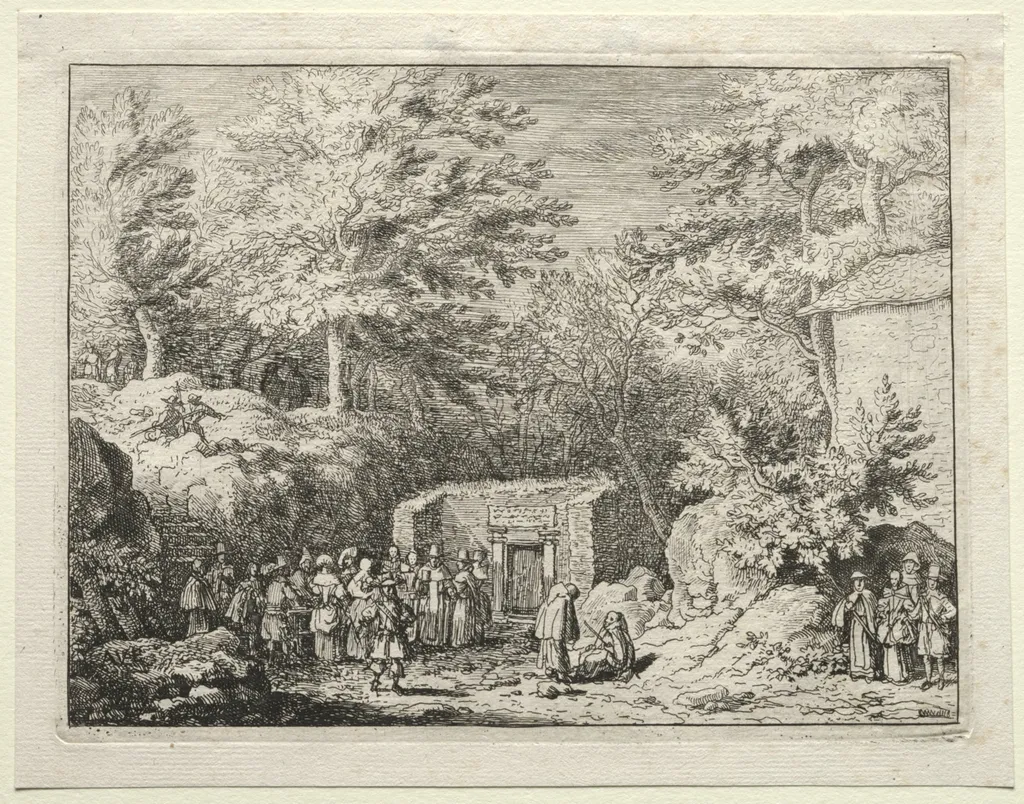
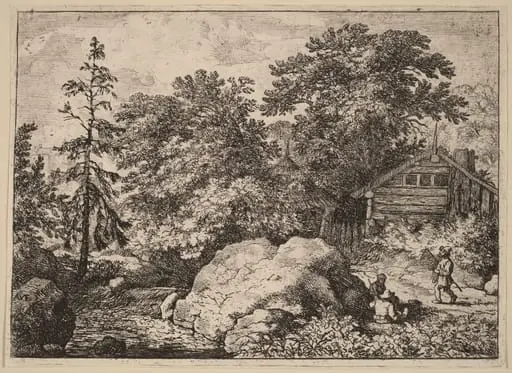
Four Springs in and around Spa: The Fourth Spring, The Spring at Sauvenière is a print by the Baroque artist Allart van Everdingen. It dates from 1650 and is held in the collection of the Cleveland Museum of Art.
About this work
Overview
Van Everdingen, a Dutch artist known for his topographical landscapes, captured these sites with attention to local geography and daily life.
Created around 1650 by Allart van Everdingen, this print is one of four depicting natural springs near Spa in present-day Belgium. Van Everdingen, a Dutch artist known for his topographical landscapes, captured these sites with attention to local geography and daily life. The work belongs to a series that records specific locations, blending observation with artistic interpretation in the tradition of Northern European landscape printing.
Subject & Meaning
The scene centers on the Sauvenière spring, a known source of mineral water in the Ardennes. Figures gather to collect water, drink, or rest nearby, suggesting the site’s function as a communal and therapeutic destination. The quiet activity reflects the spring’s role in regional life, not as a grand spectacle but as a quiet, habitual part of daily routine, grounded in realism rather than idealization.
Technique & Style
Van Everdingen employed fine linear engraving to define textures—tree bark, rock, fabric—with precision. Light is modeled through controlled hatching, creating soft contrasts that suggest morning sun filtering through foliage. The foreground figures are sharply rendered, while the distant hills fade into muted tones, using atmospheric perspective to enhance spatial depth without overt Baroque drama.
History & Provenance
The print was produced during van Everdingen’s return to the Netherlands after travels in Scandinavia and the Low Countries. It was likely part of a commercial series intended for collectors interested in regional geography and natural curiosities. Early ownership records are sparse, but the work entered museum collections in the 19th century as interest grew in Dutch topographical prints.
Context
In mid-17th-century Dutch art, landscape was increasingly valued for its own sake, not merely as background. Van Everdingen’s focus on specific springs aligns with a broader trend of documenting natural features, influenced by scientific curiosity and travel literature. Unlike Italianate idealized views, these works emphasized authentic places, reflecting Dutch cultural priorities of observation and record.
Legacy
Van Everdingen’s series helped establish the spring as a legitimate subject in landscape art, influencing later topographical printmakers. While not widely celebrated in his lifetime, his precise, unembellished depictions of natural sites contributed to the development of landscape as a genre grounded in empirical observation rather than myth or grandeur.
Artist & collection
Artist
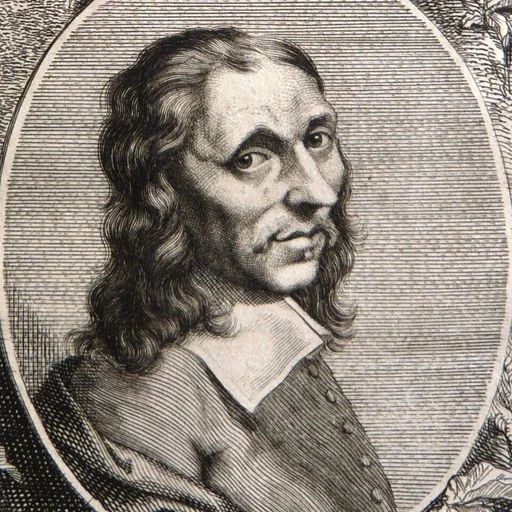
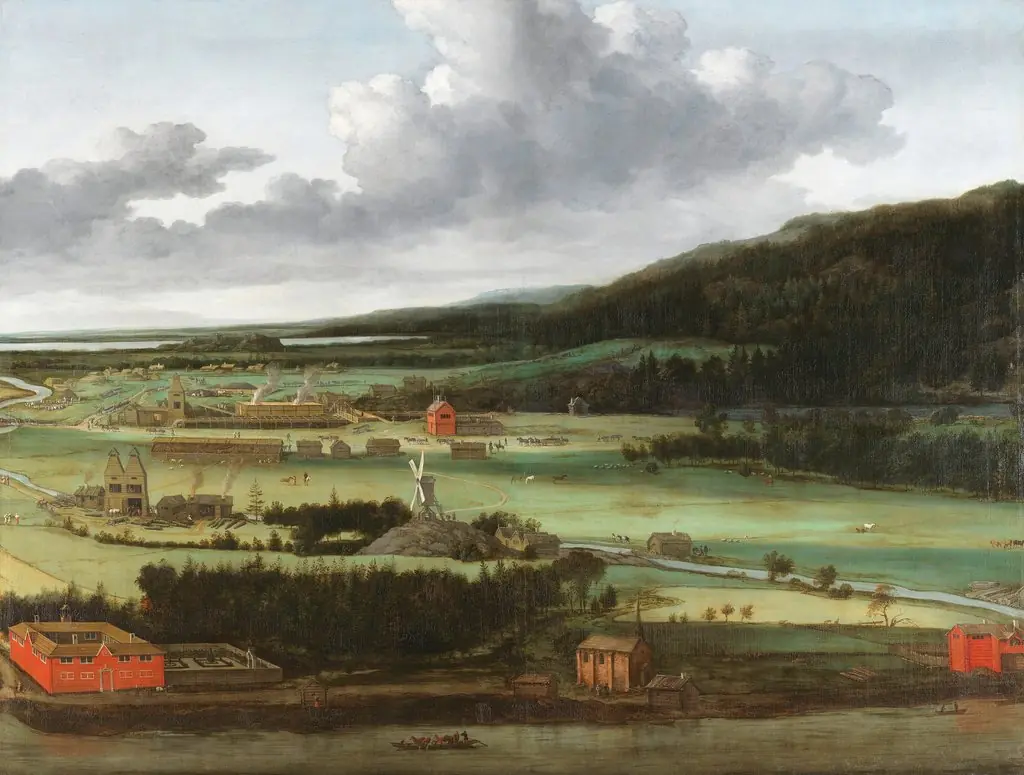
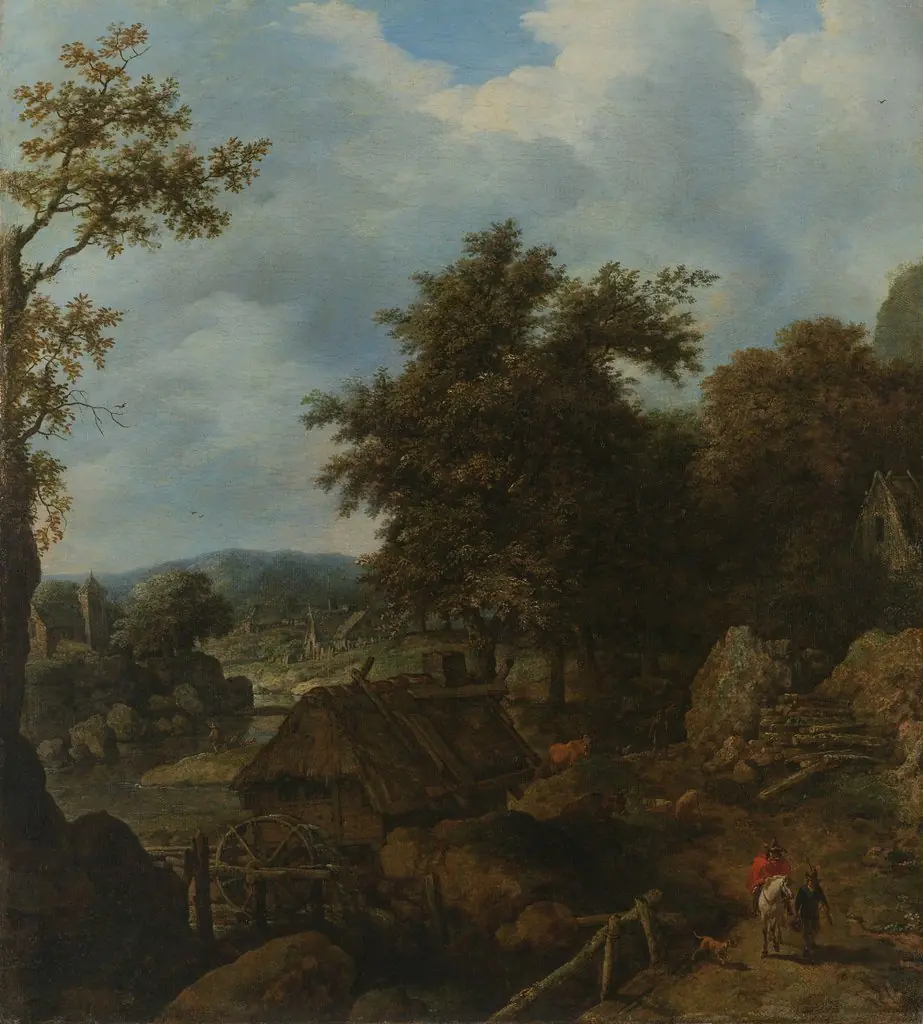
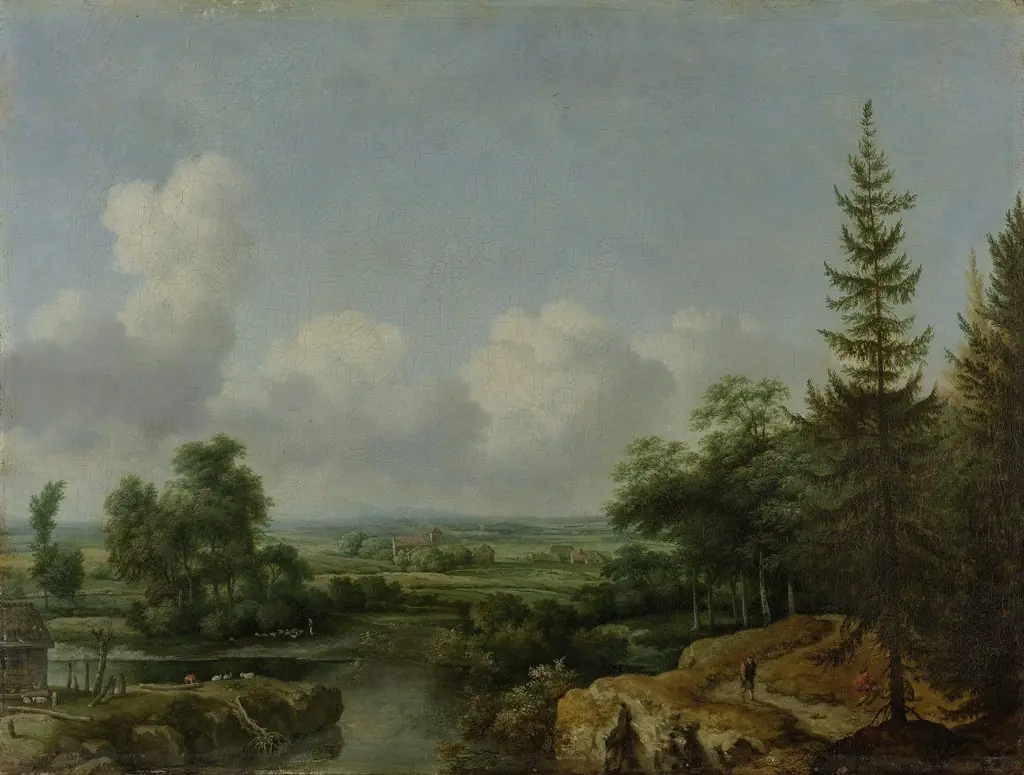
Allaert van Everdingen (Dutch pronunciation: ; bapt. 18 June 1621 – 8 November 1675 (buried)), was a Dutch Golden Age painter and printmaker in etching and mezzotint.

 The Knoll
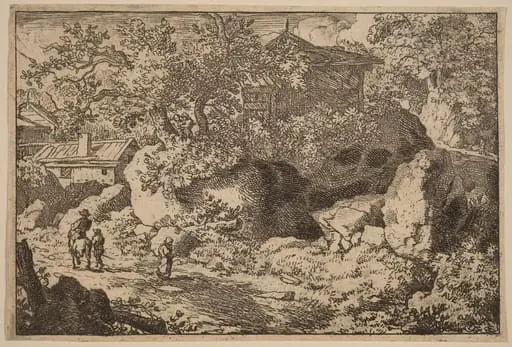 Peasant on Horseback
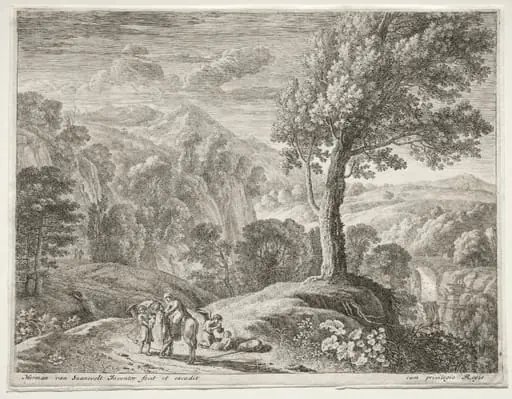 The Large Tree and the Cascade
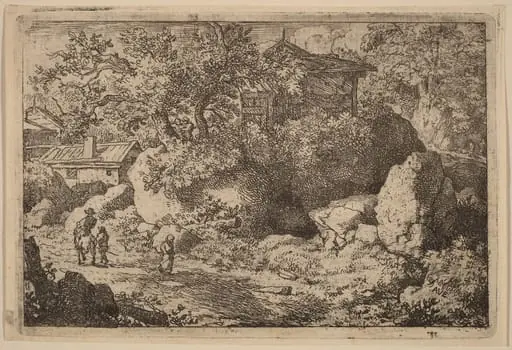 Peasant on Horseback
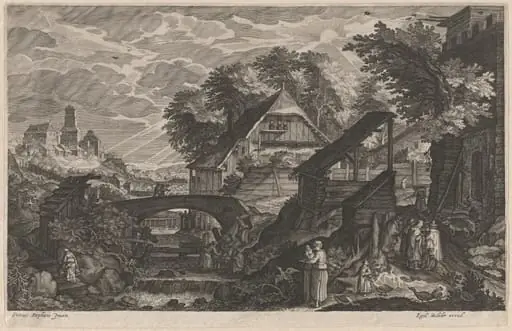 Farm Houses by a River with a City Beyond
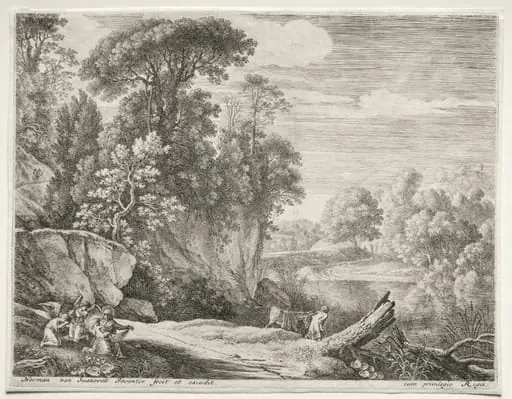 The Donkey Led to the River
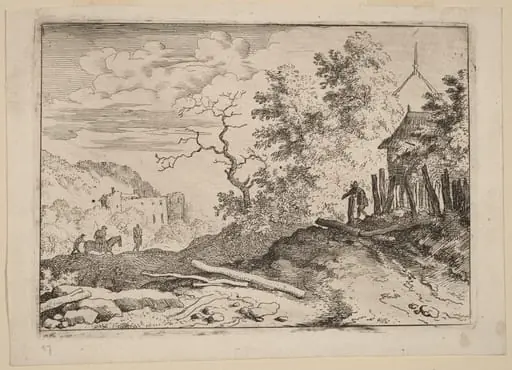 Hut with the Remains of a Hedge
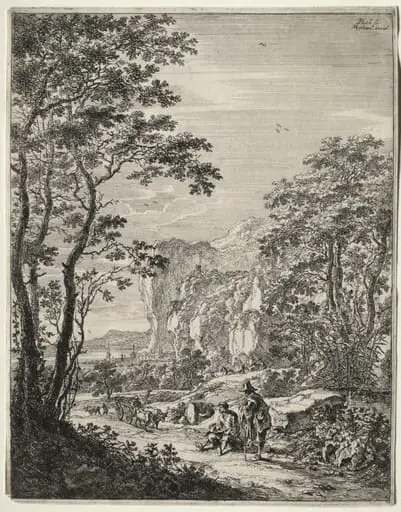 Ox-Cart. View between Ancona and Sinigaglia
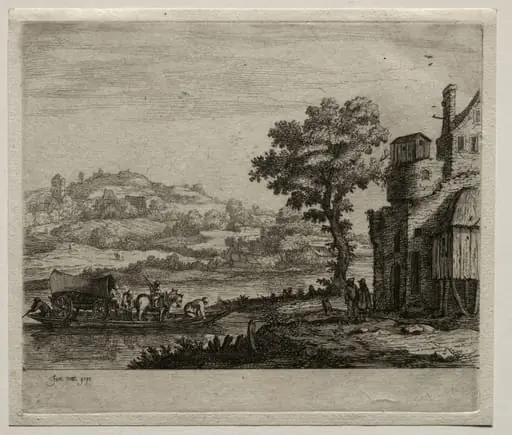 The Ferry Boat
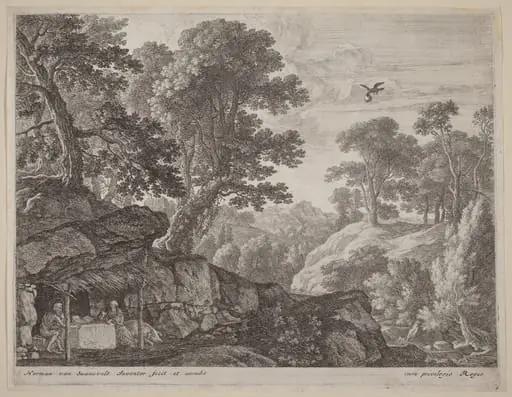 Saint Paul and Saint Anthony by the Entrance to the Cave
 Landscape with Peasants before an Inn
 The Flight into Egypt: The Donkey Led to the River