Artwork
Neptune on board the "Newcastle": Crossing the Line
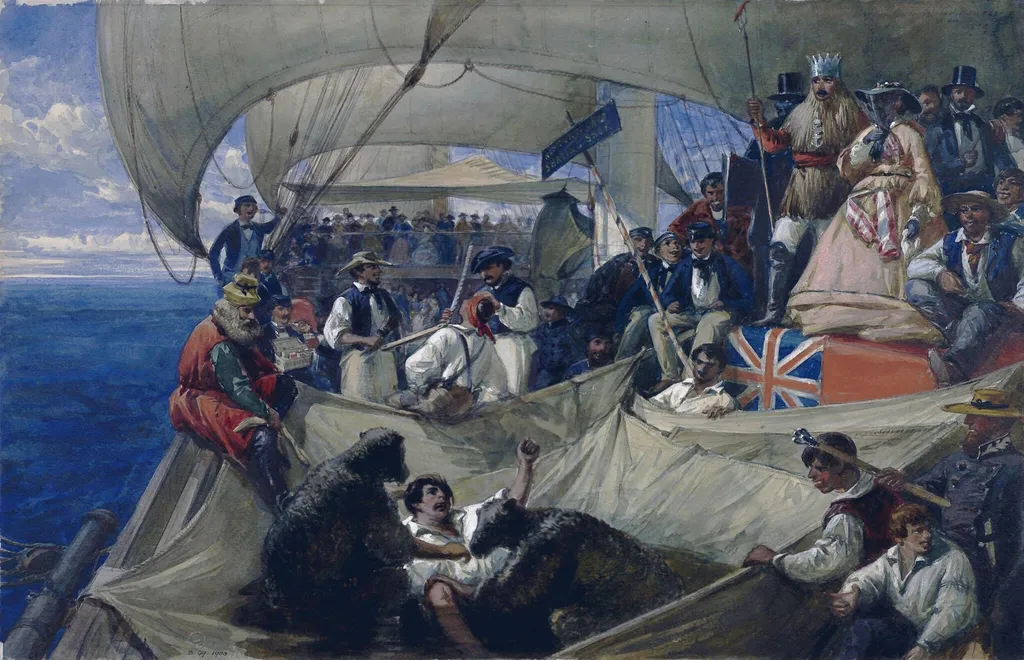
Neptune on board the "Newcastle": Crossing the Line is a watercolor work on paper by the Impressionist artist William R.I. F.R.G.S. Simpson. It dates from 1859 and is held in the collection of the Victoria and Albert Museum.
About this work
Overview
The scene is alive with activity, showing sailors, officers, and passengers gathered on deck as Neptune, personified in a leafy crown, oversees the ritual.
This watercolour captures a ceremonial crossing of the Equator aboard the HMS Newcastle, a tradition among naval crews to mark the transition from one hemisphere to another. The scene is alive with activity, showing sailors, officers, and passengers gathered on deck as Neptune, personified in a leafy crown, oversees the ritual. The composition conveys both order and chaos, reflecting the blend of maritime discipline and festive disorder inherent in the event.
Subject & Meaning
Neptune, depicted with a crown of foliage and a standard, symbolizes the mythic ruler of the sea presiding over a rite of passage. The figures in the water, some struggling, represent initiates undergoing the ritual’s trials, while others watch with expressions ranging from amusement to apprehension. The presence of a small boat with a British flag suggests the formal authority of the navy, reinforcing the ceremony’s role in reinforcing hierarchy and camaraderie among sailors.
Technique & Style
The artist employs loose, fluid brushwork to suggest motion and texture—ripples on the sea, fluttering fabric, and shifting light. Watercolour’s transparency allows layers of wash to convey the brightness of the sky and the turbulence of the waves. Clothing and facial expressions are rendered with suggestive detail rather than precision, emphasizing atmosphere over individual identity, aligning with 19th-century realist tendencies to capture fleeting moments of daily life.
History & Provenance
The painting originates from the Royal Navy’s tradition of equatorial crossing ceremonies, documented in the early to mid-1800s. While the exact date and artist remain unconfirmed, the depiction of the HMS Newcastle—a vessel active in the 1830s—anchors it within that period. Likely created by a naval officer or artist aboard, it served as a personal record rather than a commissioned work, reflecting the informal documentation common among service personnel.
Context
Equatorial crossing ceremonies were deeply rooted in naval culture, blending pagan rites with military discipline to ease the psychological strain of long voyages. The ritual reinforced group cohesion and hierarchy, with Neptune’s court often composed of senior crew members. This painting reflects a broader trend in British maritime art that valued everyday scenes over grand historical narratives, capturing the lived experience of sailors beyond battle or heroism.
Legacy
Though not widely exhibited, the work contributes to a modest but persistent archive of naval life in watercolour, preserving the human dimension of imperial seafaring. Its informal style and focus on ritual over spectacle offer insight into the social fabric of the Royal Navy during the age of sail. Today, it remains a quiet testament to the rituals that sustained morale on long, isolated voyages.
Own this work as a print
Artist & collection
Artist
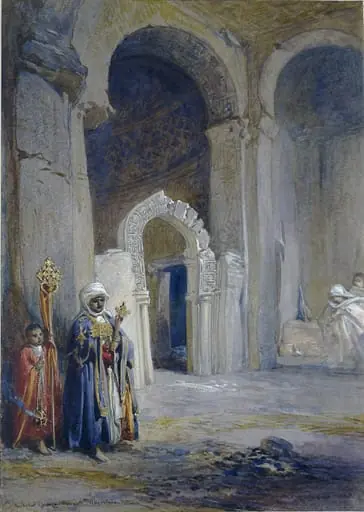
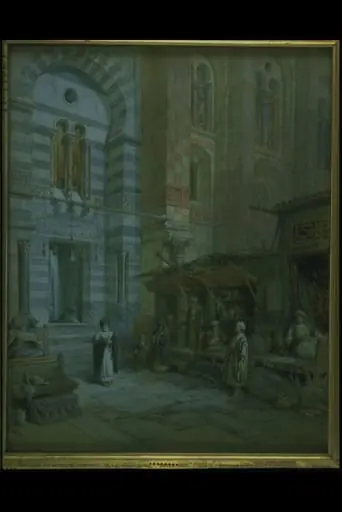
William Simpson drew travel scenes in watercolor and pencil during the 1800s. He sketched A Doorway in Cairo in 1884, showing arched doorways and sunlight on stone. His 1855 Sebastopol: View from the Victoria Redoubt…

 Churruca's Death
 Death of Lord Nelson
 The Action and Capture of the Spanish Xebec Frigate 'El Gamo'
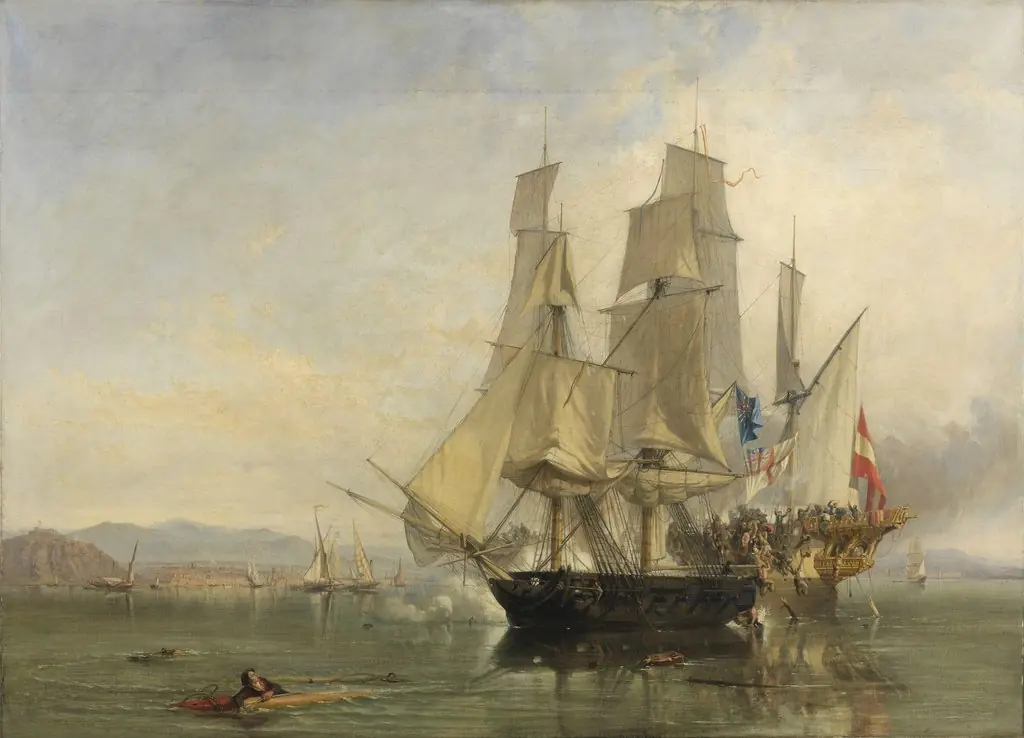 The Action and Capture of the Spanish Xebeque Frigate El Gamo
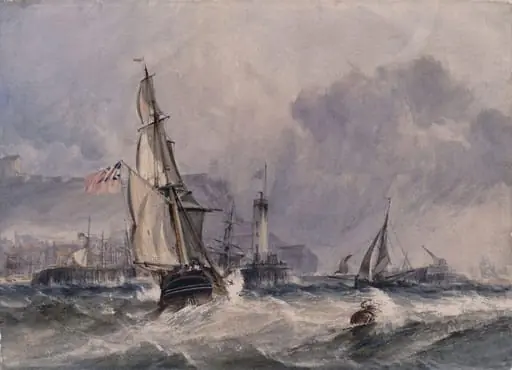 View of Scarborough
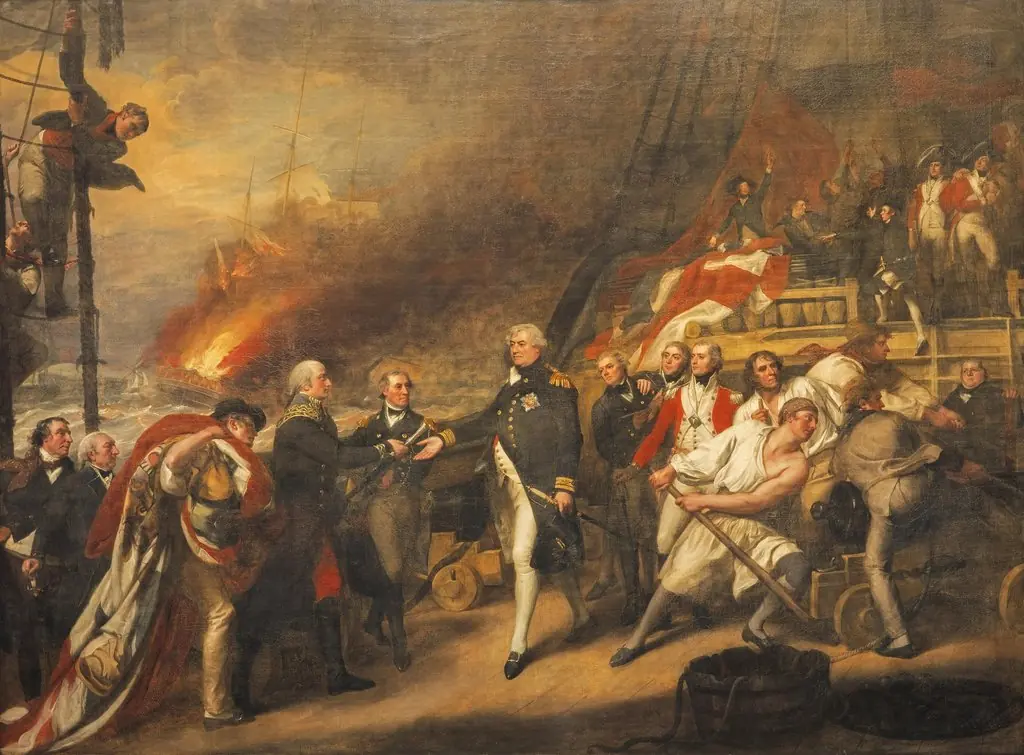 The Surrender of the Dutch Admiral de Winter to Admiral Duncan at the Battle of Camperdown (The Victory of Lord Duncan)
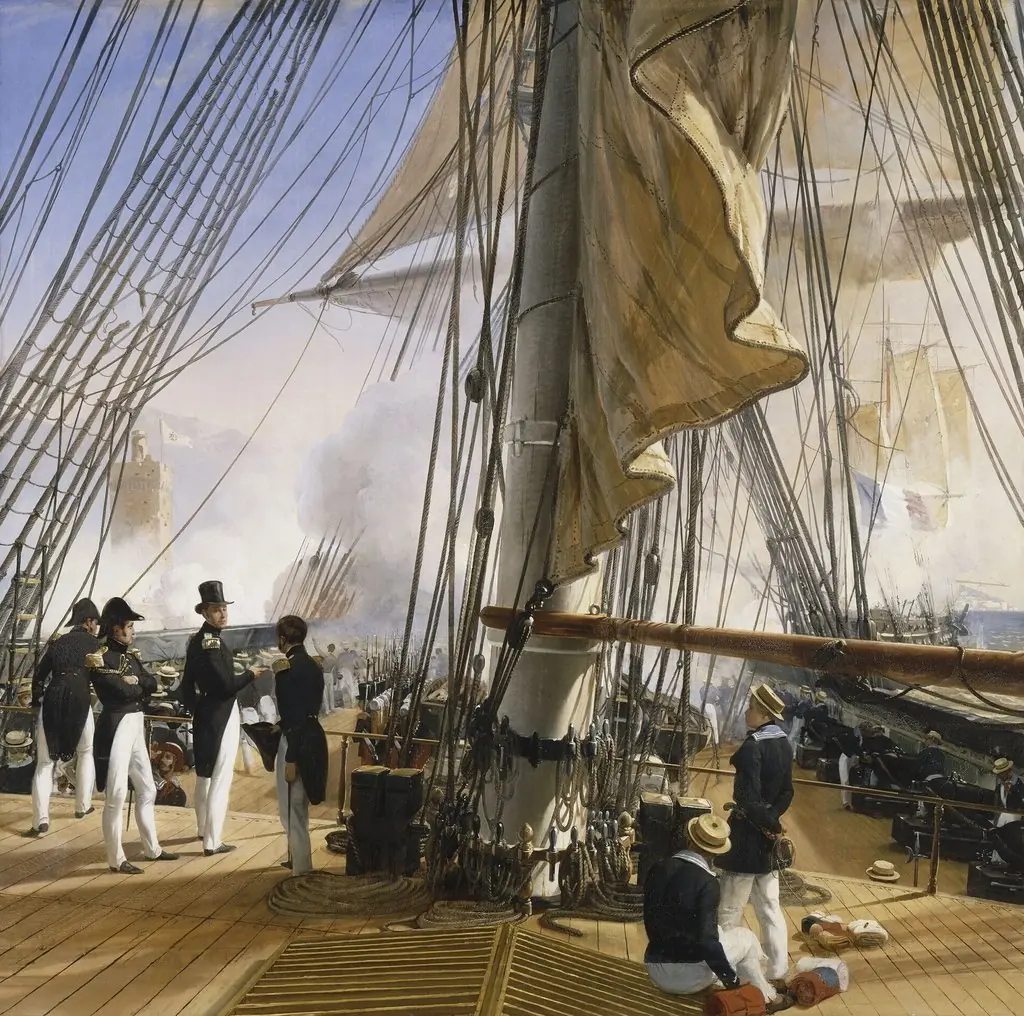 The French fleet forcing the entrance of Tagus River. 11 July 1831.
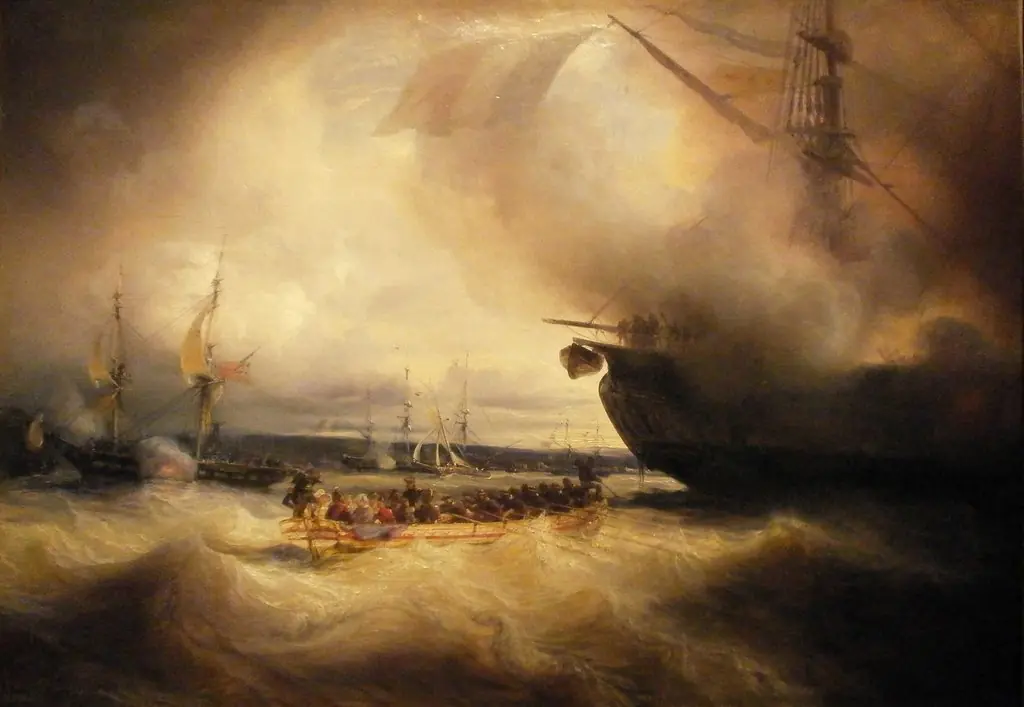 Louis-Philippe and his family in the harbour of Cherbourg, September 3, 1833
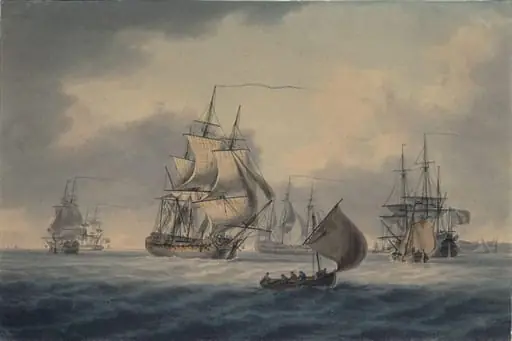 Shipping
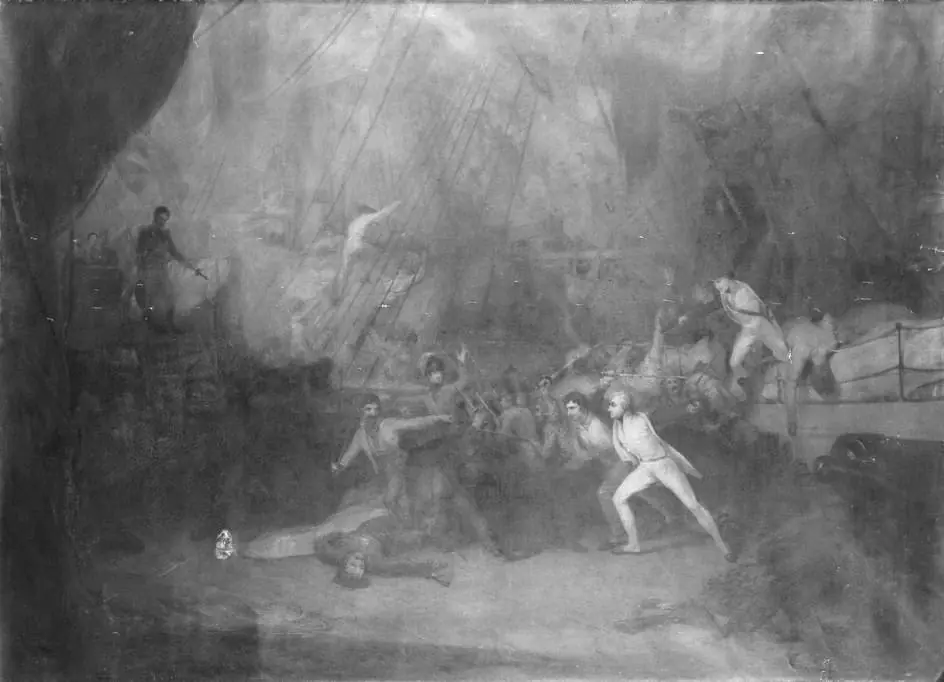 Commodore Nelson boarding the San Joseph in the Battle of St Vincent
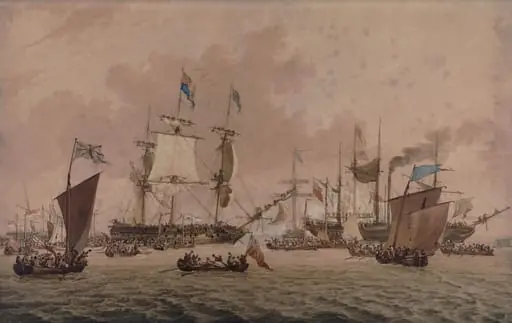 Shipping and boats: George IV passing Great Ormesby, Yarmouth, on his return from Edinburgh 1822
 Entrance to a Harbour